Kazakhstan can win in a divided energy world by using AI to optimize both oil-gas and electrification—cutting downtime, costs, and emissions.
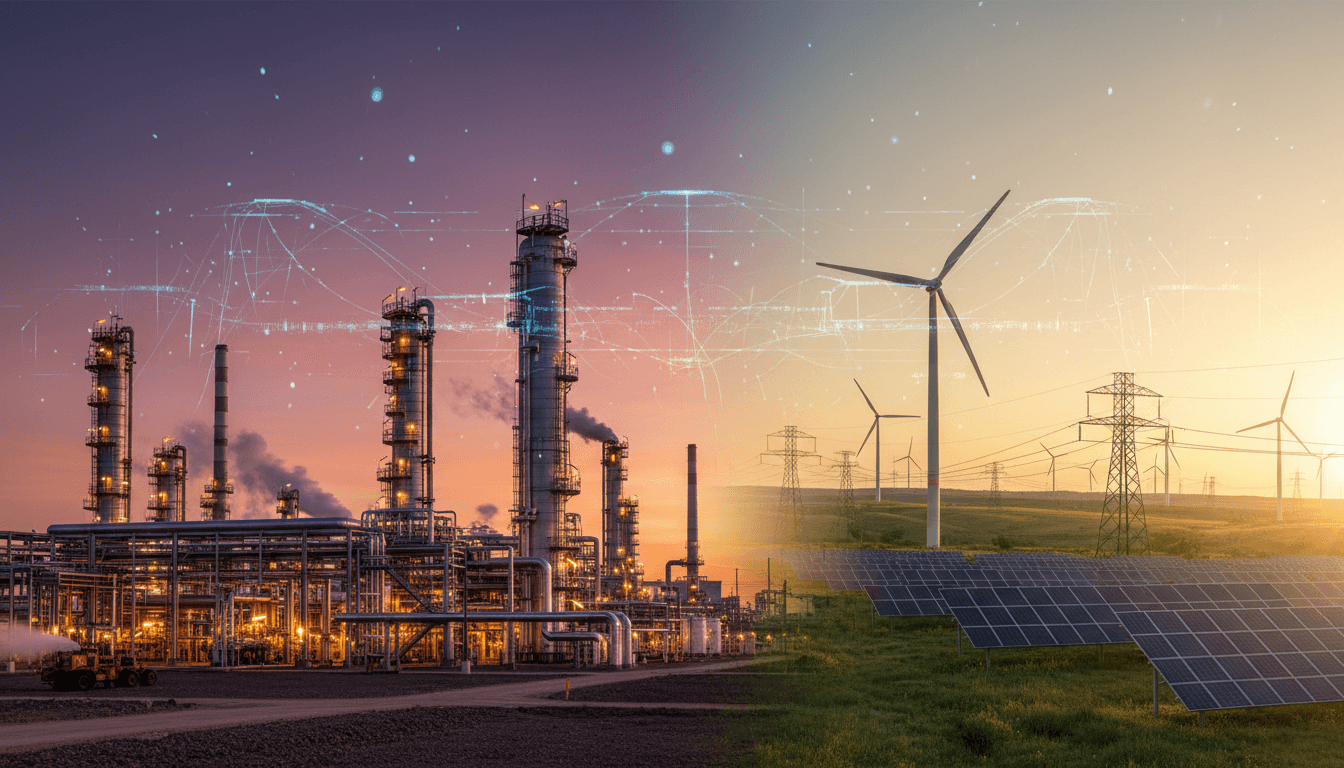
AI Kazakhstan’s Energy: Between Petro and Electro
Global energy is splitting into two camps—and Kazakhstan can’t afford to pick just one.
On one side are electro-states: countries racing to electrify transport and industry while adding record amounts of wind, solar, nuclear, and grid infrastructure. On the other are petro-states: economies that are still expanding oil and gas capacity because it’s profitable, strategically valuable, or simply the fastest way to meet demand. The recent debate captured in Haley Zaremba’s RSS summary (“Why the U.S. and China Are Taking Opposite Sides in the Energy Transition”) frames this as a high-stakes contest shaping the global energy balance.
Here’s the stance I’ll take: Kazakhstan shouldn’t treat this as a binary choice. The practical advantage isn’t “fossil vs clean.” It’s AI-driven efficiency and resilience across the whole system—from upstream oil and gas to power grids, renewables, and industrial electrification. If the world is fragmenting into petro and electro strategies, AI is one of the few tools that can perform well in both.
Why the U.S.–China split matters for Kazakhstan
The U.S.–China divergence matters because it changes investment flows, technology standards, and commodity demand—fast. That’s not abstract geopolitics; it determines what gets financed, what gets sanctioned, and which supply chains stay reliable.
The simplified picture from the RSS description is this:
- Many countries are adding clean capacity at record pace and electrifying end uses.
- Others—highlighting the U.S. in the summary—are also installing more fossil fuel capacity than ever.
- The “future energy balance” becomes a tug-of-war between petro-states and electro-states.
- AI is emerging as a key factor in how energy strategies are executed.
For Kazakhstan, a major oil and gas producer and a regional electricity player, the strategic question isn’t “Who’s right?” It’s:
How do we stay competitive when the world is pulling in two directions at once?
The answer that scales is operational: run existing assets better, build new assets smarter, and make decisions using data instead of instinct. That’s the core promise of жасанды интеллект (artificial intelligence) in energy.
Petro and electro aren’t ideologies—they’re operating models
“Petro-state” and “electro-state” are really descriptions of operating priorities. Petro models optimize extraction, processing, logistics, and export timing. Electro models optimize generation mix, grid stability, flexible demand, and electrified mobility.
Kazakhstan already lives in a blended reality: it exports hydrocarbons, modernizes refineries, manages aging power infrastructure, and explores renewables. The competitive advantage comes from using AI to reduce losses and raise output quality in both worlds.
AI as the bridge: one tool, two energy pathways
AI works as a bridge because energy systems—fossil or renewable—share the same bottlenecks: uncertainty, complexity, and expensive downtime. Machine learning is strongest when it can predict failures, optimize schedules, and detect anomalies early.
Below are the highest-ROI AI use cases that apply whether your strategic posture looks more “petro” or more “electro.”
Predictive maintenance: stop paying for unplanned downtime
The fastest payback in energy AI is often predictive maintenance. If you operate rotating equipment (pumps, compressors, turbines), pipelines, or heavy electrical gear, you already produce signals—vibration, temperature, pressure, harmonics.
What AI adds:
- Early warning models that detect failure signatures weeks earlier than thresholds.
- Remaining useful life (RUL) estimates that improve maintenance planning.
- Root-cause clustering across sites, not just one asset.
For Kazakhstan’s oil and gas operations, this can mean fewer shutdowns and safer work conditions. For power utilities, it means fewer transformer failures and better reliability during peak winter demand.
Process optimization: squeeze more value from the same inputs
Optimization AI pays when your process is continuous and your margins are sensitive to small improvements. Refineries, gas processing plants, and thermal power stations are classic candidates.
Typical outcomes when done right:
- Lower fuel/energy intensity per unit output
- Reduced flaring and off-spec product
- Better throughput stability during feedstock variability
AI here isn’t magic. It’s a disciplined combination of:
- clean historian data
- constraints that engineers trust
- human-in-the-loop control so operators can override safely
This matters because global markets are volatile. When the U.S. expands fossil capacity while others electrify, price swings and demand shifts get sharper. AI-driven efficiency is a hedge against volatility.
Energy trading and dispatch: forecast better, spend less
Forecasting is where electro-states live—and petro-states increasingly need to play. Renewables require accurate forecasts; thermal plants need smarter dispatch; industrial consumers want to minimize peak tariffs.
AI improves:
- load forecasting (hourly/daily/seasonal)
- renewable generation forecasting (wind/solar)
- unit commitment and dispatch optimization
For Kazakhstan, the win is straightforward: the grid gets more stable, and balancing costs drop as variable generation grows.
What Kazakhstan can do now: a practical AI roadmap
The biggest mistake companies make is starting with a flashy pilot and no path to production. In Kazakhstan’s energy and oil-gas sector, the best approach is staged: start where data exists and financial impact is measurable.
Step 1: Pick “boring” problems with measurable economics
Choose use cases where you can compute value in ten minutes:
- cost of downtime per hour
- cost of unplanned maintenance
- energy consumption per ton/unit
- losses in transmission/distribution
Good first projects in oil and gas:
- Compressor predictive maintenance
- Leak/anomaly detection in pipeline telemetry
- Drilling parameter optimization (where data quality is high)
Good first projects in power:
- Transformer health scoring
- Loss detection and theft analytics (where relevant)
- Load forecasting for dispatch
Step 2: Fix the data pipeline before you “train models”
AI projects fail more from data plumbing than from algorithms. Most industrial AI depends on time-series data (SCADA, historians), work order systems (CMMS), and asset registries.
A minimum viable foundation looks like:
- consistent tag naming and units
- synchronized timestamps
- clear asset hierarchy (plant → unit → equipment)
- maintenance records linked to the correct asset
If you only do one thing this quarter, do this: make failure events and maintenance actions searchable and structured. Models learn from labels; no labels, no reliable predictions.
Step 3: Make deployment and governance non-negotiable
A model that never reaches operations is just an expensive dashboard. Treat deployment like any other industrial system:
- cybersecurity review
- fallback logic when sensors fail
- monitoring for model drift
- clear responsibility: who owns alarms, who approves actions
In energy and oil-gas environments, governance is also safety. AI must be auditable and explainable enough that engineers will trust it at 2 a.m.
Where AI fits into Kazakhstan’s energy transition strategy
Kazakhstan’s strategic advantage is optionality—AI helps keep that optionality profitable. If global blocs intensify—some prioritizing electrification, others doubling down on hydrocarbons—Kazakhstan can stay relevant to both markets by improving cost, reliability, and emissions performance.
Reducing emissions without pretending hydrocarbons disappear
A realistic position for 2026: oil and gas remain central to revenues, but carbon pressure rises. AI can reduce emissions in ways that are operationally credible:
- methane leak detection (sensor + satellite + anomaly models)
- flare minimization via process stability models
- energy efficiency optimization in plants and pumping stations
This is the kind of work that doesn’t require political theatre. It’s engineering with better math.
Making electrification affordable where it actually works
Electrification isn’t a slogan; it’s an infrastructure bill. AI helps lower that bill:
- grid planning using scenario modeling
- predictive maintenance to reduce capex emergencies
- demand response and industrial scheduling
If Kazakhstan wants more renewables and more electrified industry, it needs a smarter grid first. AI is a practical way to get there without waiting for a perfect rebuild.
Common questions energy leaders ask (and the honest answers)
“Will AI replace engineers and dispatchers?”
No. AI replaces guesswork, not accountability. The winning teams use AI to surface risks early and recommend actions—then humans decide.
“Do we need huge data science teams?”
You need a small, strong core team and tight partnership with operations. One or two excellent data engineers can create more value than a room full of modelers if your data foundation is weak.
“How long to see ROI?”
For predictive maintenance and forecasting, 3–9 months is realistic when data is already available and deployment is planned from day one. Longer timelines usually signal missing data, unclear ownership, or security constraints not handled early.
The real competitive line in 2026: execution speed
The RSS summary frames a world where the U.S. and China sit on opposite sides of the energy transition. Whether that gap widens or narrows, Kazakhstan’s risk is the same: getting stuck with slow decisions and inefficient assets while others learn faster.
In this series—«Қазақстандағы энергия және мұнай-газ саласын жасанды интеллект қалай түрлендіріп жатыр»—the consistent pattern is simple: companies that treat AI as a production capability (not a PR project) improve uptime, reduce operating costs, and manage risk more intelligently.
If you’re leading operations, digital, or strategy in Kazakhstan’s energy or oil and gas sector, the next step isn’t to “choose a side.” It’s to choose a portfolio:
- 1–2 AI use cases that cut downtime this year
- 1 grid/dispatch forecasting capability that scales
- a data foundation that doesn’t collapse under growth
The question worth asking now is sharper than “petro or electro?”
How quickly can your organization turn operational data into decisions you trust?