2025 proved energy markets follow fundamentals. Here’s how AI helps Kazakhstan’s energy and oil-gas sector handle demand growth, grid limits, and legacy assets.
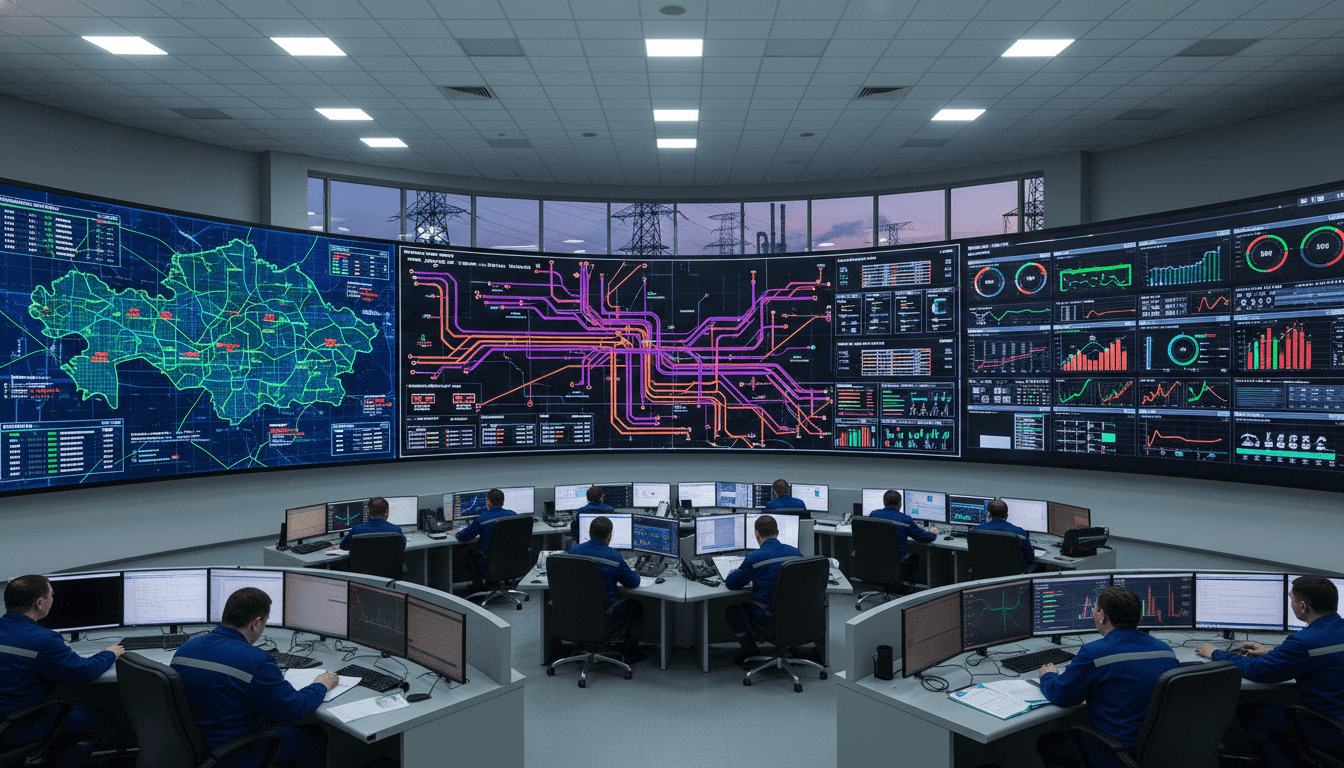
AI Kazakhstan Energy: Lessons From 2025 Fundamentals
Oil fell while headlines stayed loud. Power demand rose faster than grids could keep up. And plenty of “sunset” technologies refused to die on schedule.
That’s the real lesson hiding inside the top energy stories of 2025: energy markets still answer to fundamentals—supply, demand, and infrastructure—more than to slogans or forecasts. If you work in Kazakhstan’s energy or oil-and-gas sector, this shouldn’t feel abstract. It’s a practical warning.
Here’s my stance: Kazakhstan doesn’t need more predictions about energy markets. It needs better execution inside constraints. That’s exactly where artificial intelligence fits—especially in a country balancing export-driven oil and gas, aging grid assets in places, growing electrification, and rising expectations for reliability and emissions control.
This post is part of our series “Қазақстандағы энергия және мұнай-газ саласын жасанды интеллект қалай түрлендіріп жатыр”. We’ll use 2025’s fundamental-driven reality as a backdrop and get specific about how AI in Kazakhstan’s energy industry can address the same pressure points: demand growth, infrastructure bottlenecks, and the durability of legacy tech.
2025 proved fundamentals win—and AI helps you operate in them
Direct answer: 2025 reminded the market that infrastructure constraints and physical supply-demand balances dominate outcomes; AI helps companies respond faster and waste less inside those constraints.
The RSS summary highlights a familiar pattern:
- Oil prices fell despite geopolitical tensions.
- Electricity demand grew faster than grids could react.
- Technologies expected to fade stayed durable.
Those three points rhyme with what operators in Kazakhstan see daily:
- Price and politics don’t move barrels or electrons by themselves. Hardware, logistics, and throughput do.
- Demand growth is a systems problem. Generation, transmission, distribution, dispatch, and forecasting all have to line up.
- Legacy assets stick around. The fastest way to improve performance often isn’t ripping everything out—it’s modernizing what you already run.
AI is not a shiny add-on. It’s a way to improve decision quality when:
- demand is volatile,
- assets are aging,
- downtime is expensive,
- and data exists but isn’t used well.
Snippet-worthy line: When fundamentals rule, the winners aren’t the loudest—they’re the best operators.
Electricity demand outpaced grids—Kazakhstan can’t “build-only” its way out
Direct answer: When demand rises faster than grid expansion, AI-driven forecasting, loss reduction, and dispatch optimization become the fastest reliability upgrades.
Across the world in 2025, electricity demand growth ran into grid reality: interconnection queues, transformer shortages, permitting delays, and the slow pace of upgrades. Kazakhstan has its own version of this story—long distances, regional load patterns, industrial demand, and the constant need to keep stability and reliability high.
Where AI delivers immediate grid value
The quickest wins tend to come from three operational layers:
-
Short-term load forecasting (hours to days)
- Better forecasts reduce reserve margins and avoid expensive emergency actions.
- AI models can incorporate weather, calendar effects, industrial schedules, and historical SCADA patterns.
-
Technical and non-technical loss detection
- Losses are often treated as “background noise.” That’s a mistake.
- ML anomaly detection can flag feeder-level irregularities, meter tampering patterns, or failing equipment.
-
Dispatch and constraint management
- AI-assisted dispatch helps system operators and generation owners respond to congestion and ramping constraints.
- Even modest improvements in constraint prediction reduce curtailment and balancing costs.
A Kazakhstan-relevant scenario (practical, not theoretical)
A regional grid operator faces winter peaks plus industrial swings. Building new lines and substations may take years. Meanwhile, reliability targets don’t wait.
A realistic AI-first approach:
- Start with 24–72 hour load forecasts by region and major industrial node.
- Add equipment health scoring for transformers and breakers using maintenance history + sensor data.
- Use a simple decision support layer that recommends switching plans and maintenance windows.
This matters because it shifts the organization from “react and repair” to “predict and plan.” And that’s often the difference between a manageable peak week and an incident.
Oil prices fell anyway—so Kazakhstan needs AI that protects margins, not narratives
Direct answer: When prices soften, AI creates value by cutting unplanned downtime, reducing energy intensity, and improving planning accuracy—protecting margins barrel-by-barrel.
The 2025 oil story in the RSS summary is blunt: geopolitical tension didn’t guarantee high prices. That’s normal for oil markets, and it’s uncomfortable for operators who want a clean story to plan around.
In Kazakhstan’s oil and gas sector, the financial impact of price downturns is amplified by:
- high cost of downtime,
- complex supply chains (chemicals, parts, services),
- energy-intensive operations,
- and production constraints.
Three AI use cases that pay off even in “boring” markets
- Predictive maintenance for rotating equipment
- Compressors, pumps, turbines, and electric motors are classic failure points.
- AI models using vibration, temperature, amperage, and process data can forecast failure risk and recommend intervention timing.
-
Production optimization (especially with constraints)
- AI can recommend setpoints that maximize throughput while staying within safety and equipment limits.
- The big gains often come from stabilizing operations, not pushing harder.
-
Energy management inside upstream and midstream
- Fuel gas, electricity, and steam costs are frequently under-optimized.
- AI can detect abnormal energy intensity by unit, shift, or operating mode.
Snippet-worthy line: If you only invest when prices are high, you’re training your business to be fragile.
“People also ask”: Does AI require a full digital overhaul first?
No. Most successful projects I’ve seen start with a narrow, high-value target and work backward:
- What decision are we improving?
- What data already exists (DCS/SCADA, historians, CMMS, lab results)?
- What data quality gaps block deployment?
- Who owns the operational workflow once the model is live?
That’s how you modernize without waiting for a perfect IT landscape.
“Durable” technologies stayed durable—AI is how you modernize legacy assets
Direct answer: Legacy energy technologies aren’t going away quickly; AI helps squeeze reliability, efficiency, and safety out of existing assets while you transition.
The RSS summary points to a 2025 surprise for many commentators: technologies assumed to be on borrowed time proved durable. This is the most practical part of the lesson.
Energy systems are capital-heavy. Kazakhstan, like most countries, will run a mixed portfolio for years: legacy generation, legacy pipelines, aging substations, and industrial facilities that can’t be paused for “digital transformation.”
What “AI modernization” looks like on legacy systems
Not everything needs a full sensor retrofit or a brand-new platform. A sensible modernization stack usually looks like this:
- Data layer: connect historians, SCADA/DCS exports, lab systems, CMMS, and spreadsheets that hold “tribal knowledge.”
- Model layer: start with interpretable models where trust is critical (anomaly detection, remaining useful life, forecasting).
- Workflow layer: integrate into existing maintenance planning, shift handover, and operations meetings.
- Governance: define who approves model changes, how drift is monitored, and how incidents are handled.
The win is durability: AI makes legacy assets less brittle and easier to operate safely.
Safety and incident prevention is where Kazakhstan should be aggressive
Oil and gas safety doesn’t benefit from hype; it benefits from disciplined systems.
AI can strengthen process safety by:
- detecting early-warning patterns in pressure/temperature dynamics,
- flagging abnormal operator actions (sequence anomalies),
- prioritizing inspections based on risk rather than calendar.
A good rule: if a failure mode has precursors in data, it’s a candidate for AI monitoring.
A practical AI roadmap for Kazakhstan energy leaders (next 90 days)
Direct answer: Start with one operational decision, one asset class, and one accountable owner; measure impact in reliability or cost, then scale.
Many AI initiatives in energy fail for a boring reason: nobody owns the outcome once the pilot ends. Avoid that trap.
Step 1: Pick a “fundamentals” KPI
Choose a KPI that maps to physical reality and business value:
- unplanned downtime hours
- throughput constraint hours
- losses (%) by feeder/region
- energy intensity (kWh per unit output)
- maintenance backlog risk
Step 2: Select one high-signal use case
Good first projects share three traits: frequent events, clear value, and available data.
Examples:
- Transformer failure risk scoring in a specific region
- Pump/compressor predictive maintenance in one facility
- Short-term load forecasting for a dispatch area
- Leak/anomaly detection on a pipeline segment with sensors
Step 3: Define what “done” means (before modeling)
Write down acceptance criteria that operations will respect:
- alert precision target (e.g., 70%+ actionable alerts)
- lead time requirement (e.g., 7–14 days warning)
- integration point (CMMS work order, dispatcher console, daily meeting)
- escalation rules and ownership
Step 4: Build trust with transparency
Energy teams won’t accept a black box that can’t be challenged. Start with:
- feature importance summaries
- clear thresholds and confidence bands
- “why this alert triggered” explanations
Trust is a delivery requirement, not a nice-to-have.
What 2025’s energy stories mean for 2026 in Kazakhstan
2025 didn’t reward certainty. It rewarded resilience. Oil prices can fall for reasons that have nothing to do with your plan. Electricity demand can climb faster than projects can be permitted. And legacy assets can stay in service longer than everyone expected.
That’s why AI in Kazakhstan’s energy and oil-and-gas sector isn’t about futuristic ambition. It’s about better operations under pressure: fewer surprises, faster response, and smarter allocation of scarce capital.
If you’re deciding where to start, start where fundamentals hurt the most: reliability, losses, downtime, and safety. Those are universal. They’re measurable. And they compound.
What’s the one operational constraint in your organization that keeps showing up—week after week—and what would it be worth if you could predict it before it hits?