Build a YouTube marketing strategy for 2026 based on YouTube’s priorities—creator-led series, safer communities, smarter monetization, and responsible AI.
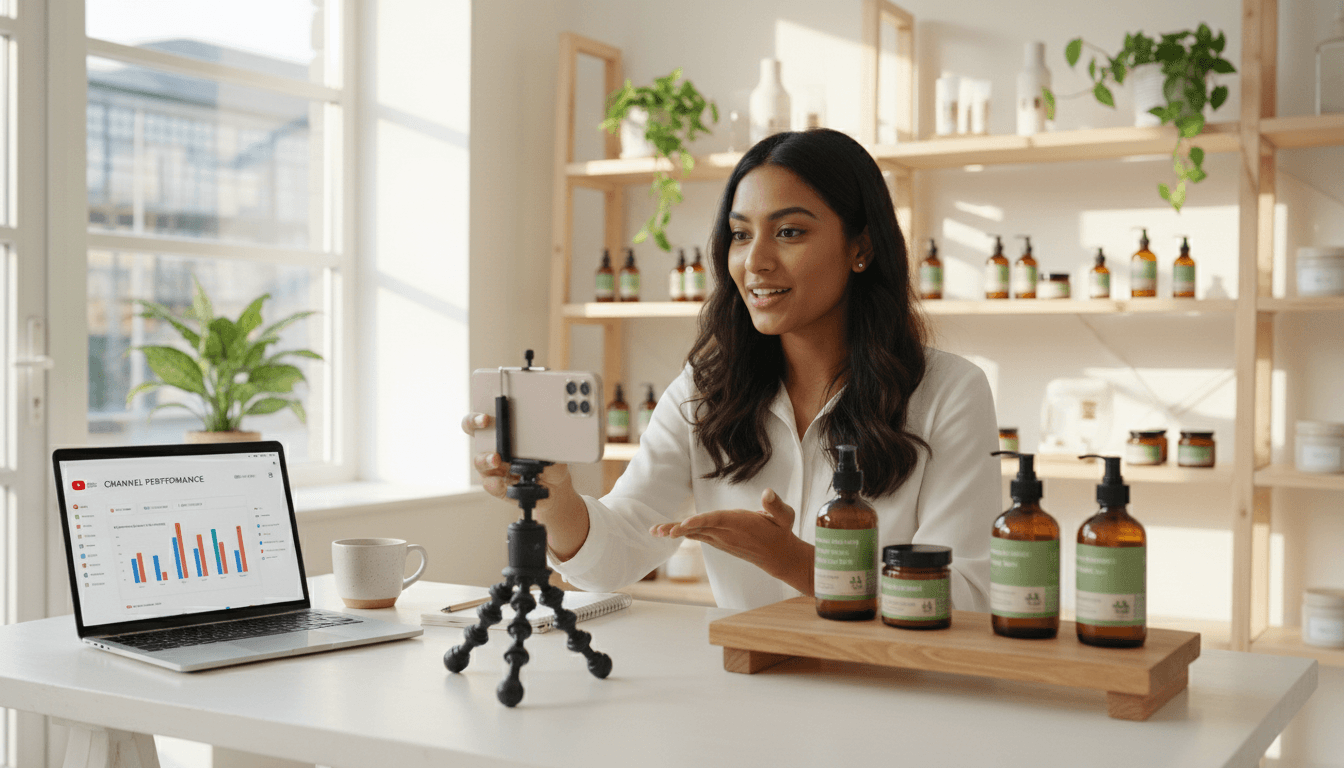
YouTube Marketing Strategy for Small Business in 2026
Most small businesses treat YouTube like a video folder: post a clip, hope it “goes viral,” then move on. YouTube’s 2026 direction (as described by CEO Neal Mohan) points to a different reality: the platform is doubling down on creator-led entertainment, youth safety, more ways to monetize, and responsible AI. If you’re running an SMB in the U.S., those aren’t abstract priorities—they’re a playbook for what YouTube will reward.
This post is part of our SMB Content Marketing United States series, where we focus on what works when you don’t have a full production team, an agency on retainer, or hours a day to “be everywhere.” The practical goal here: turn YouTube’s 2026 priorities into a plan you can execute with AI marketing tools and a realistic weekly schedule.
Snippet-worthy truth: In 2026, YouTube growth comes less from “posting more” and more from building a repeatable content system that’s safe, credible, and monetizable.
Creator-led entertainment: stop making ads, start making shows
Answer first: YouTube’s emphasis on creator-led entertainment means SMBs should design content as series-based programming, not one-off promotional videos.
YouTube has spent years training viewers to follow creators like they follow TV shows. That changes the bar for businesses. If your videos feel like commercials, viewers bounce. If your videos feel like a recurring show with a clear promise, viewers subscribe.
What “creator-led” looks like for a small business
Think like a local creator, not a national brand. A few SMB-friendly formats that consistently work:
- “Fix-it” series (service businesses): “30-second HVAC myths,” “1-minute tax tips,” “Ask a mechanic.”
- “Behind the counter” series (retail/restaurants): new inventory drops, taste tests, supplier stories.
- “Customer results” series (B2B/local pros): short case studies with numbers, before/after, timelines.
- “Founder POV” series: weekly decisions, lessons learned, pricing breakdowns (people love the real math).
Here’s what works: pick one show concept, commit to 8 episodes, and keep the structure identical (same intro style, same segment order, same CTA). You’re training the audience.
How AI tools make this doable on a budget
AI is the difference between “we should do YouTube” and “we actually do YouTube.” Use it for the repetitive parts:
- Topic mining: Pull themes from customer emails, reviews, chat logs, and FAQs.
- Outline generation: Turn one topic into a hook, 3 points, and a close.
- Script polishing: Keep it conversational; cut fluff; simplify sentences.
- Repurposing: One long video becomes Shorts, a blog snippet, and an email.
My opinion: If you’re spending more time choosing topics than filming, you don’t need more creativity—you need a system.
Youth safety: your channel has to be “brand-safe” in practice
Answer first: YouTube’s youth safety focus pushes businesses toward clearer targeting, safer creative choices, and more disciplined comment/community moderation.
YouTube’s safety priorities aren’t only about kid-focused channels. They influence recommendations, advertiser friendliness, and trust signals across the platform. In other words: if your channel feels risky, chaotic, or spammy, you’re going to feel it.
Practical safety moves that help SMBs grow
These are simple, high-impact steps that also protect your reputation:
- Review “Made for kids” settings on each upload. Don’t guess. Set it correctly.
- Moderate comments (filters + manual review on high-traffic videos).
- Avoid edgy thumbnails and bait-y titles. Short-term clicks aren’t worth long-term suppression.
- Be careful with giveaways and “free” claims. Make terms clear; avoid misleading phrasing.
If you sell in regulated categories (finance, health, legal, supplements), this matters even more. Clean claims and transparent disclaimers help both compliance and audience trust.
Where AI fits (responsibly)
Use AI to support moderation, not replace judgment:
- Draft a comment moderation keyword list (slurs, harassment terms, spam patterns).
- Summarize comment sentiment weekly: what questions keep showing up?
- Generate FAQ responses—but edit them before posting.
A channel that feels well-run is easier to subscribe to. That’s not a “nice to have.” It’s a growth lever.
Diversified monetization: plan revenue before you need it
Answer first: YouTube’s monetization expansion means SMBs should treat YouTube as a multi-revenue channel: leads, affiliate-style partnerships, digital products, and customer retention—not just ad revenue.
Most SMBs make the same mistake: they wait for big views to think about monetization. But YouTube tends to reward channels that keep viewers engaged and convert attention into outcomes (sales, signups, returning viewers).
The 4 monetization lanes most SMBs can use in 2026
-
Lead generation (highest certainty)
- Service businesses: bookings, consults, quote requests.
- Local businesses: store visits, calls, reservations.
-
Owned offers
- Paid workshop, template, mini-course, membership, maintenance plan.
-
Partnerships (without “influencer” vibes)
- Supplier co-marketing, local cross-promotions, tool stack sponsorships.
-
Retention content
- Tutorials and onboarding videos that reduce churn and support tickets.
Snippet-worthy truth: Ad revenue is optional for SMBs; qualified attention is not.
The AI-driven monetization workflow
If you want YouTube to produce leads consistently, you need a measurable funnel. Here’s a simple one many small businesses can run:
- Video targets a specific problem (“How to choose a contractor without overpaying”).
- CTA offers one next step (“Download the checklist” or “Book a 10-minute consult”).
- Landing page captures email + intent.
- Email sequence educates and routes to the right offer.
AI helps you keep the funnel filled:
- Generate 3 CTA variants per video and A/B test them across uploads.
- Turn video transcripts into email sequences.
- Score leads based on form answers and auto-route to sales or nurture.
If your YouTube videos don’t have a “next step,” you’re paying with your time and not collecting the value.
Responsible AI: your edge is speed—with guardrails
Answer first: YouTube’s responsible AI stance means SMBs can use AI for production and optimization, but must protect trust with clear standards: accuracy, originality, and consent.
AI is now baked into content creation workflows: ideation, scripting, editing, captioning, translation. You should use it. The mistake is using it lazily.
A responsible AI checklist for SMB YouTube
Use this to stay credible and avoid brand damage:
- Fact-check any claim involving money, health, safety, or legal guidance.
- Don’t fake testimonials. If it didn’t happen, don’t “generate” it.
- Get consent for customer stories and visuals. Even if it’s flattering.
- Avoid voice or face cloning unless it’s clearly disclosed and authorized.
- Keep your POV human. AI can draft; you decide what you believe.
Here’s what works in practice: I’ve found that channels grow faster when the videos have a clear point of view (even a mild one). AI tends to average everything out—so your job is to put the sharpness back in.
Smart AI uses that viewers actually like
- Cleaner captions (especially for Shorts)
- Better pacing (remove dead air)
- Tighter hooks (first 5–10 seconds)
- Clearer structure (chapters, bullets, visuals)
Responsible AI isn’t a moral lecture. It’s a strategy: trust compounds.
Your 2026 YouTube plan: a simple 30-day sprint for SMBs
Answer first: The fastest path to traction is one series, one audience, one offer, and one weekly publishing rhythm—supported by AI tools.
You don’t need a complex content calendar to start. You need a repeatable sprint.
Week 1: Build the system
- Choose one audience segment (not “everyone”).
- Pick one series concept and write 8 episode titles.
- Define one conversion goal (booking, email signup, store visit).
- Set brand-safe basics: channel keywords, comment filters, upload defaults.
Week 2: Produce efficiently
- Record 2 long-form videos (6–10 minutes) in one session.
- Cut 6 Shorts from those videos.
- Use AI for captions, summaries, titles, and thumbnail concepting (not misleading).
Week 3: Publish and learn
- Publish 1 long video + 3 Shorts per week.
- Track 3 metrics only:
- Retention at 30 seconds (your hook)
- Average view duration (your structure)
- Clicks to the next step (your offer)
Week 4: Tighten the screws
- Rework your intros based on retention drops.
- Make CTAs more specific (“Book a 15-minute estimate call”) instead of generic (“Contact us”).
- Double down on the topic that produced the most qualified comments/leads.
This is the kind of execution cadence that fits real SMB life: you’re busy, but you can be consistent.
People also ask: YouTube marketing for small business in 2026
Answer first: The winning approach is consistency + series + measurable offers.
How many videos should a small business post on YouTube each week?
One solid long-form video weekly is enough if it’s part of a series and it points to a clear next step. Add 2–4 Shorts if you can repurpose efficiently.
Do small businesses still need long-form YouTube in 2026?
Yes. Shorts drive discovery, but long-form builds trust and conversion. If you want leads (not just views), long-form does more heavy lifting.
Is AI content “allowed” on YouTube?
AI-assisted production is widely used. The standard you should follow is simple: be accurate, be original, and don’t mislead viewers.
Where this fits in your SMB content marketing mix
YouTube isn’t separate from your broader content strategy—it’s the engine that can power it. In this SMB Content Marketing United States series, we keep coming back to the same idea: one strong pillar (like YouTube) can feed your blog, your email list, and your social posts without multiplying your workload.
If YouTube’s 2026 priorities tell us anything, it’s that the platform wants creators and businesses who take the work seriously: consistent programming, safe communities, multiple monetization paths, and responsible AI use.
Set up your first 8-episode series, build a simple lead funnel, and let AI handle the repetitive tasks so you can stay focused on the part that can’t be automated: your expertise. What would happen to your business this year if YouTube became your most reliable source of qualified leads?