Social media advertising in 2026 is about predictable leads on a lean team. Learn costs, platform picks, and an automation-first ad system for small businesses.
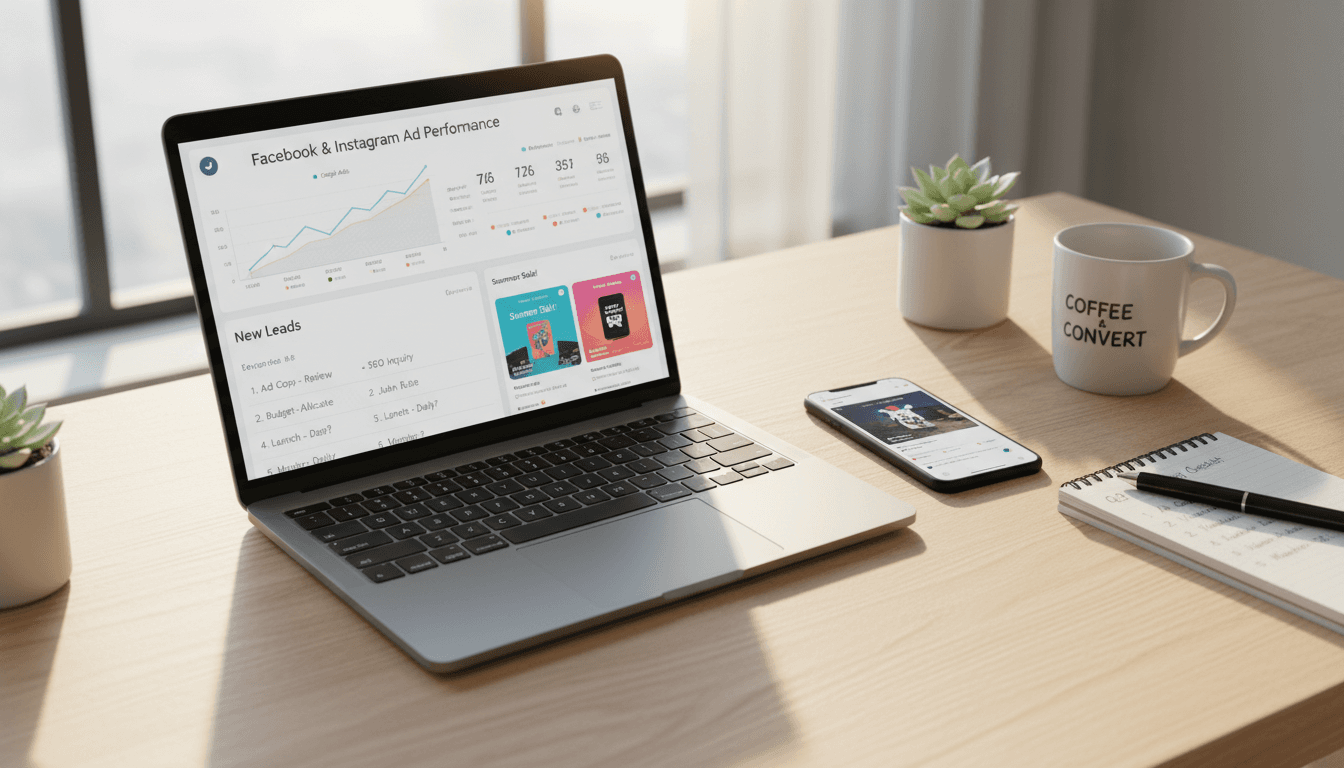
Small Business Social Media Ads: Costs + Tips (2026)
Paid social isn’t “optional” for most small businesses anymore. Not because organic is dead—but because organic is unpredictable. One week your Reels hit, the next week your best post reaches 3% of followers and disappears.
In 2026, the small businesses winning on social are the ones treating ads like a repeatable system, not a one-off promotion. That system looks a lot like marketing automation: you set the objective, target the right people, track performance, and let the results tell you what to do next.
This post is part of our Small Business Social Media USA series, and it’s written for lean teams (or teams of one) that need social media advertising to produce leads and sales without living inside Ads Manager all day.
What social media advertising actually buys you in 2026
Social media advertising is simple: you pay a platform (Facebook, Instagram, TikTok, LinkedIn, YouTube, and others) to show content to a specific audience. The key word is specific.
Here’s the practical difference small businesses feel immediately:
- Organic reach is controlled by the platform’s algorithm.
- Paid reach is controlled by you (your targeting, budget, and creative).
If you’re running a U.S. small business and your goal is predictable growth, paid social does three things better than almost any other channel:
1) It targets with a level of precision traditional ads can’t touch
You can target based on location, interests, behaviors, job titles (hello, LinkedIn), and retarget people who visited your website or engaged with your posts.
A simple example that works for local businesses:
- A dental office targets people within a 5–8 mile radius.
- The ad offers a “New Patient Special” (lead form or booking page).
- Retargeting ads follow up with anyone who clicked but didn’t book.
That’s not “being active on social.” That’s a controllable funnel.
2) It gives feedback fast—so you can adjust without wasting weeks
With paid social, you see signals quickly: click-through rate (CTR), cost per click, cost per lead, landing page conversion rate. You don’t have to wait a month to learn your message was wrong.
My opinion: small budgets demand faster learning, not fewer experiments. The trick is running small tests on purpose (more on that below).
3) It makes ROI measurable enough to automate decisions
Once tracking is set up, you can start answering questions that unlock growth:
- Which audience segment produces leads under $30?
- Which ad creative drives the highest conversion rate?
- Which platform generates sales, not just clicks?
When you can measure it, you can automate it—through rules, scheduled reporting, CRM syncing, and follow-up sequences.
How much do social media ads cost in 2026 (and how to budget)
Most brands can expect $4–$10 CPM in 2026 (cost per 1,000 impressions). CPMs have generally been rising as competition increases.
CPM is useful, but small businesses usually care more about:
- CPC (cost per click): what it costs to get traffic
- CPL (cost per lead): what it costs to capture a lead
- CPA (cost per acquisition): what it costs to get a purchase/booking
A realistic starting budget for lean teams
A clean way to budget is to fund two things:
- Testing budget (learning): prove what works
- Scaling budget (growth): push the winners
For many U.S. small businesses, a practical starting point looks like:
- $10–$30/day for 14 days to test (per platform or per campaign cluster)
- Then shift budget to the best performer(s)
If you’re spending $300 total and hoping for miracles, you’ll usually get noise. If you’re spending $300 with a testing plan, you’ll get data you can build on.
Quick budgeting math (so you don’t guess)
If your average lead-to-customer close rate is 20% (1 in 5 leads becomes a customer) and you can afford $150 per new customer, then your break-even CPL is:
- $150 × 20% = $30 per lead
That number becomes your north star for optimization.
Which platforms should small businesses prioritize in the U.S.?
Choose platforms based on where your customers actually spend attention—not where marketers argue online.
Pew Research Center platform usage data (U.S. adults) highlights why certain networks keep showing up in small business ad plans:
- YouTube has broad adoption across age groups (very high usage in 18–49)
- Instagram is especially strong for younger audiences
- Facebook remains a workhorse for broad reach, especially as age increases
The takeaway: YouTube + Meta (Facebook/Instagram) cover a lot of ground for many small businesses. Then you add TikTok, LinkedIn, Pinterest, Snapchat, Reddit, etc. when there’s a clear fit.
A simple platform pick framework (that saves time)
Use this three-question filter:
- Buyer intent: Does this platform support the kind of action you need (lead forms, bookings, purchases)?
- Creative reality: Can you produce the content style that performs there (short video, testimonials, product demos)?
- Follow-up path: Can you capture and nurture the lead (CRM, email/SMS automation, retargeting)?
If you can’t answer “yes” to #3, fix that before you spend more.
Ad formats that work (and what to run first)
Most platforms offer similar building blocks—single image, video, carousel, Stories-style placements—plus a few unique options.
If you’re a small business and you want traction fast, start with formats that are:
- fast to produce
- easy to test
- easy to iterate
Meta (Facebook + Instagram): start with Lead Ads and short video
Meta is still a strong choice for small business social media advertising because:
- targeting is mature
- creative testing is straightforward
- lead forms can reduce friction
Start here:
- Lead objective with an instant form (for quotes, consultations, waitlists)
- Reels/Stories placements with simple vertical video
- Retargeting website visitors and video viewers
TikTok: use “native-looking” video and Spark-style boosts
TikTok ads tend to perform better when they look like real posts, not commercials.
A proven pattern is boosting creator-style content alongside brand content. One example from TikTok’s own inspiration library: Good Protein used Spark Ads to amplify creator posts and saw 25% higher average watch time.
Small business translation: if you can’t hire creators, be your own creator. Shoot:
- product in use
- quick before/after
- customer reaction
- “3 mistakes people make when…” educational clips
LinkedIn: use documents and credibility for B2B lead gen
For B2B small businesses (IT services, accounting, commercial cleaning, staffing, agencies), LinkedIn is expensive—but often worth it when your average deal is high.
Formats that consistently make sense:
- Document ads (checklists, templates, short guides)
- Click-to-message when you have a tight offer and clear targeting
- Thought leader ads to amplify a founder’s best posts
YouTube: use Shorts for reach, in-stream for intent
YouTube gives you two strong lanes:
- Shorts ads for discovery (cheap learning, broad reach)
- In-stream for higher intent (tutorials, reviews, comparisons)
If you already have customer FAQs, you have a YouTube ad script.
How to run social ads like an automation system (not a hobby)
Most companies get this wrong. They run ads like a slot machine: new creative, new audience, new objective every week—then they call it “testing.”
A better approach: build a small, repeatable machine.
Step 1: Pick one objective and match every decision to it
Your objective isn’t “get more exposure.” It’s one of these:
- Leads (calls, form fills, bookings)
- Sales (ecommerce purchases)
- Traffic (only if you can convert later)
If the campaign is for leads, optimize for leads. Don’t optimize for clicks and hope.
Step 2: Let organic content choose your first ads
Boosting a proven organic post is often the fastest path to a decent ad. You’re using real-world feedback before you spend.
Here’s what I look for when choosing a post to turn into an ad:
- it earned comments (not just likes)
- it has a clear “problem → solution” message
- it already triggered DMs or inquiries
Step 3: Run A/B tests that answer one question at a time
A/B testing means one meaningful variable changes.
Good tests for small budgets:
- Creative test: same audience, two videos
- Offer test: same creative, “10% off” vs “free consult”
- Landing page test: same ad, two pages
Keep it simple. Testing doesn’t require ten ad sets—it requires clarity.
Step 4: Track the few metrics that actually move revenue
Match metrics to the funnel stage:
- Awareness: Reach, CPM, video completion rate
- Consideration: CTR, CPC, landing page view rate
- Conversion: CPL/CPA, conversion rate, cost per purchase
Snippet-worthy truth: CTR is a creative signal; CPL/CPA is a business signal.
Step 5: Automate follow-up so leads don’t rot
If your campaign goal is LEADS (and it is for a lot of small businesses), the lead capture is only half the job.
A simple automation stack looks like this:
- Lead form submission (Meta/LinkedIn) or website form
- CRM entry + tag (source platform, campaign)
- Instant email + SMS confirmation
- Sales task created (call within 5–15 minutes)
- 7–14 day nurture sequence (FAQs, proof, offer)
Speed matters. The businesses that respond first win more often than they should.
Three small-business plays you can run this month
These are straightforward campaigns that fit lean teams and can be managed alongside your normal content calendar.
1) The “local proof” lead campaign (service businesses)
- Creative: 15–25 second vertical video
- Message: one specific problem you solve + one local proof point
- CTA: lead form (“Get pricing” / “Check availability”)
Add retargeting to anyone who watched 50%+ of the video.
2) The “UGC-style” product campaign (ecommerce)
Borrow from the NARS approach: reduce friction wherever possible. If your platform supports it (or your setup is fast), test:
- direct checkout vs website checkout
- bundle vs single product
Even small differences can change CPA quickly.
3) The “document-to-lead” B2B campaign (LinkedIn)
- Offer: a 1–2 page checklist (no fluff)
- Form: LinkedIn lead gen
- Follow-up: automated email with the checklist + calendar link
This works because it’s useful even if they don’t buy yet.
Where this fits in your small business social strategy for 2026
Social media advertising works best when it supports your organic content—not when it replaces it. Organic builds trust. Paid makes sure the right people actually see the message.
If you’re building a small business social media strategy in the U.S. this year, aim for this operating rhythm:
- Post consistently (organic) to learn what resonates
- Promote winners (paid) to control reach
- Capture leads and automate follow-up (automation) so money doesn’t leak
The next step is deciding what you’ll optimize for first: more leads this month, or lower cost per lead next month. You can’t chase both at once.