Victoria’s 1GW/2.5GWh Portland Energy Park battery just cleared federal approval. Here’s why this project matters for the future of green technology.
Most companies chasing net zero still treat energy storage as an afterthought. Meanwhile, projects like Pacific Green’s new 2.5GWh Portland Energy Park in Victoria are quietly rewriting the rules of how clean power actually works in the real world.
This Australian battery energy storage system (BESS) just cleared its final federal environmental hurdle under the EPBC Act. On paper, that’s a regulatory milestone. In practice, it’s a blueprint for how green technology, smart regulation and serious capital come together to build a reliable, renewables-heavy grid.
Here’s the thing about Portland Energy Park: it’s not just “a big battery”. It’s a 1GW/2.5GWh flexible asset sitting next to a heavy industrial load, designed to stabilise the grid, back up renewables and keep energy-intensive industry viable in a decarbonising economy.
This article breaks down what that actually means and why it matters for businesses planning their own clean energy strategy.
What Portland Energy Park Actually Is – And Why It Matters
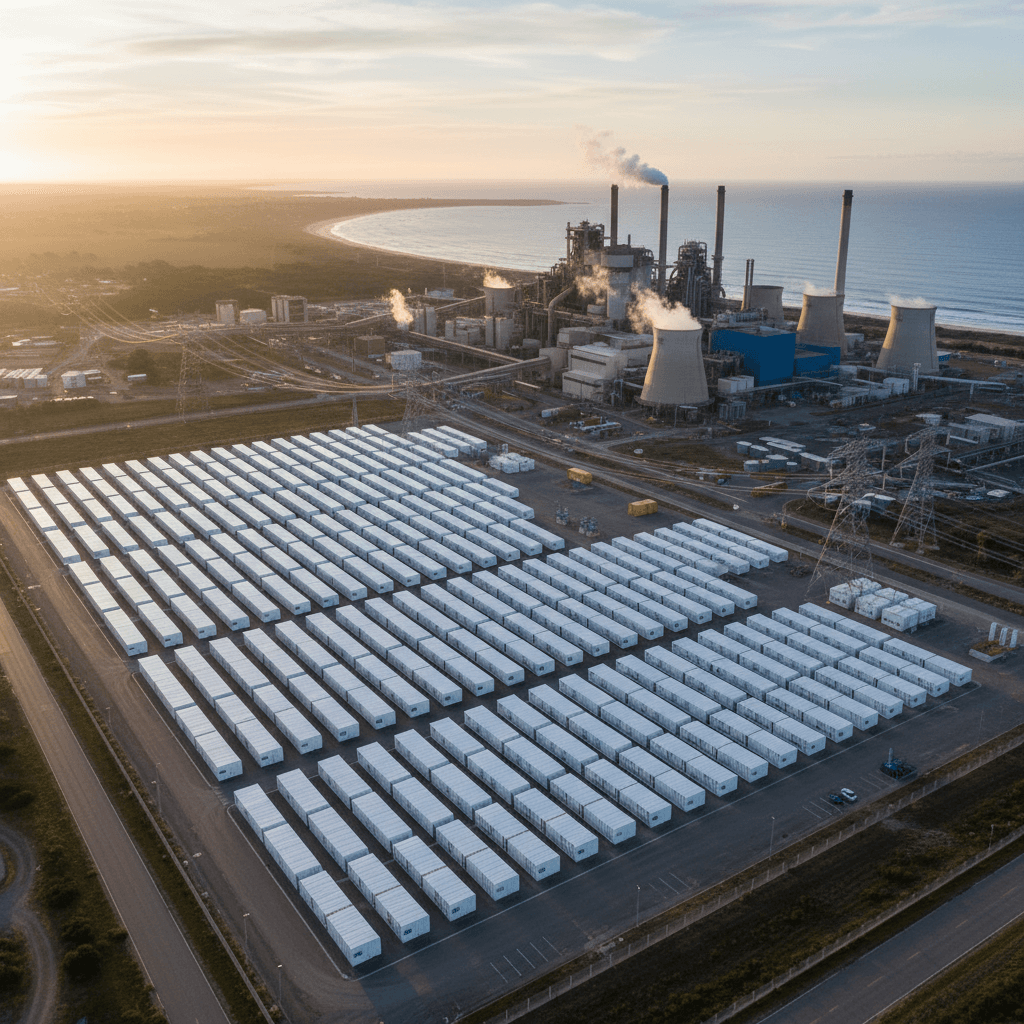
Pacific Green’s Portland Energy Park will be Victoria’s largest battery energy storage system at 1GW/2.5GWh, built on around 40 hectares of industrial land next to the Portland Aluminium Smelter.
At a high level, the project is:
- 1,000MW / 2,500MWh capacity
- Four 250MW “parks” developed in phases
- ~200 LFP battery containers with fire suppression and thermal management
- AU$1.3 billion total project cost
- Connected to the National Electricity Market (NEM) via an on-site terminal
- Phased build over 36 months, with the first 250MW online by Q3 2026
This matters because large-scale batteries are now the glue between intermittent renewables and 24/7 demand. Solar and wind get the headlines, but storage is what turns them into firm, dispatchable power that heavy industry, data centres and cities can actually rely on.
For the Green Technology series, Portland is a textbook example of how smart energy storage, supported by regulation and capital, turns climate ambition into operational reality.
The Environmental Green Light: Why EPBC Approval Is A Big Signal
The EPBC Act approval is more than a legal checkbox; it’s a signal that grid-scale energy storage is now seen as compatible with national environmental priorities.
Under the Environment Protection and Biodiversity Conservation (EPBC) Act, the project was assessed for its impacts on:
- Threatened species
- Ecological communities
- Matters of national environmental significance
The approval comes with conditions to manage construction and operational impacts. The Victorian government had already expedited the project through its Development Facilitation Program; the federal sign-off is the last major environmental gate.
What this tells us about green technology projects
If you’re planning or investing in green infrastructure, there are a few clear lessons:
-
Storage is now seen as enabling, not threatening, biodiversity
Unlike fossil projects, BESS assets are increasingly recognised as helping reduce broader environmental harm by cutting emissions and smoothing variable renewables. -
Regulators move faster when the climate benefit is obvious
The Victorian fast-track plus federal approval shows that well-structured, low-emission projects with good site selection (industrial land, near existing infrastructure) can move quickly. -
Good siting is half the battle
Building on industrial-zoned land next to a major smelter and existing transmission keeps greenfield impacts low while maximising system value.
For businesses, the message is simple: if your green technology plans are aligned with grid needs, use existing infrastructure, and proactively manage environmental impacts, regulators are far more likely to work with you than against you.
Inside the Tech: Why LFP Batteries and “Energy Parks” Make Sense
The Portland battery will use lithium iron phosphate (LFP) technology, housed in around 200 containerised units.
That choice matters:
- Safety – LFP has a more stable chemistry and lower fire risk than some nickel-based lithium chemistries.
- Longevity – Better cycle life supports intensive charge-discharge use for grid services.
- Sustainability – Lower cobalt content reduces supply chain and ethical concerns.
Each container includes advanced fire suppression and thermal management, which isn’t just a technical detail; it’s fundamental to community acceptance and insurer confidence.
The “Energy Storage Park” model
Pacific Green brands projects like Portland as Energy Storage Parks – large-scale, standalone storage assets optimised for wholesale markets and grid services rather than being tied to a single solar or wind farm.
That model is powerful because it:
- Can charge from multiple renewable sources across the NEM
- Provides frequency control, capacity and arbitrage where they’re most valuable
- Allows phased build-out to match market conditions
For Portland:
- The first 250MW comes online by Q3 2026
- Additional 250MW blocks are added every six months
This phased approach gives investors and operators options. If market prices, regulation or technology shift, the later stages can be adapted, not locked in.
For companies planning their own clean energy stack (on-site solar, PPAs, batteries), this mirrors a smart strategy: start with a scalable, modular design, then expand once the commercial model is proven.
Why Co-Locating Storage With Heavy Industry Is Smart
Putting 2.5GWh of storage next to the Portland Aluminium Smelter isn’t accidental. It’s a strategic move that shows where green technology is heading: clean energy solutions tailored to large, inflexible loads.
Smelters, refineries, and big industrial plants need:
- Very high, often constant power demand
- Tight voltage and frequency stability
- Protection from grid disturbances
A 1GW battery sitting next door can:
- Provide ultra-fast response to grid frequency events
- Support local voltage and stability
- Reduce curtailment of nearby renewables by soaking up excess generation
- Lower exposure to peak prices by arbitraging cheap and expensive hours
In plain terms, it helps keep the smelter running reliably while the grid shifts from fossil fuels to wind and solar.
What this means for other energy-intensive businesses
If you run or supply to energy-intensive operations—manufacturing, mining, data centres, cold storage—Portland’s design points to a clear direction of travel:
- Storage will move closer to load: Not just big batteries in the desert, but targeted assets at or near industrial hubs.
- Grid services will be local and digital: AI-driven optimisation, advanced forecasting and dynamic dispatch will become standard.
- Contracts will get more sophisticated: Tolling deals, capacity arrangements and performance-based contracts will replace simple “buy power, pay bill” models.
Pacific Green is already doing this at portfolio level, with:
- A 7GWh Australian pipeline (out of 11GWh globally)
- Its Limestone Coast BESS in South Australia under construction
- A 1.5GWh tolling deal with Zen Energy across three projects
- A 5GWh equipment MoU with Trina Storage between 2026–2028
That’s not just project development; it’s an emerging operating model for how storage-backed clean power will be bought and sold.
How This Fits Into Victoria’s Rapid Storage Build-Out
Victoria has already become the first Australian state to exceed 1GW of BESS charging capacity, and Portland Energy Park pushes that momentum further.
Zooming out, the state is doing three things right:
-
Backing big storage early
Rather than waiting for reliability problems, Victoria is building capacity ahead of coal retirements. -
Using policy to unblock projects
The Development Facilitation Program is actively accelerating batteries that support the energy transition. -
Positioning storage where it does the most good
Co-locating near industrial load and using existing transmission infrastructure keeps costs and environmental impacts down.
For green technology as a whole, this reinforces a central point: storage is no longer a nice-to-have add-on. It’s embedded in planning, regulation and investment strategy.
If your organisation is:
- Thinking about long-term PPAs
- Considering behind-the-meter storage
- Evaluating participation in flexibility or capacity markets
…Victoria’s approach is a preview of where many advanced grids are heading between now and 2030.
Practical Takeaways For Businesses Watching This Space
You don’t need a 1GW battery in your backyard to learn from Portland Energy Park. There are concrete steps any serious organisation can take today.
1. Treat storage as a core part of your energy strategy
If you’re planning solar, wind or green PPAs without storage, you’re building a house without a roof.
Consider:
- Hybrid contracts that include both renewable generation and access to storage
- Virtual storage products from retailers or aggregators
- Behind-the-meter BESS for peak shaving and resilience at key sites
2. Look for projects with strong siting and regulatory alignment
Projects that sit on industrial land, plug into existing transmission and clear environmental assessments quickly are usually lower risk. When assessing partners or investments, ask:
- How is land use optimised?
- What stage are environmental and planning approvals at?
- How will the asset interact with local communities and ecosystems?
3. Prioritise safe, proven technology
LFP batteries with robust fire suppression, thermal control and monitoring are rapidly becoming the standard for grid-scale assets. For corporate buyers, that improves bankability and insurability.
4. Think in phases, not one-off bets
Portland’s 36‑month phased build is a good model:
- Start with a viable first phase
- Learn from performance data
- Expand as markets and regulation evolve
The same logic applies to on-site renewables, microgrids and fleet electrification.
Where Green Technology Goes Next
Portland Energy Park shows what mature green technology looks like: large-scale, AI-optimised storage sitting where it adds maximum value, backed by solid regulation and serious capital.
As we head into 2026, three trends are clear:
- Grid-scale batteries will keep getting bigger and smarter
- Heavy industry will increasingly rely on nearby storage to stay competitive in a decarbonised grid
- Approval pathways for well-sited clean infrastructure will keep tightening—but also keep getting faster for projects that genuinely reduce emissions and respect biodiversity
If your organisation wants to stay ahead, the question isn’t whether to engage with energy storage and green technology, but how quickly you can build it into your strategy.
The reality? Projects like Portland Energy Park aren’t outliers anymore. They’re the new normal for serious energy systems—and the benchmark your future plans will be measured against.