Europe’s tax rules still favor high‑carbon flights and cruises over low‑emission rail. Here’s how closing the VAT gap can drive greener travel—and where AI fits in.
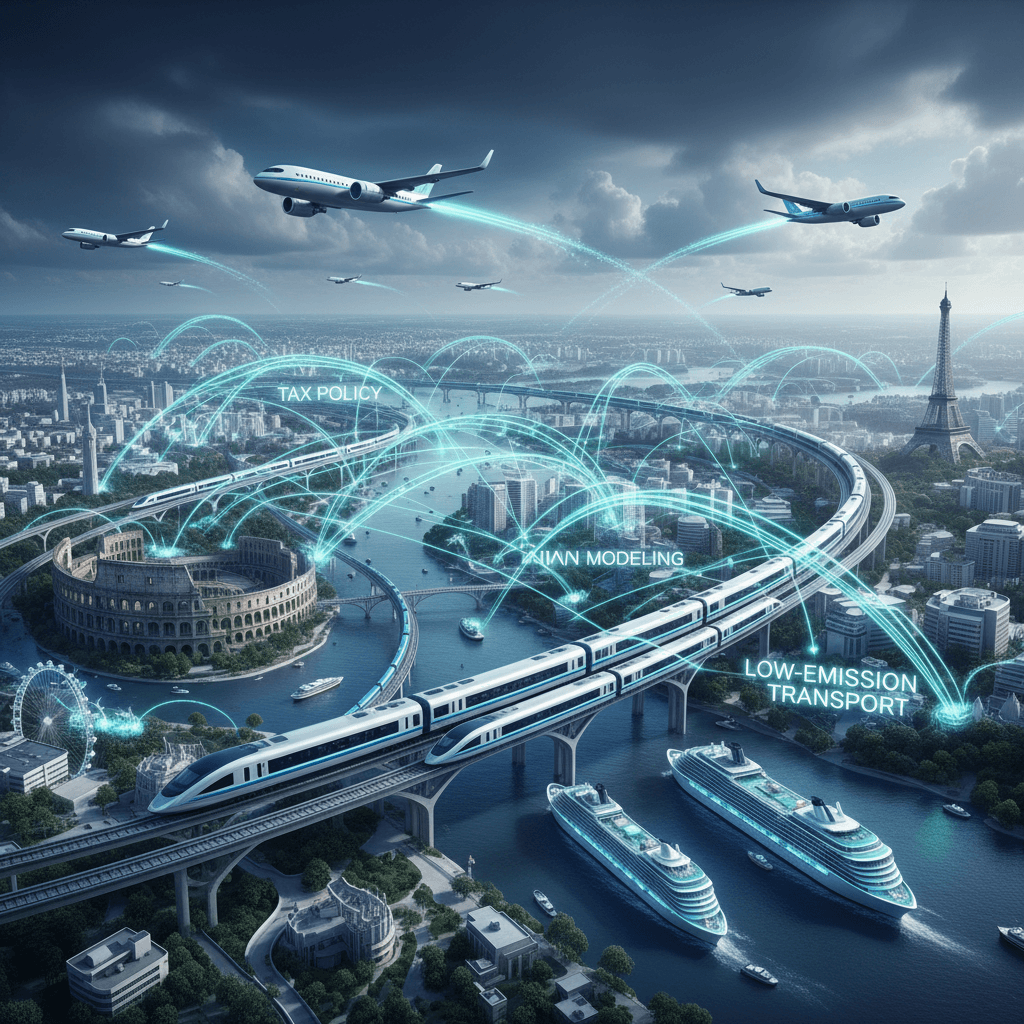
VAT, Long‑Distance Travel & Climate: The Hidden Gap
Aviation fuel used on international routes in Europe is taxed at €0 for VAT and energy duty in most cases, even though aviation is one of the most carbon‑intensive ways to travel. Rail passengers, on the other hand, regularly pay VAT on tickets and face higher track access charges.
Most companies planning their sustainability strategy never look at this tax gap. They talk about “green travel policies” while their budgets keep rewarding the dirtiest modes. This matters because VAT rules in long‑distance passenger transport quietly push demand toward planes and cruise ships and away from low‑carbon options like rail and electric coaches.
This article unpacks what’s happening with VAT on long‑distance passenger transport in Europe, why it’s a climate problem, and how smarter, tech‑driven policy can fix it. As part of our Green Technology series, we’ll also look at how AI and data can help governments and businesses model the impact of reform and build cleaner, fairer travel systems.
What the VAT gap in European transport actually is
The core problem is simple: carbon‑intensive modes of transport are often taxed less than cleaner ones.
In the EU today:
- International aviation tickets are often exempt from VAT.
- Aviation fuel for international flights is typically exempt from energy taxation and VAT.
- Shipping, especially international passenger shipping and cruises, also benefits from broad VAT and fuel tax exemptions.
- Rail and long‑distance buses/coaches usually pay VAT on tickets and taxes on energy, and rail operators pay additional track access charges.
So a high‑emission flight from Paris to Rome can be taxed less than a lower‑emission train journey on the same route. That’s the VAT gap: a structural tax preference for high‑carbon transport.
From a climate perspective, this is upside down. Per passenger‑kilometre:
- Long‑haul flights emit several times more CO₂ than high‑speed rail.
- Cruise ships have hefty CO₂, NOx, SOx, and particulate emissions per passenger.
- Electric trains powered by renewables often have near‑zero direct emissions.
Yet the tax system doesn’t reward low‑carbon choices. It often does the opposite.
Why the VAT gap is a climate and business problem
Distorted prices mean distorted choices
When tickets for high‑emission modes are artificially cheap because of tax exemptions, consumer behavior follows the price signal. That shows up in three ways:
- Leisure travel: Weekend city breaks by plane stay cheaper than they should be, compared with rail.
- Business travel: Corporate travel platforms surface flights as “cheapest and fastest,” because the tax‑free fuel and ticket exemptions are already baked into the prices.
- Tourism patterns: Cruise packages and short‑haul flights undercut lower‑emission options, shaping where and how people travel.
This is the opposite of what the EU needs to meet its 2030 and 2050 climate targets. If the real environmental cost of flying and cruising was reflected in final prices, demand would shift materially toward trains and cleaner coaches.
Lost public revenue for green investment
There’s also a straight fiscal story. Exemptions on aviation and shipping mean billions in forgone tax revenue across the EU each year. That’s money that could fund:
- Rail electrification and new high‑speed lines
- Upgrades to night trains and cross‑border services
- Charging infrastructure for electric buses and coaches
- Digital systems and AI tools for smart scheduling and traffic management
Instead, public budgets are effectively subsidizing high‑carbon mobility and then scrambling to find funds for green infrastructure.
Unfair competition for cleaner operators
Rail and coach operators operate under a different tax reality:
- VAT on tickets
- Taxes on energy (electricity or fuel)
- Track access and infrastructure charges
Aviation and shipping often don’t face equivalent burdens on their core energy use. That makes it harder for low‑carbon options to compete, even when they’re more efficient and socially beneficial.
This distorted playing field slows down green technology adoption. If rail and coach operators had better margins, they could invest faster in:
- New electric rolling stock
- AI‑based timetabling and capacity optimization
- Smarter dynamic pricing that fills seats and cuts per‑passenger emissions
Where AI and green technology fit into VAT reform
VAT rules sound like pure policy, but green technology and AI can make or break how those rules are designed and implemented.
1. Modelling climate and revenue impacts
Governments and the European Commission need to know:
- How much would emissions fall if international flights paid standard VAT?
- What happens to demand if rail VAT is cut to zero on cross‑border trips?
- How much extra revenue could go into climate infrastructure funds?
This is where AI‑driven modelling earns its keep. Modern tools can:
- Ingest historic ticket sales, flight and rail timetables, load factors, and fare structures.
- Use machine learning to estimate price elasticity for different traveller segments.
- Run scenarios: “Apply 15% VAT on short‑haul flights, cut VAT on cross‑border rail to 0%, what’s the 10‑year impact on CO₂ and revenue?”
Instead of rough guesses, policymakers get quantified forecasts with clear confidence ranges. That reduces political risk and makes serious reform more realistic.
2. Smart allocation of new green revenues
If VAT exemptions on aviation and shipping are tightened, governments gain new revenue streams. The smart move is to earmark a portion for green transport technology and let data guide the spending:
- Use AI to identify rail corridors where upgrades yield the biggest modal shift from air to rail.
- Prioritize electrification where carbon intensity of grid electricity is already low.
- Fund R&D in sustainable aviation fuels (SAF) and green shipping only where lifecycle analysis supports real climate benefits.
The same modelling tools that build the case for VAT reform can then direct the resulting funds toward the most effective climate outcomes.
3. Helping businesses respond to new price signals
Once the VAT gap starts to close, companies need tools to adapt:
- Travel platforms can use AI to default corporate users to low‑emission routes when prices converge (e.g., rail instead of short‑haul flights under six hours).
- Emissions‑aware booking engines can show “true cost” comparisons that include carbon pricing and VAT.
- Corporate travel policies can integrate automated nudges: “This meeting is under 500 km. Company policy recommends rail. Estimated emissions reduction: 72%.”
This is where green technology becomes a lead‑generation opportunity. If you provide AI‑based travel management or carbon accounting, VAT reform strengthens the business case for your tools overnight.
How VAT reform can be designed to support climate goals
VAT reform can go wrong if it’s done bluntly. The good news is that the levers are fairly clear.
Equal treatment of competing modes
Where trains, planes, ships, and coaches compete on the same corridor, tax rules should not favor the highest‑emission option.
That typically means:
- Applying standard VAT rates to international aviation tickets within and from the EU.
- Removing fuel tax exemptions for aviation and shipping, with smart phase‑ins to allow operators to adapt.
- Lowering or zero‑rating VAT on long‑distance rail and electric coach services, especially on cross‑border routes.
The climate test is straightforward: if two modes compete over similar distances, the cleaner one shouldn’t be paying more tax per passenger‑kilometre than the dirtier one.
Avoiding social backlash
Raising taxes on popular travel modes can trigger political pushback if it’s seen as elitist or punitive. A few design principles help:
- Start with business and premium travel segments where ability to pay is higher.
- Ring‑fence part of the new revenue for visible improvements in public transport: new night train routes, faster regional connections, better digital ticketing.
- Offer targeted support for isolated regions or islands where there’s genuinely no viable alternative to air or sea travel yet.
Again, AI can support this by segmenting traveller groups, forecasting impacts on different income brackets, and identifying where extra support is needed.
Aligning VAT with broader EU climate policy
VAT is just one piece of the wider European climate architecture (ETS, FuelEU Maritime, ReFuelEU Aviation, national carbon taxes). The smart move is to make sure VAT pushes in the same direction:
- High‑emission modes see gradually higher total costs through carbon pricing and VAT.
- Low‑emission modes see reduced relative costs and better infrastructure.
- Revenues from both carbon pricing and VAT support the same green technology priorities.
When that alignment is clear, businesses get a stable signal: decarbonize travel offerings now, or pay more every year.
What businesses should do as the VAT rules evolve
The policy debate may feel abstract, but for companies running travel programs or transport services, this is a practical strategy question for 2025 and beyond.
For corporate travel & procurement teams
Prepare for a landscape where planes and cruises get pricier relative to rail and low‑carbon options. Actions that make sense now:
- Audit your current travel emissions using a robust, tech‑driven tool.
- Model budget impacts of potential VAT changes: “If short‑haul flights cost 10–20% more, what happens to our travel spend?”
- Start shifting your travel policy toward rail‑first for sub‑800 km trips where feasible.
- Use AI‑enabled booking tools that can optimize for both cost and emissions, not cost alone.
If you’re ahead of the policy curve, future VAT changes won’t disrupt you—they’ll just make your already‑cleaner choices even more cost‑competitive.
For transport operators and mobility tech providers
If you run trains, coaches, shared mobility, or travel tech, VAT reform is a growth signal.
- Build scenarios where aviation and shipping lose part of their tax advantage and identify corridors where rail or coach can capture demand.
- Invest in digital experience: seamless booking, real‑time information, dynamic pricing. When taxpayers are finally treated fairly, user experience will decide who wins.
- If you’re in travel tech or carbon accounting, refine your algorithms and UX to highlight how tax and carbon interact at the trip level.
There’s a clear opportunity here: products that combine green technology, AI, and smart travel choices are exactly what companies will look for once policy shifts.
The bigger picture: tax, tech, and a fairer transport system
The reality is simpler than it looks: Europe can’t meet its climate goals while keeping high‑carbon travel artificially cheap through VAT and fuel tax exemptions. Closing the VAT gap is one of the most direct ways to steer demand toward cleaner modes.
What’s changed in the last few years is that green technology and AI give us the tools to do this intelligently. We can model impacts, target support, and design policies that are fair, effective, and politically durable.
If your organization depends on long‑distance travel—whether you’re moving people, selling trips, or managing corporate travel spend—now’s the time to rethink your playbook. Align with where tax and climate policy are clearly heading, not where they’ve been stuck for decades.
And if you’re building AI‑driven tools for cleaner mobility, this is your moment. The VAT gap won’t survive the next phase of European climate policy. The question is who’s ready to help travelers, companies, and governments navigate what comes next.