New York’s congestion pricing cut millions of car trips, freed $15B for transit and built a greener city. Here’s how unlikely alliances made it work.
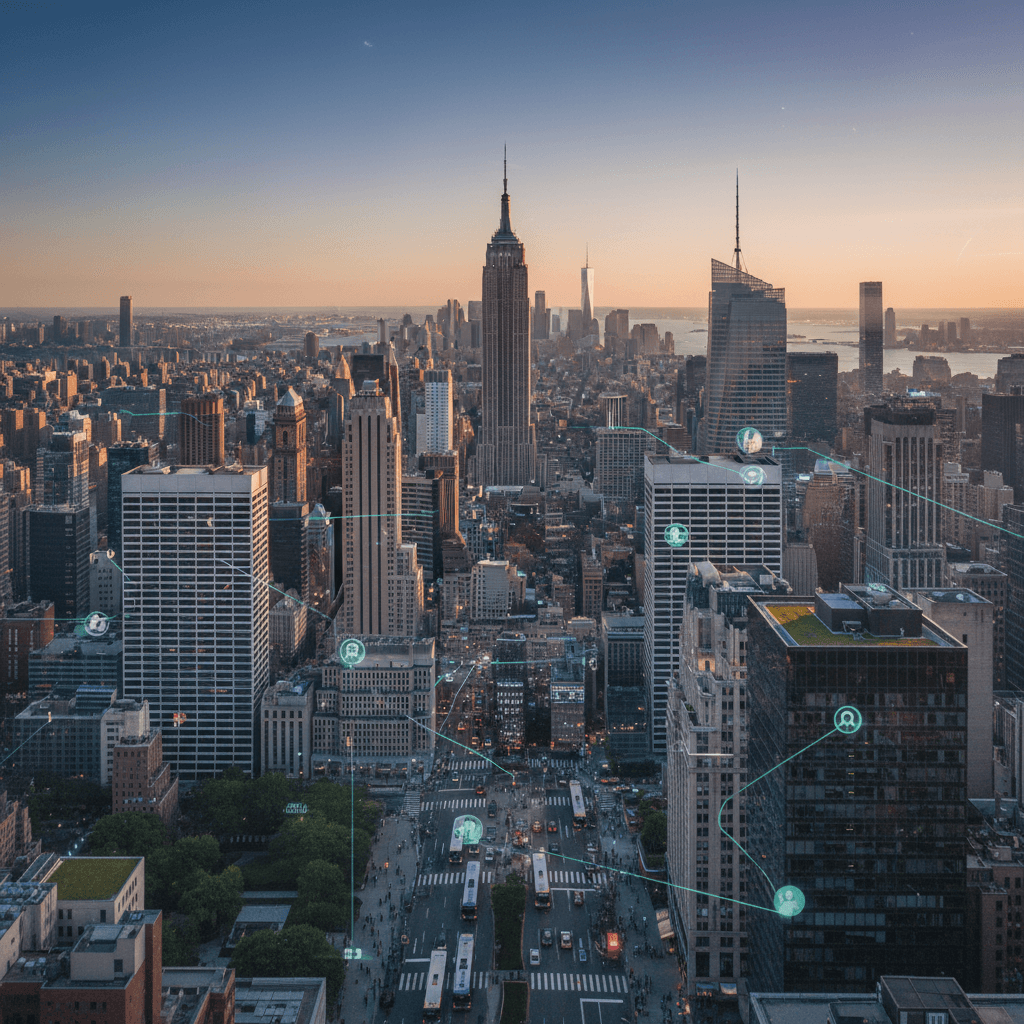
New York didn’t just cut traffic — it cut 2.2 million vehicle trips a month into Manhattan’s core and freed up $15 billion for cleaner, faster transit in under a year.
That’s not a transport tweak. That’s a green technology victory, powered as much by politics and coalitions as by sensors, data platforms and tolling gantries.
This matters because cities everywhere are choking on congestion, failing climate targets and watching public transit struggle for funding. Yet New York shows that if you align business, riders, environmental advocates and tech-minded agencies around a shared goal, congestion pricing can become a practical engine for cleaner air, stronger transit and real economic growth.
In this post, I’ll break down how New York’s unlikely alliances made congestion pricing work, what the early results really look like, and how other cities — and the companies building smart mobility and green technology — can use the same playbook.
Congestion pricing as green infrastructure, not just a toll
Congestion pricing works best when cities treat it as core green infrastructure, not a revenue grab.
New York framed its congestion relief program as a way to reduce traffic in Manhattan’s busiest area, speed up people and goods, and fund a long-term shift to sustainable transit. That framing was critical: the program wasn’t about punishing drivers; it was about buying a better system for everyone.
From a green technology perspective, congestion pricing in New York sits on top of a stack of tools:
- Roadside and in-vehicle sensors to detect vehicles
- Automated number plate recognition (ANPR) cameras
- Real-time data platforms to calculate, apply and reconcile charges
- Analytics engines to model emissions, traffic flows and revenue
- Payment and enforcement systems that work at scale
When all of that is pointed at clear sustainability goals, you get exactly what New York is now seeing:
- A monthly average of 2.2 million fewer vehicles entering the congestion zone
- Traffic speeds nearly 5% faster, including for buses
- Crashes causing injuries down around 14%
- A pipeline of $15 billion for transit upgrades and green infrastructure
The key shift? Treat congestion pricing as a platform for climate, equity and economic outcomes — not as a narrow traffic tool.
The unlikely coalitions that made it possible
Most cities stall on congestion pricing because the politics turn toxic: drivers vs. transit riders, city vs. suburbs, business vs. environment.
New York broke that stalemate by building a coalition that looked awkward on paper and powerful in practice.
Who was in the room?
Three groups tell the story:
- Transit riders and advocates – led by organizations like the Permanent Citizens Advisory Committee to the MTA, pushing for a stable funding source to fix an aging system
- Construction and business groups – like the New York Building Congress, seeing congestion relief as a trigger for more projects, more jobs and a more attractive city for investment
- Industry and manufacturers – including railcar makers such as Alstom, whose business depends on steady transit investment and a skilled, local clean-tech workforce
These are not natural allies. Yet they aligned around one shared premise: “Transit is the backbone of the region’s economy.” When transit works, everyone benefits — drivers, freight, retail, tourism, offices, and the entire green technology ecosystem.
Why this coalition worked
Here’s what New York’s experience suggests for other cities:
- Lead with shared wins, not ideology. The message wasn’t “cars are bad.” It was “less gridlock means faster deliveries, more reliable commutes and cleaner air.”
- Bring the private sector in early. Construction firms, technology vendors and manufacturers had a direct stake: more capital projects, more procurement, more innovation.
- Center lived experience. Express bus riders from Staten Island and New Jersey, and commuters from subway deserts in Brooklyn and Queens, became some of the clearest proof points when their trips through tunnels got dramatically faster.
If you’re working on green mobility tech — from AI traffic optimization to fleet electrification — this is the lesson: policy only scales your solution when unusual partners are willing to stand on the same stage.
What changed on the streets: data from New York’s first year
Congestion pricing is controversial before launch and boringly effective after. New York is fitting that pattern.
Economic and mobility impacts
Within the first months of the program:
- Business improvement districts inside the zone saw 1.5 million more visitors in the first month compared to the same period the previous year.
- Traffic speeds improved by about 5%, which sounds modest but compounds across thousands of trips a day for deliveries, service vehicles and commuters.
- The region set itself on track to generate $15 billion for long-deferred infrastructure and transit improvements.
Those numbers matter for anyone building or buying green technology:
- Faster trips mean lower fuel use and emissions even before fleets fully electrify.
- More predictable travel times make logistics optimization and AI routing tools far more valuable.
- Stable, dedicated funding lets agencies commit to long-term clean tech investments — new rolling stock, energy-efficient stations, advanced signaling and digital twins.
Environmental and transit outcomes
On the climate side, early outcomes are already visible:
- 2.2 million fewer vehicles per month entering the zone through October
- Lower emissions in the central business district
- A rebound in transit ridership, creating a positive feedback loop: better service → more riders → more support for further investment
Outside the zone, the expected horror story — that traffic would simply flood the boundaries — didn’t materialize on the scale critics predicted. Instead:
- Express buses from Staten Island, New Jersey and outer-borough neighborhoods started moving through tunnels significantly faster
- Drivers who still choose to enter the zone generally experience shorter, more predictable trips
- Yellow cabs and for-hire vehicles reported higher ridership, as a faster street network makes them more attractive again
From a green technology series perspective, congestion pricing is doing exactly what we want urban systems to do: use real-time data and price signals to nudge millions of daily decisions toward lower-carbon options.
How other cities can adapt New York’s playbook
Cities like Toronto, San Francisco, Los Angeles, Chicago and Boston have all flirted with congestion pricing. Most get stuck at the same point: public pushback and political fear.
New York’s experience offers a fairly blunt roadmap for moving past that.
1. Start with coalition-building, not technology procurement
The reality is simple: congestion pricing is a political project built on a technical platform, not the other way around.
If you’re a city leader or a solutions provider, the first phase isn’t hardware. It’s:
- Mapping who stands to gain: freight, retail, real estate, transit riders, cyclists, green tech firms
- Identifying credible messengers in each group
- Co-creating a shared story about less gridlock, stronger transit and cleaner air
The earlier this coalition-building starts, the smoother the implementation phase becomes.
2. Expect skepticism — and plan for the opinion swing
Before New York’s program went live, only about 32% of city residents supported congestion relief. Within three months of implementation, support climbed to around 42%.
London and Stockholm saw the same curve: intense opposition before launch, majority support once residents could see quieter streets, faster buses and cleaner air.
That tells you two things:
- You won’t win the argument purely with models and forecasts.
- You can win hearts once real-world data starts flowing.
Cities should design their green mobility communications around this arc:
- Be transparent about trade-offs and unknowns before launch.
- Commit publicly to monitoring and publishing data — on emissions, speeds, safety and revenue use.
- Schedule visible, early wins (like bus priority upgrades or safety fixes) funded by the new revenue.
3. Treat congestion pricing as part of a bigger green tech stack
Congestion pricing works best when it’s integrated into a broader smart city and green technology strategy.
That might include:
- AI-driven traffic signal optimization outside the zone to reduce any boundary effects
- Electrification of bus fleets and deployment of charging infrastructure funded by toll revenue
- Open data portals so startups and researchers can build tools on top of real-time traffic and transit data
- Dynamic pricing pilots that adjust tolls by time of day or emissions profile
For vendors and innovators, the message is clear: congestion pricing isn’t the end product — it’s a stable funding mechanism and data source that can underwrite the rest of your climate and mobility roadmap.
Turning congestion relief into a green growth engine
When you zoom out, New York’s congestion pricing story isn’t just about fewer cars in Manhattan. It’s about how cities pay for the green transition without waiting for unpredictable state or federal budgets.
Here’s what I’ve found separates the cities that move from endless studies to actual implementation:
- They treat transit as economic infrastructure, not a social service.
- They use pricing and data as everyday tools, not political taboos.
- They’re willing to build “strange bedfellow” coalitions: unions and tech firms, environmental NGOs and construction companies, neighborhood groups and freight carriers.
If you’re working in green technology, there’s a clear opening here:
- Help cities measure the impacts of congestion relief — emissions, safety, economic activity
- Offer modular solutions that plug into tolling and data platforms
- Partner with advocacy coalitions, not just agencies, so the case for your tech is rooted in real public benefit
New York’s early results show that entrenched urban problems — gridlock, dirty air, underfunded transit — are not immovable. They’re policy and coordination problems. And those are solvable.
As more North American cities revisit congestion pricing in 2026 and beyond, the question won’t just be, “Can we copy New York’s toll zone?” It’ll be, “Can we build the same kind of strange alliances, and are we ready to use pricing and data as serious climate tools?”
That’s where the next wave of green technology leaders will either help shape the agenda — or watch from the sidelines.