South Australia’s 2,160MWh Northern Battery shows how grid-forming, long-duration storage can replace coal, stabilise renewables, and unlock real business value.
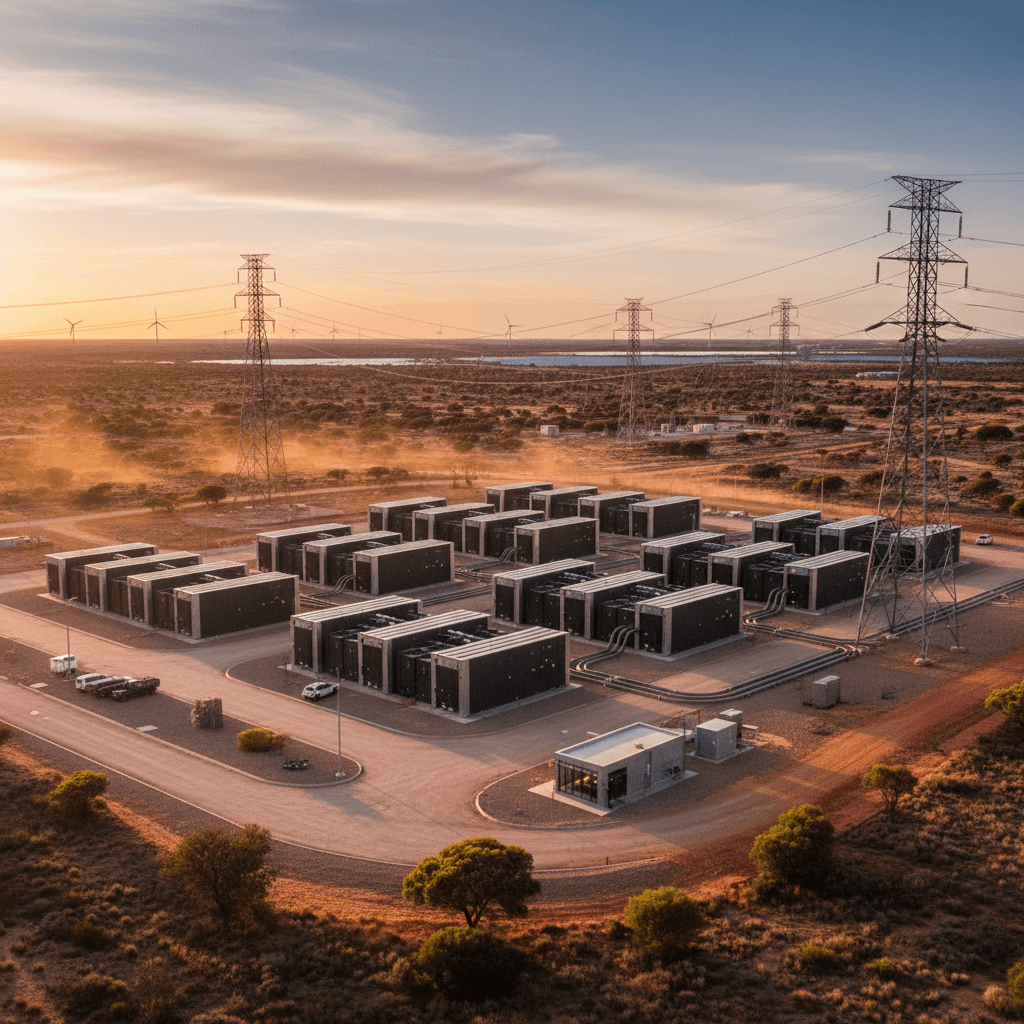
From Coal Stack to Smart Storage: Why the Northern Battery Matters
A single project in Port Augusta will be able to store 2,160MWh of energy—enough to power hundreds of thousands of homes for hours. And it’s being built on the site of a shut-down coal plant.
Most companies think “more renewables” just means more solar and wind farms. The reality? The next decade is going to be shaped less by new generation and far more by intelligent energy storage, especially long-duration batteries that can stabilise the grid without fossil fuels.
Ampyr Australia’s acquisition of the 270MW Northern Battery project in South Australia is a textbook example of where green technology is heading: grid-forming batteries, AI-driven control, and repurposed fossil infrastructure all bundled into one asset that actually makes money in the National Electricity Market.
This article breaks down why the Northern Battery is such a big deal, what grid-forming battery storage really does, and how projects like this open the door for data centres, heavy industry, and communities that want reliable, decarbonised power.
What Makes the Northern Battery So Significant?
The Northern Battery is not just “another big battery” in Australia; it ticks three boxes that matter for anyone serious about green technology and clean energy investment.
First, the scale and duration are serious.
- Capacity: 270MW
- Storage duration: up to 8 hours
- Total storage: 2,160MWh
Most early batteries were 1–2 hours long, optimised for short bursts—frequency control, arbitrage, and fast-response services. An 8-hour, grid-scale battery is built for a different job: replacing the operational role of fossil fuel plants, particularly coal and gas peakers.
Second, it’s built on a retired coal site.
The Northern Battery will sit on the site of the former 560MW Northern Power Station in Port Augusta. That repowering strategy matters because it:
- Reuses existing substation and grid connection infrastructure
- Reduces community and environmental disturbance
- Turns a symbol of high-emissions generation into a net-zero asset
This is the kind of project communities can actually get behind: you’re not just shutting something down, you’re giving the site a future.
Third, it’s grid-forming, not just grid-following.
Here’s the thing about most batteries: they follow the grid. They respond quickly, but they still depend on synchronous generators like coal, gas, or big hydro to define the “heartbeat” of the system. A grid-forming BESS goes a step further and can actually set that heartbeat.
That’s why the Northern Battery is being framed as essential infrastructure for a net-zero system, not just an add-on to renewables.
Grid-Forming BESS: The Backbone of Renewable Grids
The Northern Battery’s grid-forming technology is the real upgrade, and it changes what a battery can do for system security.
What is grid-forming in plain language?
A grid-forming battery energy storage system (BESS) uses advanced inverters that behave more like traditional synchronous generators. Instead of simply following existing grid voltage and frequency, they:
- Create their own stable voltage waveform reference
- Provide inertia-like response, helping to stabilise frequency
- Operate in both grid-connected and islanded modes
In practical terms, a grid-forming BESS can:
- Support black-start and recovery after outages
- Keep parts of the grid running even if large generators trip
- Allow higher penetration of wind and solar without risking instability
So when South Australia—already famous for being pushed to very high levels of renewable penetration—leans into grid-forming storage, it’s not just chasing climate targets. It’s buying control and resilience.
Why does this matter for a renewables-dominated system?
As coal plants exit, two things disappear with them:
- Inertia – the physical spinning mass that resists rapid changes in frequency
- System strength – the grid’s ability to handle disturbances without collapsing
Grid-forming batteries like the Northern Battery are designed to fill both gaps without burning fuel. They become the “virtual backbone” of the grid.
For businesses, that translates directly into:
- Fewer outages and extreme price events
- More predictable operating environments for electrified processes and data centres
- Greater confidence to commit to renewable power purchase agreements (PPAs) and electrification projects
Other Australian projects—like Neoen’s Western Downs and Blyth grid-forming BESS—are already proving the concept. The Northern Battery scales that logic into long-duration storage on a former coal site, which is exactly the template other regions need.
How Smart Storage Turns Green Technology into a Business Advantage
A 2,160MWh battery isn’t just a piece of infrastructure; it’s a flexible energy asset that can be tuned and optimised with advanced software and AI. That’s where the wider green technology story connects.
Intelligent storage and market-aligned dispatch
GGE and Ampyr describe the Northern Battery as combining:
- Grid-forming technology
- Intelligent storage
- Market-aligned dispatch
Translated: this isn’t a static battery; it’s a dynamic trading and system support platform.
Here’s how a smart BESS creates value while supporting decarbonisation:
- Charge when renewables are abundant and cheap (solar-heavy midday, windy nights)
- Discharge during peaks when demand is high and fossil generators typically set the price
- Provide system services like frequency control, inertia support, and voltage regulation
- Use forecasting, optimisation algorithms, and AI to balance revenue vs. system needs in real time
For energy users, that software-defined flexibility is what makes large-scale storage more than a climate play. It becomes a commercial tool.
Who benefits from projects like the Northern Battery?
-
Large energy users and industry
Smelters, manufacturers, and transport hubs get:- More stable power prices
- Access to higher-renewables contracts without reliability concerns
- Pathways to electrify heat and processes that used to rely on gas or diesel
-
Hyperscale and AI data centres
Ampyr’s global parent, AGP Sustainable Real Assets, is already active in data centres. Long-duration, grid-forming batteries are tailor-made for:- Keeping AI workloads running during grid stress
- Backing up large computing clusters with clean power
- Meeting aggressive corporate emissions targets without sacrificing uptime
-
Communities and local councils
Port Augusta isn’t just getting a new fence around an old site. The AU$40,000 Community Benefit Fund and partnerships with the Nukunu Traditional Owners signal a broader model:- Local projects funded by energy infrastructure revenue
- Cultural, economic, and social benefits layered into project delivery
- A just transition narrative that’s more than a slogan
When green technology is done well, it doesn’t just reduce tonnes of CO₂. It reshapes who benefits from the energy system.
Turning Retired Fossil Sites into Smart Energy Hubs
The Northern Battery shows why repowering old fossil sites with storage is one of the most underrated decarbonisation strategies.
Why reuse coal power station sites?
Old coal and gas sites offer three big advantages:
- Existing transmission infrastructure – Grid connection is often the most expensive and time-consuming part of a new project.
- Zoned and socially familiar – The community already recognises the land as an energy site, reducing planning friction.
- Skilled local workforce – Many skills are transferable into construction, operations, and maintenance of new assets.
By relocating the Northern Battery to the former Northern Power Station site, Ampyr is effectively compressing cost, time, and risk while delivering a clear narrative: the grid is changing, not disappearing.
A practical model for other regions
If you’re a policymaker, energy developer, or corporate sustainability lead, the Northern Battery highlights a repeatable pattern:
- Identify retired or retiring fossil assets with good grid access.
- Develop long-duration, grid-forming storage that can stabilise and reshape local energy flows.
- Layer in AI-based optimisation for dispatch and system services.
- Build community benefit mechanisms into the financial model from day one.
This approach doesn’t just manage the decline of coal; it accelerates the rise of flexible, intelligent green infrastructure.
What This Means for Businesses Planning Their Net-Zero Strategy
If you’re planning net-zero or electrification targets for 2030–2040, projects like the Northern Battery change the landscape in a few specific ways.
1. Storage is no longer optional
South Australia’s next energy phase, as Ampyr’s CEO Alex Wonhas put it, will be “dominated by energy storage, not generation.” That’s not hype; it’s a signal.
For businesses, that means:
- Renewable PPAs should be evaluated with storage, not in isolation
- Risk assessments need to include grid-forming storage availability in key regions
- Onsite and behind-the-meter batteries can complement, not compete with, grid-scale assets
2. Reliability and decarbonisation are finally aligned
For years, the storyline was: more renewables, more risk to reliability. Grid-forming BESS flips that.
Now you can:
- Commit to higher renewable penetration without betting your operations on perfect weather
- Use storage-backed contracts to smooth energy costs across volatile periods
- Build or expand facilities in renewables-rich regions like South Australia while maintaining uptime guarantees
3. AI and analytics are becoming core energy tools
Batteries like the Northern Battery are effectively AI-native infrastructure. They depend on forecasting, optimisation, and rapid decision-making to capture value and support the grid.
If you’re serious about green technology as a business driver, you’ll increasingly need to:
- Integrate energy analytics into financial and operational planning
- Work with partners who can model flexible demand and storage together
- Treat data about your energy use as an asset, not an afterthought
Where the Green Technology Story Goes Next
The Northern Battery is a strong signal of where green technology is heading: long-duration, grid-forming, AI-optimised storage sitting at the centre of decarbonised grids. It turns a retired coal site into a smart, flexible energy hub that can support renewables, heavy industry, and digital infrastructure all at once.
For businesses and communities, the message is clear: storage is the bridge between ambitious climate targets and reliable, affordable power.
If you’re planning your own transition, now’s the time to look beyond “more solar and wind” and start asking sharper questions:
- Where will long-duration storage be built near my operations?
- How can I align my energy contracts with grid-forming assets?
- Which partners understand both green technology and AI-driven energy optimisation?
Projects like the Northern Battery show that net-zero grids aren’t theoretical anymore. They’re being built, site by site, with smart storage at their core. The organisations that treat this as a strategic opportunity—not just a policy requirement—will be the ones that gain the real advantage from the green technology shift.