A Thai cement plant just switched on Southeast Asia’s first industrial heat battery. Here’s why thermal storage and AI will reshape heavy industry decarbonisation.
Why a Thai Cement Plant Matters for Global Green Tech
Cement plants burn through energy. Roughly 7% of global CO₂ emissions come from cement alone, driven by kilns that run hotter than 1,400°C. Most companies still feed those kilns with coal, petcoke, or gas because high‑temperature heat is hard to electrify.
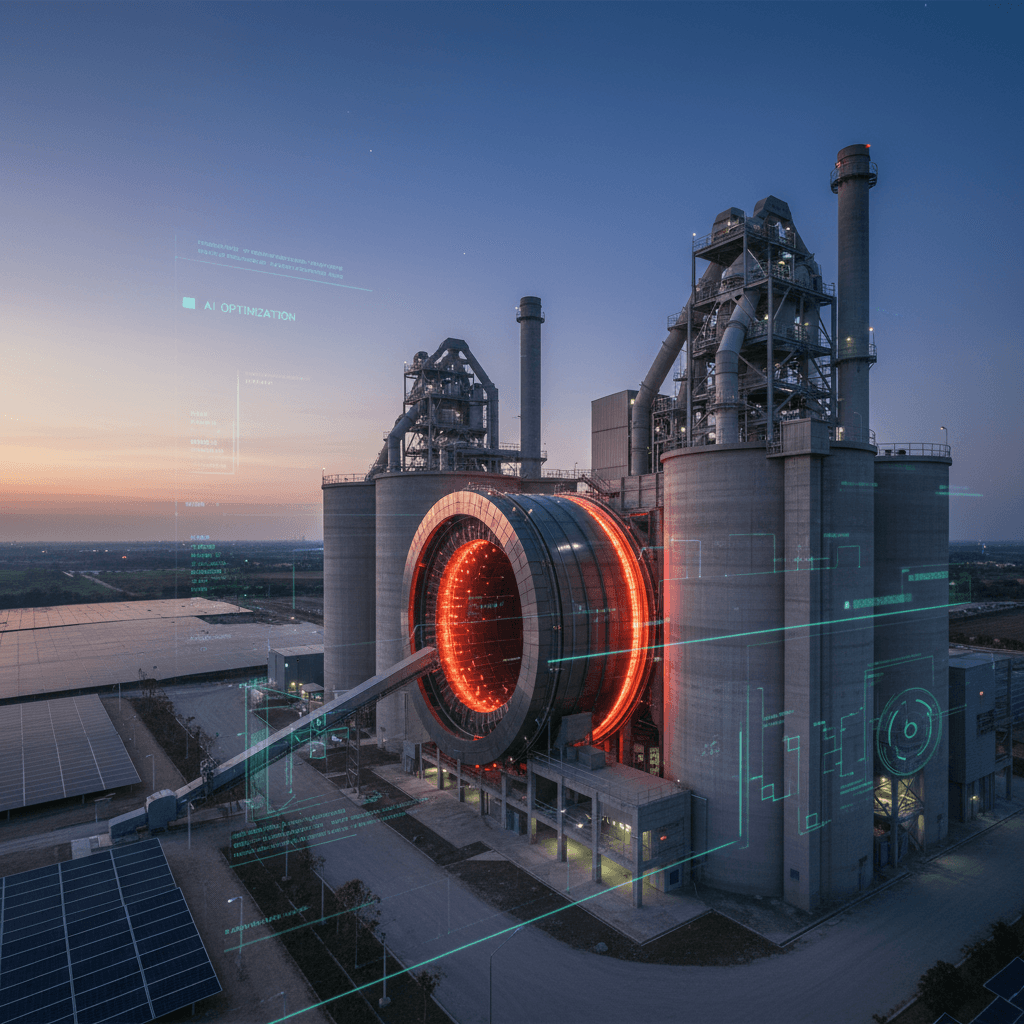
Now a 33MWh industrial heat battery in Saraburi, Thailand, is showing a different path. Rondo Energy and SCG Cleanergy have switched on what they call Southeast Asia’s first industrial thermal battery system at an SCG cement plant—and it’s not just storing electricity. It’s delivering superheated steam, boosting turbine output, and directly supporting one of the dirtiest industries on earth.
This project isn’t just a nice case study. It’s a live demonstration of how green technology, AI, and industrial thermal energy storage can work together to decarbonise heavy industry at scale.
What Exactly Is an Industrial Heat Battery?
Industrial heat batteries store energy as heat instead of chemical charge. That single design choice changes the economics of decarbonising factories, cement plants, steel mills, and chemical sites.
At a high level, a system like the Rondo Heat Battery (RHB) works like this:
- Charge – It takes in low‑cost electricity (usually from solar or wind) and converts it to high‑temperature heat using electric heaters.
- Store – That heat is stored in refractory bricks or similar high‑temperature materials, at temperatures up to ~1,000°C or more.
- Discharge – When the plant needs energy, the system releases that heat as hot air, hot gas, or steam for industrial processes—or, as in Saraburi, to drive a steam turbine for electricity.
Where lithium‑ion batteries are optimised for power and responsiveness, thermal energy storage is optimised for cheap, durable heat:
- No critical minerals
- No flammable electrolytes
- Materials measured in decades of life, not just cycles
For high‑temperature applications, that’s a big deal. You’re replacing fossil fuel combustion not with a fragile gadget, but with hot bricks charged by renewable energy.
Inside the Saraburi Cement Plant Project
The Thailand project is a real‑world example of industrial decarbonisation that checks three crucial boxes: scale, integration, and locality.
Scale: 33MWh of Stored Industrial Heat
The Saraburi installation is a 33MWh Rondo Heat Battery integrated directly into SCG’s cement operations. The companies describe it as the world’s first commercial heat battery at a cement manufacturing facility.
What that means in practice:
- It stores tens of megawatt‑hours of energy as high‑temperature heat.
- That heat is used to produce superheated steam.
- The steam feeds an on‑site turbine, increasing electricity output from the plant’s heat recovery system.
Instead of venting or under‑using waste heat, the facility now has a controllable, dispatchable heat resource that can work in sync with renewable power availability.
Integration: Working With What’s Already There
Most heavy industrial sites aren’t blank slates. They’re layered with decades of equipment, workarounds, and sunk capital. The Saraburi system respects that reality.
The heat battery is bolted onto the existing heat recovery system, not replacing it. That’s a crucial design pattern for industrial decarbonisation:
- Use heat batteries to boost and stabilise current processes.
- Avoid forcing a full redesign of the plant in one expensive leap.
- Target high‑impact nodes first: steam systems, process heat, and on‑site power.
This “augment, then evolve” strategy is much easier to finance, permit, and operate than tearing everything out on day one.
Local Manufacturing: Green Technology That Builds Local Supply Chains
Rondo and SCG Cleanergy didn’t just ship containers from overseas. They manufactured the unit entirely in Thailand, using local supply chains.
For Southeast Asia, this matters:
- It builds local capability in advanced green technology.
- It keeps economic value and jobs inside the region.
- It reduces dependencies on imported battery materials.
Decarbonisation that strengthens local industry is far easier to scale politically and economically than decarbonisation that just imports more hardware.
Why Thermal Energy Storage Is Perfect for Heavy Industry
Thermal energy storage is quietly becoming one of the most important tools for industrial decarbonisation. The reason is simple: most industrial energy demand is for heat, not electricity.
The Cement Problem
Cement manufacturing is brutally energy‑intensive:
- Kilns run above 1,400°C for clinker production.
- Traditional electrification struggles at those temperatures.
- Fuel switching (coal → gas) barely scratches the emissions problem.
You need a technology that:
- Can reach very high temperatures
- Uses cheap, abundant materials
- Plays nicely with intermittent solar and wind
Heat batteries fit that brief. They let plants charge with cheap renewable electricity when it’s available, then deliver firm, on‑demand heat to match industrial schedules.
Beyond Cement: Steel, Chemicals, Food & Beverage
The Saraburi project is part of a broader trend:
- A 100MWh Rondo system in California delivers continuous steam for Holmes Western Oil Corporation, using off‑grid solar.
- Another 100MWh unit for Heineken in Portugal will supply process heat for brewing and malting, charged by a nearby solar PV plant.
- Rondo’s initial commercial deployment—a 2MWh system reaching 1,000°C—was essentially a technical proof point for the materials and control strategy.
These cases point to a simple reality: wherever you see big boilers, kilns, or dryers, a heat battery is a candidate.
Economics: Where Heat Batteries Beat Lithium‑Ion
For industrial sites focused on heat, thermal energy storage often wins on levelised cost of heat (LCOH), not just on emissions:
- Bricks and steel are cheaper than lithium, nickel, and cobalt.
- Systems are tuned for long lifetime and high‑temperature operation.
- Charging can be optimised with smart controls to exploit low‑cost power windows.
The result is a decarbonisation pathway that doesn’t depend on heroic carbon prices. You’re just making cheap, clean heat from variable renewables.
How AI and Smart Control Make Heat Batteries Truly Powerful
Here’s the thing about green technology: the hardware is only half the story. The other half is software and AI.
For heat batteries, AI can turn a good system into a great one by orchestrating when and how energy is stored and dispatched.
Smart Charging and Dispatch
Industrial demand is lumpy. Renewable output is variable. AI sits in the middle and balances both:
- Predictive models forecast solar/wind output hours or days ahead.
- Process models anticipate plant heat and steam demand.
- Optimisation algorithms schedule charging when electricity is cheapest and discharging when the plant needs it most.
That’s not theory. I’ve seen industrial users trim 20–30% from their energy costs just by smarter dispatch of flexible assets. Add a controllable heat battery to the mix and the optimisation potential jumps.
Integrating With the Grid and Market Signals
In markets where factories can participate in energy markets, AI can make heat batteries into multi‑revenue assets:
- Buy power when prices are low or negative.
- Avoid drawing from the grid during price spikes.
- In some setups, provide demand response or ancillary services by flexing charging load.
This is where AI‑driven green technology stops being a cost centre and starts behaving like an asset on the company balance sheet.
Why Southeast Asia Is a Prime Testbed for Heat Batteries
Southeast Asia isn’t just a backdrop here—it’s a critical proving ground.
Huge Industrial Base, Rising Climate Pressure
Across the region, you’ve got:
- Massive cement, steel, petrochemical, and manufacturing capacity
- Fast‑growing energy demand
- Policy pressure through national climate targets and ESG demands from global buyers
Thermal energy storage is a practical way to square this circle: grow industrial output while shrinking emissions per tonne of product.
SCG Cleanergy has already signalled it plans to deploy more clean industrial heat projects using Rondo’s technology for other industrial customers. That’s exactly how a regional market takes off—one flagship, then a pipeline.
Localised Green Tech Supply Chains
There’s another strategic angle here. As Rondo ramps its heat battery gigafactory toward a planned 90GWh of annual manufacturing capacity, regions like Southeast Asia can:
- Host manufacturing and assembly
- Build engineering and maintenance expertise
- Export decarbonisation solutions, not just commodities
Green technology that’s made, installed, and serviced locally is more resilient and more politically durable. Thailand’s cement plant isn’t just reducing its carbon footprint; it’s quietly helping build a regional green industrial ecosystem.
How Industrial Leaders Should Approach Heat Batteries
Most companies get industrial decarbonisation wrong by treating it as a compliance task instead of a strategic redesign of their energy system.
There’s a better way to approach heat batteries and thermal storage.
1. Map Your Heat, Not Just Your Electricity
Start by building a high‑resolution heat map of your facility:
- Temperature levels (e.g., 120°C, 250°C, 800°C+)
- Load profiles (continuous, batch, shift‑based)
- Existing sources (boilers, waste heat, CHP, etc.)
You’re looking for processes that consume large amounts of medium‑to‑high‑temperature heat. Those are prime candidates for a heat battery pilot.
2. Pair Storage With Renewables and Digital Controls
A heat battery without renewables is just a fancy electric heater. To get the full benefit:
- Plan or expand on‑site or nearby solar PV or wind.
- Implement AI‑driven energy management to schedule charging.
- Integrate with existing steam and heat recovery systems rather than replacing them outright.
This trio—renewables + storage + smart control—is where the big gains in cost and carbon intensity come from.
3. Start With a Flagship Line, Then Scale
Follow the pattern you’re seeing in California, Portugal, and Thailand:
- Begin with one flagship line or plant where you can measure everything.
- Design the project so it’s replicable across similar sites.
- Use real‑world data to refine your business case and financing model.
By the time you’ve done one or two, scaling becomes a question of execution, not persuasion.
Where Heat Batteries Fit in the Green Technology Story
Heat batteries don’t get the same hype as EVs or rooftop solar, but they may do more to decarbonise hard‑to‑abate industry than almost any other single technology.
They slot perfectly into the broader Green Technology narrative:
- Clean energy: They convert intermittent renewable power into reliable industrial heat.
- Smart industry: They rely on AI and advanced controls to run cost‑optimised, low‑carbon operations.
- Sustainable growth: They let regions like Southeast Asia keep expanding industrial output without locking in decades of fossil fuel dependence.
The Saraburi cement plant is an early signal of where things are heading. As heat battery manufacturing scales and AI‑driven control becomes standard, we’ll see more factories, refineries, and mills quietly replacing flames and fossil fuels with hot bricks and smart software.
If your business runs on high‑temperature heat, this isn’t a technology to watch from the sidelines. Start mapping your heat, your renewable potential, and your digital capabilities now—because the companies that move first on industrial thermal energy storage will own the low‑carbon cost curve for years to come.