HyperStrong and CATL’s 200GWh deal isn’t just about batteries. It reshapes grid-scale storage costs, supply chains, and green technology deployment worldwide.
Why a 200GWh Battery Deal Is a Big Deal for Green Tech
A single strategic agreement just locked in battery capacity equal to almost 30% of today’s annual global demand for energy storage cells. That’s what HyperStrong and CATL committed to between 2026 and 2028: no less than 200GWh of batteries, with a 10‑year broader cooperation framework running through 2035.
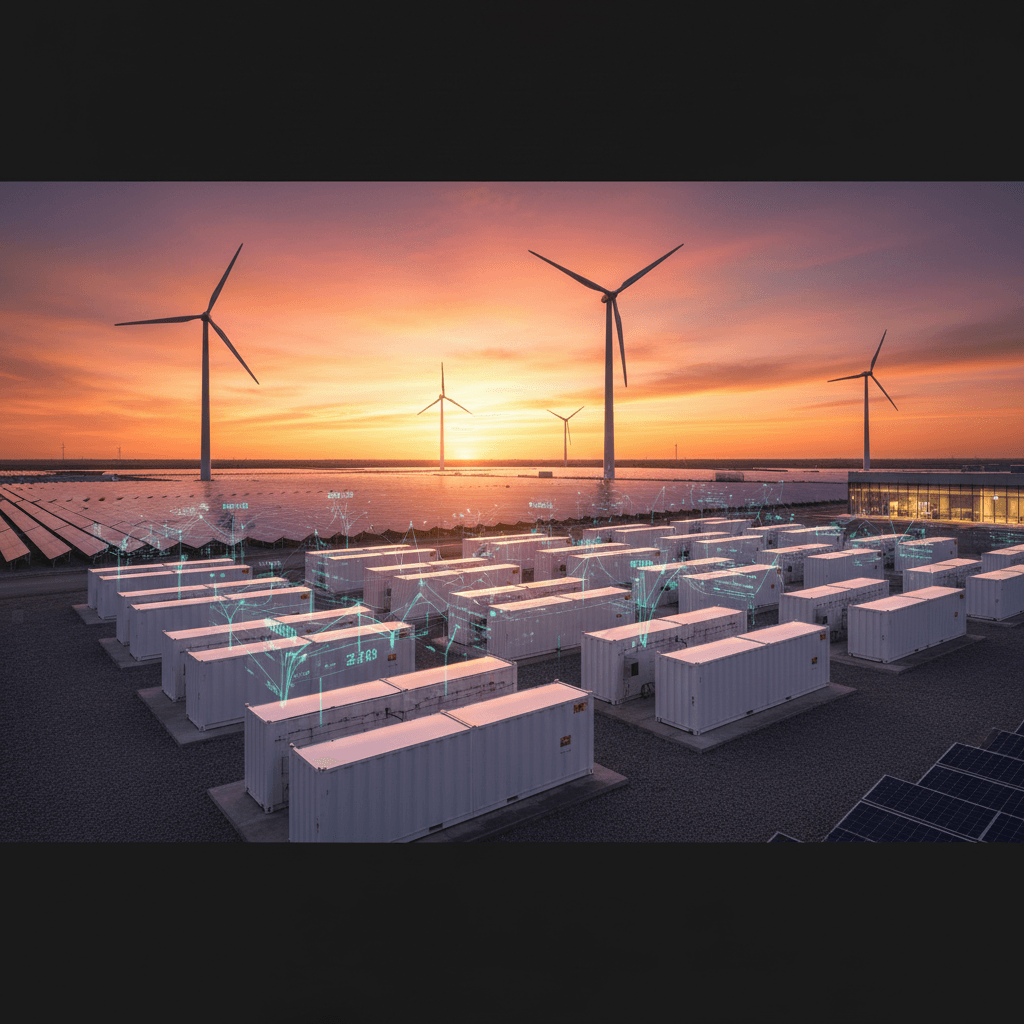
This matters because grid-scale battery storage is now the backbone of clean energy. Solar and wind are finally cheap and abundant; what holds them back is flexibility, not generation. When a system integrator like HyperStrong secures long-term supply from CATL, the world’s largest lithium‑ion battery OEM, it doesn’t just help one company scale. It reshapes pricing, availability, and risk across the energy storage ecosystem.
In this Green Technology series, I’ve argued that the next decade of climate progress will be decided less by new inventions and more by how fast we deploy what already works. This deal is a textbook example: massive volume, long-term planning, plus a focus on lifecycle performance and supply chain coordination.
The Core of the HyperStrong–CATL 200GWh Agreement
The HyperStrong–CATL agreement is, at heart, a capacity and coordination pact designed to de‑risk large-scale battery energy storage systems (BESS) for the next generation of projects.
Headline facts:
- Cooperation term: 1 January 2026 – 31 December 2035 (10 years)
- Firm volume (Phase I): At least 200GWh from 2026–2028
- Scope: Full range of battery cells and system products from CATL
- Commercial edge: Priority supply and competitive pricing for HyperStrong
- Governance model: Rolling three‑year targets, updated annually via memorandum
That 200GWh number isn’t abstract. At typical utility‑scale project sizes, it could support around 2,000 BESS plants of 100MWh each. Whether those become grid‑stabilizing assets in Europe, microgrids in Africa, or co‑located solar‑plus‑storage in Asia, the climate impact is very real.
Here’s the thing about large procurement deals in clean energy: they don’t just buy hardware, they set expectations for the whole market. Developers, IPPs, and utilities now see a system integrator committing to multi‑year volume at scale with a clear partner—this tends to:
- Push down unit costs via economies of scale
- Reduce supply volatility, which has plagued developers since 2021
- Encourage standardization of BESS architectures, which lowers engineering, permitting, and O&M overhead
If you’re planning multi‑hundred‑MWh or multi‑GWh projects from 2026 onward, this is the environment you’ll be operating in.
Why This Deal Is a Turning Point for Grid-Scale Storage
The most important part of this agreement isn’t just the volume. It’s the structure: a tight alliance between what HyperStrong calls the “system leader” and what the market recognizes as the “cell giant.”
Fixing the two big BESS pain points
Most grid‑scale and C&I storage developers run into the same headaches:
- Supply volatility – Will cells or fully‑integrated racks actually arrive on the date the grid operator, lender, and PPA say they must?
- High and unpredictable costs – Can you sign a bankable offtake or capacity contract when capex swings 20–40% between RFP and NTP?
HyperStrong and CATL are attacking both:
- Priority supply guarantees mean HyperStrong can commit to schedules with far more confidence.
- Competitive, pre‑agreed pricing frameworks stabilize project financial models.
- Full‑range product access (cells, modules, packs, turnkey systems) simplifies engineering and procurement.
From a green technology perspective, this is exactly what you want: lower “friction” between climate‑positive technology and actual deployment.
The dynamic target model
Instead of a static 10‑year MoU that ages badly as markets shift, the two companies agreed to update three‑year targets at the end of each year:
- They revisit demand forecasts, policy signals, and pricing environments.
- They sign a new memorandum that adjusts volumes and focus areas.
That’s smart because energy storage policy and pricing are moving fast—look at capacity markets in Europe, IRA‑driven manufacturing in the US, or changing rules for storage allocation in China. A rigid 10‑year plan would be obsolete in 3; a rolling three‑year window lets them stay aligned with reality.
For investors and utilities, this translates into lower counterparty risk. You’re not just betting on a one‑off procurement; you’re plugging into a supply chain that’s designed to evolve.
Beyond Batteries: Funds, Platforms, and Integrated Green Technology
The most overlooked part of the announcement is that it’s not only about selling cells. HyperStrong and CATL also want to build financial and digital infrastructure around storage.
Joint industrial fund for energy storage
The agreement includes plans to create an industrial fund focused on storage projects across:
- New energy power generation (solar, wind, hybrid plants)
- Grid‑side assets (frequency response, congestion management, capacity)
- User‑side systems (C&I, microgrids, behind‑the‑meter)
Why does that matter?
Because many promising green technology projects die at the financing stage, not the engineering stage. A dedicated fund anchored by a battery OEM and a system integrator can:
- Reduce technology risk perceived by banks
- Offer more flexible financing or build‑operate‑transfer models
- Support emerging markets where traditional lenders are cautious
When hardware, integration, and capital align, storage deployment accelerates.
Integrated lifecycle management platform
They’re also planning an integrated platform that covers the full lifecycle of energy storage assets:
- Development
- Investment
- Operation
- Maintenance
I’ve seen too many projects treat BESS as “install and forget.” That’s how you end up with:
- Under‑utilized assets that don’t earn what their business case promised
- Higher degradation from sub‑optimal cycling
- Poor visibility into safety and performance across a fleet
An integrated platform—ideally infused with AI-driven analytics—can do a lot better:
- Optimize charge/discharge against price signals, carbon intensity, and asset health
- Predict and schedule maintenance before failures
- Benchmark portfolios to pinpoint under‑performing sites
This is where the Green Technology theme shows up clearly: the value isn’t just in the lithium‑ion cells, it’s in the intelligence around them. Better software turns the same GWh of batteries into more CO₂ savings and higher revenue.
AC-side and supply chain synergies
The collaboration also extends to AC-side components and broader supply chain coordination. That might sound like a detail, but it has real impact:
- Fewer interface risks between DC BESS and grid‑connected equipment
- Tighter design integration between inverters, transformers, and control systems
- Bulk purchasing and standardized designs that shorten project timelines
For developers and EPCs, this can shave months off schedules and millions off balance‑of‑plant costs.
HyperStrong’s Expansion: From China to EMEA and Emerging Markets
Part of why CATL is willing to anchor such a large commitment is HyperStrong’s clear global trajectory.
Recent wins across EMEA
HyperStrong has already accumulated more than 300 energy storage projects worldwide, with a cumulative deployed capacity above 40GWh. Recently, the company has moved aggressively into the EMEA region, including:
- A 45MWh grid‑side standalone storage project in Greece
- Commissioned BESS projects of 7MWh, 20MWh, and 5MWh in Estonia and Lithuania
- Growing C&I and user‑side projects in Zimbabwe and factory microgrids in Côte d’Ivoire
These aren’t just dots on a map. They illustrate a pattern: pairing advanced storage with real grid and reliability problems.
Case study: Industrial microgrids in Côte d’Ivoire
In Côte d’Ivoire, HyperStrong deployed storage for three factories, each using the HyperBlock III 5MWh system. The challenge is classic for many African and emerging markets:
- Unstable grid
- Frequent power cuts
- High dependence on diesel backup
HyperStrong’s answer was a grid‑forming microgrid combining:
- Photovoltaics (PV)
- Battery storage
- Diesel generators
- The utility connection
With that setup, factories can switch on‑ and off‑grid without disruption, keep production running, and gradually reduce reliance on diesel.
From a sustainability and business standpoint, that’s powerful:
- Less diesel means lower emissions and lower fuel spend
- Stable power means higher productivity and less equipment damage
- BESS assets can later be monetized if local markets open for services like frequency regulation
This is exactly the kind of practical, localised green technology deployment we need: storage tailored to real‑world pain points, not just built where incentives are highest.
What This Means for Developers, Utilities, and Climate Strategy
If you’re developing, financing, or operating clean energy projects, a deal of this scale has concrete implications.
1. Expect more stable storage pricing (but plan for cycles)
A 200GWh anchor agreement helps stabilize cell and system prices, at least for large, bankable counterparties. That doesn’t mean prices only go down—there will still be commodity and policy swings—but the wild uncertainty of the early 2020s should soften.
Practical move: when you model projects for 2026–2030, use conservative price trends but push your suppliers on:
- Indexed pricing structures
- Availability guarantees
- Penalties for non‑delivery
2. Bankability improves when supply chains are locked in
Lenders like two things: certainty and track record. A long‑term partnership between a top cell maker and an experienced system integrator offers both.
For project owners, that can translate into:
- Better debt terms (tenor, cost, DSCR assumptions)
- Easier approval in credit committees, especially for newer markets
- More flexibility in structuring merchant or hybrid revenue stacks
When you pitch your next project, don’t just present the tech spec. Present the supply chain story: who stands behind your cells, racks, and long‑term O&M.
3. AI and digital twins will quietly become standard
With an integrated platform that spans development to O&M, the only rational move is to weave in AI, forecasting, and digital twins:
- AI can predict degradation and optimize cycling to extend life
- Digital twins help test control strategies under extreme grid events
- Automated monitoring raises early flags on thermal or safety issues
If you’re running a fleet of assets, you should be asking:
“How do we make each MWh of installed storage do more work, at lower risk, over 15–20 years?”
The answer won’t be “more hardware.” It will be better software, data, and operational discipline.
4. Emerging markets become more attractive
HyperStrong’s work in Zimbabwe and Côte d’Ivoire sends a clear message: energy storage for reliability and resilience is finally moving beyond pilots.
For governments and industrials in similar markets, this creates a playbook:
- Start with C&I microgrids where outages are expensive
- Add PV and BESS to cut diesel consumption
- Scale to regional grids as regulatory frameworks mature
The HyperStrong–CATL partnership, backed by a fund and stable hardware supply, makes these pathways easier to finance and replicate.
Where Green Technology Goes From Here
This 200GWh agreement is one of those quiet milestones: not flashy, but decisive. It tells us that the battery energy storage industry is maturing—from opportunistic projects to long‑term industrial planning.
For the broader green technology story, there are a few clear signals:
- Scale is happening now. We’re no longer debating whether storage is viable; the market is locking in tens of gigawatts for the next planning cycle.
- Intelligence is the differentiator. The companies that win won’t just ship batteries; they’ll orchestrate assets, finance, and data.
- Emerging markets matter. Projects in Greece, Estonia, Zimbabwe, and Côte d’Ivoire show that storage is as much about reliability as it is about pure renewables integration.
If you’re serious about decarbonisation, the question isn’t whether to integrate large‑scale storage into your strategy—it’s how fast you can line up technology partners, secure bankable supply, and build an operating model that treats storage as a living asset, not a static box of batteries.
The reality? It’s simpler than it looks: pick strong partners, plan for the long term, and make every kilowatt‑hour of stored energy count.