LFP batteries are the key to affordable, sustainable EVs and storage in Europe. Here’s why they matter now—and how Europe can build its own clean LFP ecosystem.
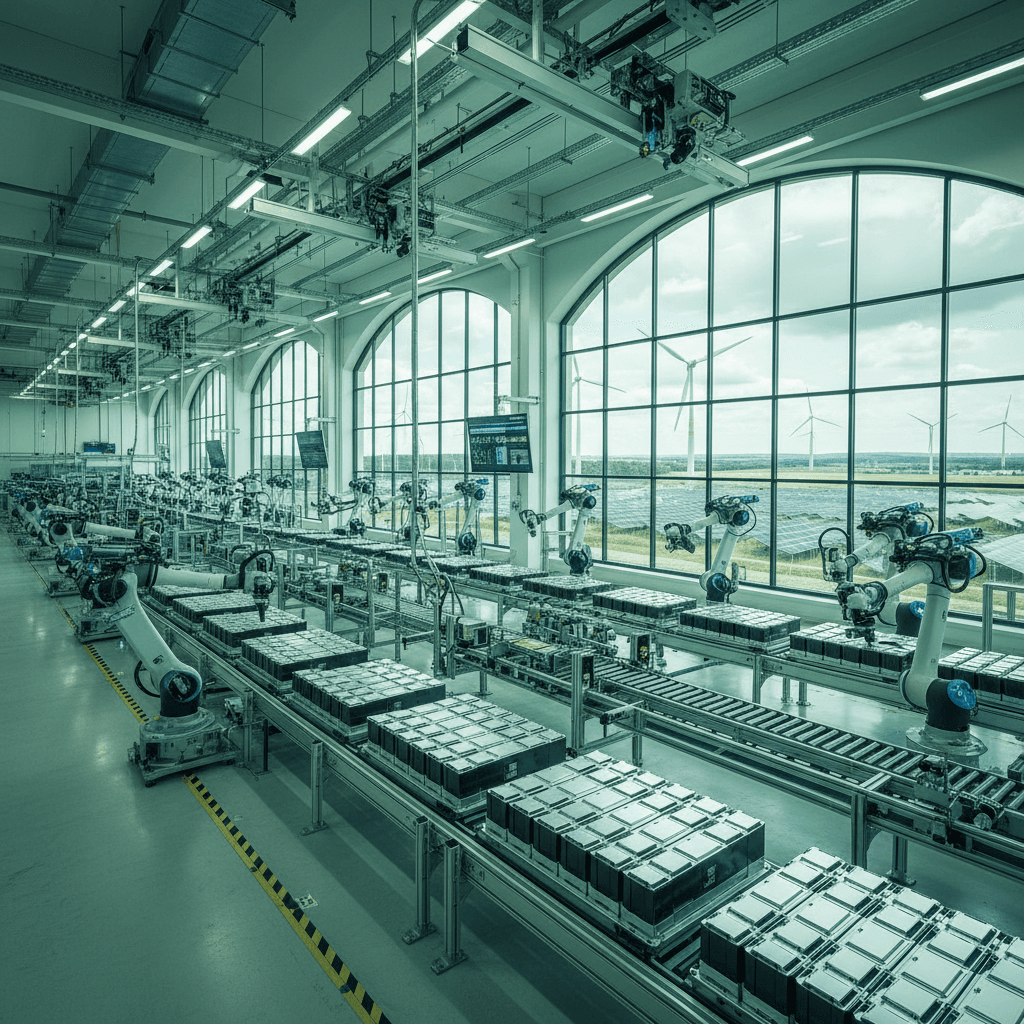
Why Europe Must Back LFP Batteries Now
Volkswagen’s first mass‑market EVs launched in Europe at price points many families just couldn’t justify. At the same time, Chinese brands started selling electric cars using LFP batteries thousands of euros cheaper, often with similar real‑world range. That price gap isn’t an accident; it’s a chemistry decision.
Most companies still obsess over nickel‑rich lithium‑ion cells because of their higher energy density. But the market is quietly voting with its wallet: lithium‑iron‑phosphate (LFP) batteries are scaling fast, they’re cheaper, safer, and use less constrained raw materials. Europe is late to this party—and that’s a problem if you care about both affordable EVs and green technology sovereignty.
This matters because the energy transition lives or dies on cost and supply chains. If electric cars, buses, and stationary storage stay expensive, adoption slows. If Europe stays dependent on imported Chinese LFP cells, the region swaps one strategic dependency (oil and gas) for another (batteries). There’s a better way to approach this: embrace LFP—but do it sustainably and intelligently.
In this article, I’ll walk through why LFP batteries are winning the mass market, where Europe is behind, how AI‑driven green technology can help Europe catch up, and what practical steps policymakers and companies can take right now.
LFP Batteries: The Chemistry Built for Mass‑Market EVs
LFP batteries are already the default choice for affordable EVs and large‑scale energy storage because they trade a bit of range for big gains in cost, safety, and sustainability.
What makes LFP different?
Compared to the popular NMC and NCA chemistries (nickel‑manganese‑cobalt / nickel‑cobalt‑aluminum), LFP batteries offer:
- Lower cost per kWh: No nickel or cobalt, which are expensive and volatile commodities.
- Longer cycle life: Often 2,500–4,000 full charge cycles or more, ideal for taxis, fleets, and storage.
- Better thermal stability: Lower fire risk and simpler thermal management.
- More sustainable materials: Iron and phosphate are abundant and geographically diverse.
The trade‑off is lower energy density—roughly 20–30% less than high‑nickel chemistries at the cell level. But real‑world engineering narrows that gap. Cell‑to‑pack designs, structural battery packs, and better software management mean modern LFP packs are perfectly competitive for city cars, compact SUVs, and stationary storage.
Here’s the thing about EV adoption: most drivers don’t need 600 km of range. They need a car they can afford, that charges reliably, and doesn’t degrade quickly. LFP hits that sweet spot.
Why the market is shifting toward LFP
Global data from 2023–2024 shows LFP grabbing over 30% of EV battery demand, with a much higher share in China’s domestic market. For entry‑level and mid‑range EVs, LFP is quickly becoming the default.
Why?
- Automakers can cut battery pack costs by 15–25% using LFP instead of NMC.
- Fleet operators care more about total cost of ownership and cycle life than ultimate range.
- Energy storage systems (solar + storage, grid batteries) prioritize stability, lifespan, and safety, where LFP excels.
Most companies get this wrong by chasing headline WLTP range numbers instead of optimizing price per kilometer over the vehicle’s lifetime. LFP wins that metric in a lot of mainstream use cases.
Europe’s LFP Problem: Strong Demand, Weak Supply
Europe doesn’t really have a demand problem for LFP; it has a production and strategy problem.
China currently dominates LFP technology
China owns most of the LFP ecosystem:
- Key patents and manufacturing know‑how
- Massive cell and cathode production capacity
- Mature, AI‑optimized manufacturing lines
The result is simple: Europe imports a huge share of LFP cells and packs from Chinese manufacturers. That keeps upfront EV prices lower, but it also:
- Exposes the EU to geopolitical and trade risks
- Pushes value‑added manufacturing and jobs outside Europe
- Makes it harder to enforce strict environmental and labor standards across the supply chain
If you’re trying to build a resilient, green technology base in Europe, that’s a problem.
Why Europe hesitated on LFP
Europe’s battery strategy leaned early toward high‑energy NMC chemistries, aligned with premium German cars chasing long‑range performance. That made sense at the time—until two things happened:
- EV uptake shifted from luxury to mainstream much faster than expected.
- Chinese LFP scaled and got cheap while keeping durability high.
Now Europe is in a catch‑up race. Either it:
- Builds its own sustainable LFP ecosystem, or
- Accepts dependency and watches value chains migrate east.
From a green technology perspective, the choice is obvious. LFP is tailor‑made for affordable electrification of cars, vans, buses, and storage. Europe needs it—produced under European rules.
How LFP Fits the Green Technology Transition
LFP batteries aren’t just a cheaper alternative; they’re a structural enabler for Europe’s broader green technology agenda.
Electrifying mobility at scale
For Europe to reach its 2035 combustion engine phase‑out targets, EVs can’t remain premium products. You need:
- Sub‑€25,000 electric city cars
- Affordable electric vans for small businesses
- Durable battery packs for car‑sharing, taxis, and delivery fleets
LFP helps in three big ways:
- Cost compression: A lower battery bill makes it possible to hit these price points without destroying margins.
- High cycle life: Perfect for shared mobility and high‑mileage use where batteries are cycled daily.
- Lower fire risk: Critical for high‑density urban parking, depots, and underground garages.
The reality? If Europe wants streets full of electric compact cars instead of a handful of luxury EVs, LFP has to be in the mix.
Powering clean energy storage
Solar and wind don’t care about your calendar; they care about physics. Storage is what turns intermittent renewables into reliable power.
LFP batteries are already the workhorse for stationary energy storage because they:
- Deliver long cycle life at relatively low cost
- Offer strong safety performance for dense installations
- Use materials that are easier to scale sustainably
Pair that with AI‑driven energy management systems and you get:
- Smarter charge/discharge scheduling
- Predictive maintenance
- Optimized degradation control
This is where our Green Technology series ties in directly: AI plus LFP is a powerful combo for balancing grids, maximizing solar self‑consumption, and reducing fossil backup.
Building a Sustainable LFP Ecosystem in Europe
Europe shouldn’t just copy‑paste China’s LFP model. It should build a cleaner, more transparent, and more automated version.
1. Clean up the LFP value chain
The EU can anchor LFP in its sustainability agenda by enforcing high standards at every step:
- Responsible mining of lithium, iron, and phosphate with strict environmental safeguards
- Low‑carbon cathode production, powered by renewables
- Lifecycle carbon accounting from raw material to recycling
Battery regulations already push in this direction, but LFP offers an extra advantage: avoiding cobalt and nickel reduces exposure to high‑risk mining regions and complex traceability issues.
“If Europe is smart, it uses LFP to re‑design the battery value chain around transparency, not just price.”
2. Use AI to close the experience gap
Chinese incumbents have years of production data and manufacturing experience. Europe can’t rewind time, but it can compress the learning curve.
Here’s where AI and data come in:
- AI‑driven cell design: Optimize cathode recipes, particle sizes, and binders for performance and cost.
- Smart manufacturing: Use computer vision and anomaly detection to reduce scrap rates on new lines.
- Predictive quality control: Flag defects in real time before they turn into warranty claims.
I’ve seen European pilot lines where AI‑assisted process control cut variability by double‑digit percentages in months, not years. That kind of acceleration is exactly what LFP needs.
3. Scale recycling and second life early
LFP’s long life makes it a natural candidate for second‑life applications:
- Retired EV packs can serve years in stationary storage
- Modules can be repurposed for behind‑the‑meter storage for businesses
At the same time, Europe should:
- Invest in hydrometallurgical and direct‑recycling methods tailored for LFP
- Use digital passports to track battery history for safe second‑life use
Done right, this pushes LFP toward a true circular economy model, not just a linear extract‑use‑dump cycle.
What Policymakers and Companies Should Do Next
If you work in policy, manufacturing, mobility, or energy, there are concrete steps you can act on now.
For EU and national policymakers
- Back LFP explicitly in industrial policy: Treat it as strategic, not secondary to NMC.
- Fund LFP‑specific R&D: Cathode innovation, manufacturing processes, and AI optimization tools.
- Tie incentives to sustainability metrics: Reward low‑carbon, transparent LFP manufacturing in Europe.
- Protect against dumping without blocking technology: Use trade tools carefully so you don’t freeze out necessary capacity while European plants ramp up.
For automakers and fleet operators
- Segment by chemistry, not fashion:
- LFP for city cars, compact SUVs, vans, and fleets
- High‑nickel chemistries for long‑range, premium segments
- Co‑design packs for LFP instead of retrofitting NMC designs.
- Use data and AI to model real‑world usage and choose the right battery chemistry for each vehicle platform.
For energy and storage companies
- Standardize on LFP for most grid‑scale and commercial storage, unless there’s a clear reason not to.
- Invest in digital twins of battery systems to forecast degradation, schedule maintenance, and extend asset life.
- Work with local suppliers to align on European sustainability benchmarks.
Why This Moment Matters for Europe’s Green Tech Future
Europe stands at a crossroads. Either it treats LFP batteries as a “cheap Chinese option” and stays dependent, or it treats them as a strategic pillar of its green technology ecosystem and builds something better: cleaner, smarter, and locally anchored.
For our broader Green Technology series, LFP is a perfect case study: technology alone isn’t enough. What counts is the combination of:
- The right chemistry for the right job
- Transparent, low‑carbon supply chains
- AI and data to accelerate learning and efficiency
If you’re working on EVs, energy storage, or climate strategy in Europe, now is the time to decide where you stand on LFP. The market isn’t waiting, and neither is the climate.
So the real question is: will Europe simply buy tomorrow’s batteries, or will it build them—sustainably, intelligently, and at scale?