Egypt’s new 1.2GW solar-plus-storage projects show how green technology, AI, and storage are reshaping grids—and where businesses can plug into the opportunity.
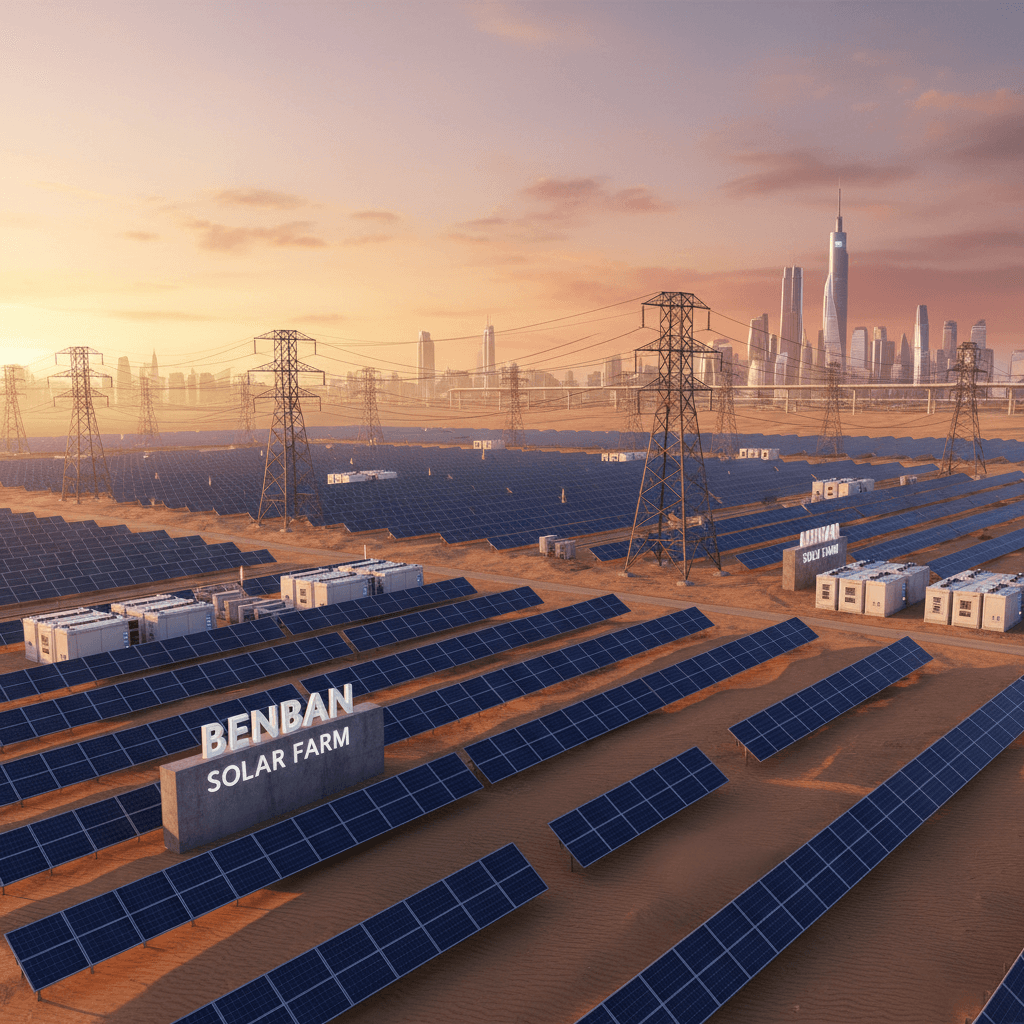
Most countries talk about clean energy targets. Egypt just signed contracts that hard‑wire those targets into 1.2GW of real solar capacity and 720MWh of battery storage.
This matters because big, bankable projects like these are where climate commitments turn into steel, silicon, and software. They’re exactly the kind of green technology infrastructure that will shape energy systems through the 2030s—and a strong signal for businesses watching emerging markets for clean energy opportunities.
In this article, you’ll see how Egypt’s new solar‑plus‑storage projects fit into a larger shift toward smart, AI‑enabled, low‑carbon grids—and what that means for developers, technology providers, and energy‑intensive businesses across the region.
Egypt’s New Solar-Plus-Storage Projects at a Glance
Egypt has signed power purchase agreements (PPAs) with a consortium of Hassan Allam Utilities Energy Platform and Infinity Power to build two major renewable energy projects:
- Total solar PV: 1.2GW
- Total battery storage: 720MWh
- Offtaker: Egyptian Electricity Transmission Company (EETC)
- Ministry partner: Ministry of Electricity and Renewable Energy
Project 1 – Benban
- Capacity: 200MW solar PV
- Storage: 120MWh BESS
- Target commercial operation: Q3 2026
- Location: Benban, already one of the world’s largest solar complexes
Project 2 – Minya
- Capacity: 1GW solar PV
- Storage: 600MWh BESS
- Target commercial operation: Q3 2027
- Location: Minya, central Egypt
These aren’t just more solar farms. Because they’re paired with large-scale battery energy storage systems (BESS), they directly support grid stability, peak shaving, and frequency regulation, which have become critical bottlenecks in high-renewables systems.
Egypt is targeting 42% renewables in its energy mix by 2030 and 65% by 2040, with more than 21GW of renewable capacity and 3.3GW of BESS planned by 2030.
For anyone working in green technology—AI for energy, smart grid software, storage hardware, or corporate sustainability—this is the direction of travel: more hybrid projects, more digital control, more integrated planning.
Why Solar-Plus-Storage Is Now the Default, Not the Exception
Solar alone lowers emissions and reduces fuel imports. Solar-plus-storage changes how the grid actually operates.
What storage adds that solar can’t do alone
Battery storage in Egypt’s Benban and Minya projects will:
- Shift solar output into evening peaks – 720MWh can move a meaningful share of midday solar into higher‑value hours.
- Smooth volatility – BESS can respond in milliseconds to cloud cover, faults, or demand spikes.
- Provide grid services – voltage support, frequency regulation, and reserve capacity that used to come only from gas or oil units.
- Delay or avoid network upgrades – strategically placed storage can reduce congestion and defer costly transmission expansions.
In practice, that means EETC can integrate gigawatts of solar without constantly worrying about “too much solar at noon, not enough at night.”
The economics are shifting fast
Solar costs have fallen over 80% over the last decade globally. Battery prices, despite some recent volatility, continue to trend down over the medium term. In many sun‑rich countries, solar-plus-storage PPAs now undercut new fossil plants on lifetime cost, especially once you factor in fuel price risk.
For Egypt, that translates into:
- Reduced exposure to imported fossil fuel prices
- More predictable long‑term power costs for industry
- Stronger investment narrative for green manufacturing, green hydrogen, and data‑intensive sectors
There’s a good reason you’re seeing similar project patterns in Germany, Australia, and Southeast Asia: solar-plus-storage is becoming the default model for new utility‑scale renewables.
How These Projects Fit Into Egypt’s Green Technology Strategy
Egypt isn’t just building more megawatts. It’s quietly positioning itself as a regional clean energy hub, and solar-plus-storage is a core part of that strategy.
National targets: from paper to projects
Egypt’s medium‑ and long‑term targets are clear:
- 21GW+ renewable capacity by 2030
- 8.5GW from solar PV by 2030
- 3.3GW of battery storage deployed by 2030
- 42% renewables share by 2030, rising to 65% by 2040
The Benban and Minya projects are early building blocks in that 3.3GW BESS roadmap. They’re also important signals to:
- International financiers, who want to see bankable PPAs and credible policy before committing billions
- Technology providers, who need a pipeline big enough to justify local presence and R&D
- Large energy users, who are planning long‑term RE procurement or green hydrogen projects
Why PPAs matter for investors and developers
Long‑term PPAs with state-backed offtakers like EETC are crucial. They:
- Reduce revenue risk and make projects financeable at lower cost of capital
- Provide clear price and volume structures that match investor expectations
- Create a framework that other developers can replicate and improve on
For developers looking at North Africa, Egypt’s approach—clear PPAs, ambitious targets, and a proven solar cluster at Benban—is significantly more attractive than markets still stuck in pilot‑project mode.
The Quiet Role of AI and Digital Tech in Solar-Plus-Storage
Here’s the thing about large solar-plus-storage projects: they don’t work well without smart software. This is where the green technology and AI story becomes very real.
Where AI shows up in projects like Benban and Minya
You won’t see it in the press release, but under the hood, AI and advanced analytics can drive value at multiple layers:
-
Forecasting and scheduling
- Machine learning improves solar output forecasts using satellite data, weather models, and historical performance.
- Better forecasts mean more accurate day‑ahead bidding and fewer imbalances.
-
Battery dispatch optimization
- AI algorithms decide when to charge or discharge batteries to maximize revenue and support grid stability.
- They consider real‑time prices, forecasted demand, and asset degradation.
-
Predictive maintenance
- Anomaly detection flags failing inverters, strings, or battery modules before they take down performance.
- Asset owners avoid unplanned outages and extend equipment life.
-
Grid‑level coordination
- Virtual power plant (VPP) software can aggregate multiple sites—like Benban clusters and Minya—into a single controllable portfolio.
- This turns distributed assets into a flexible “virtual plant” from the grid operator’s perspective.
If you build solar and storage without this digital layer, you leave money and reliability on the table.
Practical opportunities for green tech businesses
For companies working in AI, digital twins, or grid software, Egypt’s 3.3GW BESS target by 2030 is a clear signal. There’s room for:
- Forecasting as a service for PPAs and merchant exposure
- AI‑driven energy management systems (EMS) tailored to hybrid plants
- Fleet‑level optimization platforms for developers operating multi‑asset portfolios
- Grid analytics tools that help EETC plan, simulate, and operate a high‑renewables network
I’ve found that teams who get involved early—during feasibility and design—tend to lock in longer‑term roles as operators, optimizers, or data partners.
What This Means for Developers, Corporates, and Technology Providers
The reality? Egypt’s move here isn’t just local news. It’s a blueprint others will copy, especially across the Middle East and Africa.
For renewable developers and IPPs
If you’re a developer or independent power producer:
- Hybrid is now standard – Build storage into your project designs from day one. Regulators and utilities increasingly expect it.
- Model multiple value streams – Don’t just think “solar + PPA.” Include grid services, capacity payments, and potential future market reforms.
- Invest in digital capabilities – Either build or partner for AI‑enabled forecasting, dispatch, and O&M. It’s becoming a differentiator in tenders.
Concrete step: start sizing “storage add‑ons” for your pipeline assets and prepare standard technical and financial models you can drop into PPA negotiations.
For large energy users and corporates
If you run energy‑intensive operations in Egypt or the wider region—cement, data centers, manufacturing—these projects:
- Increase the future availability of long‑term green PPAs
- Make 24/7 low‑carbon power more realistic thanks to storage
- Improve grid resilience, which reduces outage and curtailment risk
Practical moves:
- Map your load profile against potential solar-plus-storage supply.
- Begin internal work on renewable procurement strategies (corporate PPAs, sleeved arrangements, or participation in green tariffs).
- If you’re planning data‑heavy AI or cloud infrastructure, factor Egypt’s growing green power base into your siting decisions.
For AI and green tech solution providers
If your business sits at the intersection of AI and energy:
- Treat Egypt’s 3.3GW storage goal as a multi‑year addressable market for software, optimization, and analytics.
- Focus offers on clear value levers: higher revenue per MWh, lower O&M cost, reduced curtailment, and proven improvements in forecasting accuracy.
- Design products that integrate with standard SCADA, EMS, and grid operator interfaces used in the region.
There’s a better way to approach “green AI” than abstract climate branding: show how your tools make real assets—like Benban and Minya—more profitable, more reliable, and easier to integrate into the grid.
Where Egypt’s Energy Transition Goes Next
Egypt’s solar‑plus‑storage push is part of a broader regional trend: more renewables, more storage, more digital control. You can already see similar patterns in Germany, Australia, and Southeast Asia, from data center‑adjacent BESS to multi‑gigawatt hybrid complexes.
For the Green Technology series, this is a clear example of what we’ve been tracking throughout 2025: AI, storage, and renewables converging into a single system rather than separate industries.
Over the next few years, expect to see:
- Larger hybrid projects bundling solar, wind, storage, and green hydrogen
- More sophisticated AI‑driven grid management to handle variable renewables
- Tighter links between corporate sustainability targets and real infrastructure investment
If your business touches energy in any way—buying it, generating it, optimizing it—now’s the right moment to rethink how you engage with markets like Egypt.
Ask yourself: where can you plug into this new wave of solar‑plus‑storage projects—as a buyer, a partner, or a technology enabler—rather than just a spectator?