SECI’s 1,200MWh BESS deal with Andhra Pradesh is more than news—it’s a clear signal of how storage, AI, and green technology will shape India’s next energy decade.
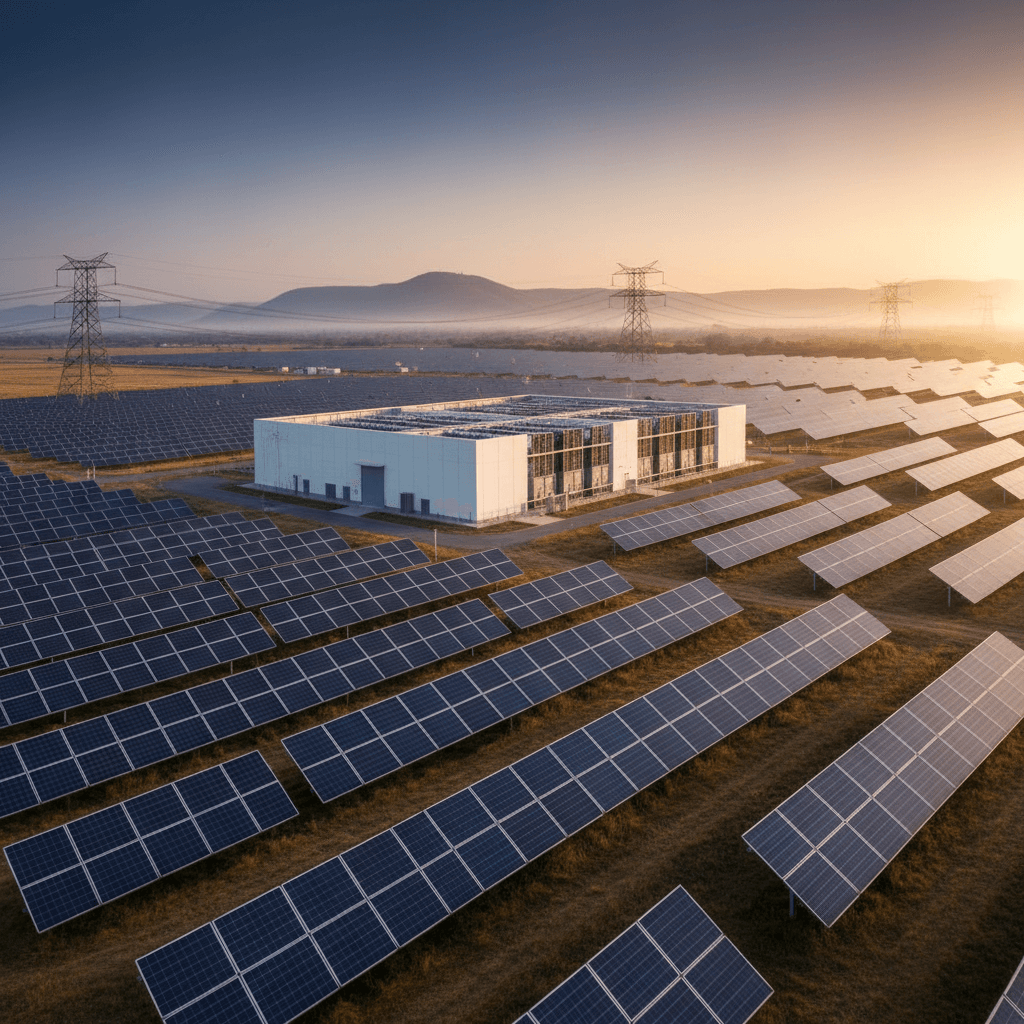
Most countries talk a big game on clean energy. Very few back it with thousands of megawatt-hours of real storage on the ground.
That’s why the new agreement between India’s Solar Energy Corporation of India (SECI) and the Government of Andhra Pradesh for a 1,200MWh battery energy storage system (BESS) in Nandyal plus a 50MW solar hybrid project is a bigger deal than it might look at first glance.
This matters for anyone following green technology, grid decarbonisation, or power markets for a simple reason: large-scale storage is what turns cheap solar into dependable power. And dependable power is what utilities, industries, data centres, and cities actually buy.
In this article, I’ll walk through what this SECI–Andhra Pradesh deal really signals, how it fits into India’s broader energy storage push, and what it means for businesses looking to invest, partner, or build in the clean energy space.
What SECI and Andhra Pradesh Just Agreed To
The SECI–Andhra Pradesh agreement sets up two cornerstone projects:
- 1,200MWh grid-scale BESS at Nandyal
- 50MW hybrid solar project (solar plus storage)
- CAPEX model with SECI funding and investment responsibility
In plain language: a central government-backed entity is paying to put serious battery storage and hybrid solar capacity inside a fast-growing state grid. Andhra Pradesh gets the flexibility and reliability; SECI carries the capital and development risk.
Why 1,200MWh is a meaningful number
1,200MWh of storage can, for example:
- Supply 300MW for 4 hours, covering a big chunk of the evening peak, or
- Provide 150MW for 8 hours, smoothing a long ramp in demand or drop in solar output
At state grid level, that’s not a marginal asset. It’s a dispatchable tool that can:
- Shave evening peaks
- Capture and shift midday solar surplus
- Provide fast-response grid services (frequency control, contingency reserves)
- Reduce curtailment of existing and future solar parks
This is exactly the kind of infrastructure you need if you want more renewables without more diesel backup or new coal.
Why CAPEX mode matters
Both projects are being developed under CAPEX mode, with SECI taking on full investment responsibilities.
That sends three important signals:
- Policy confidence – Central agencies aren’t just issuing tenders; they’re willing to fund and own assets.
- Market signalling – When a public-sector player puts capital into a location like Nandyal, it derisks the region for private investors following behind.
- Learning by doing – SECI will gain real operational experience with large BESS assets in India’s conditions (climate, grid behaviour, regulatory structure), which will feed back into future tenders and standards.
For green technology providers—battery OEMs, EMS software firms, AI optimisation platforms, EPCs—this is the kind of anchor project that can create long-term demand and local capability.
India’s Storage Gap: Huge Targets, Slow Buildout
Here’s the thing about India’s clean energy story: renewables are growing fast, but storage is lagging.
By the end of June 2025, India had reached 490MWh of cumulative BESS installations. In the first half of 2025, just 48.4MWh of new storage was added—a 74% drop versus the first half of 2024.
Those are small numbers compared to what’s coming next.
The 2032 requirement: 411.4GWh of storage
The Central Electricity Authority (CEA) projects that by 2032 India will need about 411.4GWh of energy storage to keep the grid stable while absorbing high solar and wind penetration:
- 236.2GWh from BESS
- 175.2GWh from pumped hydro energy storage (PHES)
Compare 236.2GWh with 0.49GWh installed so far. That’s an almost 500x scale-up for BESS in less than a decade.
The Nandyal 1,200MWh project is a drop in that ocean—but it’s a strategic drop:
- It increases operational experience with grid-connected storage.
- It demonstrates technical configurations, business models, and regulatory handling.
- It helps Indian regulators and system operators get comfortable with storage as a mainstream asset, not a pilot.
When you’re staring at a 400+ GWh requirement, you don’t need one perfect project. You need a pipeline of credible ones that standardise contracts, risk allocation, and technical approaches. This is one of those.
How SECI Is Quietly Engineering a Storage Market
If you follow India’s storage story, SECI shows up everywhere. Not because it’s a flashy brand, but because it’s the agency quietly writing the playbook.
Since 2018, public-sector entities led by SECI have issued tenders for:
- Standalone BESS
- Solar-plus-storage and wind-plus-storage hybrids
- Firm Dispatchable Renewable Energy (FDRE) products
- Round-the-Clock (RTC) renewable energy products
- Time-specific or peak-demand-based storage services
By mid-2025, India had conducted tenders involving around 171GWh of energy storage capacity. Not all translated directly into built projects, but that’s not the whole point.
The real impact:
- Standardisation of contracts – PPAs and storage contracts are becoming more bankable and familiar to lenders.
- Price discovery – Auctions show where storage tariffs are landing, which feeds into planning and regulation.
- Investor education – Domestic and international capital now has real tender and tariff history, not just PowerPoint assumptions.
The 1,200MW solar + 3,600MWh BESS tender
In June 2025, SECI went further and issued a tender for:
- 1,200MW of solar PV
- Paired with 600MW / 3,600MWh BESS (6-hour duration)
- Connected to the Inter-State Transmission System (ISTS)
Developers sign 25-year PPAs with SECI on a build–own–operate basis.
Layer that with the Nandyal 1,200MWh BESS and Andhra’s 50MW hybrid plant, and a pattern becomes clear: SECI isn’t treating storage as an appendix to solar. It’s building a portfolio of:
- Centralised, grid-scale BESS assets like Nandyal
- Co-located solar-plus-storage hybrids
- Market products like FDRE/RTC power, where storage is essential to deliver firmness
From a green technology lens, this is exactly the scaffolding you want if you’re trying to industrialise a new asset class.
Where AI and Smart Software Fit Into These Projects
This blog series is about green technology, not just hardware—and large BESS projects are where AI quietly earns its keep.
A 1,200MWh system plus a 50MW hybrid plant is not just steel, lithium, and inverters. The value is in how intelligently that asset is run.
Core digital and AI use cases
For a project like Nandyal, you’d typically see or want:
- AI-driven dispatch optimisation
- Forecast solar output, demand, and prices (where applicable)
- Decide when to charge, discharge, or stay idle to maximise revenue and grid support
- Predictive maintenance
- Use sensor data to predict failures in battery packs, PCS, or HVAC
- Reduce unexpected outages and extend asset life
- Battery health analytics
- Track state-of-health across thousands of cells
- Optimise cycling patterns to balance revenue vs degradation
- Grid-interactive control
- Provide ultra-fast response for frequency regulation
- Coordinate with system operator signals in real time
I’ve found that the highest-return green technology deployments aren’t the sexiest on paper. They’re the ones that quietly squeeze 3–5% more efficiency, 10–20% more revenue, and 2–3 years more asset life out of a multi-hundred-crore project. That’s where AI and software shine.
For companies selling EMS platforms, AI analytics, digital twins, or integrated SCADA for renewables, projects like Nandyal are a perfect match: large, complex, and politically important, with a central agency hungry for reliability and data.
What This Means for Investors, Developers, and Large Energy Users
The reality? This isn’t just another policy headline. It’s a market signal with direct implications for how you plan your own green technology strategy in India and similar markets.
If you’re a project developer or IPP
You should be reading this agreement as a clear sign that:
- Storage-backed tenders will keep growing – especially hybrid, FDRE, and RTC formats.
- Public capital will anchor early projects, making it easier to raise private debt and equity.
- States like Andhra Pradesh will favour solutions that bring both renewables and flexibility.
Practical moves:
- Build internal capability in battery sizing, EMS selection, and storage revenue modelling.
- Partner with AI/analytics providers who can support optimised operations from day one.
- Explore co-location models: solar + BESS + potentially data centres or industrial loads.
If you’re an industrial or commercial energy user
Think large loads: manufacturing hubs, data centres, EV charging corridors, logistics parks.
This kind of grid investment means:
- Higher availability of green, firm power products – not just “solar when the sun shines”.
- Better conditions for corporate PPAs that include storage for peak coverage.
- A path to real decarbonisation, not just buying unfirm green certificates.
If you’re planning capacity in Andhra Pradesh or other Indian states, now is the time to:
- Design your energy procurement strategy around storage-backed PPAs.
- Evaluate behind-the-meter BESS paired with rooftop or open-access solar, especially if your load profile is peaky.
- Use energy data plus AI forecasting to understand how much storage makes financial sense.
If you’re a technology or solutions provider
This agreement strengthens the business case for:
- Battery manufacturing and assembly in India
- Power electronics, PCS, and high-reliability inverters
- EMS and AI platforms for utility-scale storage
- Grid integration, control systems, and cybersecurity for critical energy assets
The smartest move here is usually focus. Don’t try to be everything. Become excellent at one piece of the storage value chain and plug into these emerging projects through partnerships and tenders.
Where Green Technology Goes Next in India
Most companies get storage strategy wrong because they think of it as an optional add-on to solar.
The SECI–Andhra Pradesh deal shows that perspective is outdated. Storage is being baked into state-level planning, national targets, and tender design. It’s not a bonus; it’s the backbone of a future green grid.
From a green technology standpoint, India is moving from:
- Pilot projects and one-off demos
to - Integrated, policy-backed storage ecosystems that combine BESS, pumped hydro, digital control, and AI.
As this transition accelerates, the winners will be the organisations that:
- Treat storage and AI as core infrastructure, not accessories
- Build deep capability in grid integration, forecasting, and optimisation
- Align their energy strategy with where public-sector capital is heading
If you’re planning your own green technology roadmap—whether as a utility, industrial offtaker, or solution provider—the question isn’t if you’ll work with large-scale storage. It’s how quickly you build the expertise to make it a profitable, resilient part of your business.
If you’d like a structured way to think through your own storage opportunities—technical sizing, business models, and AI optimisation—I recommend starting with a simple internal audit: where do your peaks, curtailment, or reliability issues really sit today, and what would 2–4 hours of flexible capacity change in your operation?