A new 1.5 GW gas plant proposal in Virginia shows how AI data centers, grid reliability and green technology are colliding—and what a cleaner path forward looks like.
Most companies chasing AI growth are quietly running into the same wall: the grid can’t keep up.
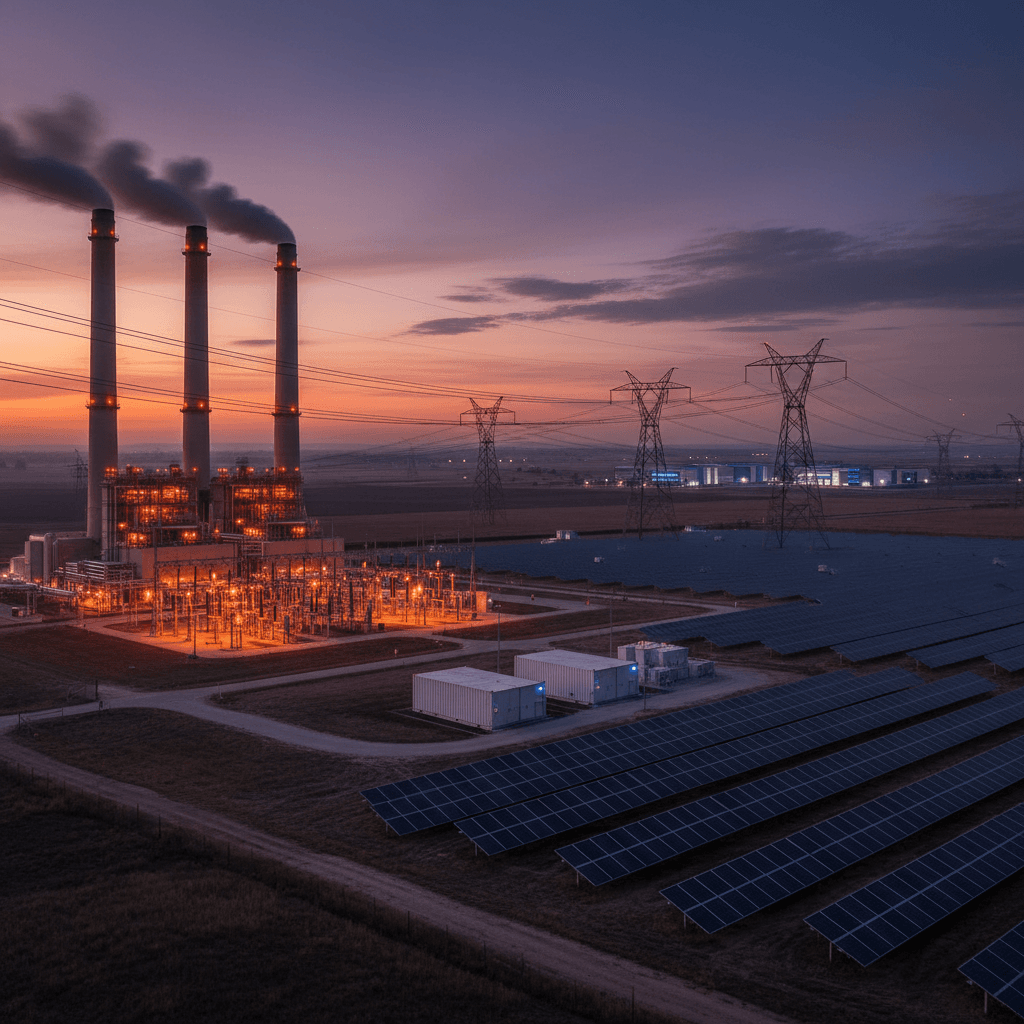
That’s exactly what’s playing out right now in Fluvanna County, Virginia, where a 1.5‑gigawatt gas plant proposal has been pushed to yet another vote delay. On paper, the “Expedition Generating Station” would help keep PJM’s massive regional grid stable as AI data centers explode across Virginia. In reality, it’s become a frontline battle over what kind of energy system we’re building: one that doubles down on fossil fuels, or one that treats green technology and AI as the core of the solution.
This matters because decisions like this don’t just affect one rural county. They shape how fast we decarbonize, how reliable the grid is, and how sustainable AI‑driven growth will be over the next decade.
In this post, I’ll break down what’s happening in Fluvanna, how grid operators like PJM are using projects like this to respond to AI‑driven demand, and—most important—what a greener alternative looks like when you combine clean energy, smart grids and AI.
What’s Really at Stake in the Fluvanna Gas Plant Fight
The Fluvanna County Planning Commission has postponed its vote on Tenaska’s proposed 1.5 GW natural gas plant to January 13. Tenaska requested the delay after commissioners signaled they wanted more time, and because key permit, zoning and environmental reviews are also landing in January.
Here’s the core of the proposal:
- Size: 1.5 gigawatts of new gas generation
- Location: Next to an existing 1 GW Tenaska gas plant near a Williams pipeline
- Timeline: Aimed to be completed by 2031
- Grid role: Feed power into PJM Interconnection, which serves parts of 13 states and D.C.
Local planning staff say the project aligns with parts of the county’s comprehensive plan around economic development and land use, but clearly fails the test on renewable energy goals because it’s entirely fossil‑based. The tradeoff is blunt:
- Pros: An estimated $8.3 million per year in local tax revenue for 30 years, plus conservation of some nearby land and expansion of a facility that already supplies about 4% of the county’s tax base.
- Cons: More fossil fuel dependency, potential air and water impacts, construction traffic, noise, and a direct conflict with stated renewable energy and rural preservation goals.
Residents are split. Some families of plant workers describe Tenaska as safe and reliable corporate neighbors. Others, organized through groups like Fluvanna Horizons Alliance, argue a second gas plant can’t be squared with health, climate and community priorities.
Tracey Smith, a local resident, put her finger on the deeper issue: if a comprehensive plan that promises renewable energy and rural protection can be “brushed aside” when a big fossil project shows up, what’s the point of public participation at all?
Why PJM and Data Centers Are Driving Gas Proposals
The Tenaska project exists because PJM is under pressure to meet exploding electricity demand, especially from AI‑heavy data centers and financial services.
Here’s what’s driving that demand spike:
- AI workloads: Training and running large AI models can use 10–30x more power than traditional web applications on the same footprint.
- Data center clustering: Northern Virginia is already the world’s largest data center hub. New AI‑focused campuses are measured in hundreds of megawatts each.
- Electrification trends: EV charging, heat pumps and industrial electrification are all adding to the baseline.
From PJM’s perspective, firm capacity you can turn on at will—like gas—is a tempting shortcut. The queue for new renewables and storage is clogged by permitting delays, interconnection backlogs and financing friction. Clean energy advocates are right that a “fast track” process can end up favoring fossil projects that are easier to permit under current rules.
The reality, though, is not that PJM “loves” gas. It’s that the system is still optimized for it. The rules, timelines and risk models were built around centralized thermal plants. Until those rules shift, a 1.5 GW gas plant will almost always look simpler on paper than, say, a portfolio of:
- 2–3 GW of utility‑scale solar and wind
- Several hundred megawatts of battery storage
- Aggressive demand response and flexible load from AI‑driven data centers
That portfolio can absolutely do the job. But it requires green technology and AI to be built into the grid design, instead of added as an afterthought.
How Green Technology Could Replace (or Shrink) New Gas
If you’re serious about a low‑carbon grid that still keeps the lights on for AI, there’s a better path than building more gas capacity and hoping to offset it later.
1. AI‑Optimized Demand Response for Data Centers
Data centers are often framed as inflexible loads—always on, always hungry. That’s less and less true.
Modern AI training can be:
- Shifted in time to run when renewables are abundant
- Moved across sites to chase cleaner or cheaper power
- Throttled without harming end‑user performance
With the right software and incentives, data centers on the PJM grid can behave like flexible grid assets, not just giant static loads. AI can forecast:
- Short‑term renewable output
- Transmission congestion
- Price and carbon intensity signals
Then it can automatically schedule AI jobs to minimize emissions and reduce strain on local substations. Every megawatt of flexible demand you create is a megawatt of peak gas capacity you don’t need.
2. Storage + Smart Grids Instead of Pure Gas Peakers
A 1.5 GW gas plant is a blunt instrument. Green technology lets you be more surgical.
A cleaner alternative relies on stacking:
- Battery storage to handle short‑duration peaks
- Long‑duration storage (where available) for multi‑hour gaps
- Targeted grid upgrades to move power from high‑renewable regions
- Localized microgrids around critical infrastructure
When this is orchestrated with AI—forecasting load, optimizing dispatch, and learning from past events—you get reliability that rivals traditional plants without locking in 30–40 years of fossil infrastructure.
3. Hybrid Clean Energy Hubs Near Existing Infrastructure
Tenaska’s pitch leans heavily on its existing site and connection to a major gas pipeline. That’s valuable—but not uniquely valuable to gas.
The same location and transmission access could be used to build a hybrid clean energy hub:
- Large‑scale solar on company‑owned land
- Co‑located battery systems to provide firm capacity
- Potential future integration of green hydrogen or other low‑carbon fuels
- AI‑driven control systems that treat the whole cluster as a single flexible resource
This kind of hub still delivers local tax revenue and jobs, still anchors the grid, but aligns with Fluvanna’s renewable energy goals instead of undermining them.
What Local Decision‑Makers Should Be Asking
For county planners, supervisors and residents, the Tenaska case isn’t just a yes/no question on a gas plant. It’s a chance to reset the rules for what qualifies as being “in substantial accord” with a comprehensive plan in the era of green technology.
Here are the questions I’d want answered before approving any large fossil project:
-
What is the full 30‑year carbon cost?
Not just emissions on paper, but the opportunity cost of blocking or delaying cleaner projects on the same land and interconnection capacity. -
What’s the realistic clean alternative portfolio?
Ask for a side‑by‑side comparison: a gas‑heavy scenario vs. a mixed portfolio of renewables, storage and demand flexibility, modeled for reliability and cost. -
How will AI and smart grid tools be used?
Any project claiming to support AI‑driven demand should also show how AI will be used to reduce that demand’s impact on the grid and emissions. -
How does this decision line up with local values—not just revenue?
Fluvanna’s comprehensive plan emphasizes renewable energy, rural character and public health. A project that conflicts with those should face a higher bar than “it brings in taxes.” -
Is there a clear phase‑down or transition path?
If gas is approved as a “bridge,” there should be hard milestones for blending in low‑carbon fuels, adding storage and reducing runtime over time.
The bigger principle: public participation has to mean something. Communities are increasingly climate‑literate. If a comprehensive plan can be ignored when it’s inconvenient, trust evaporates, and every project becomes a fight.
How Businesses Can Align AI, Clean Energy and Growth
If you’re running a company that depends on AI or large‑scale compute—especially in PJM territory—you don’t have to wait for counties and grid operators to get everything right.
There are concrete steps you can take now:
-
Choose data center partners with transparent energy strategies. Favor operators that:
- Use hourly or granular clean energy matching
- Participate in demand response programs
- Publish their grid emissions profiles
-
Use AI to manage your own load. Many organizations can batch non‑urgent compute, shift workloads, and respond to grid signals without touching user‑facing services.
-
Support local clean projects directly. Community solar, on‑site generation, and power purchase agreements tied to storage send a much stronger signal than generic offsets.
-
Engage in local planning processes. If your business benefits from the grid, your voice in planning commission hearings and comprehensive plan updates carries weight—especially when you argue for smart green infrastructure instead of quick fossil fixes.
I’ve seen the companies that get ahead of this end up with lower long‑term energy costs, better ESG stories, and fewer surprises when regulators finally tighten the screws.
Where Green Technology Fits in Decisions Like Fluvanna’s
The Fluvanna gas plant debate looks local, but it’s part of a global pattern: AI and digital growth are colliding with aging, fossil‑heavy grids. Counties and grid operators can respond by doubling down on gas, or by using AI and green technology to redesign how the system works.
The better approach is clear:
- Treat AI not just as a source of demand, but as a tool for optimizing clean energy.
- Use smart grids, storage and flexible loads to provide reliability instead of another 30‑year fossil asset.
- Make comprehensive plans and community values binding, not optional.
If you care about sustainable AI, clean energy or smart cities, this isn’t just a Virginia story. It’s a preview of the choices your own region will face over the next few years.
The question isn’t whether we’ll build more capacity for AI and data centers. We will. The real question is whether that capacity is locked into fossil fuels—or whether we use green technology and AI together to build a grid that’s cleaner, smarter and actually aligned with the communities it serves.