Nielsen and Roku expanded data-sharing to improve streaming measurement. Here’s what it means for agentic marketing and how to act on it.
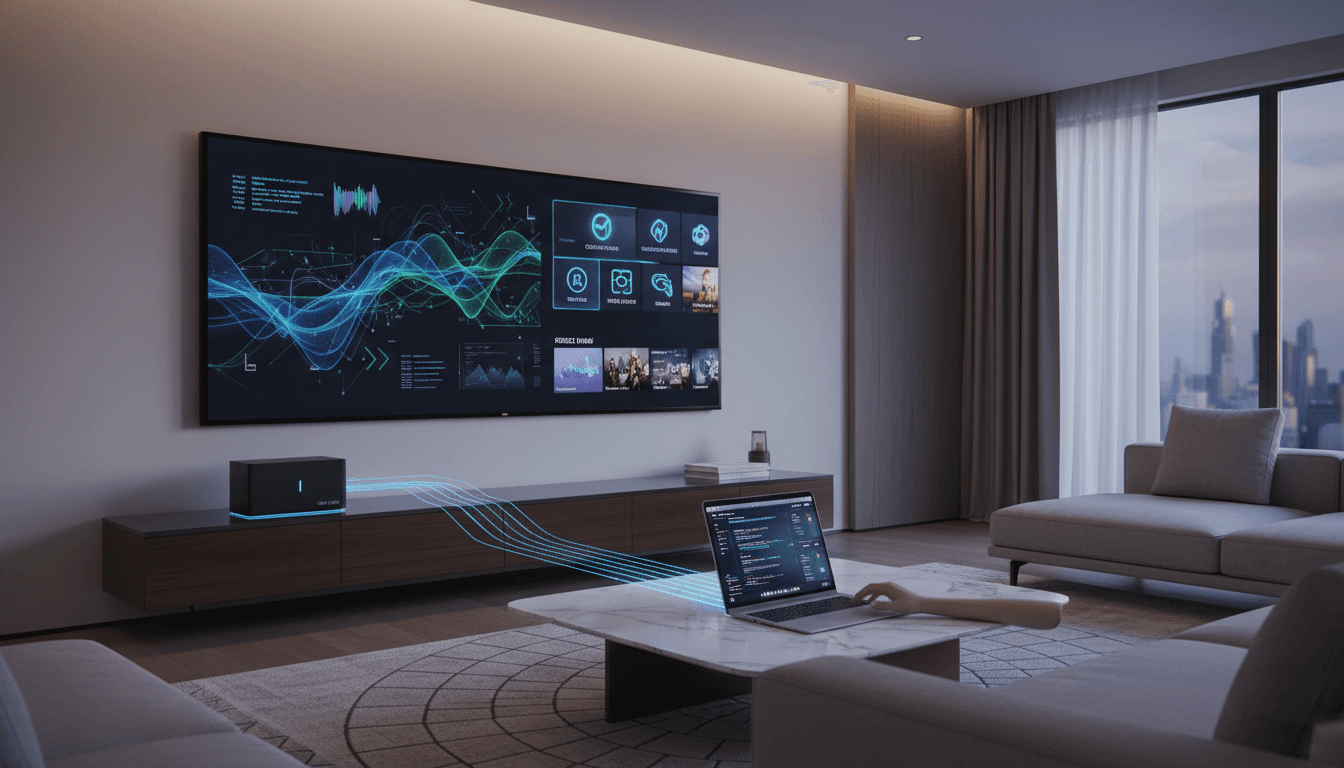
Streaming Measurement Gets Real: Nielsen x Roku
Roku devices now represent more than 21% of total TV viewing in the U.S., based on Nielsen research cited in a recent industry update. That single stat explains why Nielsen and Roku just expanded their data-sharing agreement—and why every marketer running streaming budgets should pay attention.
Most teams still treat streaming measurement like a spreadsheet reconciliation project: export from one platform, stitch it to another report, argue about definitions, then make a budget call two weeks late. The Nielsen–Roku partnership is a signal that the industry is finally forcing measurement closer to where decisions actually happen: in near-real-time, with bigger datasets, and with fewer blind spots.
If you’re following our Agentic Marketing series, you’ll recognize the pattern: autonomous marketing agents only perform as well as the data they can access and trust. Partnerships like this are essentially infrastructure upgrades for agentic systems. And if you’re building toward that future, it’s worth seeing what’s changing and what you should do next. (If you want a practical view of how autonomous execution fits into modern marketing ops, start here: 3l3c.ai.)
What the Nielsen–Roku partnership actually changes
The headline is “data-sharing,” but the practical shift is bigger: Nielsen gets deeper Roku streaming data feeding its advanced measurement and outcomes products, and Roku gains access to Nielsen streaming platform ratings. This is a two-way deal—important because measurement has become a bargaining table, not a one-directional service.
Here’s what’s different about this expansion versus the older “panel-only” era:
- More behavioral signal at scale: Roku is a major connected TV (CTV) platform. Large-scale device data adds detail that traditional panels can’t always provide quickly.
- A tighter loop between exposure and outcomes: Nielsen is explicitly positioning this as advanced campaign measurement and outcome solutions, not just ratings.
- Cross-system credibility pressure: Nielsen’s Big Data + Panel approach earned Media Rating Council (MRC) accreditation in January (per the source article), but it’s also faced criticism about methodology stability. Bringing in more robust platform data is one way to reduce those weaknesses—or at least reduce the perception of them.
A useful way to think about it: this isn’t just “better reporting.” It’s a push toward a measurement layer that can support frequent, automated decisioning.
Big Data + Panel: why it matters for marketers, not just media nerds
Nielsen’s Big Data + Panel product attempts to unify classic panel measurement with large datasets from sources like set-top boxes and smart TVs, reportedly reaching an estimated 45 million households. If you’re a marketer, the implications are concrete:
- Fewer gaps between platforms (less “walled garden math”) when you’re trying to explain reach and frequency.
- More stable planning inputs for quarterly or monthly pacing.
- Better calibration for incrementality work when your exposure data isn’t missing half the story.
Agentic marketing systems thrive here because they don’t just “report.” They decide: shift budget, cap frequency, rotate creative, reallocate to cohorts. That requires a measurement substrate that can handle messy reality.
Why streaming measurement is still a headache (and why that’s fixable)
Streaming grew faster than its standards. Linear TV had decades to establish common currencies and norms. Streaming/CTV scaled in a fragmented environment where each platform had its own:
- identifiers and identity rules
- ad exposure definitions
- attribution windows
- completion metrics and viewability assumptions
The result: advertisers overpay for duplicated reach and underinvest in what’s actually working because they can’t see the full path.
The fix isn’t one perfect dashboard. The fix is more high-quality data interoperability—and agreements that make interoperability normal.
Fragmentation creates three common budget mistakes
If your team has ever debated why platform A says you reached 10M people and platform B says the campaign reached 14M “unique,” you’ve seen fragmentation in action. In practice it causes:
- Phantom reach: each platform claims unique audiences that overlap heavily.
- Frequency blowouts: the same households get hammered because caps don’t reconcile.
- Slow optimization: by the time you aggregate reports, the campaign’s already halfway done.
Data-sharing partnerships don’t magically solve all three, but they make it possible to solve them with better calibration and more consistent rating inputs.
What this signals for 2026: measurement is becoming an agent input
Here’s the stance I’ll take: measurement is no longer primarily for humans. It’s becoming an input stream for autonomous systems.
That doesn’t mean humans are out of the loop. It means the tempo changes. In 2026, especially as CES season drives new ad tech narratives and budgets reset, the teams that win will be the ones who can:
- interpret streaming signals quickly
- standardize how those signals enter decisioning systems
- automate routine optimization while keeping strategy human-led
The Nielsen–Roku arrangement fits this shift because it improves the chances that “what happened” can be computed more reliably and more frequently.
What autonomous marketing agents need from measurement data
In agentic marketing, an “agent” isn’t a rules-based automation. It’s a system that can reason over constraints and goals (brand lift vs. CAC vs. reach vs. margin), then act. For that, measurement data has to be:
- Timely: late data produces late decisions.
- Granular: aggregated averages hide waste.
- Comparable: definitions can’t change every week.
- Auditable: if the agent moves money, you need a trail.
Data-sharing partnerships help most with comparable and granular—the two that are hardest to fake with spreadsheets.
How to apply this: a practical playbook for streaming campaigns
You don’t need a Nielsen–Roku-level agreement to benefit from the mindset behind it. You can operationalize the same principles inside your org.
1) Treat measurement like a product, not a report
If your measurement layer is built ad hoc per campaign, you’ll never scale. Assign an owner and maintain versioned definitions.
A “measurement product” should include:
- a metric dictionary (what counts as an impression, completion, household reach, etc.)
- identity assumptions (household vs. person-level modeling)
- update cadence (daily vs. weekly)
- governance (who can change definitions)
This matters because agentic systems break when definitions drift.
2) Build an “agent-ready” metric set
Autonomous optimization works best when metrics are explicitly tied to decisions. Here’s a clean baseline for ad-supported streaming:
- Reach (household/person model) + effective frequency
- Cost per incremental reached household (modeled if needed)
- Attention proxy (completion rate, time-in-view, or weighted completion)
- Outcome proxy tied to your funnel (site visits, sign-ups, store lift, etc.)
Then map each metric to an action:
- If frequency > target: cap or rotate placements
- If completion low: swap creative or tighten targeting
- If incremental reach cost spikes: shift budget to inventory with less overlap
The goal is to make optimization deterministic enough for an agent to act safely.
3) Use “calibration windows” to avoid thrash
One risk of faster measurement is overreacting to noise. A simple fix is to set calibration windows:
- Daily: pacing, delivery, obvious anomalies
- Weekly: efficiency moves (CPM, completion, reach curve)
- Biweekly/monthly: deeper outcome modeling and creative learning
Agents can operate inside these windows: quick actions daily, heavier reallocations weekly.
4) Negotiate data access like it’s media value
Advertisers often negotiate CPMs hard and accept weak data terms. That’s backwards in streaming.
Your media plan should specify:
- what log-level or aggregated data you’ll receive
- latency expectations
- allowable match keys (privacy-compliant)
- how deduplication will be handled (or at least estimated)
If you want autonomous optimization later, data rights today are non-negotiable.
For teams building this muscle, I’ve found it helps to think in systems: your execution layer, your measurement layer, and your decision layer should connect cleanly. That’s exactly the direction platforms are heading, and it’s what we’re building toward with Vibe Marketing at 3l3c.ai.
The uncomfortable part: “better data” doesn’t automatically mean “trusted measurement”
Nielsen’s Big Data + Panel approach getting MRC accreditation is meaningful—accreditation is a legitimacy milestone. But the article also notes industry criticism about methodology stability.
Both can be true:
- the industry needs hybrid measurement (panel + big data)
- hybrid measurement can produce volatility if calibration, bias correction, or dataset composition shifts
Marketers should respond with verification habits, not cynicism.
A simple trust checklist for streaming measurement
Use this when you’re evaluating any measurement feed (including improved ones):
- Explainability: Can your partner explain where the data comes from and how it’s modeled?
- Consistency: Do definitions stay stable across months and quarters?
- Reproducibility: If you rerun a report, do you get the same answer?
- Sensitivity: Which inputs cause the biggest swings?
- Actionability: Does the data arrive in time to change outcomes?
Agentic marketing makes this checklist even more critical. An agent will exploit whatever signal you give it—good or bad.
Where this goes next: streaming becomes the proving ground for agentic marketing
Streaming is where measurement pain is most obvious, budgets are significant, and feedback loops can be fast. That combination makes it the ideal environment for agentic systems to prove value.
The Nielsen–Roku partnership is one more sign that the market is aligning around a new expectation: measurement should be interoperable enough to support continuous optimization. Not “monthly reporting.” Not “post-campaign decks.” Continuous.
If you want to build toward that, start by tightening your data flows and decision rules now. Then, when your team is ready to hand off more execution to autonomous agents, you’ll be operating from a stable measurement foundation—not vibes.
If that’s the direction you’re headed, take a look at the Vibe Marketing autonomous app and think about one question: when streaming measurement finally becomes consistent, will your marketing operations be ready to act at that speed—or will you still be waiting on a Monday morning report?