AI-powered hotel apps turn loyalty into a booking engine. Learn what Centara’s new app signals for personalization, direct revenue, and guest experience.
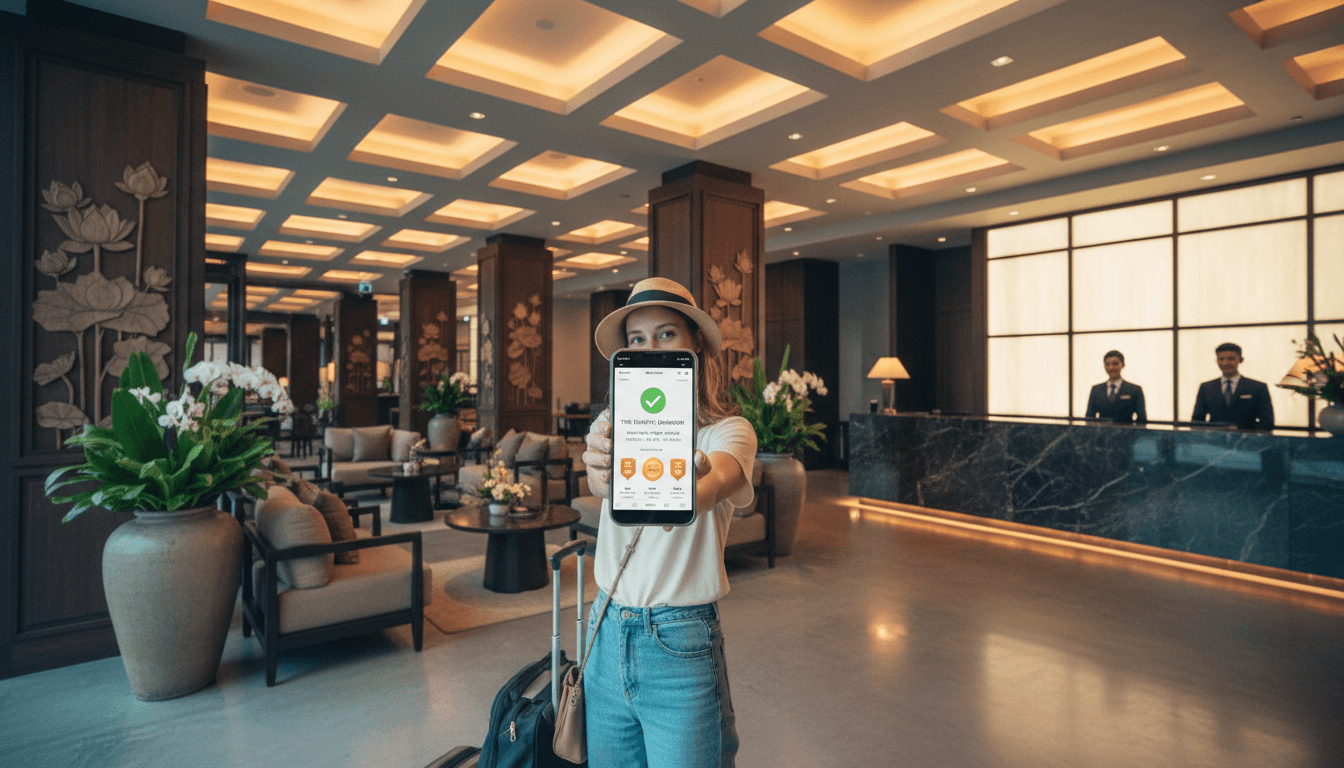
AI-Powered Hotel Apps: Loyalty, Personalization, Profit
Mobile apps used to be a “nice-to-have” for hotel brands. In late 2025, that mindset is expensive.
Direct bookings are under pressure, OTA costs aren’t getting friendlier, and guests now expect their whole trip—booking, changes, rewards, support—to fit inside their phone. When a hospitality brand launches a well-designed app (like Centara just did), it’s not a vanity project. It’s a distribution channel, a loyalty engine, and—if you wire it correctly—your best AI-powered personalization surface.
Centara Hotels & Resorts’ new mobile app is a timely example: real-time booking, loyalty built in, and a standout feature that lets members pay with points (fully or points + cash). On paper, it’s “convenience.” In practice, it’s the foundation for smarter customer experience automation—the exact theme of our “पर्यटन और आतिथ्य उद्योग में AI” series.
Why hotel apps are becoming the new “front desk”
A modern hotel app isn’t just a booking tool. It’s a decision engine: it guides guests toward an action (book, upgrade, dine, extend, rebook) with less friction and more confidence.
Centara’s launch hits the core expectations guests now bring to travel:
- One place to manage booking + stay + loyalty
- Real-time availability and rate visibility
- Mobile-only offers that feel worth installing an app for
- Support access without waiting on email threads
Centara also adds hard incentives: members can get up to 15% off, and during the launch window (until 15 Feb 2026) that discount becomes 25%, plus double loyalty points on app bookings. That’s not subtle. It’s a direct attempt to shift behavior from OTAs and browsers to a logged-in, data-rich channel.
Here’s my stance: Hotels that treat their app as a “mini website” will lose. The brands that win will use the app as a personalized trip companion—and AI is what makes that scalable.
The app advantage hotels don’t talk about enough: authenticated intent
A guest browsing your website is often anonymous. A guest inside your app is typically logged in (or close to it). That changes everything.
Once the guest is authenticated, you can do three high-value things ethically and effectively:
- Recognize them (preferences, past stays, tier)
- Predict needs (arrival time, likely add-ons, language, room type)
- Act at the right moment (pre-arrival upsell, mid-stay dining prompt, post-stay rebook)
That’s where AI in hospitality stops being abstract and starts generating revenue.
Loyalty in the app: a wallet, not a points counter
Centara built the app around CentaraThe1: points balance, tier, redemptions, and member pricing. The most interesting move is payments: members can pay at checkout using points fully or as a points + cash blend.
That sounds like a feature. It’s actually a behavioral nudge:
- Guests stop seeing points as “someday value”
- Points become an active currency
- Redemption friction drops sharply
And lower friction drives usage. Usage drives data. Data improves personalization. Personalization increases conversion. It’s a loop.
Where AI makes loyalty feel personal (instead of spammy)
Most hotel loyalty messaging is still batch-and-blast: “20% off this weekend.” That’s not personalization; it’s a coupon.
A better approach is AI-driven segmentation and next-best-action logic:
- Guest A is a family traveler → highlight connecting rooms, kids’ meals, late checkout
- Guest B is a frequent business traveler → highlight express check-in, laundry timing, quiet floors
- Guest C redeems points often → offer points + cash bundles that preserve points for a longer stay
A snippet-worthy rule I’ve seen work well:
If your loyalty offer doesn’t change based on who the guest is and where they are in the journey, it’s not an offer—it’s noise.
Centara’s points payment option is also an AI opportunity: once you can split tender (points + cash), you can optimize the recommendation. For example, suggesting a points amount that preserves a threshold for a free night later can feel surprisingly thoughtful—if the guest opts in.
Practical playbook: 5 AI-driven loyalty moments to build into your app
If you’re running a hotel, resort, or chain and want leads or direct revenue, these are the moments that matter:
- Price-drop alert for wishlisted hotels (predict intent + reduce abandonment)
- Pre-arrival upgrade offers personalized by length of stay and past behavior
- In-stay dining prompts based on time, party size, and outlet capacity
- Smart late checkout offers based on housekeeping load (good for ops + upsell)
- Rebook nudges 7–21 days post-stay with a tailored perk (points boost, breakfast, spa credit)
None of these require “sci-fi AI.” They require clean data, clear rules, and a model that’s trained to prioritize guest value and hotel profitability.
Personalization that guests actually feel (and don’t resent)
Guests don’t want “personalization” as a concept. They want the hotel to remember what matters without making it weird.
Centara’s messaging focuses on an intuitive interface and tailored services. To make that real, personalization has to show up in small, concrete ways:
- Room recommendations that reflect what the guest books (not what the hotel wants to sell)
- Language and content that match the guest’s region and trip type
- Service shortcuts: repeat requests, saved preferences, and quicker support
What to personalize first: the high-impact trio
If you’re prioritizing features, start with the three that most directly improve conversion and satisfaction:
- Search and discovery: reorder hotels and room types based on likely fit
- Offers: show one strong, relevant offer rather than five generic ones
- Support: route issues based on context (reservation type, property, language)
A common mistake is overbuilding “AI concierge” chat while the basics (login, payments, vouchers, refunds, upgrades) are clunky. Personalization can’t compensate for friction.
Real-time availability is more than convenience—it’s trust
Centara highlights real-time availability and detailed room info. That matters because real-time inventory reduces the moment when guests think: “Is this accurate, or will I get an email later saying it’s unavailable?”
AI can enhance this even more:
- Demand forecasting to adjust availability messaging and reduce over-promising
- Dynamic merchandising (not just pricing): highlight the room most likely to satisfy the guest, not simply the highest ADR
- Cancellation risk prediction to manage inventory more confidently
This connects directly to the “मांग पूर्वानुमान” (demand forecasting) track within पर्यटन और आतिथ्य उद्योग में AI.
Mobile-only deals are powerful—if you measure the right things
Centara’s mobile-only launch offer—25% off until 15 Feb 2026 plus double points—is aggressive. It will drive installs and app bookings. But a discount isn’t a strategy unless you know what it bought you.
The metrics that tell you if your app is truly working
Hotels often celebrate installs. Installs are a vanity metric.
What you actually need to track (weekly, not quarterly):
- App-to-booking conversion rate (by market, device, and segment)
- Share of direct bookings via app vs web
- Repeat rate: second booking within 6–12 months
- Cost per direct booking (including offer cost and tech cost)
- Ancillary attach rate: dining, spa, transfers, upgrades
- Loyalty engagement: redemption rate and points liability trend
If you’re using AI in hospitality, add two more:
- Offer acceptance rate by model/segment (to prevent “AI spam”)
- Incrementality testing (holdout groups so you know what AI actually caused)
A blunt truth: If you don’t run holdouts, you’ll over-credit your personalization for revenue that would’ve happened anyway.
How to evolve a hotel app into an AI concierge (without overpromising)
“AI concierge” is an overloaded phrase. Guests don’t want a chatbot that can’t solve real problems. They want fast, correct outcomes.
A realistic maturity path looks like this:
Step 1: Get the foundations right
- Single sign-on, stable payments, easy modifications
- Clear loyalty wallet (earn, redeem, tier, benefits)
- Support that can see the reservation context
Centara’s app is clearly aiming to nail this baseline by combining booking, loyalty management, and points payment in one flow.
Step 2: Add AI where it reduces effort
- Smart FAQs that answer with reservation-aware context
- Automated service requests (extra towels, check-out time, airport transfer)
- Personalized recommendations that are constrained by rules (no inappropriate upsells)
Step 3: Connect AI to operations
This is where competitive advantage shows up:
- Forecast housekeeping and staffing based on arrivals and requests
- Predict peak times at outlets and propose reservations proactively
- Trigger service recovery offers when sentiment signals appear
If your AI doesn’t talk to ops, it will create promises your property can’t fulfill.
Quick Q&A (the “People Also Ask” version)
Is a hotel app worth it for a mid-size brand? Yes—if it drives direct bookings and loyalty enrollment. If it’s only a brochure, no.
What’s the fastest AI feature to implement? Personalized merchandising (sorting and recommending rooms/offers) often beats chatbots for ROI because it sits directly in the booking funnel.
How do you avoid creepy personalization? Use first-party data the guest expects you to have (past stays, preferences they set), be transparent, and give easy opt-outs.
What Centara’s launch signals for 2026 travel brands
Centara’s app is a strong indicator of where hospitality is heading: mobile-first loyalty + direct payment flexibility + always-on support. The brand is also making the correct strategic bet: relevance beats novelty.
For teams working on AI in tourism and hospitality, the takeaway is practical: an app is the best place to deploy AI because it’s contextual, authenticated, and measurable. When you connect loyalty data to real-time behavior, personalization stops being a buzzword and starts becoming a repeatable growth system.
If you’re planning your 2026 roadmap, start with this question: What would you automate, personalize, or predict if you had a guest’s full journey in one place—search to checkout to next trip?
That’s the difference between “we have an app” and “we have a profitable direct channel.”