Build resilient foodservice operations with AI: unify systems, forecast demand, reduce stockouts, and deliver consistent omnichannel experiences.
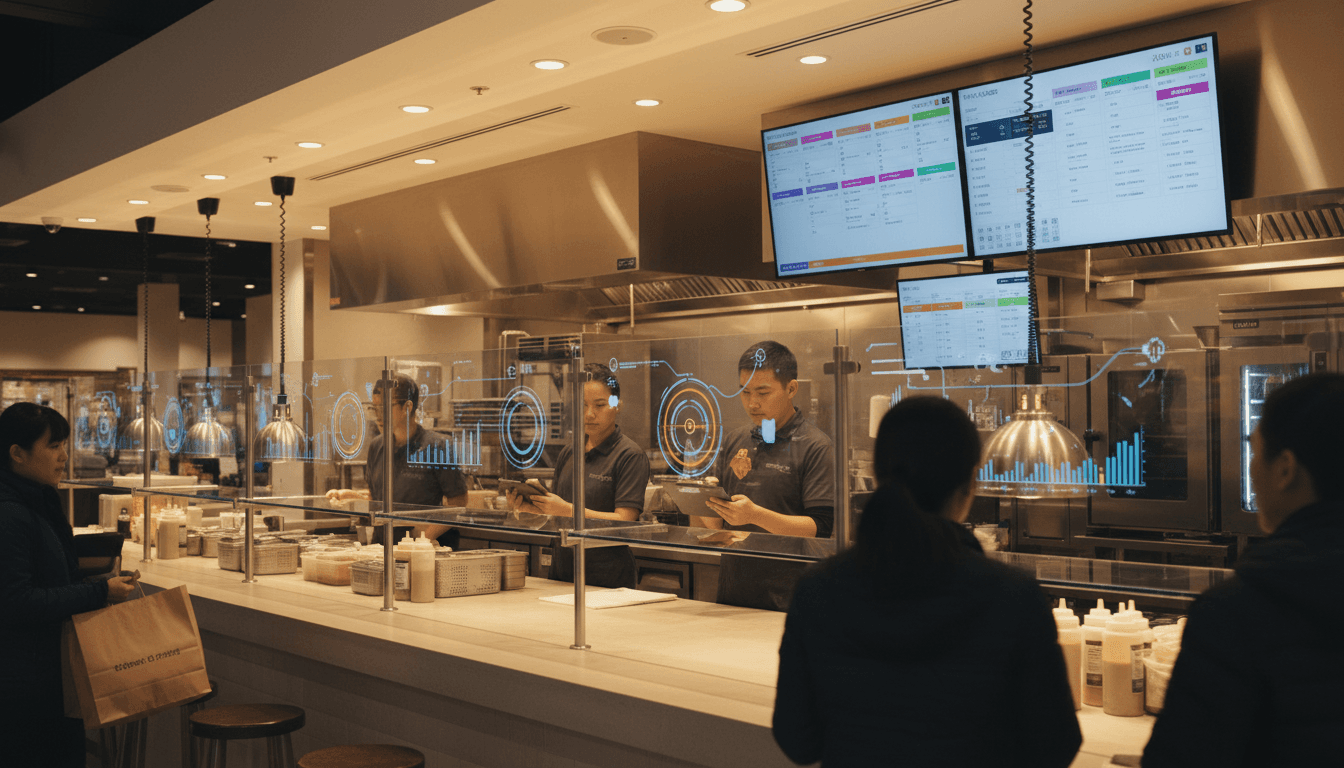
AI-Powered Resilient Foodservice Ops That Actually Work
Only 22% of restaurants say they’re satisfied with their current technology systems. That number isn’t just a tech gripe—it’s an operations warning light. If your ordering, kitchen, inventory, loyalty, and delivery tools don’t talk to each other, you don’t have “systems.” You have a collection of failure points.
December is the stress test. Holiday footfall spikes, delivery demand swings, staff availability gets messy, and guests get less patient. In Ireland especially, where convenience retail and food-to-go keep blending into the broader retail ecosystem, foodservice resilience isn’t a “restaurant problem.” It’s an omnichannel retail problem.
This post is part of our AI in Retail and E-Commerce series, and I’m going to take a clear stance: operational resilience isn’t a poster on the staff room wall. It’s a set of decisions you make about data, workflows, and automation—where AI earns its keep when things get chaotic.
Resilient foodservice ops start with one truth: fragmentation kills
Resilience means you can keep serving customers—even when demand spikes, suppliers miss a delivery, a device fails, or two staff call in sick.
Most operators try to “fix resilience” with a new channel (another delivery partner, another kiosk, another app). That often makes it worse. Every new channel adds:
- Another menu to maintain
- Another set of orders to reconcile
- Another batch of customer data trapped in a silo
- Another workflow staff must remember when it’s busy
When systems are fragmented, managers fall back to workarounds: spreadsheets, WhatsApp messages to suppliers, manual stock checks, and “ask the kitchen.” Those work until they don’t.
A resilient operation has unified systems across on-premise and online platforms. The unification isn’t just IT housekeeping. It’s how you reduce mistakes, speed up decisions, and make customer experiences consistent across every touchpoint.
What “unified” really means (and what it doesn’t)
Unified doesn’t mean “one vendor for everything.” It means:
- A shared source of truth for products, pricing, inventory, and customers
- Real-time data flows between ordering, payments, kitchen production, and stock
- Operational visibility (managers can see problems before guests do)
This is where AI becomes practical. Not flashy. Practical.
Where AI actually builds resilience (not just dashboards)
AI improves resilience when it reduces the gap between what’s happening and what your team can respond to.
Think of AI in foodservice the same way you’d think about it in e-commerce: it’s not “the model.” It’s the loop—sense → decide → act → learn.
AI use case #1: Demand forecasting that’s usable on a Tuesday
The goal isn’t perfect forecasts. The goal is fewer bad decisions:
- Too much prep leading to waste
- Too little prep leading to substitutions, refunds, and angry reviews
- Understaffed peaks and overstaffed lulls
A strong AI demand forecasting approach blends:
- Store-level historical sales
- Day-of-week and seasonality patterns (December behaves differently)
- Promo calendars
- Local events (sports fixtures, school holidays)
- Weather signals (especially relevant for delivery vs. walk-in trade)
Then it outputs actions managers can use:
- Recommended prep quantities by daypart
- Suggested staffing levels by role
- Early warnings when demand is deviating from plan
Resilience comes from response time. If you discover you’re trending 25% above forecast at 12:30pm, it’s already late. AI helps you see that at 11:15.
AI use case #2: Inventory intelligence that prevents “menu shame”
Guests don’t care that your supplier shorted you. They care that your app let them order something you can’t make.
AI-driven inventory management connects POS sales, recipe-level consumption, and supplier lead times to do three things:
- Predict stockouts before they happen
- Recommend substitutions that protect margin and guest satisfaction
- Trigger automated replenishment suggestions
For omnichannel foodservice (counter + click-and-collect + delivery), this is huge. It reduces:
- Item cancellations and refunds
- Time wasted calling customers
- “Out of stock” experiences that push people to competitors
A practical rule: if your online menu isn’t inventory-aware, you’re manufacturing complaints.
AI use case #3: Labor optimization without treating staff like robots
Most companies get this wrong. They use labor tools purely to cut hours. Then service collapses, and turnover rises.
AI is useful when it balances:
- Forecasted transactions by channel
- Service targets (e.g., ticket times, drive-thru speed, queue length)
- Staff skill mix (who can do what)
Resilient scheduling isn’t “fewer people.” It’s the right people at the right times, plus a plan when someone doesn’t show.
This matters in December because absence rates often rise, and training time is scarce. AI can help you:
- Identify fragile shifts (only one trained person on ovens)
- Recommend cross-training priorities
- Build contingency schedules
Omnichannel resilience: treat foodservice like retail and e-commerce
Foodservice has fully joined the omnichannel world. Guests move between:
- In-store ordering
- Mobile ordering
- Self-service kiosks
- Delivery marketplaces
- Click-and-collect
The operational mistake is treating each channel as a separate business. The customer doesn’t.
A resilient omnichannel stack has three “always-on” layers
1) Experience layer (front end): kiosks, tablets, mobile, web ordering
2) Execution layer (operations): POS, kitchen display systems, payment flows, production timing
3) Intelligence layer (AI + analytics): forecasting, personalization, anomaly detection, staffing recommendations
If you don’t have the intelligence layer, your teams are constantly reacting. If you don’t have the execution layer connected to the experience layer, you’re constantly apologising.
Why devices still matter (yes, the hardware)
The RSS content points to devices like modern tablets being adopted to future-proof guest experiences. That’s not just about looking modern.
Reliable, purpose-built devices matter because resilience is physical:
- A device that doesn’t crash mid-rush prevents queues
- Mobile order-taking reduces bottlenecks
- Line-busting at peak times protects conversion
But here’s the catch: hardware without workflow redesign is expensive decoration. If a tablet speeds ordering but the kitchen can’t sequence tickets intelligently, you just moved the problem.
Customer behavior analysis: resilience is also about expectations
AI in retail and e-commerce often starts with customer behavior analysis, and foodservice should copy that playbook.
Operational resilience improves when you understand:
- Which customers are time-sensitive (lunchtime office trade)
- Which customers are value-sensitive (family bundles)
- Which customers are convenience-first (delivery regulars)
Practical AI-driven moves that reduce friction
Personalized recommendations:
- Suggest high-margin add-ons that don’t slow production (e.g., bottled drinks, packaged sides)
- Recommend “fast prep” combos during peaks
Dynamic menu governance (not chaotic pricing):
- Promote items with stable supply
- Downplay items that are inventory-risky
- Highlight items that smooth kitchen load (spread demand across stations)
Queue and wait-time transparency:
- Predict realistic pickup times
- Adjust promises by channel
A resilient brand tells the truth early. If it’s a 22-minute wait, don’t promise 12.
A resilience blueprint: what to implement in the next 90 days
If you’re running foodservice inside retail (forecourt, convenience, supermarket café) or running a multi-site restaurant group, resilience improves fastest when you focus on a few high-leverage changes.
Step 1: Unify menu, pricing, and item availability across channels
Start here because it prevents immediate customer pain.
- One master menu
- One pricing logic
- Inventory-aware item availability
Success metric: fewer cancellations, fewer refunds, fewer “we can’t do that” moments.
Step 2: Put AI forecasting in service of operations (not finance)
Forecasts should drive actions:
- Prep plans
- Staffing plans
- Ordering plans
Success metric: waste down, stockouts down, ticket times more stable.
Step 3: Automate exception handling
Resilience isn’t the average day. It’s the weird day.
Use AI and rules to detect anomalies:
- Sales spike outside pattern
- Inventory consumption doesn’t match sales (shrink, recipe variance)
- A channel suddenly drops (device issue, integration failure)
Success metric: you spot issues in minutes, not after close.
Step 4: Close the loop with staff feedback
The reality? Your frontline team knows where the system lies.
Create a lightweight loop:
- “What slowed you down today?”
- “Which items caused remakes?”
- “Where did orders bunch up?”
Feed this back into training, menu design, and system configuration.
Success metric: fewer manual workarounds, higher adoption of tools.
Common questions operators ask (and straight answers)
“Do we need AI to be resilient?”
No. You need connected workflows and disciplined operations. AI helps you scale those disciplines across sites, shifts, and channels.
“What’s the first AI project that pays off?”
Demand forecasting tied to staffing and prep planning usually shows value quickly because it hits labor, waste, and service speed at the same time.
“Will personalization hurt speed of service?”
It will if you recommend items that complicate production. Good personalization respects operational constraints: items that are quick to assemble, available, and margin-friendly.
What resilient foodservice ops will look like in 2026
The direction is clear: unified systems across on-premise and online, backed by AI that turns data into decisions staff can actually use. The operators who win won’t be the ones with the most tools. They’ll be the ones with the fewest points of failure.
If you’re following our AI in Retail and E-Commerce series, this is a good moment to zoom out: foodservice is no longer separate from retail. It’s one of the fastest ways to build loyalty, increase basket size, and differentiate the in-store experience. Resilience is what makes that strategy dependable.
If you’re planning your 2026 roadmap, pick one area—forecasting, inventory, labor, or omnichannel consistency—and design it end-to-end. Where does the data come from? Who acts on it? What happens when it’s wrong? That’s the difference between “AI adoption” and operational resilience you can feel on a Saturday rush.
What’s the one failure point in your current setup that you’d eliminate first: inventory blind spots, staffing fragility, or disconnected online ordering?