Mobile retail devices like Toshiba’s TCx M7/M11 make AI personalisation usable on the shop floor. See key use cases and a rollout checklist.
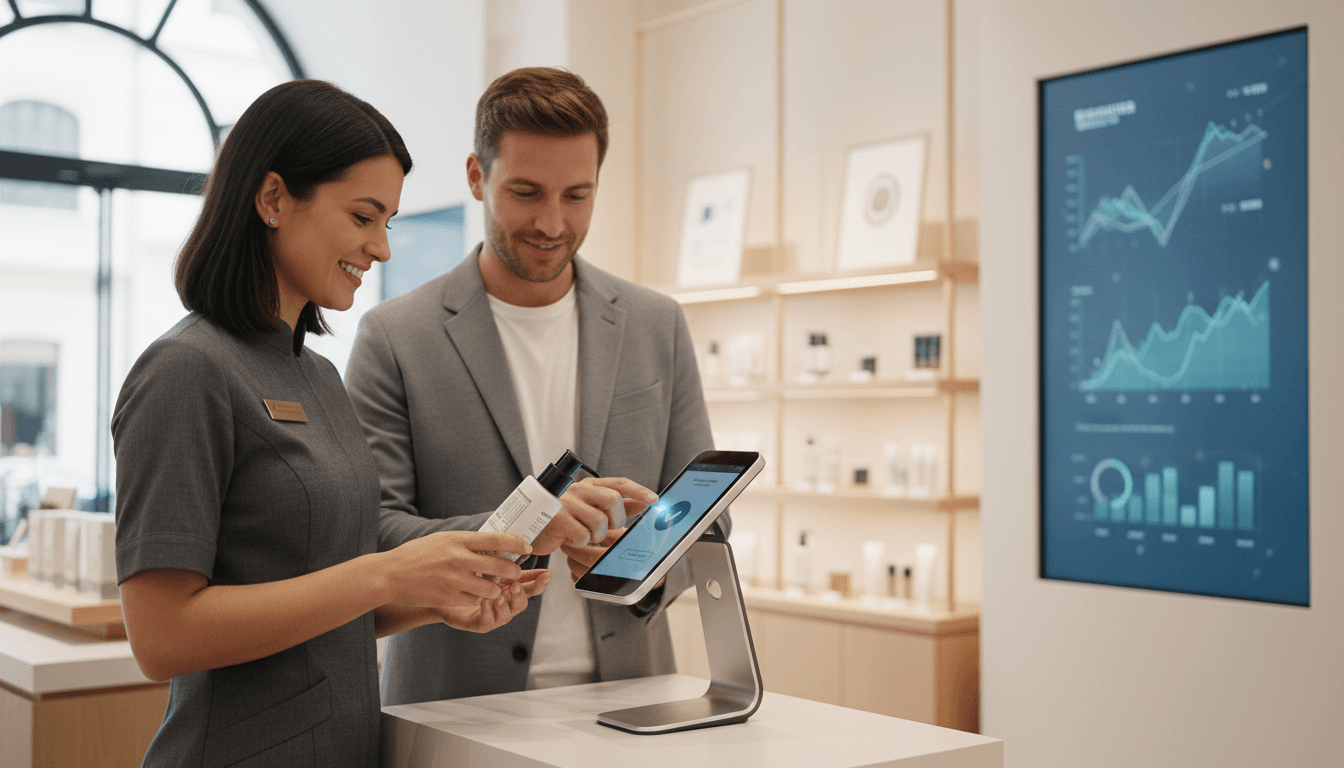
Mobile Retail Tech That Actually Enables AI Personalisation
A lot of AI retail projects fail for a boring reason: the data arrives too late, too messy, or not at the moment decisions are made. You can build a brilliant recommendation model, but if the associate can’t see it on the floor—or can’t act on it while the customer is standing there—it’s just another dashboard.
That’s why Toshiba’s latest retail mobility announcement matters. In mid-December, Toshiba Global Commerce Solutions introduced the TCx M7, expanding its mobile innovation line alongside the TCx M11. The headline isn’t “new device.” The real story is that mobile-first operations are becoming the delivery mechanism for AI in retail, connecting real-time signals (inventory, customer context, basket, queue length) to actions (assist, recommend, sell, fulfil) wherever the shopper happens to be.
This post is part of our AI in Retail and E-Commerce series, focused on how retailers—including many teams across Ireland—are turning AI into practical wins: better customer behaviour analysis, more relevant recommendations, smarter pricing, and cleaner omnichannel experiences. Mobile hardware is often the missing piece.
Why mobile-first is the fastest route to “AI that works”
AI becomes useful when it’s embedded in the workflow. Retail doesn’t happen at a desk; it happens in aisles, fitting rooms, stockrooms, pop-ups, and queues. Mobile devices are the simplest way to put AI outputs in the hands of the people who can act.
When you give associates a capable mobile device with scanning and payment built in, you’re not just speeding up checkout. You’re capturing higher-quality operational data and enabling faster decisions:
- Richer customer behaviour signals: What was scanned? What was checked but not purchased? What sizes/colours were requested?
- Cleaner inventory truth: More real-time stock checks and cycle counts reduce the “phantom inventory” that breaks omnichannel.
- Faster service loops: Fewer trips to a fixed terminal means more customer-facing time.
Here’s the stance I’ll take: if your AI strategy doesn’t include associate mobility, you’re building a brain without hands.
What Toshiba’s TCx M7/M11 signals for retail operations
The Toshiba TCx M7 and TCx M11 are designed around in-the-moment retail work. The RSS item highlights features that map neatly to today’s customer expectations: speed, convenience, and personal service.
Built-in scanning + tap-to-pay changes the store’s “shape”
A store with mobile scanning and tap-to-pay stops being a set of lanes and becomes a set of service points. That’s not poetic—it’s operational.
If any associate can:
- scan items,
- access product and inventory info,
- take payment on the spot,
…then queues shrink, conversion rises, and the store can flex for peak periods (which matters a lot in late December and January sales). For Irish retailers dealing with tight staffing and busy weekend footfall, this flexibility is often more valuable than another feature on a POS roadmap.
Real-time data is the fuel for AI personalisation
Personalised retail isn’t only about knowing the customer’s name. It’s about context. Real-time access to what’s in stock, what complements the item in-hand, and what delivery options exist is what makes “personalisation” feel helpful rather than creepy.
Mobile devices act as the bridge between:
- digital intent (browsing history, wishlists, loyalty preferences), and
- physical reality (store inventory, queue length, staff availability).
That bridge is where AI can do practical work: recommend an alternative size that’s actually available, suggest a bundle that improves margin, or trigger a ship-from-store option before the shopper walks out.
Device management isn’t exciting—but it’s the difference between pilot and rollout
Toshiba’s announcement includes “simple device management” as a benefit. That line is easy to skip. Don’t.
Retail tech fails at scale when devices aren’t maintained, patched, and governed. If you’re serious about AI in retail operations, you need consistent device uptime and a controlled environment for:
- app updates,
- security policies,
- role-based access,
- and reliable connectivity.
Mobility only enables AI if the fleet behaves predictably.
Away’s example: mobile checkout as an omnichannel multiplier
Away’s case shows what happens when mobility is treated as a customer experience layer, not a gadget. In the RSS content, Away’s senior director of direct-to-consumer technology describes using Toshiba’s TCx M7 and M11 to deliver “speed, mobility, and real-time personalisation,” turning “any sales floor into a fully capable checkout and service destination,” with built-in scanning and tap-to-pay.
What I like about this example is the implied operating model:
- The associate stays with the customer. That alone increases conversion, especially for considered purchases.
- Checkout becomes an option, not a destination. You can close the sale wherever confidence is highest.
- Events and pop-ups become easier to run. “Event-ready” matters when brands activate in temporary spaces.
For retailers in Ireland balancing flagship stores, smaller footprints, and seasonal activations, this matters because it reduces dependency on fixed infrastructure. It also tightens the link between store and e-commerce: the device is effectively a roaming node of your commerce platform.
Where AI fits: 5 practical use cases powered by mobile devices
Mobile hardware doesn’t “do AI” by itself—but it creates the conditions where AI can perform. Here are five use cases that become far more achievable when associates have capable devices.
1) On-the-floor recommendations that respect inventory
The biggest flaw in many AI-powered recommendations is availability. Mobile devices let associates see current stock and fulfilment options instantly.
What this looks like in practice:
- customer wants a size that’s out of stock in-store,
- the device suggests a similar style that is in stock or offers home delivery,
- the associate completes the order on the spot.
Recommendation quality isn’t only model accuracy; it’s “can we fulfil it right now?”
2) Clienteling that feels like service, not surveillance
When a loyalty customer is recognised (with consent), mobile devices let staff act on preferences without leaving the conversation.
Good clienteling prompts are specific:
- “Your usual fit is 32x32—this style runs smaller.”
- “The matching accessory is in the stockroom; I can grab it.”
Bad prompts are vague:
- “Customer likes denim.”
Mobile enables the good kind because it provides product context and next-best-actions in real time.
3) Better customer behaviour analysis from richer store signals
Retailers often over-index on e-commerce analytics because it’s easier to measure. But stores generate signals too—if you capture them.
Mobile workflows can log:
- assisted selling interactions,
- reasons for substitution (size, colour, price),
- products frequently scanned but not bought,
- stock-outs encountered during selling.
That dataset supports AI models for demand sensing, assortment planning, and staff coaching. It’s not glamorous, but it’s incredibly valuable.
4) Pricing and promotion execution without the lag
If you’re running pricing optimisation or promotion tests, execution gaps ruin your results. Mobile devices help with:
- verifying promo compliance,
- confirming shelf-edge labels are correct,
- quickly checking whether a discount should apply to a basket.
AI can recommend price actions, but mobile helps you implement and measure them correctly.
5) Omnichannel fulfilment that doesn’t burn out the team
Buy-online-pickup-in-store and ship-from-store only work when associates can move quickly and avoid double handling.
Mobile devices can:
- guide pick paths,
- confirm substitutions,
- trigger customer notifications,
- and support on-the-spot payments or returns.
That reduces fulfilment friction and keeps service levels high during peak periods.
A practical checklist: choosing mobile tech that supports AI
If the goal is AI-enabled retail (not just new kit), evaluate mobility through these questions. I’ve found these criteria prevent expensive misfires.
- Workflow fit: Can an associate complete the top 10 tasks without returning to a fixed terminal?
- Real-time integration: Does the device/app surface live inventory, order status, and customer context?
- Data capture quality: Are scans, substitutions, and assisted sales events captured consistently?
- Payment readiness: Does tap-to-pay reduce queues without creating reconciliation headaches?
- Fleet management: Can IT manage updates, security, and role-based access centrally?
- Resilience: What happens if Wi‑Fi drops—do critical functions degrade gracefully?
- Training time: Can a seasonal hire become competent in under an hour?
If you can’t answer most of these with confidence, your “AI roadmap” is likely to stall in pilots.
The bigger trend: hardware is quietly becoming part of the AI stack
Retail AI conversations often focus on models and platforms, but the interface layer matters just as much. The interface is where AI becomes behaviour.
Over the next year, expect more retailers to treat mobile devices as:
- the front end for AI-powered recommendations,
- the capture point for store behaviour data,
- and the operational control surface for omnichannel execution.
That direction is especially relevant in Ireland, where many retailers operate with lean teams and need technology that boosts throughput without compromising service. The winners won’t be the ones with the fanciest AI demos. They’ll be the ones who make daily work easier for associates and more consistent for customers.
A simple rule: If your AI can’t be acted on in 10 seconds by a busy associate, it’s not ready for the sales floor.
Next steps: make mobility your AI “delivery system”
If you’re reviewing mobile POS, scanning, or associate devices for 2026, don’t frame it as a hardware refresh. Frame it as the delivery system for AI in retail and e-commerce: the thing that turns data into action at the exact moment customers decide to buy.
If you want help mapping mobile workflows to AI use cases—recommendations, customer behaviour analysis, pricing execution, or omnichannel fulfilment—start with one store and one measurable goal (queue time, conversion, out-of-stock saves). Then scale what works.
What’s the one moment in your store journey where a real-time prompt—inventory-aware and actionable—would change the outcome of a sale?