Automated retail only scales when AI, replenishment, and ops work together. Here’s what T-ROC’s launch means for omnichannel retail in 2026.
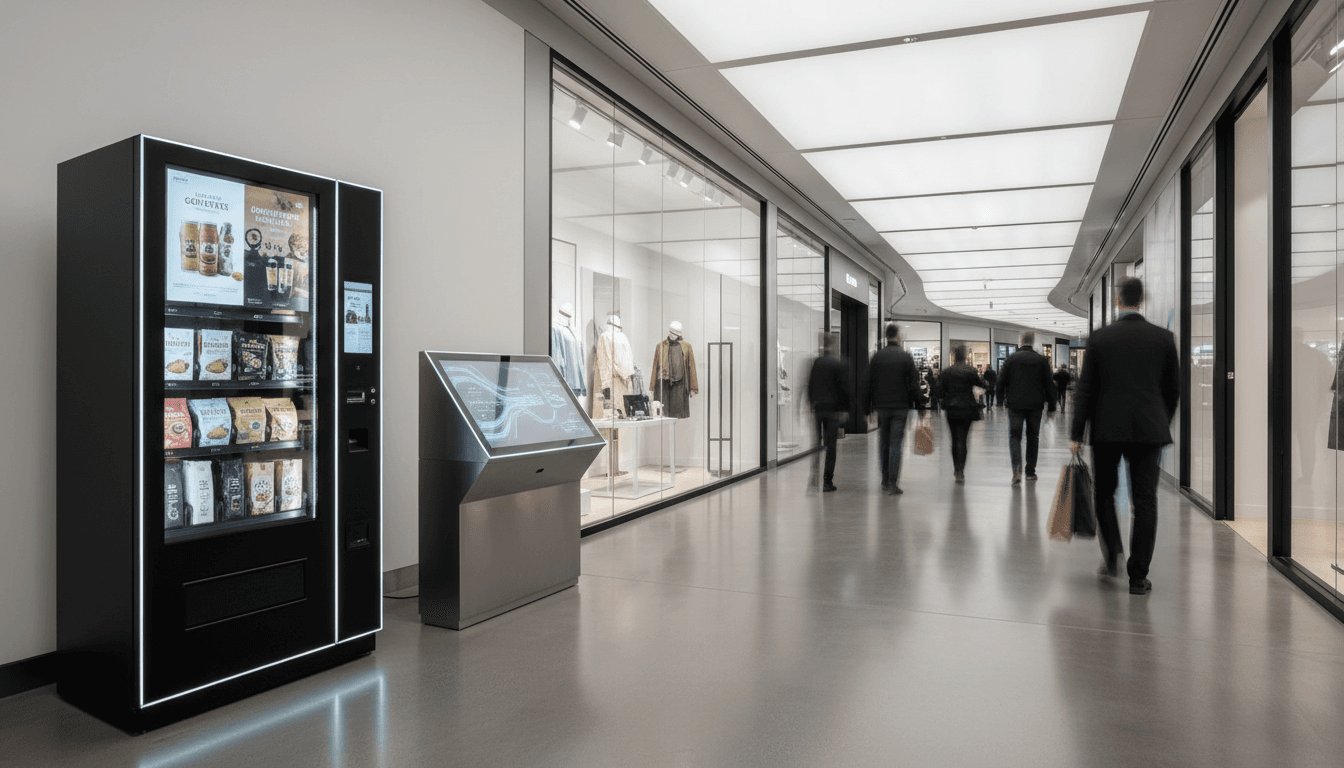
Automated Retail Meets AI: What Actually Scales
Most companies get automated retail wrong because they treat kiosks and smart vending like a hardware purchase. The operators who win treat it like an always-on retail channel—with demand forecasting, replenishment, pricing, fraud controls, and customer experience all working together.
That’s why T-ROC Global’s December 2025 launch of Automated Retail Solutions matters. The headline isn’t “new kiosks.” It’s the bet that infrastructure + intelligent automation + operations is the only formula that scales beyond a few pilot machines.
This post is part of our AI in Retail and E-Commerce series, where we look at how retailers (including many teams in Ireland) are applying AI for customer behavior analysis, personalization, pricing optimization, and better omnichannel experiences. Automated retail is a practical place to do all of that—because every interaction is measurable.
Automated retail scales when ops are the product
Answer first: Automated retail scales when the operator can reliably keep machines in-stock, maintain uptime, and optimize assortments based on real demand—not gut feel.
T-ROC’s announcement is essentially a blueprint for this: bring together vending, self-service kiosks, and intelligent automation, then back it with a nationwide replenishment network and operational support. They’re claiming “turnkey,” and for automated retail, that word only means something if replenishment and maintenance are real.
Two details in the launch jump out:
- Over 2,000 field staff supporting replenishment and service
- 34 warehouses across the U.S. supporting distribution and parts/logistics
Those numbers matter because a kiosk network fails for boring reasons: a door sensor breaks, a payment terminal glitches, a planogram wasn’t updated, or a high-selling SKU goes out of stock for three days. Customers don’t care that it’s “innovative.” They just remember it was empty or broken.
The myth: “Frictionless” means staff-free
Frictionless retail doesn’t mean humans disappear. It means customers don’t feel the operational complexity. In practice, the best automated programs are human-supported and software-driven:
- Humans do the physical work (replenishment, repairs, swaps)
- Software decides what to stock, where, and when
- AI helps predict demand and reduce waste
That combination is what turns a kiosk from a novelty into a channel.
Where AI fits: from “machine data” to customer behavior signals
Answer first: The highest ROI use of AI in automated retail is turning machine events into decisions—assortment, pricing, replenishment routes, and personalization across channels.
A kiosk or smart vending machine is basically a sensor-rich point of sale. Every purchase, browse event, stockout, and failure is logged. That data can power the same AI tactics retailers use in e-commerce—just applied to physical, unattended retail.
Here are the AI use cases that actually hold up in 2025:
AI demand forecasting that’s specific to micro-locations
A kiosk in an office lobby behaves differently from one in a petrol station, university campus, or hospital. AI forecasting works when it factors in:
- Day-of-week and hour-of-day patterns
- Local events (sports matches, exams, holiday travel)
- Weather sensitivity (cold drinks vs. hot coffee spikes)
- Nearby store competition and footfall changes
If you’re running automated retail in Ireland, this micro-location logic is even more valuable: footfall can swing hard with commuter patterns, tourism seasons, and city-centre events.
Intelligent replenishment: fewer truck rolls, higher in-stock
Replenishment is where profit is won or lost. AI can improve replenishment by:
- Predicting stockout risk per SKU per machine
- Optimizing route planning (which machines need service first)
- Recommending substitutions when a supplier is short
A simple rule I’ve found useful: treat stockouts like customer churn. If your top 10 SKUs stock out regularly, your repeat usage rate collapses—fast.
Pricing optimization without annoying customers
Dynamic pricing is a touchy topic, and I’m not a fan of “surge pricing” in everyday retail. But measured price optimization works well in automated environments when it’s transparent and limited:
- Discount items approaching freshness limits (food, cosmetics, OTC)
- Time-based bundles (commuter breakfast combos)
- Location-based assortments with consistent pricing
AI helps by learning elasticity at the machine level. The key is guardrails: caps on price changes, clear signage in the UI, and policies that don’t punish loyal customers.
Personalization via omnichannel identity (when it’s earned)
Automated retail is often anonymous, which is fine. Personalization becomes powerful when customers opt in—through:
- Loyalty sign-in at kiosk
- App-based QR scan for pickup/discount
- Email receipt and preference settings
Once you have consented identity, you can connect:
- What they buy at a kiosk n- What they browse online
- What they return in-store
That’s the omnichannel promise: a customer who grabs a charger from a kiosk at the airport can later get a relevant accessory recommendation online—without creepy overreach.
What T-ROC’s “turnkey operator” approach signals for the market
Answer first: The market is shifting from “sell machines” to “sell outcomes”—uptime, in-stock rates, and measurable ROI.
T-ROC is positioning itself as deployer + operator + long-term partner. That’s a direct response to how procurement often works: a retailer wants speed, predictable costs, and someone accountable when things break.
Ben Wheeler—leading Automated Retail at T-ROC—frames the scaling logic in a way I agree with: solutions that don’t actually deliver product or 24/7 service struggle to scale. Translation: a screen on a wall isn’t a retail channel unless it completes the job.
The business case retailers actually approve
If you’re pitching automated retail internally, you’ll win budget faster by tying it to a few operational KPIs. The ones that matter:
- In-stock rate (per top SKUs)
- Uptime (payment + dispenser + screen)
- Gross margin per location (after service and replenishment)
- Shrink/fraud rate (especially in semi-public locations)
- Repeat usage rate (proxy for customer trust)
Here’s the stance I’d take: if a vendor can’t commit to reporting these metrics weekly and improving them quarter over quarter, they’re not selling a channel—they’re selling equipment.
Why this matters for e-commerce teams too
Even if your role is purely online, automated retail changes the funnel:
- It creates instant gratification nodes (buy now, get now)
- It offers pickup and returns options in high-traffic areas
- It reduces last-mile costs for small, urgent items
Think of automated retail as a physical equivalent of “rush pickup.” It’s not competing with your e-commerce stack; it’s extending it.
Practical playbook: how to launch automated retail without wasting 6 months
Answer first: Start with one category, one customer promise, and operational discipline—then let AI improve decisions as data accumulates.
If you’re considering a kiosk or smart vending program (in Ireland or elsewhere), here’s what works in practice.
1) Pick a job-to-be-done, not a device
Good: “Travel essentials available in under 60 seconds.” Bad: “Install kiosks in 20 locations.”
When the customer promise is clear, the assortment, UX, and replenishment plan becomes obvious.
2) Design the assortment like an e-commerce category page
Automated retail has limited shelf space, so merchandising has to be ruthless:
- 60–70% proven bestsellers
- 20–30% local/seasonal items
- A small test pocket (5–10%) with rapid rotation
AI can recommend swaps, but humans must set the guardrails: brand standards, safety, compliance, and margin floors.
3) Treat data quality as a launch requirement
If your telemetry is messy, your AI will be nonsense. Require clean event tracking for:
- Browse → add to cart → purchase
- Payment failures and refunds
- Stock levels by SKU (real-time, not “once per day”)
- Door opens, jams, temperature (if relevant)
4) Build an “exceptions” operating model
Most weeks, most machines are fine. Profit disappears when exceptions pile up.
Set up workflows for:
- Stockout alerts (before they happen)
- Payment terminal issues (within hours)
- High-shrink locations (trigger audits or SKU changes)
- Customer support escalation (clear, fast resolution)
5) Connect it to omnichannel on purpose
If you want automated retail to support your omnichannel strategy:
- Use consistent product IDs and pricing rules
- Share inventory signals (at least for top items)
- Offer digital receipts and opt-in loyalty
- Align promotions so customers aren’t confused
This is where AI in retail and e-commerce pays off: one customer, one set of insights, multiple ways to buy.
People also ask: the questions leaders raise in the first meeting
Is automated retail profitable in 2026?
Yes—when the operator can keep in-stock and keep uptime high. Profitability is less about the machine cost and more about replenishment efficiency, assortment accuracy, and shrink control.
Do kiosks replace stores?
No. They replace missed moments—late-night needs, travel needs, high-traffic impulse buys, and quick service transactions where a staffed counter isn’t economical.
What’s the biggest risk?
Operational drift. A pilot can look great for 60 days and then decay. The fix is a weekly cadence on in-stock, uptime, and exceptions—plus AI forecasting to prevent repeat failures.
What to do next if you’re serious about automated retail
Automated Retail Solutions from T-ROC Global is a signal that the category is maturing: more operators are bundling hardware + software + field operations into one accountable offering. That’s exactly what retailers should demand.
If you’re building your 2026 roadmap, I’d treat automated retail as part of the broader AI-driven omnichannel experience—a measurable channel that blends physical convenience with e-commerce-grade analytics.
If you’re evaluating vendors or building a business case, focus the conversation on the unglamorous stuff: in-stock rates, uptime, forecasting accuracy, replenishment coverage, and how customer behavior analysis feeds back into merchandising. The shiny kiosk UI is the easy part.
What would you rather be known for next year: “we installed kiosks,” or “we added a new channel that customers trust at 7 a.m., 7 p.m., and on Sunday nights?”