Automated retail is becoming a true omnichannel channel. Learn how AI-driven kiosks and smart vending improve forecasting, personalisation, and ROI.
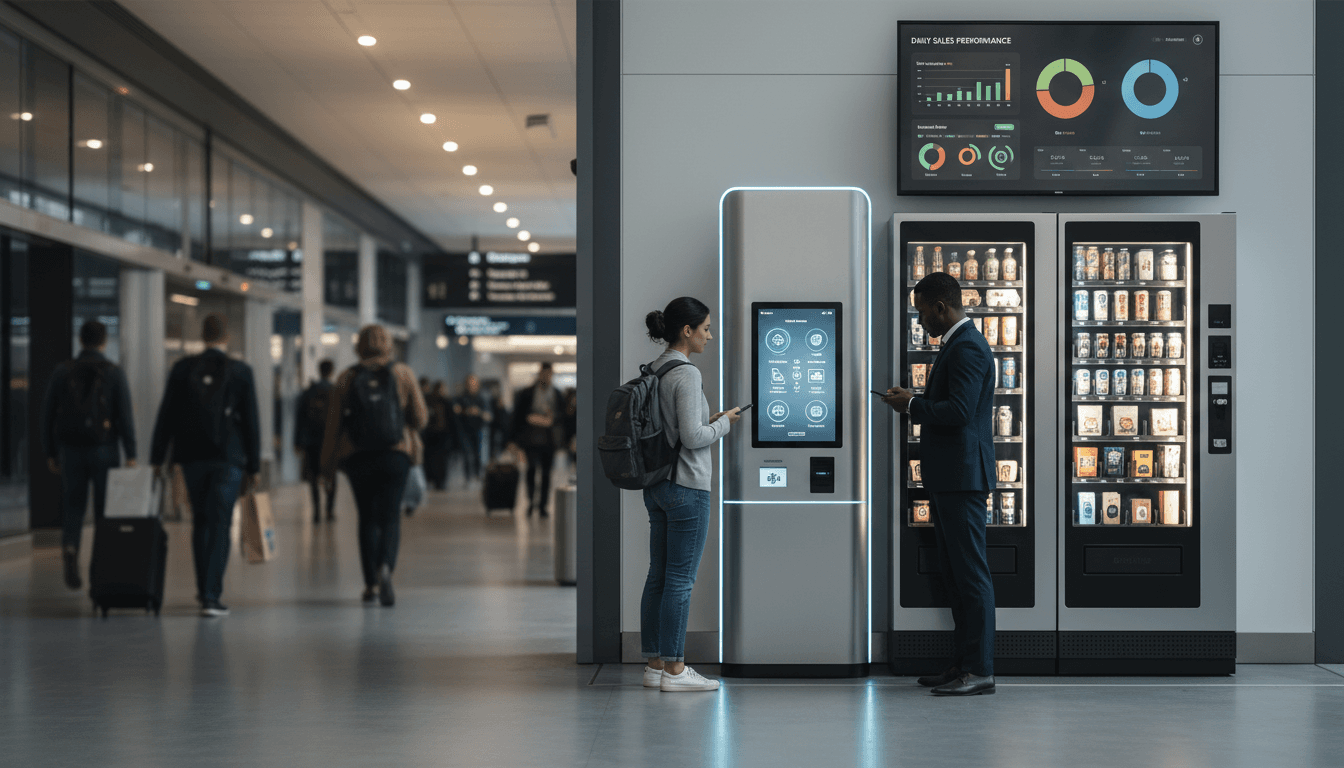
Automated Retail + AI: Smarter Kiosks, Real ROI
A lot of retailers still treat vending and kiosks like “extra channels” — nice to have, hard to manage, easy to ignore.
But right now, automated retail is turning into something much bigger: a distributed, always-on storefront that can sit in an office lobby, a transport hub, a campus, or a gym — and still behave like a modern e-commerce experience. That’s exactly why T-ROC Global’s new Automated Retail Solutions announcement matters. They’re not just shipping machines; they’re packaging deployment, replenishment, operations, and support into a single model designed to scale.
For anyone following our AI in Retail and E-Commerce series (especially teams in Ireland building omnichannel experiences with tighter labour and higher customer expectations), automated retail is worth a closer look. The real value isn’t “fewer queues.” It’s that automation plus AI can finally make unattended retail measurable, optimisable, and personal.
What T-ROC’s launch signals: automated retail is becoming a channel
T-ROC Global has launched Automated Retail Solutions that combine smart vending, self-service kiosks, and intelligent automation with nationwide operations. Their differentiator is operational muscle: over 2,000 field staff and 34 warehouses across the U.S., designed to support large-scale rollouts with replenishment and end-to-end support.
That matters because automated retail fails for predictable reasons:
- Machines go down and stay down.
- Stock gets guessed instead of forecasted.
- Planograms drift because nobody “owns” compliance.
- Reporting tells you what happened, not what to do next.
A “turnkey operator” approach is an attempt to solve the unglamorous part: keeping unattended retail functioning at scale.
Automated retail doesn’t scale because the hardware is hard. It fails because the operations are.
T-ROC is also being refreshingly blunt about a core scaling rule: if a solution doesn’t reliably vend a product or deliver a 24/7 service, it won’t scale. I agree. Retail teams don’t need more pilots; they need channels that can hit uptime, margin, and customer experience targets.
The AI layer: where automated retail becomes profitable
Automated retail hardware is the visible part. The profit comes from the invisible part: data + decisioning.
Here’s the practical way to think about it: a kiosk or smart vending machine is a mini-store with built-in sensors. Add AI, and it becomes a system that can answer four high-value questions.
1) What should we stock here — and how much?
The fastest win is demand forecasting and assortment optimisation. Instead of “refill every Tuesday,” AI models can forecast unit demand by location and time window.
What that reduces:
- Stockouts (lost sales + frustration)
- Spoilage for perishables
- Slow-moving inventory sitting in a machine
What that improves:
- Fill-rate and availability
- Gross margin (less waste, fewer emergency visits)
- Customer trust (“it’s always stocked”)
This is where T-ROC’s replenishment network becomes strategically relevant. AI can recommend the what and when; you still need the can — the ability to execute the replenishment plan reliably.
2) Which customer behaviours predict conversion?
Automated retail can collect behaviour signals that physical retail often misses or can’t attribute cleanly:
- Session starts vs. purchases
- Browse depth (how many screens / how many item views)
- Time-to-purchase
- Abandonment moments (price, out-of-stock, too many steps)
- Elasticity to promotions (what discount actually moves units)
If you’ve worked in e-commerce analytics, this will feel familiar. That’s the point. Unattended retail is becoming more like e-commerce, just with immediate physical fulfilment.
For retailers in Ireland pushing AI for customer behaviour analysis, automated retail is another data stream that can feed the same measurement discipline you already apply to web and app.
3) What offer should we show right now?
Personalisation in automated retail doesn’t have to be creepy. It can be situational and still effective:
- Time-based recommendations (morning vs. evening)
- Weather/context (hot drinks vs. cold drinks, commuter rush vs. quiet hours)
- Basket-based suggestions (“pair with” items)
- Inventory-aware offers (promote what you have)
The golden rule: personalise to help the customer decide faster, not to maximise clicks.
4) How do we reduce shrink and fraud without wrecking UX?
Self-service always brings shrink risk. Smart vending and kiosks can use AI-supported controls such as:
- Anomaly detection (unusual purchase patterns, repeated failures)
- Computer vision for “pick and pay” style scenarios
- Tamper alerts and remote monitoring
Done well, it protects margin while keeping the experience fast.
Omnichannel isn’t just online-to-store anymore
Most omnichannel strategies still revolve around a few classic moves: click-and-collect, endless aisle, ship-from-store, loyalty unification.
Automated retail adds a new option: store-to-anywhere.
The “micro-storefront” model
A smart kiosk in a university or office can act like:
- A compact assortment store
- A returns/drop-off point (depending on design)
- A service desk for subscriptions or account management
Where this gets interesting is when the kiosk experience is connected to your existing digital stack:
- Loyalty recognition (even if it’s opt-in via QR/app)
- Shared promotions across web/app/kiosk
- Unified inventory and product content
When retailers complain their omnichannel experience is “fragmented,” it’s usually because channels don’t share data and rules. Automated retail forces the question: is your product catalogue, pricing logic, and promotion engine reusable across touchpoints? If not, kiosks will expose that weakness fast.
What “turnkey” should actually mean (and what to ask vendors)
T-ROC is positioning its offer as turnkey: deployer, operator, and long-term partner. If you’re evaluating automated retail solutions, don’t accept “turnkey” as marketing shorthand. Define it.
A serious checklist for automated retail at scale
Ask for clear answers (and owners) across these areas:
-
Uptime and support
- What’s the target uptime percentage?
- What’s the mean time to repair?
- Who dispatches a tech and how fast?
-
Replenishment model
- Who owns forecasting vs. execution?
- How are replenishment routes planned?
- What’s the process for planogram compliance?
-
Data and analytics
- Do you get raw event data (sessions, views, failures) or only sales totals?
- How is data exported into your BI tools?
- Can you run A/B tests on offers and UI?
-
Payments and identity
- Supports wallets and local payment preferences?
- Optional loyalty sign-in without friction?
- How is PCI scope handled?
-
Security and shrink
- Monitoring, tamper detection, anomaly alerts
- Clear incident process (who does what)
-
Commercials
- Revenue share vs. fixed lease vs. managed service
- Who carries inventory risk?
If a provider can’t speak to these with specifics, you’re not buying a scalable channel — you’re buying a pilot.
Practical use cases that work (and one that usually doesn’t)
Automated retail is most profitable where it matches a simple customer job: “I need this now.”
Use cases that tend to perform
1) High-frequency essentials Snacks, beverages, OTC health items, phone accessories, personal care — items with predictable demand and low consideration.
2) Workplace and campus retail Captive audiences + repeated visits create strong conditions for learning demand patterns and improving personalisation.
3) Travel and transit Customers pay for speed. If your machine is stocked and the UI is fast, you win.
4) Brand-owned sampling with instant purchase Brands often waste money on sampling that can’t be attributed. Smart vending can connect sampling to redemption and repurchase.
The use case that often disappoints
Overcomplicated “endless aisle” kiosks in low-intent environments. If the kiosk can’t vend the product on the spot (or deliver a service 24/7), conversion usually suffers. People aren’t excited to order online from a screen when their phone is in their pocket.
That aligns with the stance from Ben Wheeler’s team: vending and real service delivery are what scale.
How to measure ROI in automated retail (the metrics that matter)
If you want automated retail to be treated like a real channel, measure it like one.
Channel performance metrics
- Sales per machine per day (and per location type)
- Gross margin after service and replenishment
- Stockout rate (by SKU and time)
- Uptime (not just “machine is on,” but “machine is sell-ready”)
- Conversion rate (sessions to purchases)
- Basket size and attach rate
AI and optimisation metrics
- Forecast accuracy (before/after)
- Waste/spoilage reduction (for perishables)
- Promo lift (incremental, not just correlated)
- Time-to-purchase reduction after UI/personalisation changes
The reality? Automated retail becomes compelling when you stop judging it like a vending programme and start managing it like e-commerce with physical fulfilment.
A pragmatic path for retailers in Ireland
For Irish retailers and e-commerce teams, the US footprint T-ROC described (2,000 field staff, 34 warehouses) won’t map 1:1 locally — but the operating model and AI opportunity absolutely do.
If you’re considering automated retail in Ireland, I’ve found this phased approach works:
-
Start with one environment, not one machine Choose a cluster (e.g., 10–20 sites of the same type). You’ll learn faster and avoid one-off operational chaos.
-
Design for data from day one Require session analytics, event logs, and inventory telemetry. If you can’t measure abandonment, you can’t improve it.
-
Integrate with your omnichannel stack Product content, pricing rules, promos, loyalty. If those are fragmented, kiosks will inherit the mess.
-
Operationalise replenishment before you scale Forecasting is only as good as your ability to restock on time.
Where this is heading in 2026
Automated retail is moving toward a world where:
- Machines adjust assortments based on local demand, not head office assumptions.
- Offers are contextual and inventory-aware, not generic discounts.
- Kiosks become service points for subscriptions, upgrades, repairs, and returns.
- Retailers treat these endpoints as part of omnichannel, not side projects.
That’s why T-ROC’s announcement is more than a product launch. It’s a signal that automated retail is being packaged as a scalable operating model — the missing piece for many deployments.
If you’re building an AI roadmap for retail and e-commerce, don’t limit your thinking to websites, apps, and store POS. Automated retail is an AI surface area, and it can produce some of the cleanest behavioural data you’ll ever get in the physical world.
If you’re exploring automated retail solutions and want to pressure-test the business case, ask yourself one forward-looking question: which product or service in your catalogue would customers buy more often if it was available in two minutes, 24/7, with the same personalisation you use online?