Amazon now sells Ford certified used cars via Amazon Autos. Here’s what the move teaches about AI, personalization, pricing, and omnichannel retail.
Amazon Autos + Ford Used Cars: What AI-Powered Retail Learns
A certified used car is one of the most expensive “add to cart” moments most people will ever make. And Amazon just made that moment feel a lot more like ordinary e-commerce.
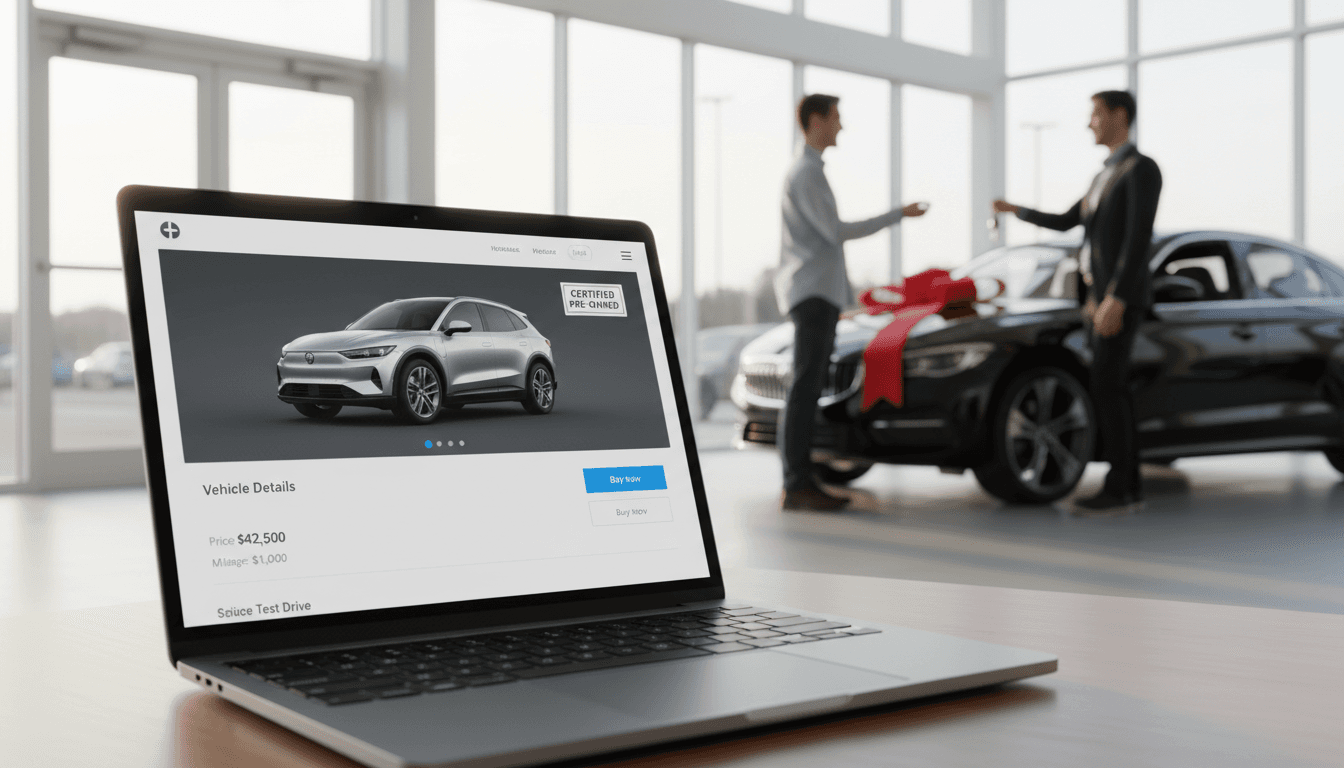
On November 28, 2025, Amazon and Ford expanded Amazon Autos to include Ford certified used vehicles—specifically Ford’s Blue Advantage inventory—after Hyundai became the first automaker on the portal in late 2024. Buyers can search, pick finance options, and complete a purchase online, with participating Ford dealers handling delivery.
For our AI in Retail and E-Commerce series (with a practical eye on how retailers in Ireland are applying AI for customer behaviour analysis, personalization, pricing optimization, and omnichannel), this partnership is more than a headline. It’s a clear signal: high-consideration categories are being pulled into standard e-commerce patterns, and AI is the difference between a “nice listing page” and a buying experience people actually trust.
What Amazon and Ford are really building (it’s not “online car sales”)
Answer first: Amazon Autos is shaping a marketplace-style, omnichannel car buying workflow where trust, fulfillment, and financing happen in one connected journey.
Selling used cars online isn’t new. What’s new is the interface and expectation: shoppers are trained by years of e-commerce to want transparent pricing, fast comparisons, and predictable steps. Amazon’s portal applies that muscle memory to vehicles, while Ford anchors the trust layer with certified inventory (Blue Advantage) and dealer infrastructure for delivery.
The mechanics matter:
- Amazon handles discovery and transaction flow (search, filters, checkout-like steps).
- Ford dealers handle physical fulfillment (delivery, handover, likely test drive logistics where offered).
- Certification reduces perceived risk (inspection standards, warranty-like assurances, known conditions).
This matters because used cars have the classic e-commerce friction stack: unclear quality, inconsistent pricing, confusing fees, and anxiety around financing. A portal that standardizes the journey pulls those frictions into a system that can be optimized—often with AI.
“Trusted vehicle certification plus the convenience Amazon is known for” is the pitch. The operational reality is a new omnichannel funnel where data quality and decision support decide who wins.
The hidden product is trust—and AI is how you scale it
Answer first: In used-car e-commerce, trust isn’t branding; it’s operational consistency. AI helps deliver that consistency across inventory, pricing, and customer communication.
A shopper doesn’t “trust” because a logo is familiar. They trust because the experience behaves predictably: accurate photos, clear condition notes, fair pricing, and no surprises at delivery.
Where trust breaks in used-car e-commerce
Even strong retailers get burned by four repeat issues:
- Condition ambiguity: “Minor wear” means different things to different sellers.
- Pricing whiplash: The same model varies wildly in price without explanation.
- Financing confusion: APR and terms feel like a separate universe.
- Channel handoffs: Online steps don’t match what happens in-store or at delivery.
How AI turns trust into a repeatable system
AI doesn’t fix trust with a chatbot. It fixes trust by improving the inputs.
- Condition standardization: Computer vision can flag mismatched photos, detect dents/scratches patterns, and enforce consistent image sets per listing (front/side/interior/odometer/tyres).
- Listing quality scoring: Models can predict which listings trigger returns, cancellations, or disputes—then require stronger disclosures.
- Fraud and anomaly detection: Outlier pricing, suspicious mileage patterns, or inconsistent VIN/feature data can be flagged before a listing goes live.
- Customer intent prediction: If browsing behaviour suggests a buyer is comparing towing capacity or safety features, the portal can surface the right specs without making them hunt.
For retailers used to selling appliances or fashion online, cars feel extreme. But the principle is familiar: reduce uncertainty, shorten decision time, and make the handoff predictable.
Omnichannel is the hard part: online purchase, dealer delivery
Answer first: The Amazon–Ford model works only if the dealer handoff feels like one continuous journey; AI helps sync inventory, appointments, and customer updates across systems.
Omnichannel gets talked about like it’s a marketing strategy. In automotive retail, it’s an operational discipline. If a buyer clicks “buy” and then waits three days for someone to confirm delivery, the magic is gone.
What has to be orchestrated behind the scenes
To make “buy online, delivered by a dealer” feel smooth, you need:
- Near real-time inventory accuracy (no selling cars that are already reserved)
- Clear delivery windows and proactive updates
- Financing steps that don’t restart on the dealer’s side
- Consistent fees, add-ons, and paperwork policies
AI opportunities in the omnichannel handoff
Here’s what works in practice (and what I’ve seen reduce customer complaints in other high-friction categories):
- Predictive delivery ETAs: Use historical dealer throughput, location, and vehicle prep times to set realistic delivery promises.
- Next-best-action routing for staff: If a buyer stalls at financing, route a callback to the right specialist instead of a generic queue.
- Automated exception handling: When a delivery slips or a document is missing, trigger a specific workflow and customer message—not a vague apology email.
- Conversational service that knows context: If a customer asks “Is it still arriving Friday?”, the assistant should know the order status, dealer schedule, and paperwork state.
For Irish retailers building omnichannel experiences, the lesson is blunt: the channel transition is where loyalty is won or lost. Cars just make that more visible.
Pricing and personalization: the part everyone wants, and many mishandle
Answer first: AI-driven personalization and pricing optimization can increase conversion, but only if you protect customer trust with clear explanations and guardrails.
Used-car pricing is messy because supply is messy. Two “identical” cars aren’t identical: mileage, trim, service history, condition, and location all change value.
Pricing optimization that doesn’t feel like a trap
Dynamic pricing has a reputation problem. Shoppers hate the feeling that prices are “made up.” The fix is transparency.
Strong AI pricing in a used-car portal should:
- Anchor on explainable factors (mileage band, condition grade, comparable sales)
- Avoid rapid oscillations (daily swings that look like manipulation)
- Be paired with price confidence cues (e.g., “priced within typical range for similar listings”)
Retailers outside automotive can borrow the concept: price optimization needs an explanation layer. If customers can’t understand why the price is fair, conversion drops and support costs climb.
Personalization that respects the moment
Cars aren’t impulse purchases. Personalization should feel like helpful narrowing, not pressure.
High-value personalization ideas that fit this Amazon Autos-style portal:
- Fit-based recommendations: “Best options for a 25km commute” or “best for three child seats” (driven by shopper behaviour and stated needs)
- Finance-aware sorting: Sort by monthly payment ranges the customer is exploring, not just sticker price
- Lifecycle triggers: If a buyer repeatedly views hybrids, surface total cost of ownership comparisons (fuel, maintenance patterns)
This is classic customer behaviour analysis applied to a complex SKU. It’s exactly the same muscle Ireland’s e-commerce leaders are building—just with a pricier cart.
What retailers (and marketplaces) should copy from this move
Answer first: The Amazon–Ford partnership is a template for bringing “offline-heavy” categories online: standardize the journey, keep fulfillment local, and use AI to remove uncertainty.
Most companies get this wrong by trying to digitize the entire experience at once. Amazon’s approach is more pragmatic: digitize discovery and transaction confidence, then rely on the dealer network for physical delivery.
Here are the transferable lessons for retail and e-commerce teams:
1) Build a certification layer (even if you don’t sell cars)
Certification is a promise backed by process. In other sectors it can look like:
- Refurbished electronics with graded conditions
- Furniture with verified dimensions and material checks
- Luxury resale with authenticity guarantees
AI supports this by enforcing consistent inspections and flagging outliers.
2) Treat product data as a conversion asset
Used cars are a data problem: options packages, trims, and condition notes create chaos. The winners invest in data normalization.
A practical checklist:
- Standard attribute taxonomy
- Photo requirements and automated QA
- Condition grading rules
- “Missing data” penalties in search ranking
3) Make omnichannel measurable
If you can’t measure the handoff, you can’t improve it.
Track:
- Time from purchase to dealer confirmation
- Delivery promise accuracy (promised vs actual)
- Cancellation reasons (mapped to step in journey)
- Customer support contacts per order
Then apply AI to predict which orders will go wrong and intervene early.
4) Put guardrails on automation
Automation should remove friction, not remove accountability.
Guardrails worth adopting:
- Human escalation for financing edge cases
- Audit logs for price changes
- Bias checks in recommendation models (e.g., don’t systematically push higher-cost financing)
The bigger signal for 2026: marketplaces are coming for “complex commerce”
Answer first: Amazon bringing Ford used cars onto Amazon Autos shows where e-commerce is heading: complex purchases will be sold through marketplace flows, with AI doing the heavy lifting on decision support.
As we head into 2026, consumers are less impressed by “digital transformation” slogans and more focused on whether online buying saves time without adding risk. In categories like automotive, the bar is even higher because the downside is real money.
For brands and retailers, this is a fork in the road:
- If you control the marketplace-like experience, you own the customer relationship.
- If you only supply inventory, you risk becoming interchangeable.
In our AI in Retail and E-Commerce series, I keep coming back to the same point: AI isn’t the strategy; it’s the engine. The strategy is designing a journey customers actually want to complete.
If you’re building omnichannel e-commerce in Ireland (or selling into Irish consumers), consider this your prompt: where are customers dropping out because the experience is uncertain, slow, or inconsistent—and what would happen if you treated that uncertainty as a data problem you can systematically reduce?