Albertsons’ AI shopping assistant points to a new retail battleground: saving time. See what to copy for personalization, pricing, and omnichannel wins.
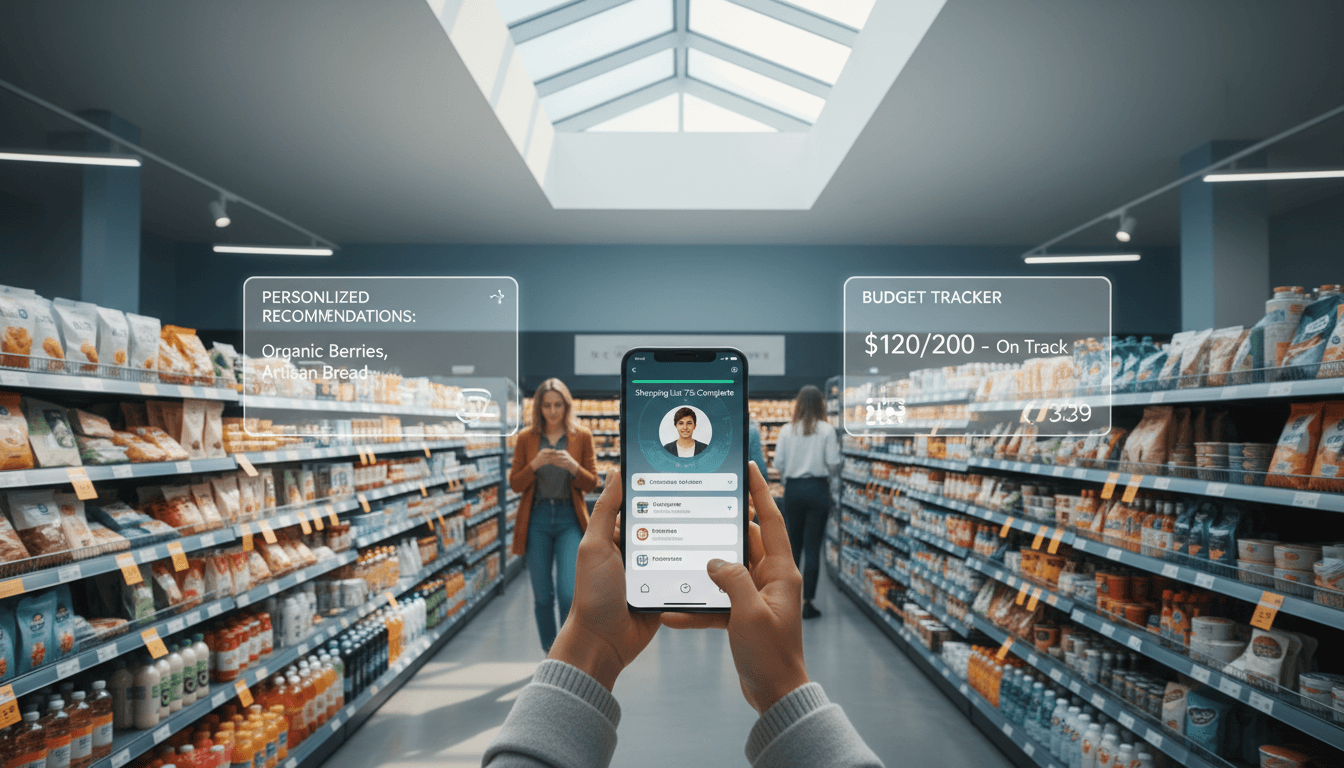
AI Shopping Assistants: What Albertsons Gets Right
Four minutes. That’s the shopping-time target Albertsons is putting on the table with its new AI-powered planning and shopping assistant.
If you run digital, e-commerce, or loyalty for a retailer, that number should make you a little uncomfortable—in a good way. Because it reframes the competitive set. You’re no longer just competing on price, assortment, or delivery slots. You’re competing on time-to-dinner.
This post is part of our AI in Retail and E-Commerce series, where we look at how retailers (including many teams in Ireland) are applying AI for customer behavior analysis, personalized recommendations, pricing optimization, and omnichannel experiences. Albertsons is a useful case study because it’s not treating AI as a novelty feature. It’s treating AI as a new interface layer between shopper intent and purchase.
Albertsons’ move: AI as the new grocery interface
Albertsons’ headline claim is straightforward: an AI assistant that can reduce shopping time to as little as four minutes, using two-way conversations to help shoppers plan and complete a shop. It follows an earlier in-year release, “Ask AI,” suggesting a broader roadmap rather than a one-off experiment.
What matters isn’t the chatbot. It’s the workflow redesign.
A typical grocery journey has friction at every step: deciding what to cook, building a list, checking budgets, finding items, substituting out-of-stocks, and then repeating the cycle next week. An AI assistant can collapse those steps into a single conversation that produces a cart (digital) and a plan (physical).
Albertsons also signaled what’s next in early 2026: expansion across its banner mobile apps plus agentic commerce capabilities such as:
- Budget optimization (stay under a weekly spend)
- In-store aisle locations (find a specific product quickly)
- Voice integration (hands-free planning and shopping)
That roadmap is the real story: AI that follows the shopper across channels.
Why “agentic commerce” matters (and what it really means)
Agentic commerce is a fancy label for a simple promise: the customer states an outcome, and the system does the work.
In grocery, “doing the work” isn’t just recommending products. It’s handling constraints:
- dietary needs (gluten-free, high-protein, allergen avoidance)
- household preferences (“kids won’t eat spicy”)
- inventory realities (what’s available right now)
- time (“I’ve got 20 minutes to cook”)
- money (“keep this under €80 / $80”)
Most retailers already have pieces of this across recipe content, search, promotions, and loyalty. The problem is orchestration. A conversational AI layer can orchestrate those components in one place.
Here’s the stance I’ll take: if your AI doesn’t take action, it won’t change outcomes. Helpful answers are nice. Completed baskets are better.
The four-minute claim: plausible if you design for it
Can a weekly shop really happen in four minutes? For a full trolley, maybe not. For a typical “what’s for dinner + a few essentials” mission, it’s plausible—if the experience:
- Starts with intent (“5 dinners for two adults, budget X”)
- Creates a meal plan automatically
- Generates a cart with smart substitutions
- Applies relevant offers without the shopper hunting
- Offers a one-tap checkout (delivery/pickup) or a store-mode list
Retailers often underestimate how much time shoppers lose switching between search, categories, offers, and recipes. A well-built assistant removes that switching cost.
Three strategies Albertsons signals (that other retailers should copy)
Albertsons’ announcement hints at three practical strategies that translate well to other grocery and general retail businesses.
1) Treat personalization as a behavior engine, not a “recommended for you” widget
Personalized recommendations are table stakes. The higher value play is using AI for customer behavior analysis that predicts the mission and reduces decision fatigue.
An assistant can detect patterns like:
- “Sunday night planning” behavior
- repeat purchases with seasonal variation
- promotion sensitivity by category (e.g., brand loyal in coffee, price sensitive in snacks)
- likely replenishment windows (e.g., baby products every X days)
Then it can proactively help:
- “Your usual lunch items are due—want to restock?”
- “You bought tacos last week; want a variation that uses what you still have?”
- “Your basket is 12% above your typical week—here are two swaps to bring it back.”
That’s not just personalization. That’s behavior-guided basket building.
Practical metric to track
If you’re building (or buying) an AI shopping assistant, don’t measure success with engagement alone. Track:
- Time-to-cart (minutes from open to checkout-ready cart)
- Edit rate (how much shoppers change AI suggestions)
- Substitution acceptance (did they accept replacements?)
- Repeat usage within 30 days (habit formation)
2) Make pricing optimization feel like a customer benefit
Many AI programs in retail aim at margin: dynamic pricing, promo optimization, markdown efficiency. Those are real wins, but shoppers only care when it helps them.
Albertsons explicitly mentioned budget optimization—that’s smart framing. Budget tools do two things at once:
- increase trust (“this retailer helps me control spend”)
- reduce cart abandonment (“I can afford this shop”)
A good budget agent should:
- set a target spend and track it live
- explain why swaps help (“same size, €1.20 less, similar nutrition”)
- prioritize items that matter to the customer (don’t swap their favorite coffee first)
- apply loyalty offers automatically where eligible
My opinion: “budget mode” will become a default setting in 2026 as shoppers stay cautious and promo-aware after several years of price volatility.
What to avoid
- “Lowest price” behavior that wrecks brand value and reduces long-term loyalty
- confusing optimization logic that feels like manipulation
- suggesting cheaper items that are frequently out of stock (nothing kills trust faster)
3) Build omnichannel AI that works in-store, not just online
A lot of AI retail experiences are built for e-commerce only. Grocery is different: many customers still shop in store, even if planning happens on mobile.
Albertsons’ plan to add in-store aisle location is a signal that the assistant is meant to span the journey. That’s the right direction.
Here’s what “real omnichannel AI” looks like:
- One list that syncs across app, website, and store mode
- Store-aware suggestions based on the shopper’s chosen location
- Aisle-level guidance (and ideally section-level: “endcap,” “deli counter”)
- Substitution logic that reflects store inventory and pack sizes
- Voice support for hands-busy moments (cooking, driving, walking the aisles)
This matters because omnichannel experiences are where loyalty gets sticky. If the assistant only works online, you’re leaving value on the table for the large share of trips that begin digitally but finish in-store.
What retailers in Ireland (and similar markets) can learn from this
The AI in Retail and E-Commerce theme in Ireland often comes down to a practical question: How do we modernize without creating a messy tech stack?
Albertsons’ approach suggests a helpful blueprint:
- Start with one high-frequency journey (grocery planning and list building)
- Use AI to reduce time and effort, not to add novelty
- Expand into pricing optimization and omnichannel features once trust is earned
For Irish grocery and retail teams, the near-term opportunity is especially strong in:
- mission-based experiences (school lunches, weeknight dinners, holiday hosting)
- loyalty-linked personalization (offers that actually fit the household)
- store-mode navigation (aisle location + substitution suggestions)
Even if your market is smaller, the principle holds: AI ROI comes from repeated weekly behaviors, not occasional “wow” moments.
Implementation checklist: what you need before you ship an AI assistant
An AI shopping assistant rises or falls on operational fundamentals. Here’s a blunt checklist I use when assessing readiness.
Data and decisioning
- Clean product catalog with consistent attributes (size, dietary tags, variants)
- Promotion and loyalty rules that can be applied programmatically
- Inventory signals (even if imperfect) that update frequently
- Customer consent and preference management (especially for sensitive data)
Experience design
- Clear “modes” (quick replenishment, budget mode, meal planning, in-store mode)
- Explanation UI (“why this product?”) to build trust
- Easy edits (swap, remove, change quantity) without friction
- A graceful fallback when the model is uncertain
Governance and safety
- Guardrails against unsafe dietary or allergy suggestions
- Controls for brand compliance and restricted products
- Human-in-the-loop escalation for edge cases and customer support
A simple rule: don’t let the assistant create work for your contact centre. If the AI increases confusion, it’s not ready.
People also ask: the practical questions leaders are asking
Will AI assistants replace search and category browsing?
For routine trips, yes—partially. Search won’t disappear, but conversational planning will take a growing share of “start the trip” behaviors because it’s faster.
Where does the business value show up first?
In grocery and essentials retail, the earliest measurable gains tend to be:
- higher conversion from planning to purchase
- bigger baskets driven by fewer “forgotten items”
- improved loyalty engagement due to personalized offers
- fewer refunds/substitutions if inventory-aware logic is used
What’s the biggest risk?
Trust. If the assistant recommends poor substitutes, misses budgets, or suggests irrelevant items, customers won’t give it a second chance.
The real takeaway: speed is becoming a loyalty feature
Albertsons is betting that shopping speed—powered by AI—will be a reason customers come back. I think they’re right. When an assistant can plan meals, respect budgets, and guide shoppers in-store, it stops being “digital” and starts being how the retailer works.
If you’re mapping your 2026 roadmap, I’d focus on one question: Where can an AI assistant remove the most friction from your highest-frequency shopping missions? Start there, prove value, and then expand into deeper customer behavior analysis and pricing optimization.
If you’re exploring an AI shopping assistant for your own omnichannel experiences, what would your customers pay for in saved time—ten minutes per trip, or an hour per week?