AI security can reduce cyber fear that’s pushing Irish consumers away from online buying—and protect telehealth trust with smarter, lower-friction defenses.
AI Security: Stop Cyber Fear Killing Online Trust
22% of consumers in Ireland say they’re buying fewer items online because they fear cyberattacks. That’s not a vague “people are worried about security” headline—it's a measurable hit to digital growth. Add another detail: 14% say they entered payment details on a fraudulent website in the past year, thinking it was legitimate. If you run e-commerce, that should make you uneasy.
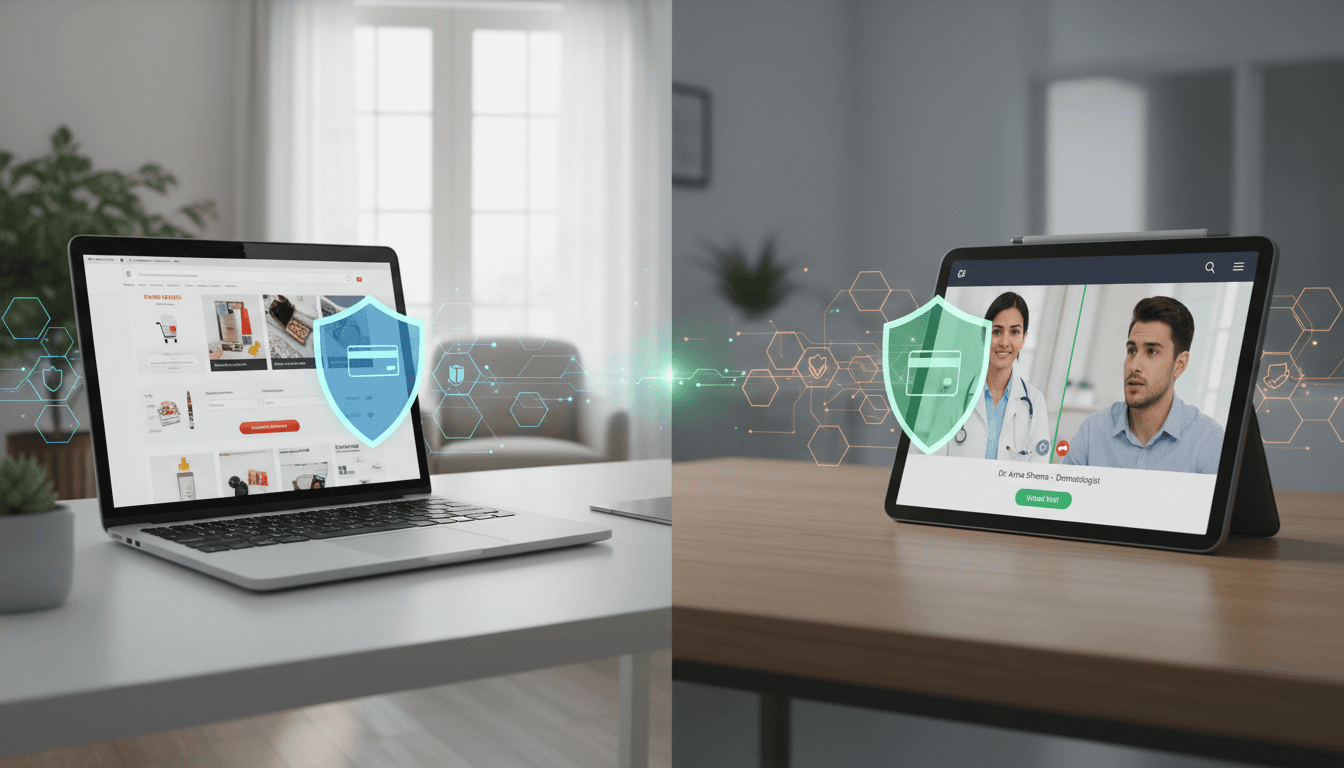
Now here’s the part many teams miss: this isn’t just a retail story. The exact same trust dynamic sits under telemedicine, patient portals, online appointment booking, digital prescriptions, and at-home diagnostic services. If one-in-five people are changing how they shop because online feels risky, healthcare leaders should assume the same instinct will show up when a patient is asked to upload an ID, store a payment method, share symptoms, or join a video consult.
I’ve found that “add more friction” is the default reaction when security is under pressure. It’s also the fastest way to tank conversion and patient experience. The better approach is security that gets smarter in the background—and that’s where AI-driven cybersecurity earns its place.
What the Irish consumer data really tells us
The simplest reading is “cybercrime is rising and consumers are nervous.” The more useful reading is this:
Consumers are not making a rational security calculation—they’re making a trust decision under uncertainty.
Ekco’s research (1,000 adults in the Republic of Ireland) highlights several numbers that explain the shape of that uncertainty:
- 22% are purchasing fewer items online due to cyber fears.
- 19% are paying in-person with cash when they can, for the same reason.
- Only 30% believe they know how to check whether a retailer website is safe.
- 26% have landed on a fake website mimicking a real one.
- 14% have entered payment details on a fraudulent website.
- 25% avoided a retailer because it suffered a cyberattack.
- 66% would stop shopping with a retailer permanently if their data was stolen.
That last number is the one boards should circle: two-thirds will walk away for good after a breach. Not “might churn.” Will.
Convenience is winning… until it suddenly isn’t
The research also shows a tension that every digital product team recognizes:
- 31% store payment details on websites to save time.
- The same 31% have payment details stored on multiple websites.
So consumers want speed. But when they feel unsafe, they don’t ask for a more secure checkout—they just leave. That’s the real cost of cyber risk: lost behavior, not only incident response.
Why this matters even more for telehealth and digital health platforms
Healthcare is an unusually high-stakes trust environment. If retail trust is about “Will my card be misused?”, healthcare trust includes:
- Will my diagnosis or medication history be exposed?
- Will my appointment be disrupted?
- Is this portal actually my hospital, or a convincing fake?
- If I pay here, am I being scammed?
And unlike retail, patients often don’t have a “try another store” mindset. They may have one provider, one insurer pathway, one local clinic. That means breach impact can turn into delayed care, missed follow-ups, and lower adherence—not just lost revenue.
Healthcare data is also a prime target. Patient records contain identity data, financial information, and sensitive clinical detail. That combination is attractive to criminals because it’s profitable and hard to “reset” (you can change a card; you can’t change a diagnosis history).
The retail signal: patients will punish digital systems that feel unsafe
The Irish numbers give healthcare a preview of what happens when public confidence drops:
- Patients avoid online intake forms and revert to phone calls.
- Appointment scheduling shifts back to in-person.
- Telemedicine adoption stalls after a well-publicized incident.
- Staff face more manual work (which introduces new errors and risks).
This is why cybersecurity in healthcare can’t be framed as an IT cost center. It’s a growth constraint and a patient access issue.
Where AI fits: security that protects without punishing users
AI in retail and e-commerce is usually discussed as personalization, pricing, and recommendations. That’s fine—but it’s incomplete. In 2026 planning conversations, AI for cybersecurity deserves equal billing, because trust is what makes the rest of the digital experience work.
AI-driven security works best when it does two things at once:
- Detects threats faster than humans can.
- Reduces unnecessary friction for legitimate users.
Here are the practical areas where AI security actually helps.
AI-powered fraud detection and bot mitigation
A big chunk of e-commerce risk isn’t “hackers breaking in,” it’s automated abuse:
- credential stuffing (reusing leaked passwords at scale)
- card testing
- account takeover
- fake account creation
- scraping and inventory manipulation
AI models can spot abnormal patterns across IP reputation, device fingerprints, typing cadence, velocity rules, and behavioral signals. The win isn’t only fewer losses—it’s fewer false positives that annoy real customers.
Healthcare parallel: patient portals and telehealth apps also face credential stuffing and account takeover. If an attacker gains portal access, the impact can include data theft, prescription fraud, and social engineering against clinicians.
Risk-based authentication (the grown-up version of MFA)
Most organizations hear “enable MFA” and stop there. Patients and shoppers often hate MFA because it’s triggered at the wrong times.
Risk-based authentication uses AI to decide when to step up verification:
- If a known user logs in from a familiar device and location, let them in quickly.
- If the same user appears from a new country, new device, and unusual time, require a stronger check.
That protects accounts while keeping the “normal path” smooth.
My stance: if your security strategy is forcing every user through maximum friction, you’re doing security theater and calling it resilience.
Phishing and fake-site defense: trust signals people can actually use
Ekco’s research says only 30% feel they know how to check if a website is safe. That tells you education alone won’t solve it.
AI can help by:
- detecting lookalike domains and brand impersonation
- monitoring for fake checkout pages and cloned portals
- flagging malicious ads that route to fraud sites
- scanning inbound emails and messages for impersonation patterns
Healthcare parallel: clinics and hospitals are frequently impersonated in phishing campaigns (“your invoice,” “your test results,” “your appointment reminder”). AI-assisted detection and automated takedown workflows can shrink the window of exposure.
Security operations: faster detection, faster containment
Security teams are overwhelmed. AI helps triage the noise.
A practical goal for AI in cyber resilience is simple:
Shrink the time from “something is wrong” to “we contained it.”
In e-commerce, that can mean isolating a compromised admin account before it changes payout settings. In healthcare, it can mean isolating a workstation before malware spreads to clinical systems.
What to do next: a practical playbook for retail and healthcare leaders
If your goal is leads and growth, the best content is also the most useful. Here’s a clear set of moves that map directly to the consumer behaviors in the research.
1) Reduce stored payment risk without losing conversion
Consumers store cards because it’s convenient (31% do it). You can keep the convenience while reducing blast radius:
- tokenize payment data and minimize storage footprint
- require re-authentication for high-risk changes (shipping address, payout details, password reset)
- monitor for account takeover signals on saved-payment accounts
In healthcare, the same principle applies to storing insurance details, IDs, and payment methods for co-pays.
2) Design for “trust moments” in the journey
Trust isn’t a footer badge. It’s a set of moments where users hesitate.
Examples in e-commerce:
- first-time checkout
- password reset
- add a new card
- change delivery address
Examples in telemedicine:
- uploading documents
- entering symptoms
- joining a video call
- paying for a consult
Improve those moments with:
- clear in-app confirmations of critical changes
- real-time alerts for unusual logins
- transparent security messaging written in plain language
3) Assume breach impact is reputation impact
The research shows 66% will stop shopping permanently if data is stolen. That’s a warning: your incident response plan must include customer communication that’s fast, specific, and honest.
If your breach comms template is 900 words of legal fog, you’re choosing churn.
4) Use AI for detection, but keep humans accountable
AI is strong at pattern recognition and speed. Humans are strong at context and judgment. The safest operating model is:
- AI flags, scores, and prioritizes events
- humans validate and decide actions for edge cases
- automation handles routine containment steps (session kill, password reset prompts, temporary holds)
In healthcare, pair this with governance so clinical operations aren’t disrupted by over-aggressive automated blocks.
5) Measure trust like a KPI (because it is one)
If 22% are buying less due to cyber fears, trust is already a conversion metric.
Track:
- checkout abandonment after security prompts
- successful vs failed login ratios
- rate of account recovery requests
- fraud losses per 1,000 transactions
- portal adoption and repeat usage (healthcare)
Then use those metrics to tune risk-based flows.
Security that breaks the user journey is not a security win. It’s a revenue leak.
Where this sits in our “AI in Retail and E-Commerce” series
We often frame AI in retail and e-commerce as growth tech: personalization, dynamic pricing, demand forecasting, omnichannel analytics. Those matter. But the Irish consumer research is a reminder that AI trust infrastructure is the foundation under all of it.
If customers and patients don’t feel safe, they don’t convert, they don’t enroll, and they don’t come back.
If you’re leading digital transformation—whether you’re selling trainers or offering telemedicine—make 2026 the year you treat AI-driven security as part of product strategy, not a back-office patch job.
The question worth sitting with: when your next user hesitates at the “Pay” or “Submit” button, have you built a system that earns their trust… or one that silently pushes them back to offline life?