Amazon’s rush pickup points to a new standard: one-hour collection powered by AI forecasting, inventory accuracy, and smarter omnichannel promises.
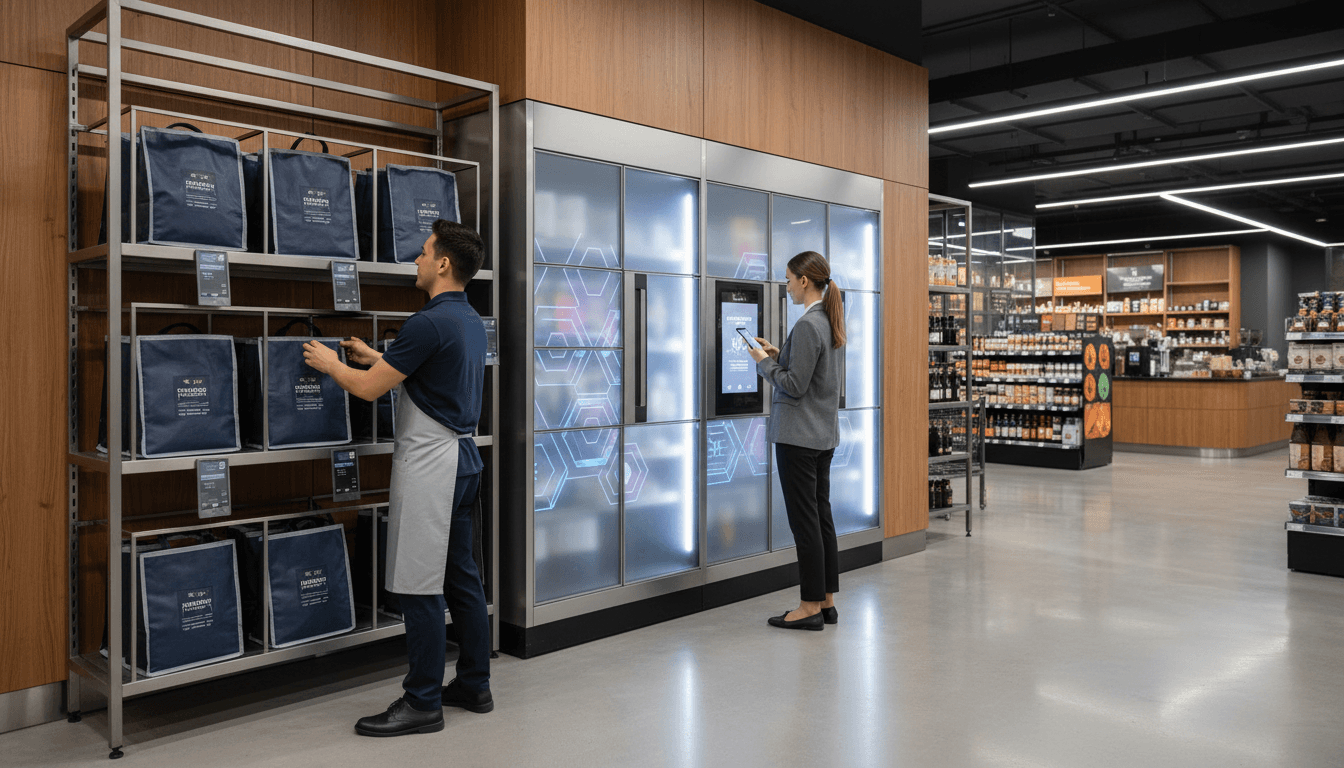
AI-Powered Rush Pickup: What Amazon Signals Next
A one-hour pickup promise isn’t really a delivery promise. It’s a systems promise—that the product will be in the right building, on the right shelf (or backroom location), with the right staff workflow, and a customer experience that doesn’t collapse under peak demand.
That’s why the report that Amazon is developing a “rush” pickup option—letting shoppers order online and collect at an Amazon-owned store within an hour—matters well beyond Amazon. If this rolls out across formats like Whole Foods and Amazon Fresh, it’s a clear sign the next battleground in retail and e-commerce is speed + certainty, not speed alone.
For retailers in Ireland (and any market with dense urban pockets plus suburban sprawl), this is also a practical blueprint for where AI in retail and e-commerce actually earns its keep: demand prediction, inventory placement, labor orchestration, and personalization that nudges customers toward options you can fulfill fast.
What “rush pickup” really competes on: certainty, not just speed
A one-hour pickup offer only works if the customer trusts it. The moment you cancel orders, substitute items, or make shoppers queue for 20 minutes, your “rush” brand promise becomes a liability.
Rush pickup competes on three things:
- Availability confidence: “If the site says it’s ready in an hour, it will be.”
- Fulfillment precision: fast pick paths, low error rates, minimal substitutions.
- Handoff experience: frictionless pickup flow that feels faster than delivery.
This matters because customer expectations have shifted again in late 2025. Post-holiday behavior shows the same pattern every year: customers want immediacy for a subset of purchases (gifts, tonight’s dinner, last-minute essentials), and they’ll trade off assortment or even pay a fee to get it.
The reality? One-hour pickup is less about logistics muscle and more about decision intelligence. That’s where AI does the heavy lifting.
Where AI makes rush pickup possible (and profitable)
If you’ve worked on click-and-collect, you already know the pain: inventory isn’t accurate enough, pickers are interrupted, stores weren’t designed for micro-fulfillment, and demand spikes break everything.
AI doesn’t fix bad operations. But it does make good operations scalable.
Demand prediction: placing inventory where the next hour happens
Rush pickup requires that products are already close to the customer. That’s a forecasting problem with a short time horizon—hours and days, not weeks.
AI models can forecast near-term demand by combining signals such as:
- local shopping patterns by daypart (lunch, after-work, late evening)
- weather and events (sports matches, school holidays, December footfall)
- promotion calendars and digital ad bursts
- real-time store sales velocity and substitution rates
For grocers, the big win is avoiding the classic click-and-collect failure: the shopper orders what looks “in stock,” but the shelf is empty. Better predictions allow smarter inventory placement and earlier replenishment—especially for high-velocity SKUs.
Inventory accuracy: the quiet make-or-break metric
Most retailers talk about speed. The metric that decides whether speed is possible is inventory accuracy.
AI helps here in two ways:
- Anomaly detection: spotting mismatches like “system says 12 units, sales velocity suggests 0.”
- Cycle count prioritization: telling staff which items to recount first because they drive the most cancellations or substitutions.
If you’re aiming for one-hour pickup, treat inventory accuracy like a product feature. Customers do.
Pick optimization: faster picking without burning staff
One-hour pickup compresses picking time and increases interruption cost. AI can optimize picking by:
- batching orders intelligently (temperature zones, aisle adjacency)
- adjusting pick routes as store conditions change (crowded aisles, replenishment blocks)
- predicting item-level substitution risk and suggesting alternates before the picker arrives
This isn’t theoretical. In practice, shaving even 60–90 seconds per order scales dramatically when you’re processing hundreds of rush orders per store per day.
Labor orchestration: staffing the hour, not the day
Rush pickup creates a new operational shape: you don’t just need staff; you need staff in the right 60-minute windows.
AI scheduling can forecast workload (orders + walk-in traffic) and recommend:
- micro-shifts (short coverage bursts)
- dynamic task switching (picking vs. checkout vs. staging)
- proactive staging for likely rush orders (high-confidence baskets)
I’m opinionated on this: if you try to run rush pickup with static staffing, you’ll either miss SLAs or overstaff and lose margin.
Personalization that doesn’t feel creepy—and actually improves fulfillment
Most personalization programs obsess over conversion. Rush pickup forces a better question:
What should we recommend that we can fulfill in under an hour, reliably?
That means personalization becomes omnichannel and operational:
- prioritise items with high on-shelf confidence at the customer’s nearest store
- recommend substitutes with low return risk (size, brand preference, diet flags)
- offer a pickup window the store can truly handle, not the earliest possible time
Done well, this improves customer trust and reduces customer service contacts.
The best rush pickup upsell is honesty
If the system isn’t confident an item will be pickable within an hour, the experience should say so—then offer the next-best option:
- 2-hour pickup at the same store
- 1-hour pickup at a nearby store
- delivery tomorrow morning
This is where AI-driven promise-time accuracy becomes a competitive differentiator. Retailers that overpromise will train customers to stop believing the badge.
Omnichannel experience: the store becomes a node, not a destination
Amazon’s reported plan highlights a broader retail trend: stores aren’t just for browsing—they’re local fulfillment nodes.
For many retailers, especially in grocery and pharmacy, pickup is now a core part of the customer journey:
- Customers start on mobile, compare availability, and choose pickup vs. delivery.
- The store executes picking and staging.
- The customer completes the journey curbside, at a locker, or in a dedicated pickup area.
AI ties these steps together by aligning:
- customer behavior analysis (who chooses pickup and when)
- inventory and demand planning (what to stock locally)
- store operations (how to pick, stage, and hand off)
If you’re building an “AI in Retail and E-Commerce” roadmap, rush pickup is a great forcing function because it demands cross-team alignment: digital, merchandising, supply chain, store ops, and customer service.
Practical playbook: how retailers can copy the strategy (not the scale)
Most companies get this wrong by starting with the front-end badge (“Ready in 60 minutes!”) before the operational core is stable.
Here’s a sequence that works better.
1) Start with a narrow assortment that you can actually guarantee
Choose categories where:
- demand is predictable
- items are easy to pick
- substitutions are acceptable (or easy to manage)
For grocery, that might be:
- packaged foods, beverages, household essentials
- limited fresh categories with strong availability (bananas, milk, eggs)
2) Build a promise-time model, not a fixed SLA
A fixed one-hour SLA is risky if you can’t absorb spikes.
Instead, use AI (or even a rules-based version first) to compute promise time from:
- current order queue
- picker capacity and shift coverage
- item complexity (multi-zone baskets take longer)
- store congestion patterns by time of day
Then show customers the earliest time you can hit with high confidence.
3) Design the pickup moment like a product
Rush pickup fails at the handoff more often than it fails at the picking.
Strong designs include:
- a dedicated pickup entrance or counter
- clear “I’m on my way” and “I’m here” check-in
- staged orders organised by temperature zone and pickup sequence
- exception handling that’s fast (missing item, substitution approval)
4) Measure the right metrics (and don’t hide the ugly ones)
If you’re serious about rapid pickup, track:
- Promise-time accuracy: % orders ready when promised
- Item fill rate: % items fulfilled as ordered
- Substitution acceptance rate: do customers accept alternates?
- Average pick time per order and per item
- Queue time at pickup: minutes from arrival to handoff
- Refund rate and CS contacts per 1,000 orders
A lot of retailers report “pickup adoption.” The metrics above tell you whether the service is sustainable.
What this signals for 2026: speed will be bundled with intelligence
Amazon’s reported rush pickup work fits a larger pattern: same-day and next-day delivery expanded, and now retailers are squeezing the last mile by shifting some urgency to customer-assisted fulfillment (pickup).
Here’s the bet: customers will increasingly accept pickup for urgent needs if retailers deliver three things consistently—accuracy, speed, and a painless handoff.
For the AI in Retail and E-Commerce series, rush pickup is a clean example of AI that’s not flashy but pays the bills. Predict demand better. Place inventory smarter. Promise only what you can deliver. Treat staffing as a real-time system.
If you’re considering a rush pickup program (or trying to fix a struggling click-and-collect operation), start by auditing your promise-time accuracy and item fill rate. Then ask a simple question: What could we confidently make “ready within an hour” if we let AI decide the promise, the assortment, and the staffing?
Speed is easy to market. Certainty is harder—and that’s where AI earns trust.