IKEA’s New Zealand launch shows how AI and omnichannel execution turn opening-day queues into lasting loyalty. A practical playbook for retailers.
AI Lessons from IKEA’s New Zealand Store Launch
A seven-year wait ended with a queue.
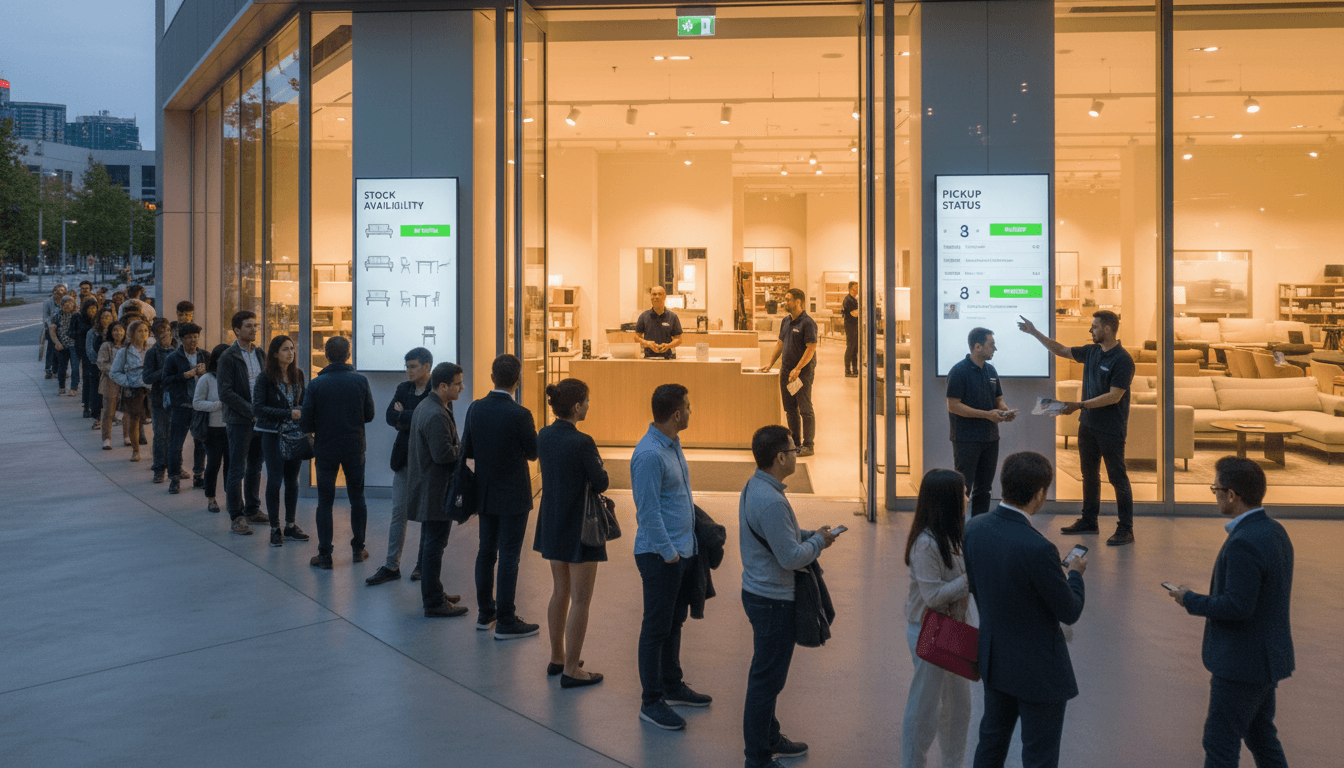
When IKEA opened its first New Zealand outlet in early December 2025, shoppers reportedly lined up for hours to get in. That kind of “warm welcome” is great PR, but it’s also a live-fire test of retail fundamentals: demand forecasting, staffing, checkout flow, inventory accuracy, last-mile capacity, and the handoff between online browsing and in-store purchasing.
For retailers in Ireland following the AI in Retail and E-Commerce series, this matters for a simple reason: market expansion is rarely won on brand awareness alone. You win it on customer experience, and you keep winning it by turning launch-day excitement into repeat behavior across every channel.
Why big store launches still work (and what most brands miss)
Big openings work because they create urgency, scarcity, and social proof—three classic drivers of footfall. But the part most companies get wrong is what comes next: they treat the queue as the victory lap instead of the starting gun.
A crowded opening day creates two opposite outcomes at the same time:
- High intent: customers are motivated, ready to buy, and primed to explore.
- High friction: long wait times, stockouts, crowded aisles, and overwhelmed staff can turn excitement into annoyance fast.
AI isn’t there to “wow” people with flashy tech. Its job is to reduce friction and protect margin while demand spikes—especially when you’re entering a new market and you don’t yet have years of local behavioral data.
The two questions that decide whether opening-day buzz becomes loyalty
Answer these well and you’re in good shape:
- Can customers find what they came for—quickly?
- Can you stay helpful and consistent across store, web, and delivery?
AI supports both by improving prediction, personalization, and operational decisioning.
Use AI to forecast demand when you don’t have local history
When a retailer enters a new market, the data problem is real: your global models are useful, but local preferences can be surprisingly different. In home and furniture retail, small differences matter—room sizes, rental vs. owner occupancy, climate, and local styles all change what sells.
The best approach is transfer learning with local calibration:
- Start with demand models trained on comparable regions (store formats, product mix, income bands).
- Add early local signals quickly: web sessions, wishlists, “notify me” requests, store locator searches, and basket building.
- Re-train weekly during the first 8–12 weeks post-launch.
This is where many expansion plans fail. Teams wait for “enough data” and run the store like a guess. The reality? You can build a strong forecasting loop in the first month if you treat every digital interaction as a demand signal.
Practical signals that predict opening-week sales
If you’re launching in a new country (or even a new city), track these by product family:
- Search volume spikes by SKU/category
- Save-to-list and add-to-cart rates
- Delivery postcode checks (where demand clusters)
- Returns-policy page views (a proxy for purchase anxiety)
- Stock-availability page exits (a proxy for stock frustration)
AI can turn these into actionable forecasts—not perfect, but good enough to avoid the worst outcome of a launch: empty shelves and angry customers.
Personalization that respects the reality of furniture shopping
Furniture and homeware aren’t impulse buys for most people. Shoppers research, compare, measure, and often need a second visit. That means personalized recommendations should be more like a helpful in-store colleague and less like “people also bought this random lamp.”
A useful personalization system for a new-market launch focuses on three jobs:
- Project-based intent (e.g., “setting up a nursery”, “small apartment storage”)
- Compatibility (dimensions, style, color families, room constraints)
- Confidence (delivery timelines, stock certainty, assembly expectations)
Here’s what works in practice:
- Recommend bundles that solve a whole room problem (desk + chair + cable management + lighting) rather than isolated products.
- Use AI to detect constraint language (“small”, “rental”, “no drilling”, “cat-proof”) and prioritize relevant items.
- Offer “good/better/best” options to protect conversion without racing to the cheapest item.
A strong AI retail strategy doesn’t chase clicks. It reduces decision fatigue.
In-store + online: the omnichannel moment that matters
Store openings create a predictable pattern:
- Customers browse online first.
- They visit the store for feel/fit/testing.
- They buy later online (often for delivery), especially for bulky items.
If your systems treat those as separate customers, you’ll waste marketing spend and frustrate shoppers.
The omnichannel fix is straightforward:
- A single customer profile (with consent) that connects browsing, store visits, and purchase history.
- A “continue your plan” experience: saved lists, room plans, measurements, and delivery estimates follow the customer.
- Post-visit messaging based on what they actually interacted with—not generic category blasts.
Queue management is a customer experience problem—AI can help
Queues aren’t just about wait time. They’re about perceived fairness, clarity, and control.
AI-powered queue management can do three useful things during peak demand:
1) Predict surges before they hit the door
Combine local event calendars, traffic patterns, weather, marketing campaigns, and historical peak curves from similar stores. Even without perfect data, you can forecast staffing needs and open additional service points earlier.
2) Route customers to the right support
Not everyone needs the same help:
- Some need quick pickup.
- Some need design advice.
- Some need financing or delivery scheduling.
A simple triage layer—digital kiosks, appointment scheduling, or a mobile “help me find” flow—reduces congestion where it hurts most.
3) Protect checkout flow and reduce abandonment
AI can monitor real-time transaction times, basket sizes, and queue growth to trigger actions:
- Open additional tills
- Reassign staff
- Switch to express lanes
- Push mobile checkout options for smaller baskets
This isn’t about fancy robotics. It’s about operational decisioning that keeps the store from tipping into chaos.
Expansion playbook: AI + omnichannel as the safety net
A successful market entry isn’t a single store opening. It’s a repeatable system.
If you’re building an expansion playbook (and you want it to work in Ireland or beyond), treat AI as the layer that makes the system resilient:
The 90-day AI plan after a new-market launch
Days 1–14: Stabilize operations
- Improve inventory accuracy with exception alerts (phantom stock is brutal in week one)
- Monitor returns reasons daily; fix top 3 causes immediately (missing parts, unclear assembly, damaged delivery)
- Add “near real-time” dashboards for stockouts, queue time, and delivery backlog
Days 15–45: Convert excitement into repeat behavior
- Personalize re-engagement: reminders for saved lists and abandoned baskets, tuned to delivery lead times
- Introduce project-based bundles and “complete the room” suggestions
- Use customer service transcripts to spot recurring confusion and update FAQs, product pages, and signage
Days 46–90: Optimize margin and loyalty
- Price optimization tests by category (don’t start with everything—pick 1–2 categories with elastic demand)
- Predictive replenishment by postcode clusters
- Loyalty activation: targeted benefits tied to behavior (delivery discounts for high-basket customers, assembly support for first-time buyers)
The stance I’ll take: if you don’t run a disciplined 90-day post-launch loop, you’ll spend more on acquisition to replace customers you could’ve retained.
Common questions retailers ask (and direct answers)
Should a new-market launch prioritize store experience or e-commerce?
Both, but sequence matters. The store sets trust; e-commerce scales convenience. AI helps connect them so customers don’t feel like they’re starting over each time.
What’s the fastest AI win after a store opening?
Demand sensing and inventory exception alerts. Stockouts and inaccurate availability do more damage to early brand perception than imperfect recommendations.
How do you personalize without being creepy?
Use session-based and intent-based personalization first (what they’re doing now), then gradually add profile-based personalization when customers opt in and see clear value.
Turning a “warm welcome” into durable growth
IKEA’s New Zealand opening is a reminder that physical retail still has enormous power—especially when a brand arrives in a market that’s been waiting. But the queue is the easy part. The hard part is delivering a consistent omnichannel experience once the novelty fades.
If you’re leading retail or e-commerce teams in Ireland, the playbook is clear: use AI to forecast demand with imperfect local history, personalize around real shopping jobs (not vanity clicks), and run stores with operational intelligence during surges.
If you’re planning a launch, a rebrand, or a new location in 2026, ask one practical question: What will you measure in the first 30 days that tells you customers want to come back—without another grand opening?