Riesbeck’s move to eGrowcery shows how AI-ready fulfillment improves grocery pickup, delivery, and omnichannel CX. Use this playbook to plan yours.
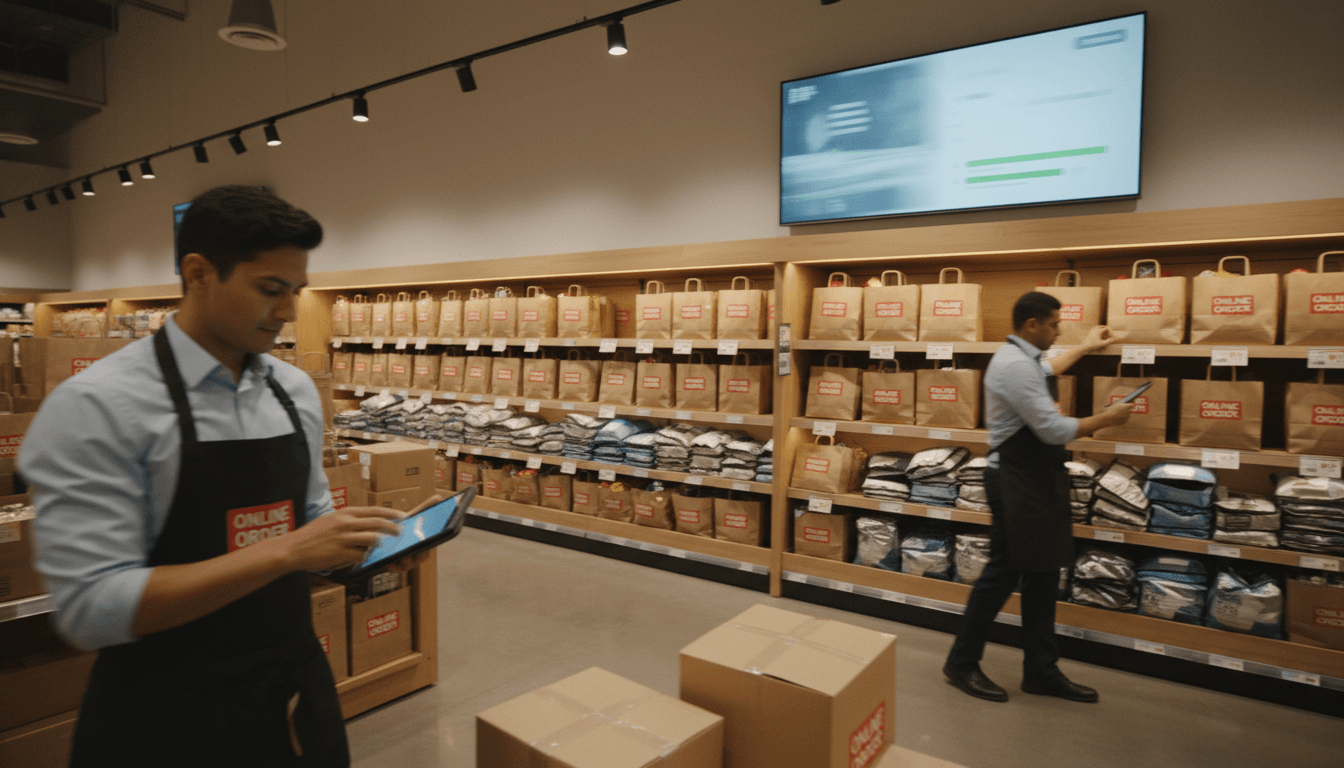
AI Grocery Fulfillment: Lessons from Riesbeck’s Move
December is when grocery e-commerce stops being a “nice-to-have” and becomes a stress test. Orders spike, substitutions get messy, pickup windows tighten, and store teams feel every weak link in the chain. That’s why a regional grocer’s tech decisions in early December are worth paying attention to.
Riesbeck’s Food Markets—an employee-owned supermarket chain with 17 locations across Ohio and West Virginia—just rolled out eGrowcery’s online shopping and fulfillment platform to strengthen pickup and delivery. On the surface, it’s a platform switch. Practically, it’s a blueprint for how smaller and mid-sized grocers can build an omnichannel operation that actually holds up under pressure.
This post is part of our AI in Retail and E-Commerce series, where we look at how retailers (including many across Ireland) are using AI and unified commerce to improve customer experience, boost digital adoption, and make operations less chaotic. Riesbeck’s move lands right in the middle of that conversation: the “digital shelf” is only as good as the fulfillment behind it.
Why grocers are replacing their e-commerce stacks (even if they “work”)
Most companies get this wrong: they judge their e-commerce platform by whether customers can place orders. That’s the lowest bar. The real bar is whether the platform helps you pick, pack, substitute, stage, and hand off orders profitably—without breaking in peak periods.
Riesbeck’s CEO said their prior system connected them with customers before the pandemic, but expectations changed. That’s the story across grocery:
- Customers expect accurate inventory and fewer surprises at checkout n- They want fast pickup slots and on-time delivery
- They punish clunky experiences with silent churn (they simply stop ordering)
- Store teams need tools that don’t add extra steps
Here’s what’s happening operationally: even modest e-commerce growth magnifies friction. A single bad substitution flow can create a service desk line, refund requests, and lost loyalty. A platform that doesn’t coordinate catalog, pricing, and fulfillment forces store teams into manual workarounds. Those workarounds become your “process”—until they collapse.
Riesbeck’s stated goal is to beat the industry average 3% e-commerce growth rate cited in the announcement, and eGrowcery claims retailers that upgrade to its unified commerce platform can see up to a 23% sales increase “right out of the gate.” You should treat any vendor number as directional, not guaranteed, but it points to a real mechanism: when ordering becomes easier and fulfillment becomes more reliable, digital share tends to rise.
Unified commerce isn’t a buzzword—it's a way to prevent operational debt
A unified commerce platform matters because grocery is full of edge cases. Weighted items. Substitutions. Age-restricted products. Promotional pricing. Loyalty offers. And the biggest one: inventory that changes every minute.
Unified commerce (when done properly) reduces the mismatches between what the customer sees online and what the store can actually fulfill. In plain terms, it’s fewer “we don’t have that” moments.
Where AI fits in a fulfillment platform
Even when a platform isn’t marketed as “AI-first,” the competitive advantage increasingly comes from AI-driven decisions inside the workflow. In grocery fulfillment, AI usually shows up in three practical places:
- Search and discovery: Better on-site search, smarter category browsing, and more relevant recommendations. This lifts conversion because customers find what they need faster.
- Substitution intelligence: Suggesting substitutes that match brand, dietary needs, and price tolerance. This reduces refunds and increases satisfaction.
- Operational optimization: Forecasting demand, allocating labor, and optimizing pick paths. This improves speed and reduces cost per order.
If you’re running omnichannel retail, AI isn’t a standalone project. It’s a set of small decisions that remove friction for customers and minutes from store tasks. Those minutes are margin.
The customer experience payoff: speed and trust
Riesbeck’s leadership called out speed and convenience as the drivers. That’s not marketing fluff—it’s the two-part equation for grocery e-commerce retention:
- Speed gets the first and second order.
- Trust gets the tenth.
Trust is built when availability is accurate, substitutions are sensible, pickup is smooth, and the final total doesn’t surprise shoppers. A fulfillment platform that supports tighter execution is a direct investment in customer trust.
What “good” looks like in grocery pickup and delivery (and how to measure it)
If you’re evaluating an e-commerce fulfillment platform—whether you’re in Ireland, the UK, or North America—don’t start with feature lists. Start with outcomes and KPIs. These are the metrics that actually move profitability and loyalty.
The 8 metrics I’d track in the first 90 days
- Order success rate (orders fulfilled without customer complaint or refund)
- On-time pickup/delivery rate (promise time vs actual)
- Substitution rate (and the % accepted vs rejected)
- Out-of-stock rate on digital orders (true OOS vs “system OOS”)
- Pick speed (items per minute) by store and by picker
- Cost per order (labor + packaging + last-mile fees)
- Repeat purchase rate (30/60/90 days)
- Digital basket size vs in-store basket size
These numbers tell you whether the platform is improving reality, not just user interface.
Don’t ignore store-team experience
Riesbeck’s CEO mentioned early positive feedback from store teams. That’s a bigger signal than many retailers realize.
When store teams like the tools:
- picking errors fall
- substitution quality improves
- staging and handoff gets faster
- training becomes simpler
And here’s the honest bit: if the in-store workflow is painful, your digital strategy will stall. Associates will avoid it, shortcuts will creep in, and customers will feel it.
The strategic angle: market penetration in grocery e-commerce
Riesbeck’s goal includes “market penetration,” which is exactly the right language. Grocery e-commerce isn’t only about competing with national giants. It’s about owning the weekly shop in your trade area.
A strong omnichannel retail setup helps a regional grocer defend and grow share in three ways:
1) Capture time-poor shoppers without losing margin
Pickup is often the sweet spot: it meets convenience needs while avoiding the full cost of last-mile delivery. A platform that manages pickup slots, staging, and order accuracy is a margin protector.
2) Create a consistent experience across channels
Customers don’t think in channels. They think in tasks: “I need dinner, I need school lunches, I forgot detergent.” The closer your online and in-store experiences are—pricing, promos, loyalty, product data—the fewer reasons they have to shop elsewhere.
3) Build a data foundation for AI personalization
Once a retailer has consistent product data and transaction history across channels, AI-driven personalization becomes practical:
- tailored offers based on real purchase behavior
- reminders for replenishment
- recommendations that respect dietary preferences
- suppression of irrelevant promos (which customers quietly hate)
For our AI in Retail and E-Commerce series audience, this is the recurring theme: you can’t personalize your way out of operational chaos. Fulfillment comes first.
What this means for retailers in Ireland watching the same trend
Even though Riesbeck’s operates in the US, the pattern maps cleanly to Irish retail:
- Consumers expect quick pickup and reliable delivery options.
- Promotions and loyalty are core to grocery economics.
- Labor is constrained, so productivity gains matter.
- Retail media and personalization are growing, but only work when data is trustworthy.
If you’re an Irish grocer or omnichannel retailer, the key lesson isn’t “choose vendor X.” It’s this: treat fulfillment as a customer experience product, not a back-room function.
A practical readiness checklist before you switch platforms
If you’re planning a similar upgrade, I’d pressure-test these areas early:
- Product data quality: Are weights, allergens, and variants consistent?
- Inventory signals: How often is stock updated, and from where?
- Substitution rules: Who controls them—central team, store, or customer preferences?
- Labor model: Dedicated pickers vs shared labor? Peak coverage plan?
- Handoff design: Pickup signage, staging area, temperature control, and queue flow
- Customer comms: Order status updates, substitution approvals, and refunds
A platform can help, but it can’t compensate for unclear ownership and messy inputs.
People also ask: quick answers on AI fulfillment platforms
Is AI required to run grocery pickup and delivery?
No. But AI-driven features (forecasting, substitution matching, personalization, pick optimization) are increasingly what separates “functional” from “efficient and scalable.”
What’s the biggest driver of grocery e-commerce repeat orders?
Reliability. Accurate availability, sensible substitutions, and on-time fulfillment beat flashy design every time.
How long does it take to see results from a unified commerce upgrade?
Many retailers see improvements within the first 60–90 days—especially in conversion and operational metrics—if training and data cleanup are handled upfront.
Next steps: make fulfillment your growth engine
Riesbeck’s move to eGrowcery is a reminder that grocery e-commerce growth isn’t magic—it’s execution. If your online shop promises convenience but your fulfillment can’t deliver it consistently, customers won’t argue. They’ll just switch.
If you’re mapping your 2026 omnichannel roadmap, start by asking a blunt question: Which part of our digital ordering journey creates the most friction for customers and the most waste for teams? Fix that first. Then layer in AI personalization and optimization where it removes real work, not where it looks impressive in a demo.
What would happen to your e-commerce growth if your stores could fulfill digital orders with the same confidence they run the checkout lane?