Target SoHo shows how concept stores can drive omnichannel growth. Learn how AI-powered personalization turns in-store discovery into measurable retail outcomes.
What Target SoHo Teaches About AI-Powered Retail
Target didn’t open a concept store in SoHo because it needed more shelves in Manhattan. It did it because physical retail now has to earn its keep—not by carrying everything, but by creating moments shoppers remember, photograph, and talk about.
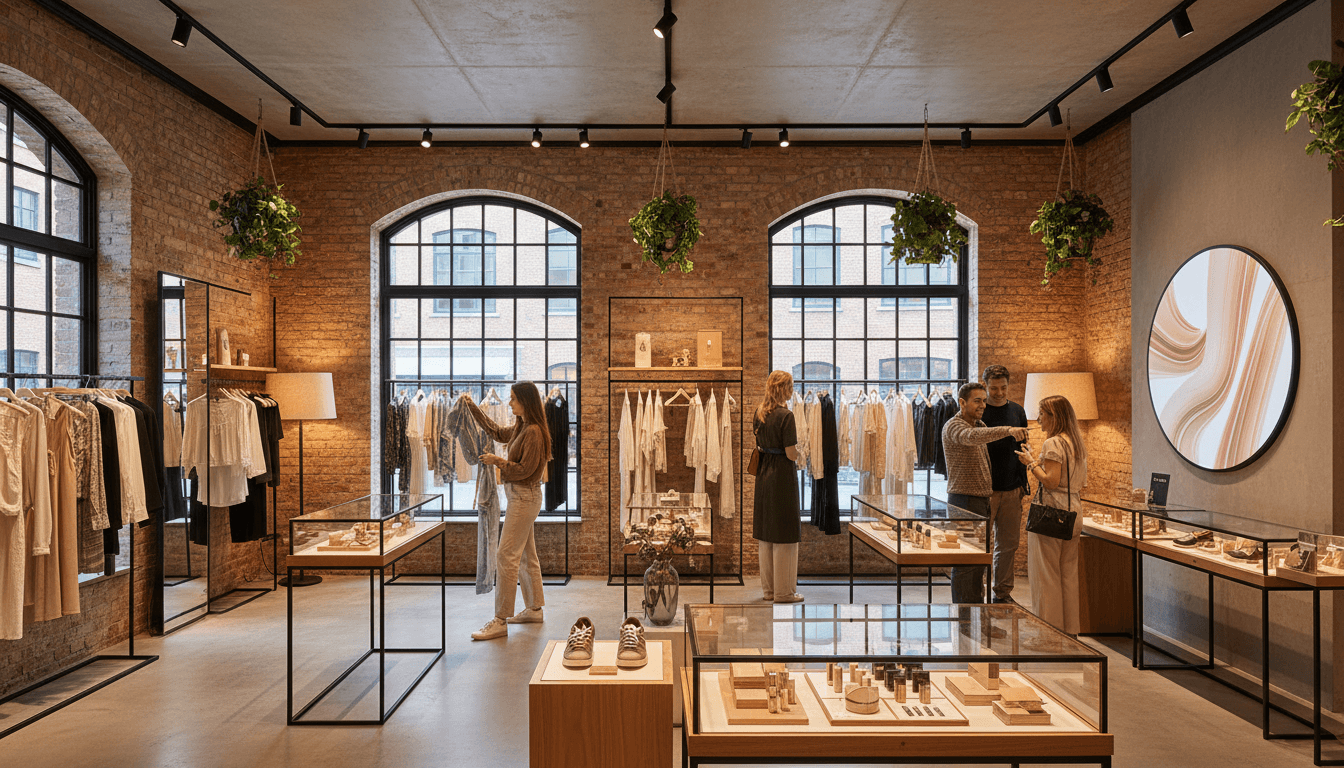
Target SoHo (opened December 2025) is designed around “play, discovery and style,” with curated edits, rotating product drops, a beauty bar, and even a selfie moment at checkout. On paper, that sounds like brand theatre. In practice, it’s a signal: the store is becoming a high-impact media channel, and the winners will be the retailers who connect that experience to their omnichannel engine.
For retailers in Ireland—especially those balancing tight labour, high street pressure, and fast-shifting customer behaviour—this is useful. The real lesson isn’t “add a selfie wall.” It’s this: concept stores work when you run them with data discipline, and that’s where AI in retail and e-commerce stops being a side project and starts paying rent.
Target SoHo is a concept store built for discovery
Target SoHo’s design choices point to one core goal: make discovery feel effortless and intentional.
The store highlights several experience zones:
- Curated By: seasonal edits shaped with NYC tastemakers across fashion, beauty, and home
- The Drop @ Target SoHo: rotating seasonal styles meant to keep the assortment fresh
- Broadway Beauty Bar: rotating curation of beauty picks selected with top beauty talent
- Selfie Checkout: a “share-worthy” final moment that turns checkout into an event
Here’s what’s smart about this format: it acknowledges that many shoppers already know how to buy basics online. What they don’t get online—at least not consistently—is serendipity. A good concept store manufactures that serendipity.
The operational challenge most retailers underestimate
Discovery is expensive if you treat it like décor.
Rotating assortments, seasonal activations, tastemaker partnerships, and in-store storytelling create three hard problems:
- Forecasting becomes tougher because demand is intentionally spiky.
- Merchandising quality matters more because customers expect “edited,” not “random.”
- Measurement needs to be sharper because the point isn’t just sales per square metre—it's lifetime value, repeat visits, and cross-channel conversion.
This is where AI-driven personalization and omnichannel analytics can make or break the concept.
Why AI makes concept stores more than brand theatre
A concept store without AI is often a beautiful guessing game. With AI, it becomes a learning system.
The most practical role of AI in retail and e-commerce here is straightforward: turn store interaction data into better decisions—faster than a team can do manually.
1) AI turns “curation” into a repeatable capability
“Curated By” sounds like taste—and it is—but taste scales when you combine it with signals:
- what’s being tried on vs. what’s being purchased
- which fixtures or zones create dwell time
- what customers search for online before visiting
- what gets scanned in-app or saved to wishlists
AI models can surface patterns a human team won’t spot quickly, like:
- This hoodie sells when styled next to a specific denim silhouette, but only in the first 10 days of a drop.
- Beauty conversions spike when staff demonstrate two specific routines, not five.
That’s not abstract. It means your next rotation is less guesswork and more iteration.
2) AI supports localised assortment without fragmenting the brand
SoHo is a particular customer profile. Dublin city centre is different. Cork is different again. Galway changes week to week depending on tourism and weather.
Retailers often avoid localisation because it causes complexity: too many mini-stores, too many planograms. The better approach is to set brand guardrails and use AI to tune within them:
- local demand prediction for limited drops
- store-level size curve optimization (especially apparel)
- micro-segmentation for neighbourhood preferences
Done right, localisation doesn’t dilute the brand. It makes the brand feel like it’s paying attention.
3) AI connects the experience to omnichannel revenue
If a concept store is a media channel, the KPI can’t be only store sales.
AI-enabled omnichannel measurement helps answer questions that finance teams care about:
- Did the store visit increase online conversion within 7 days?
- Did customers who engaged with a “drop” buy full-price more often?
- Which in-store zones correlate with repeat visits?
If you can’t quantify those outcomes, concept retail gets cut the moment budgets tighten.
The omnichannel play: make in-store moments shoppable everywhere
The SoHo format screams “try it, share it, buy it.” Retailers should treat that as a single flow, not three disconnected actions.
A solid omnichannel experience needs two things: frictionless capture and frictionless continuation.
Frictionless capture: don’t lose the signal
Every “discovery” zone should create a clean signal you can use later:
- QR codes or NFC taps that save a collection to a wishlist
- digital receipts that link purchases to profiles
- in-app “scan to learn” for ingredients, materials, or styling ideas
This matters because concept stores generate interest that doesn’t always convert immediately.
Frictionless continuation: let customers finish later
In Ireland, shoppers often browse in town and complete purchases later at home. Your job is to make that handoff painless.
AI-driven personalization can:
- trigger follow-up recommendations based on what a customer viewed in-store
- send back-in-stock or low-stock alerts for drop items
- personalise onsite or app homepages based on store interactions
A blunt opinion: if your store experience doesn’t improve your e-commerce conversion rate, you’re funding entertainment.
What Irish retailers can copy (and what they shouldn’t)
You don’t need a SoHo budget to apply the underlying strategy. You do need focus.
Copy this: rotating “edits” with a clear promise
The “Curated By” idea works because it’s a promise: this is edited for you.
In an Irish context, that could be:
- “Weekend in the West” (travel-ready capsule)
- “Workwear that actually lasts” (durability-led edit)
- “Gifting under €30” (seasonal, January-friendly)
AI helps by reading what’s resonating across channels and suggesting what the next edit should include.
Copy this: a “drop” model that creates return visits
Drops aren’t just hype. They’re a scheduling tool.
If you run drops, use AI demand forecasting to avoid the two classic mistakes:
- overbuying and training customers to wait for markdowns
- underbuying and frustrating your best customers
A drop should have a clear runway: tease → in-store moment → online continuation → post-drop recommendations.
Don’t copy this: experiences that can’t be measured
“Selfie Checkout” is clever branding, but the real question is: what does it do to conversion, basket size, queue abandonment, and repeat visits?
If you can’t answer that, you’re relying on vibes.
The fix is simple: define 3–5 metrics per activation before you build it, such as:
- zone conversion rate (engagement → add-to-basket)
- attach rate (did the look drive a second item?)
- email/app opt-in rate from the zone
- return visit rate within 30 days
A practical AI roadmap for a concept-style store (90 days)
Retail leaders often ask what to do first without boiling the ocean. Here’s what works when you want results quickly.
Weeks 1–2: instrument the experience
- unify customer IDs across POS, e-commerce, and loyalty
- ensure digital receipts and consent capture are consistent
- label zones/events in your data (yes, literally name them)
Weeks 3–6: deploy “useful” personalization
- product recommendations based on browse + store interactions
- personalised email flows for drop interest and replenishment
- onsite search improvements (AI-assisted synonyms and intent)
Weeks 7–12: optimise merchandising and staffing
- demand forecasting for rotating edits
- labour scheduling informed by predicted footfall and zone engagement
- test-and-learn loops for displays: A/B variants by week or by store
If you do only one thing: connect store engagement signals to your e-commerce personalization. It’s the fastest path to visible uplift.
Quick Q&A retailers ask about AI and concept stores
Does a concept store replace e-commerce investment?
No. It increases the return on your e-commerce investment by generating higher-intent traffic and richer customer data.
What data do you actually need to start?
Transaction data, product catalogue data, basic customer profiles (with consent), and simple engagement signals (scans, wishlists, zone events). Perfect data isn’t required; consistent data is.
Is AI mainly for big retailers?
Big retailers move first, but mid-sized retailers can move faster. Many AI use cases—recommendations, forecasting, segmentation—are achievable without massive in-house teams if your foundations are clean.
Where this goes next: the store as a learning lab
Target said the SoHo store will evolve through 2026 with new experiential zones, seasonal activations, and café/event programming. That’s a clue to the real strategy: keep the store in beta.
For this “AI in Retail and E-Commerce” series, I keep coming back to the same belief: the best retailers treat AI as a feedback engine, not a buzzword. Concept stores generate feedback at high volume—if you capture it properly.
If you’re running retail in Ireland and considering a refreshed store format, start with the hard question: what will we learn here that we can’t learn online—and how will AI help us act on it within days, not quarters?