Agentic AI can automate shopping, but 50% of consumers still hesitate. Learn how retailers can roll out autonomy safely and build trust first.
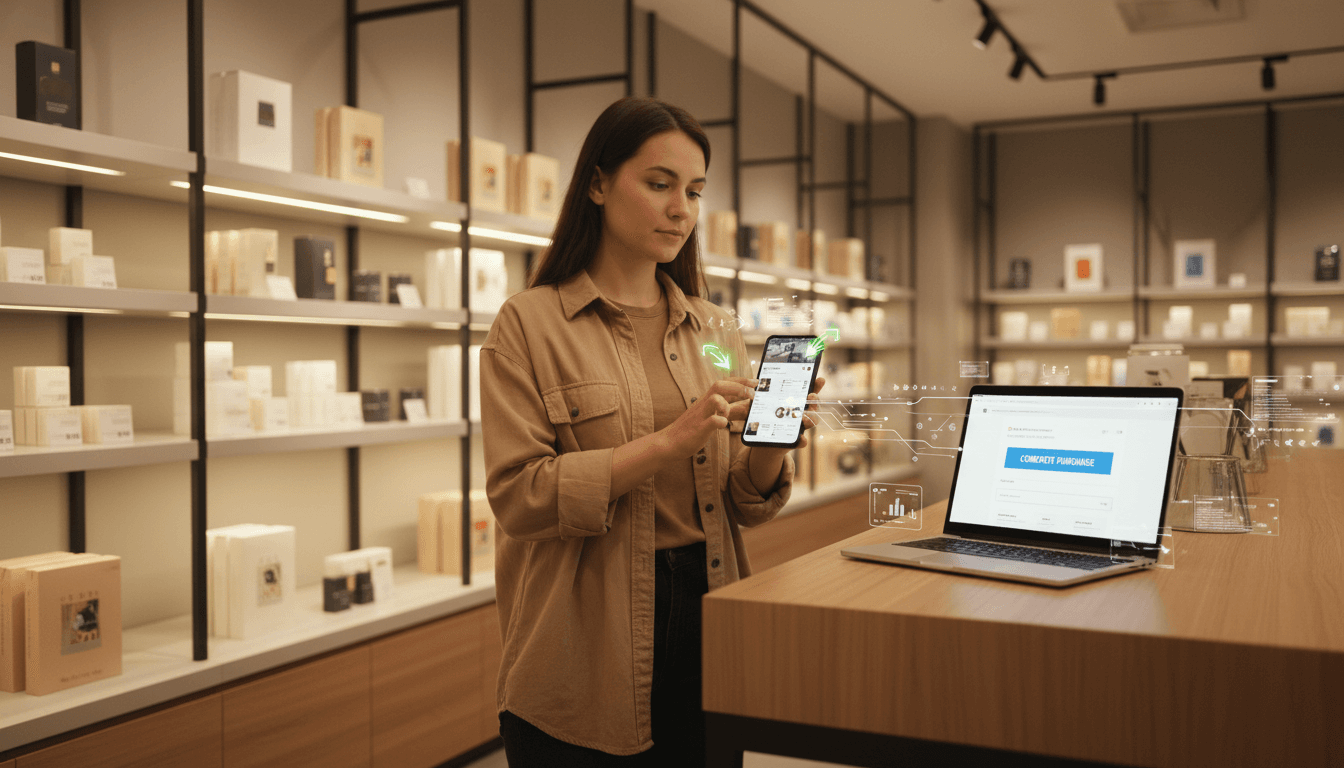
Agentic AI in Retail: Win Trust Before You Automate
Agentic AI is already nudging shoppers toward a new default: software that doesn’t just recommend, but acts—researching products, comparing options, and even completing checkout. The twist is that many customers aren’t ready to hand over the keys. A recent Bain report found 50% of consumers are cautious about fully autonomous purchasing, even as 30%–45% of U.S. consumers say they use generative AI for product research and comparison.
That tension—automation vs. trust—is the whole story for retail and e-commerce going into 2026. Retailers want higher conversion, lower service costs, and better personalization. Customers want speed, but also control, privacy, and a feeling they won’t get tricked by an algorithm.
For our AI in Retail and E-Commerce series (with a practical lens for retailers in Ireland), this is the next real test: you can absolutely deploy agentic shopping experiences, but if you don’t design for transparency and consent, you’ll create backlash, not loyalty.
What agentic AI actually changes in the shopping journey
Agentic AI changes the shopping journey by shifting AI from “advisor” to operator. Generative AI answers questions and summarizes options. Agentic AI takes steps: it can open tabs, apply filters, use tools (catalog search, inventory, promotions), and make decisions over time using memory.
In practical retail terms, an agent can:
- Build a basket based on constraints (“€60 budget, gluten-free, delivery by Tuesday”)
- Reorder household items automatically when stock is low
- Swap items if sizes are out of stock, within your rules
- Apply promotions, loyalty points, or bundles without the shopper hunting
- Trigger post-purchase actions like returns, exchanges, or service bookings
Here’s the important part: the interface becomes less like a store and more like a delegated assistant. That’s why it can disrupt discovery and loyalty as much as search engines did. If an AI agent is picking products for customers, the brands that win are the ones the agent trusts, understands, and can validate.
Why referral traffic from AI matters (even before it’s big)
Bain’s research (with Similarweb) notes that AI can account for up to 25% of referral traffic for some retailers, while still being under 1% of total traffic overall. That sounds contradictory until you remember traffic isn’t evenly distributed.
A small slice of shoppers—often high-intent, higher-spend—can create an outsized impact. If those customers start their journey in AI tools instead of search, you’ll feel it first in:
- Brand search volume softening
- Product page sessions coming from “unknown” referrers
- Higher conversion from AI-referred sessions (because research was pre-done)
My take: treat AI referral as an early-warning dashboard. It signals where your product content, trust signals, and availability data need tightening.
Why consumers hesitate: it’s not fear of AI, it’s fear of outcomes
Consumer caution around autonomous purchasing isn’t irrational. It’s learned. People have seen:
- “Personalisation” that feels like surveillance
- Confusing pricing and promo rules
- Subscriptions that are hard to cancel
- Returns that are friction-heavy
- Recommendation widgets that push what’s profitable, not what’s best
When an agent can spend money on your behalf, shoppers worry about four things:
- Control: “Can I set rules and override choices?”
- Transparency: “Why did it pick that product?”
- Privacy: “What data is it using, and who gets it?”
- Accountability: “If it goes wrong, will the retailer fix it quickly?”
If you want a sentence worth repeating internally, it’s this:
Customers don’t object to automation—they object to being surprised at checkout.
The trust gap shows up fastest in high-stakes categories
In grocery, health, baby, and high-value electronics, autonomy triggers more anxiety. In lower-stakes categories (household basics, repeat purchases, accessories), customers tolerate automation sooner.
That suggests a rollout strategy: start where the customer already behaves like an autopilot (replenishment, staples, repeat orders), then expand to more complex shopping missions.
The retailer playbook: autonomy in layers, not a big-bang “AI checkout”
The best way to earn trust is to introduce agentic AI as a set of graduated permissions—like how banking apps added contactless, then tap-to-pay limits, then card freezing, then spending controls.
Layer 1: “Assist” (AI helps, customer decides)
This layer boosts conversion without spooking shoppers. Examples:
- AI product comparisons that cite specs, reviews, compatibility, and delivery windows
- Size/fit guidance using return reasons and product attributes
- Bundling suggestions (“you’ll also need a cable/adapter/refill”) that are easy to decline
What to build first:
- Clean product attributes (dimensions, materials, compatibility)
- FAQ content structured for direct answers
- Returns and delivery promises stated clearly on PDPs
Layer 2: “Recommend with rules” (AI proposes, customer approves)
This is where agentic behaviour starts: the AI creates a basket and proposes substitutions.
Make it safe:
- Show a simple reason for every suggestion (“matches your dietary preference”, “in stock for next-day delivery”, “better value per unit”)
- Ask for approval before payment
- Offer a “strict mode” (no substitutions) and “flex mode” (sub within €X)
A practical example for an Irish retailer: a grocery agent that builds a weekly shop and flags which items are impacted by stock constraints, offering “approve all” only after the shopper reviews the changes.
Layer 3: “Autopilot” (AI buys, customer audits)
Fully autonomous purchasing is where that 50% caution number bites. So don’t start here.
If you do offer autopilot, it must come with visible guardrails:
- Spending limits per week/month
- Brand and ingredient exclusions
- Allergy and safety constraints
- Only buy from a pre-approved list
- A “cooldown window” (e.g., 30 minutes to cancel)
Autopilot should feel like a thermostat: set the comfort range, then let it run.
Personalisation vs. privacy: the trade you can’t dodge
Agentic commerce needs data to work well: preferences, sizes, addresses, purchase history, loyalty status. But the more autonomous the agent, the more sensitive the data feels.
Retailers should take a firm stance: privacy-by-design isn’t optional in agentic AI. If your approach is “collect everything and apologise later,” you’ll lose trust—and likely run into compliance trouble.
Three trust-building moves that actually work
-
Preference centres that people use
- Let shoppers edit dietary preferences, brands, budgets, and “never buy” lists.
- Keep it simple. Five toggles beat a 40-field form.
-
Explainability that’s human, not academic
- “Chosen because it’s the lowest sugar option in your price range and it’s in stock.”
- Avoid vague claims like “because you might like it.”
-
Receipts that show the agent’s work
- A post-checkout summary: substitutions made, promos applied, delivery trade-offs.
- This reduces complaints because it reduces surprises.
What to measure: KPIs for agentic AI that go beyond conversion
If you only measure conversion rate, you’ll optimise toward aggressive automation and wonder why repeat purchase drops.
Use a balanced scorecard:
- Approval rate: % of AI-created baskets that customers accept
- Override rate: how often customers change AI choices (and why)
- Return rate by agent action: are substitutions driving returns?
- Customer effort score: time-to-complete a mission (weekly shop, gift purchase)
- Trust signals: opt-in rate to autopilot, preference-centre engagement
A simple operating rule I like: if overrides are high, don’t blame the user—your constraints are wrong or your catalogue data is messy.
“People also ask” questions retailers should answer internally
Will agentic AI replace ecommerce sites and apps?
No. It will reshape how customers arrive and how decisions are made. Your site becomes the source of truth for product data, inventory, fulfilment promises, and policies. Agents will rely on that truth.
How do we keep our brand visible when an agent is choosing?
Brand visibility shifts from banners to structured signals: clear product attributes, reliable availability, consistent pricing, strong reviews, and explicit policies. Agents reward clarity.
What’s the fastest low-risk use case?
Start with repeat purchase and customer service automation:
- Reorder flows
- “Where is my order?”
- Returns initiation
- Subscription management with clear controls
These reduce cost and build confidence without asking for full buying autonomy on day one.
The stance I’d take for 2026: earn autonomy like you earn loyalty
Agentic AI will disrupt retail discovery and loyalty, but retailers who chase full autonomy too early will pay for it in trust. The winners will introduce agentic features in layers, prove value with clear guardrails, and make the customer feel in control even when the system is doing the work.
For retailers in Ireland building their AI in retail and e-commerce roadmap, the near-term opportunity is straightforward: use AI for customer behaviour analysis, smarter personalisation, and omnichannel continuity—then graduate to agentic checkout only when your data, policies, and service operations can support it.
If you’re considering agentic AI for shopping, start by auditing one journey end-to-end (weekly grocery, gifting, replenishment). Where do customers lose time? Where do they lose trust? Fix trust first—then automate the boring parts.
What would your customers allow an AI agent to do without asking—and what’s the one action they’d never forgive you for automating?