Swipe fees can add $20B to holiday prices. Learn how AI-driven payment optimization cuts cost, fraud, and checkout friction—without hurting conversion.
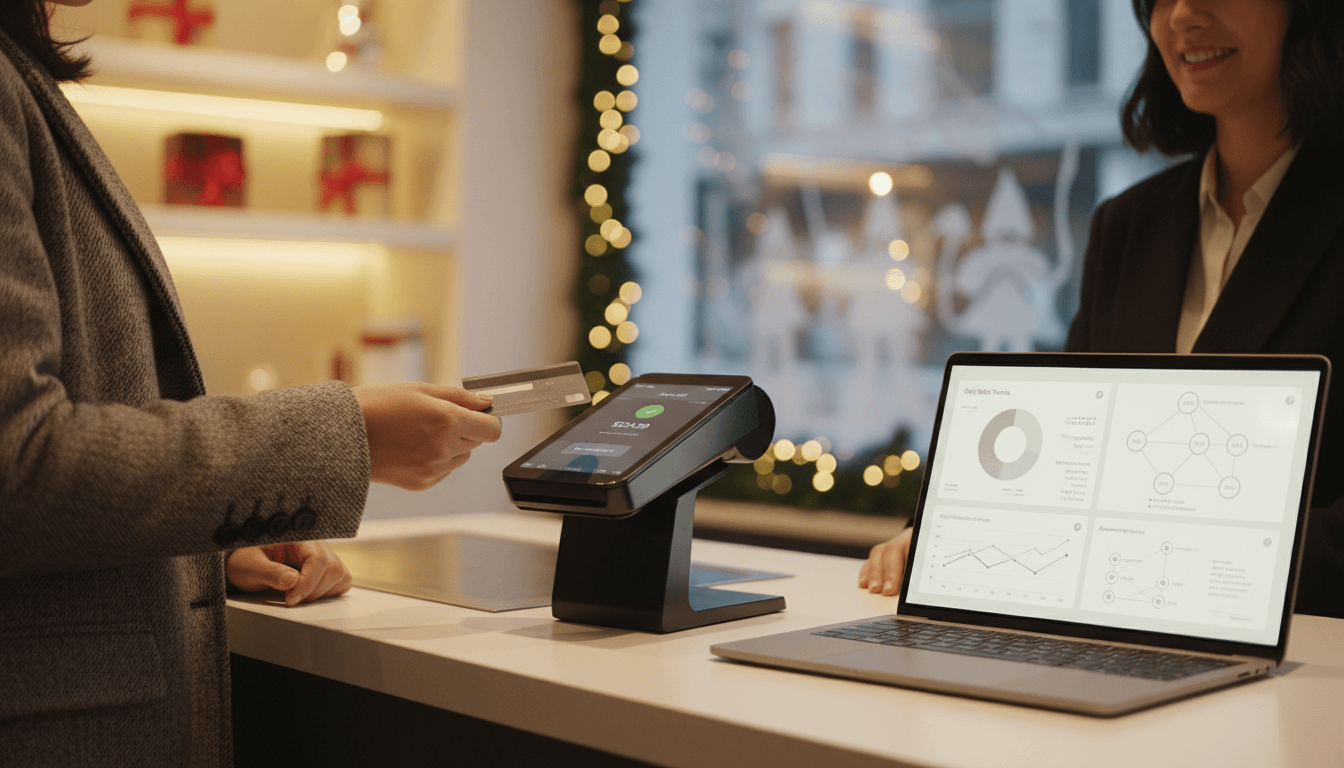
Swipe Fees Are a $20B Holiday Tax—Use AI to Cut It
U.S. shoppers are projected to spend up to $1.02 trillion across November and December, and the average household will put around $890 on holiday purchases. Hidden inside that checkout moment is a cost most customers never see: card “swipe fees” (interchange). Based on an average 2.35% rate on major card networks, that holiday spending alone bakes in roughly $20 billion in fees—money that retailers either absorb or recover through higher prices.
Retailers already know interchange is expensive. What’s different now is the combination of record fee totals, shoppers feeling more price pressure, and the growing expectation that checkout should be instant, secure, and consistent across store, mobile, and web. That’s where this fits into our AI in Financial Services and FinTech series: the payments stack is becoming an AI problem as much as a banking problem.
Here’s my stance: most retailers treat swipe fees like weather—annoying but unavoidable. They’re not. You can’t “negotiate interchange away,” but you can use AI to reduce the behaviors and flows that trigger higher-cost routing, higher fraud, more chargebacks, and unnecessary card usage where cheaper rails exist.
Why swipe fees hit harder during the holidays
Swipe fees are essentially a percentage toll on card volume. When volume spikes, the toll spikes. During peak season, that cost gets amplified by three realities:
- More card-not-present transactions. E-commerce and buy-online-pickup-in-store (BOPIS) lift authorization risk and fraud exposure, which can drive additional costs.
- More returns and chargebacks. Holidays bring higher return rates, delivery disputes, and friendly fraud—each one raising operational cost and, in many cases, payment costs.
- More promotional discounting. When margins are thinner, a 2%–3% processing cost isn’t background noise; it’s the difference between profitable and painful.
The Merchants Payments Coalition argues swipe fees have risen 70% since the pandemic and hit $187.2 billion last year. Whether you’re a supermarket, convenience chain, marketplace seller, or DTC brand, that trend matters because interchange scales with growth.
Snippet-worthy truth: When your sales grow, swipe fees grow automatically—unless you actively change the payment mix and risk profile.
Swipe fees aren’t just a finance issue—they shape customer experience
Answer first: payments cost and customer experience are tied together. The “cheapest” payment strategy that annoys customers will backfire. And the “frictionless” strategy that blindly pushes premium credit rails will quietly drain margin.
In omnichannel retail, the payment moment touches:
- Conversion rate (checkout friction, authentication steps)
- Basket size (payment acceptance and wallet preferences)
- Fraud losses (false declines vs. approvals)
- Service load (refunds, delivery disputes)
- Loyalty (how easy it is to pay, return, and get support)
This is exactly why AI is showing up in financial services: banks and FinTechs use AI for fraud detection, credit risk, and RegTech compliance. Retailers can apply similar models—without becoming a bank—to decide how to route payments, when to step up authentication, and how to shift customers toward lower-cost options.
The hidden trade-off: false declines vs. fee minimization
If you aggressively reduce risk or push too hard on alternative payments, you can cause false declines and cart abandonment. AI helps because it can optimize multiple goals at once:
- Keep approval rates high
- Reduce fraud and chargebacks
- Reduce payment costs (where practical)
That “multi-objective optimization” is the part many teams miss.
Where AI can realistically reduce swipe-fee impact
Answer first: AI won’t erase interchange, but it can reduce the amount of volume that hits the most expensive pathways and reduce downstream costs linked to card payments. Here are five areas where I’ve seen the best ROI.
1) Intelligent payment steering (without wrecking conversion)
A practical approach is to use AI to decide how and when to present payment methods.
Examples:
- If a customer has a strong history and low fraud risk, default to the fastest option (often a saved wallet) to preserve conversion.
- If the basket is low-margin or the customer is highly price-sensitive, surface bank transfer / pay-by-bank / account-to-account options more prominently.
- If the customer is a frequent in-store shopper, encourage PIN debit or lower-cost rails where that’s standard and familiar.
This doesn’t mean dark patterns or annoying popups. It means contextual choice architecture: show the right options, in the right order, to the right customer.
What AI brings:
- Propensity models predicting which method a customer will accept
- Margin-aware recommendations using product-level gross margin
- Real-time experimentation (A/B + bandits) that learns quickly in peak season
2) Smarter routing and authorization optimization
For large retailers using multiple processors or gateways, AI can optimize:
- Processor selection to improve approvals and reduce retries
- Retry logic (when to retry, how long to wait, whether to change parameters)
- Soft decline recovery strategies that don’t spam the issuer
Even if interchange is fixed, higher approval rates reduce the need for costly second attempts, customer support contacts, and lost sales. And fewer messy retries reduces risk signals that can lead to more declines.
3) Fraud and chargeback reduction that targets the real money leak
Everyone says “use AI for fraud detection.” The nuance is where your money actually leaks:
- Friendly fraud spikes in holidays (“I didn’t receive it” disputes)
- Account takeovers increase with gift card theft and credential stuffing
- Return fraud grows with higher return volume
AI improves outcomes when it’s paired with operational playbooks:
- Dynamic step-up authentication only when the model is uncertain
- Link analysis to catch mule accounts and synthetic identities
- Post-purchase anomaly detection to flag high-risk orders before fulfillment
Chargebacks are expensive on their own—and they can also increase scrutiny and costs across the payment ecosystem. Reducing them is a margin move.
4) Refund optimization and return policy personalization
Here’s an underused idea: AI-guided refund paths.
If a customer has a strong history and low risk, instant refunds can protect loyalty and reduce call volume. If risk is higher, route them to an alternative flow (store credit, delayed refund until scan-in, photo verification). Done right, this reduces:
- Dispute rates
- Customer service workload
- Inventory shrink
It also stabilizes cash flow, which matters when holiday volume is high and working capital is tight.
5) Payment analytics that treats fees like a controllable KPI
Answer first: you can’t manage what you don’t measure at checkout detail. Many teams track payment cost as a blended number. That hides the levers.
An AI-driven payments dashboard should break down costs by:
- Channel (store vs. e-commerce vs. app)
- Basket type (low margin vs. high margin)
- Tender type (credit, debit, wallet, BNPL, bank transfer)
- Issuer/network patterns
- Refund/chargeback rates per segment
Once you see which segments are bleeding margin, optimization becomes obvious.
Practical playbook: reducing swipe-fee pressure in 30–60 days
Answer first: start with changes that don’t require new rails or major re-platforming. Peak season is not the time for a fragile payments overhaul.
Step 1: Build a “true cost of payment” model
Include:
- Interchange + assessments + processor fees
- Chargebacks and dispute ops cost
- Fraud loss rate
- Customer support contacts per payment type
This is where finance, payments, and CX finally align.
Step 2: Segment customers and baskets for steering
At minimum:
- New vs. repeat customers
- High-margin vs. low-margin baskets
- High-risk vs. low-risk orders
Then decide acceptable actions per segment (default tender order, incentives, step-up auth).
Step 3: Run controlled experiments
Good experiments are small and measurable:
- Reorder payment methods for a segment
- Offer a modest incentive for lower-cost tender on low-margin items
- Adjust step-up auth thresholds based on model confidence
Track conversion, AOV, approval rate, dispute rate, and blended fee rate.
Step 4: Put compliance and governance in writing
This is where our FinTech series lens matters. If you’re using AI to influence payment choice or risk decisions, you need:
- Model monitoring (drift, bias, stability)
- Audit trails for risk decisions
- Clear consumer disclosures for incentives
- Data minimization and retention rules
RegTech isn’t just for banks anymore; retailers handling high volumes and sensitive payment data benefit from the same discipline.
“People also ask”: quick answers your team will want
Are swipe fees the same as credit card processing fees?
Swipe fees typically refer to interchange paid to issuers, but merchants experience a broader set of costs (network assessments, processor markup). Blended “processing fees” include all of these.
Can AI negotiate swipe fees down?
No. Interchange schedules are set by networks and issuers. AI helps by changing the mix (payment method, routing, fraud outcomes, retries) so fewer transactions hit the most expensive outcomes.
Will pay-by-bank or account-to-account replace cards?
Not overnight. Cards are entrenched for rewards, dispute rights, and habit. The realistic path is a portfolio approach: keep cards, grow alternatives where customers accept them, and use AI to choose wisely.
The real opportunity: treat payments like a product, not plumbing
Swipe fees are being framed as a holiday villain because the dollar amount is easy to calculate and the timing stings. But the strategic mistake is bigger: if payments are “just plumbing,” you’ll keep paying whatever the system charges.
If you treat payments like a product—measured, tested, and improved—you can protect margin and keep checkout smooth. AI makes that practical by turning messy payment decisions (risk, routing, tender mix, refunds) into measurable policies that evolve as customer behavior changes.
If swipe fees are quietly adding tens of billions to holiday spend, the smartest retailers won’t just complain. They’ll build a payments optimization loop: better data → better models → better choices at checkout.
Where do you see the biggest friction right now—authorization declines, fraud, returns, or payment method mix? That answer tells you where AI will pay back first.