Payment habits stayed steady even as 36% of Americans spent less. Learn how AI turns stable routines into higher approval rates and smoother checkout.
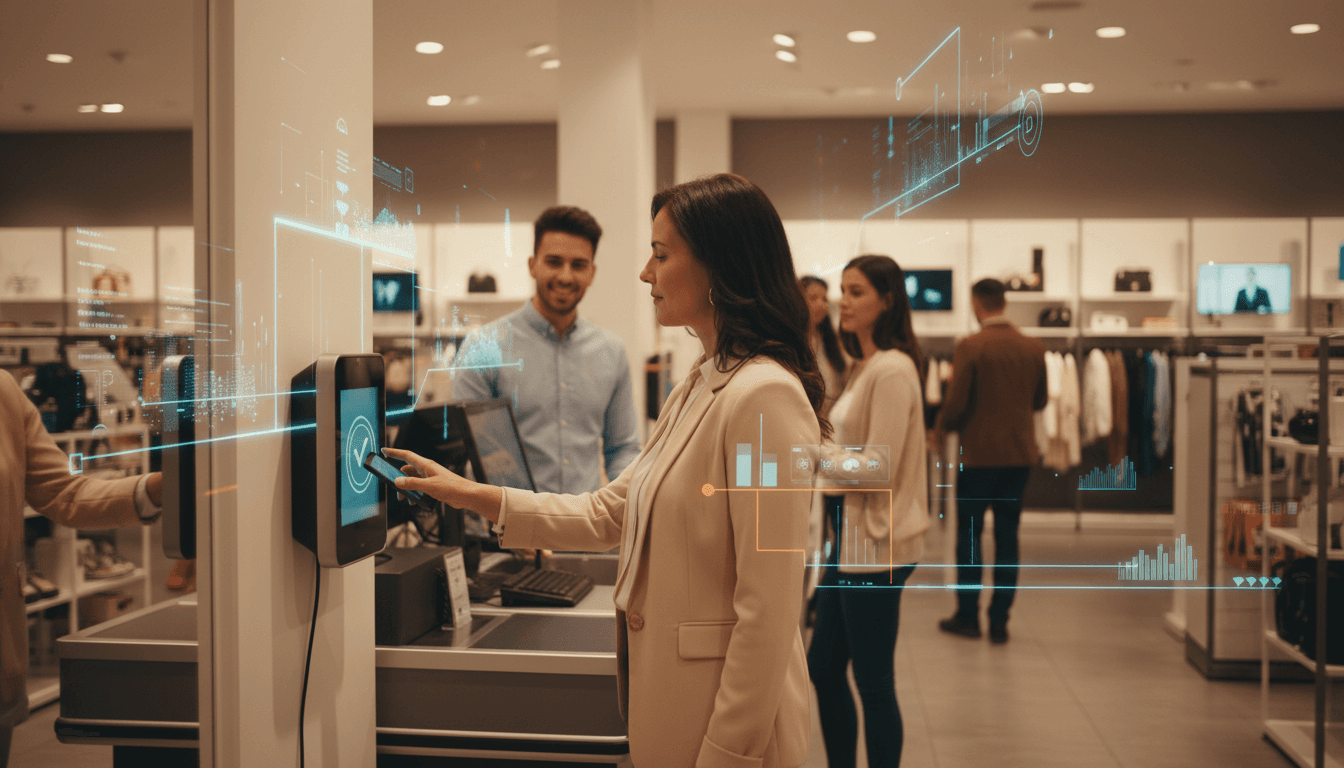
AI Payment Insights: Stable Habits, Smarter Retail
A useful thing happened in 2025’s messy economy: people didn’t randomly change how they pay.
Logica’s Future of Money Study reports 36% of Americans are spending less due to economic conditions—yet payment routines stayed steady across methods and brands, with only gradual shifts like continued mobile adoption. For retailers and fintech teams, that stability is gold. It means you can build AI models on behavior that doesn’t whipsaw every quarter.
This post sits in our AI in Financial Services and FinTech series for a reason: payments are where retail operations, customer experience, and financial infrastructure collide. If you’re trying to drive leads in 2026—whether you’re a retailer, a payments provider, or a bank building merchant services—your best angle isn’t “new payment trend hype.” It’s using AI to turn stable payment behavior into measurable margin, lower fraud, and higher conversion.
What “stable payment routines” really mean (and why AI loves it)
Stable payment routines mean shoppers have a default way to pay—and they stick to it even under stress. That predictability is exactly what machine learning needs to produce reliable signals.
When households cut back, the instinct is to assume “everything changes.” Spending might. Payment preference usually doesn’t. People still choose what feels fast, trusted, and familiar at the moment of purchase. That creates two practical advantages:
- Cleaner segmentation: Your models don’t need to relearn behavior every time the macro environment swings.
- Better experiment design: A/B tests on checkout flow or tender incentives are easier to interpret when the baseline is stable.
The operational impact retailers underestimate
Most companies get this wrong: they treat payments as a back-office function until something breaks.
Stable payment behavior affects:
- Staffing and lane planning (how many staffed lanes vs. self-checkout)
- Cash management (drawer counts, replenishment cycles, shrink controls)
- Authorization strategy (routing, retries, decline recovery)
- Customer experience (tap-to-pay speed, wallet recognition, saved credentials)
And this is where AI earns its keep: not by “predicting the future of money,” but by optimizing the payments workflow you already have.
Mobile payments are mainstream—now the goal is conversion, not adoption
Mobile payments are already a default behavior for a majority of consumers. The study reports 57% of Americans use a phone/mobile device for in-person purchases. Gen Z and Millennials lead usage, which matters because they also set expectations for speed and friction.
The infrastructure story is basically solved in many stores: Apple Pay is accepted at more than 90% of U.S. retailers, and Google Pay is broadly supported anywhere contactless terminals exist. So the question for 2026 isn’t “Should we support mobile wallets?” It’s:
How do we use AI to make wallet-driven checkout faster, safer, and more profitable?
AI tactics that actually move the needle in mobile-wallet checkout
-
Friction forecasting at the lane level
- Use computer vision + POS event logs to predict congestion and dynamically open lanes or route customers to self-checkout.
- KPI to watch: queue abandonment rate.
-
Smart tender prompts (don’t annoy customers)
- If a shopper typically uses a mobile wallet in-store, don’t push a store card modal that slows them down.
- Use AI to decide when to show an upsell prompt vs. when to stay silent.
- KPI: prompt acceptance rate and time-to-tender.
-
Token-aware fraud controls
- Mobile wallets rely on tokenization; that changes fraud patterns.
- AI models should treat tokenized transactions differently from manual card entry and adjust risk thresholds accordingly.
If you’re a bank or fintech offering merchant acquiring, this is a lead opportunity: merchants want wallet performance analytics, not generic “contactless enabled” claims.
Debit stayed dominant in-store—so optimize for speed and reliability
Debit remains the top method for in-person payments, according to the Logica study. That’s not surprising: debit feels “real” when budgets are tight, and it’s widely accepted.
The generational nuance is the part operators miss. Younger Gen Z (16–22) shows higher preference for cash at 35%, and also mixes in digital payment apps. That creates a weird reality:
- Your youngest shoppers may still bring cash.
- Your slightly older shoppers are tapping debit.
- Your checkout experience needs to support both without creating bottlenecks.
Where AI helps with debit-heavy, high-volume stores
Answer first: AI improves debit-heavy performance by reducing declines and shortening time at tender.
Practical moves:
- Decline recovery models: Predict which “soft declines” (network timeouts, suspected fraud, partial auth edge cases) are worth retrying and how—without spamming the network.
- Dynamic routing: If you have multiple processors or routes, AI can choose the lowest-latency, highest-approval path in real time.
- Cash drawer forecasting: Use hourly payment mix predictions (cash vs. debit vs. wallet) to plan drawer levels and cash office workload.
These are unglamorous, but they’re the difference between a Saturday rush that feels smooth and one that bleeds sales.
Online payments are still card-first because trust wins
For online purchases, the Logica study reports 38% prefer debit and 30% prefer credit. The driver isn’t novelty—it’s trust.
That matters because many e-commerce teams over-index on adding new payment methods while under-investing in the basics:
- credential storage that doesn’t break
- fast, low-friction authentication
- clear error handling when something fails
AI in e-commerce checkout: focus on the last 10% of friction
Answer first: AI should be used to reduce checkout drop-off by predicting friction moments and adjusting the flow.
Examples that work:
- Form-field intelligence: Predict which field causes abandonment for which segment (billing address mismatches are a repeat offender) and adapt UI guidance.
- Adaptive authentication: Step up verification only when risk is elevated; otherwise, keep the flow moving.
- Cart-level payment recommendations: If a shopper’s history shows they convert better with debit saved-on-file than a wallet redirect, prioritize that option.
This is also where RegTech and compliance from our FinTech series connects directly. Adaptive flows must still respect consent, privacy, and auditability. If you can’t explain why the model stepped up authentication, you’ll struggle with governance.
Payment apps and BNPL: stable usage, selective value
The study notes that awareness and usage of PayPal and Venmo remain steady and high, while Cash App and Zelle have increased. BNPL shows mixed movement—down for some brands, up for another—while staying present in categories like apparel and electronics.
Here’s my stance: retailers should stop treating “add every payment method” as a strategy. It’s a cost center if it doesn’t raise conversion, AOV, or retention.
A simple AI framework for deciding which alternative payments to support
Answer first: Use AI to quantify incremental value by segment, not by gut feel.
Run the decision like this:
- Measure incremental conversion (not overall conversion)
- Compare similar cohorts with/without the method displayed.
- Measure margin impact
- Include fees, fraud/chargeback rates, and customer service burden.
- Measure repeat behavior
- Does the method create stickier customers, or just one-off bargain hunters?
- Set “keep or kill” thresholds
- Example: keep if conversion lift ≥ 0.4% and margin impact isn’t negative.
For BNPL specifically, AI is useful in two places:
- Eligibility and guardrails: Keep risky cohorts from overextending.
- Returns prediction: BNPL can correlate with higher return rates in some categories; model it and adjust merchandising or terms.
This is a natural crossover with financial services AI: lenders and BNPL providers already use credit risk models; merchants need returns risk models and profit-based tender optimization.
Generational payment behavior is a personalization map
Answer first: Generational differences aren’t a branding exercise—they’re features for your AI models.
From the study:
- Gen Z and Millennials drive mobile payments.
- Younger Gen Z shows meaningful cash usage.
- Older cohorts keep card routines consistent.
Retailers can turn that into practical personalization without being creepy:
- Channel-aware messaging: Don’t push app download prompts to shoppers who reliably pay with cash in-store.
- Tender-aware offers: If a segment is debit-heavy, promote instant discounts rather than deferred rewards.
- Receipt and post-purchase flows: Wallet users often want digital receipts and easy returns. Optimize that path.
If you operate in Ireland or across the EU, this is where governance matters more. Stronger privacy expectations and regulatory oversight mean your personalization needs:
- clear consent paths
- minimal data retention
- explainable decisioning
That’s not a blocker; it’s a competitive advantage when done well.
A 2026 action plan: turn payment stability into ROI
Answer first: Build a “payments intelligence layer” that connects POS, e-commerce, and risk signals—then let AI optimize decisions you can measure.
Here’s what I’d implement over two quarters:
- Unify payment event data
- Tender type, wallet token presence, auth outcomes, retries, refund events, time-at-tender.
- Define three North Star KPIs
- Approval rate, checkout conversion, fraud/chargeback rate (and track margin impact).
- Deploy two models that pay back fast
- Decline recovery / smart retry model
- Checkout friction prediction model
- Add governance from day one
- Model monitoring, bias checks, audit logs, and clear human override paths.
Stable payment routines don’t make payments “boring.” They make them predictable enough to optimize.
Retailers that treat payments as an AI optimization surface will win on speed, trust, and margin—especially when consumers are spending less.
As we head into 2026, the question worth asking inside your org is simple: if your shoppers’ payment habits are stable, why is your checkout performance still inconsistent?