Reduce Christmas Day farm jobs with a simple prep plan and smart AgriTech ideas. Cut delays, prevent breakdowns, and get back to family sooner.
Christmas Day Farm Jobs: Plan Less, Rest More
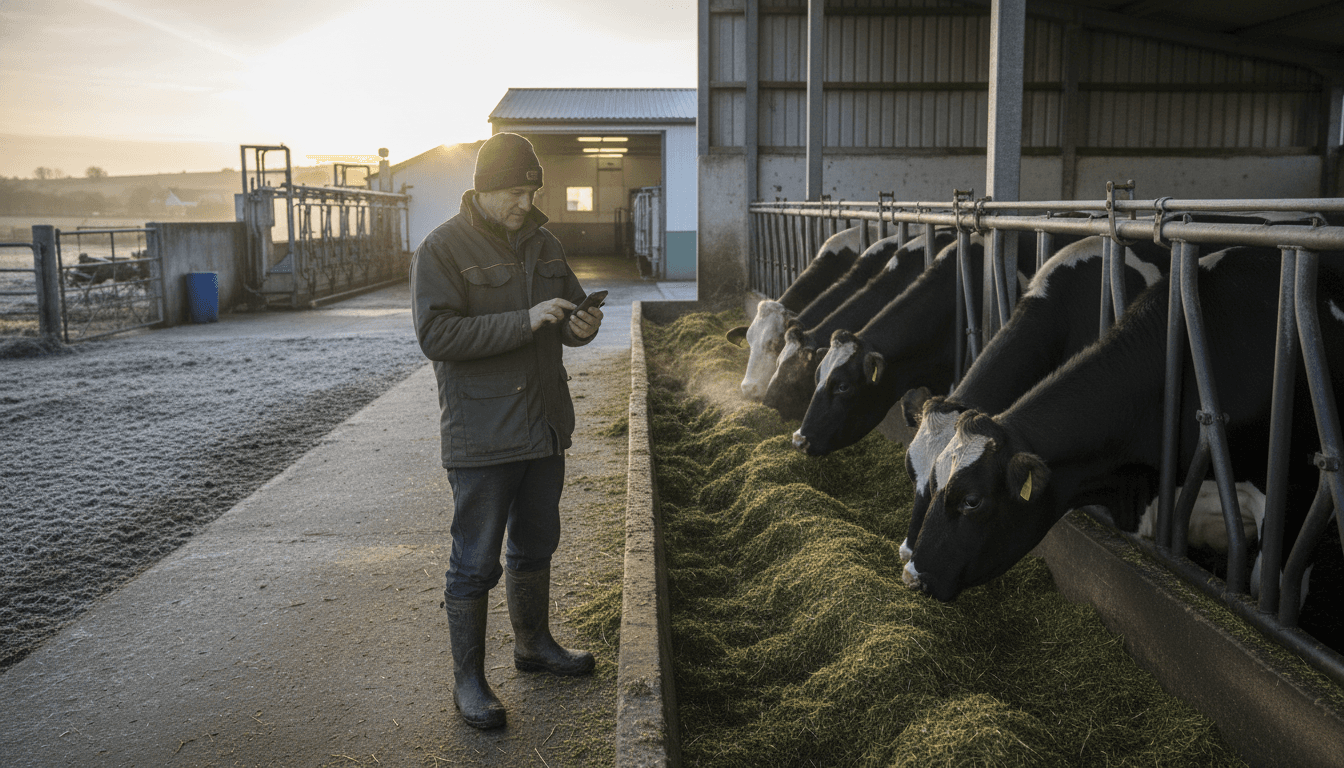
Christmas Day on a farm isn’t a day off—it’s a day with fewer hands, tighter time, and zero tolerance for things breaking at 7:30am. The work still has to happen: cows still need milking, calves still need feeding, water still needs checking, and sheds don’t magically stay clean because it’s a holiday.
Here’s the honest part: most “Christmas workload” advice is really just common sense packaged as motivation. The better approach is operational: decide what “bare essentials” actually means for your yard, then set up the next 24–48 hours so you’re only doing those essentials.
This is where the “AI in Agriculture and AgriTech” conversation gets practical. Workload reduction is exactly what good systems do—whether that system is a notebook, a farm management app, or an AI-enabled schedule that flags risks before they become a bad morning.
Strip Christmas Day down to the “non-negotiables”
If you want a shorter Christmas Day in the yard, you need a written definition of “done.” Not “best practice,” not “while I’m here,” not “might as well.” Done.
For most Irish livestock farms in late December, the non-negotiables usually fall into five buckets:
- Animal welfare checks: health, calving issues, lameness, lying comfort, ventilation.
- Water: trough function, flow, freezing risk.
- Feed delivery: silage/TMR/concentrates and a fast push-in.
- Milking (if applicable): plus a minimum viable wash routine.
- Critical hygiene: calf feeding equipment, teat troughs, high-risk pens.
Everything else becomes either:
- Do it the day before (pre-load, pre-mix, pre-bed, pre-fix), or
- Defer it (because the cost of doing it on Christmas is higher than the cost of doing it on the 26th).
Snippet worth remembering: “Christmas workload isn’t reduced by working faster; it’s reduced by removing decisions and avoiding rework.”
Where AgriTech helps immediately
Even without robotics, basic digital tools reduce the mental load:
- A farm app with repeatable task templates (winter milking day, calf feeding, bedding checks).
- Shared task lists so whoever’s helping knows the order and standard.
- Automated reminders (e.g., “TMR wagon refill after feeding” instead of relying on memory).
If you’ve ever forgotten to refill something and paid for it the next morning, you’ve already met the problem AI is good at: preventing predictable misses.
Do tomorrow’s setup today (and be stubborn about it)
The highest return work happens the day before Christmas Day. That’s not inspirational—it’s operational physics. If you do setup work on Christmas morning, you’re doing it while tired, hungry, under time pressure, and often in the dark.
The original farm advice is spot-on: small setup jobs save disproportionate time when stacked together.
The “10-minute saves” that add up fast
These are the classic quick wins that genuinely shorten the morning:
- Set gates the night before so stock flow is ready.
- Stage equipment: scrapers, brushes, lime, bedding tools where they’ll be used.
- Pre-fill concentrate buckets or bags for each group.
- Clean teat troughs in advance so you’re not scrubbing on Christmas.
- Clear big dirt the day before so Christmas is just a tidy pass.
This looks minor until you add it up. If you remove 6–8 “little delays” that each cost 5 minutes, you’ve bought yourself 30–40 minutes—and that’s the difference between “quick check and out” and “why am I still here?”
Calf feeding: the most underrated prep job
Calves don’t care about Christmas. They care about consistency.
A simple trick from the yard that’s worth repeating: pre-measure milk replacer powder and have buckets staged with cold water, so Christmas morning becomes “add hot water, mix, feed.”
AgriTech angle: if you’re using calf feeders or even a basic digital log, you can tighten this further by:
- Flagging calves with recent scours or poor intakes so you check them first.
- Standardising mixes so anyone helping can’t accidentally change concentration.
Consistency prevents problems—and problems are what steal your Christmas.
Feed and bedding strategies that actually reduce labour
The simplest labour reduction strategy is to do more once, so you do less twice. Feeding and bedding are perfect examples.
Double up bedding the day before
If you’re in straw-bedded pens, increase bedding on Christmas Eve to reduce the need for a full top-up on Christmas Day. The goal isn’t perfection; it’s comfort and cleanliness with minimal handling.
If you’re in cubicles, plan for:
- A quick brush and spot-lime on Christmas Day,
- With any heavy cleaning done on the 24th.
This keeps lying surfaces acceptable while avoiding a full “make it perfect” routine.
Pre-load silage and plan the push-in
Feeding more silage in the passage on Christmas Eve (within your normal management limits) means Christmas Day becomes a push-in job rather than a full feeding session.
For farms on TMR:
- Feed on the 24th.
- Refill the wagon immediately after so it’s ready.
That one habit removes a classic Christmas morning pain: starting up, loading, realising you’re short on an ingredient, hunting for it, then cleaning up.
Where AI and precision feeding fits
Even basic precision feeding tools help you avoid two Christmas killers: running short and over-feeding.
- Inventory tracking (silage bales/pit estimates, concentrate usage) prevents “surprise empty.”
- Ration management software keeps the mix consistent when different people feed.
- If you have sensors or milk data integrated, you can set rules like: high-yield group gets priority if you’re time-limited.
Good feeding decisions aren’t complicated. They’re just easier when your numbers are in front of you.
Prevent the breakdown that ruins the day
If the parlour, tractor, scraper, or pump is “a bit dodgy,” Christmas Day is when it will fail. That’s not superstition; it’s selection bias. You notice failures most when you least have time.
Here’s a practical maintenance rule for holiday weeks:
- Fix the known issue now.
- If you can’t fix it, prepare a workaround (backup pump, spare hoses, manual scraper plan).
- Make sure the parts you always need are on hand.
A short, high-value checklist for the 24th:
- Parlour: liners condition, chemical drums, wash cycle, vacuum alarms
- Tractor: diesel, battery, lights, tyre pressure
- Water: ballcocks, frost risk points, backup hoses
- Calf gear: hot water access, mixing paddles, spare teats
Predictive maintenance is one of the best “quiet wins” in AgriTech
Many farms already collect machine and parlour data but don’t use it to prevent downtime. Predictive maintenance (even simple alert thresholds) can flag:
- Rising wash cycle times
- Vacuum instability
- Repeated minor faults that precede a bigger failure
You don’t need a research project. You need alerts that say “deal with this before it becomes a Christmas call-out.”
Make it a family job—without making it chaos
The original story is familiar: on a New Zealand dairy farm, Christmas Day milking worked because the owner brought family into the parlour. Many hands made light work, and it became a tradition.
That idea works in Ireland too—but only if the job is designed for helpers.
A helper-ready system has three traits:
- Clear sequence: what happens first, second, third.
- Standard work: “this is how we do it” written down.
- Right tools staged: nobody is hunting for disinfectant or a scraper.
If you want kids or relatives to help, give them jobs that are:
- Safe
- Finite (start and finish)
- Easy to check (did it get done?)
Examples:
- Filling pre-labelled concentrate buckets
- Pushing in silage along a safe route
- Rinsing and stacking calf-feeding equipment
AI scheduling isn’t “fancy”—it’s how you reduce confusion
A simple schedule on a shared phone or tablet can assign tasks like:
- “Push-in: 10 minutes, after feeding”
- “Check waters: pens 1–6”
- “Calf buckets: rinse + dry, store in calf kitchen”
When tasks are assigned and timed, you reduce the two big time wasters: duplicate work and missed work.
A practical Christmas workload plan (copy this)
This two-day plan is the fastest way I’ve seen to cut Christmas Day down to essentials. Adjust the details to your system.
23rd–24th: Preparation block (60–120 minutes total)
- Write your non-negotiables (one list, one page).
- Stage gates and equipment for stock flow.
- Pre-fill concentrates (bags/buckets) and label by group.
- Pre-bedding: top up straw or do heavy cubicle cleaning.
- Feed strategy: extra silage in passage or TMR wagon refill.
- Clean critical gear: teat troughs, calf feeding buckets.
- Fix or plan around faults: parlour/tractor/water.
Christmas Day: Execution block (aim: 45–90 minutes)
- Quick welfare check first (highest risk animals first)
- Milk/feed
- Push-in feed
- Check water
- Quick tidy only (no “big clean”)
One-liner: “If Christmas Day includes a ‘big clean,’ the planning failed.”
What to do next if you want tech to carry more of the load
If this post hit a nerve, you’re not alone. Winter workload overwhelm is real, and it’s one of the main reasons farms adopt automation in the first place.
A sensible next step is to choose one area where AgriTech saves time immediately:
- Digital task lists and reminders (fastest setup)
- Feeding logs and inventory tracking (prevents shortages)
- Milk and health alerts (reduces time spent checking the obvious)
- Basic maintenance tracking (prevents holiday breakdowns)
If you want help mapping your farm jobs into a simple, repeatable schedule—one that works for Christmas week and for the rest of winter—reach out for a quick workload audit. You’ll come away with a one-page plan and a shortlist of tools that fit your system.
Christmas Day will never be “no work.” But it can be short work, done early, with fewer surprises. What would you change on your farm if you designed the yard routine for the person who’s tired, rushed, and trying to get back to family dinner?