Ghana’s new sea route to Togo, Benin, and Nigeria could cut logistics friction for SMEs. See how AI helps you forecast, price, and ship profitably.
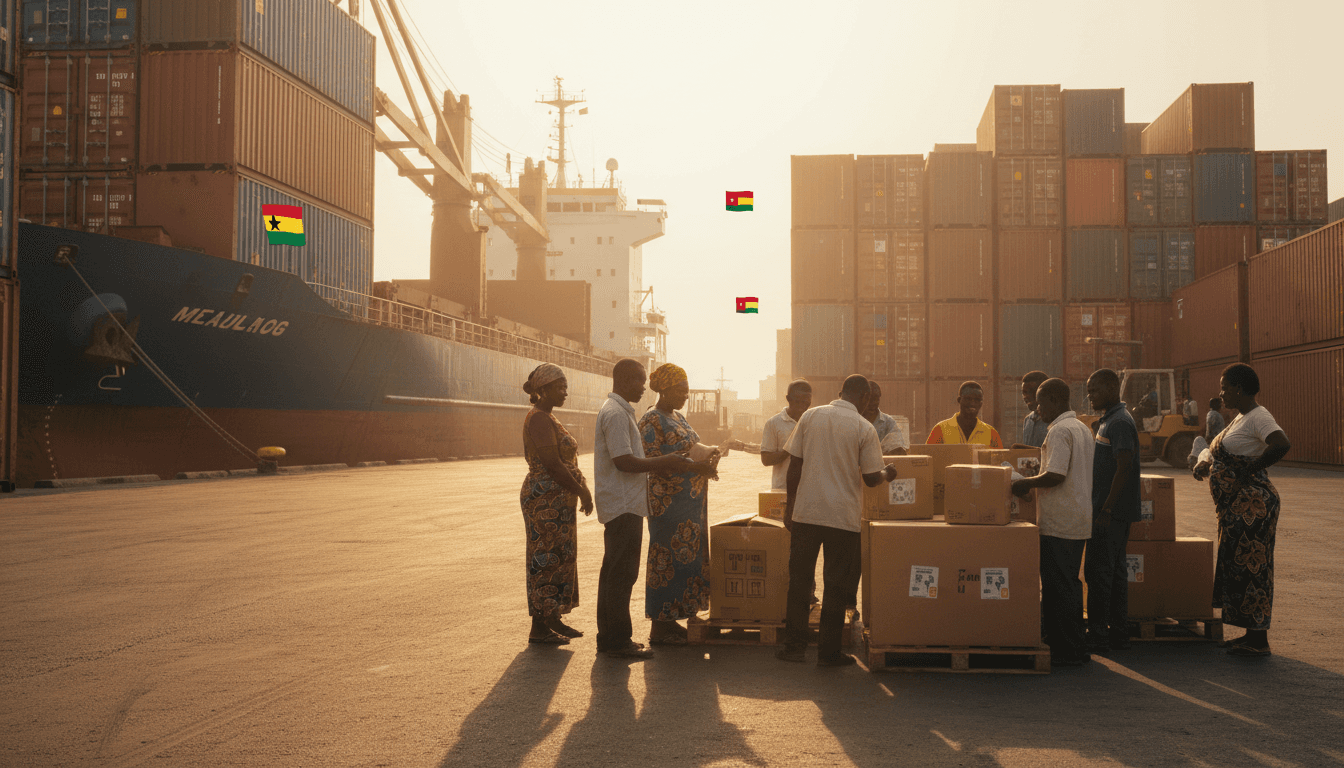
Ghana’s New Sea Route: A Practical Boost for SMEs
A Ghana–Togo–Benin–Nigeria sea transport service is about to change one expensive line item for small businesses: regional logistics. Ghana’s Transport Minister, Joseph Bukari Nikpe, has announced an imminent launch of a new marine transport service connecting Ghana with other West African coastal states.
Most SMEs I meet don’t struggle because their product is weak. They struggle because moving goods reliably—and predicting when they’ll arrive—costs too much time and cash. If this coastal sea route becomes consistent (predictable schedules, clear documentation, dependable handling), it could become the “quiet infrastructure” that helps Ghanaian SMEs sell more across ECOWAS markets.
This post is part of our “Sɛnea AI Reboa Adwumakuo Ketewa (SMEs) Wɔ Ghana” series. The angle is simple: a new route is only half the win. The bigger win is using AI and data-driven operations to plan, price, and deliver faster than competitors who still run everything on guesses and WhatsApp threads.
What the Ghana–Togo–Benin–Nigeria sea route changes for SMEs
The direct impact is lower friction for cross-border trade—especially for bulky, non-urgent goods where road transport can be costly, unpredictable, and exposed to border delays.
For SMEs, three changes matter most:
- More predictable movement of stock: A scheduled sea service (even weekly) can be easier to plan around than ad-hoc trucking. Predictability reduces emergency shipments—the most expensive kind.
- Potential cost relief on volume: Sea transport often becomes more cost-effective when you’re moving heavier loads. That matters for SMEs graduating from “small parcel” to “small pallet” scale.
- New market testing becomes realistic: If logistics becomes more stable, it’s easier to test sales in Lomé, Cotonou, or Lagos without committing to large inventory.
December is also when many businesses review what worked and what didn’t. If 2025 taught SMEs anything, it’s that cashflow breaks when delivery timelines break. A coastal option adds flexibility—especially for businesses planning Q1 restocks and Valentine’s/ Easter demand cycles.
Who benefits most (and what to prepare before launch)
The SMEs that win early won’t be the biggest. They’ll be the ones that prepare their operations.
SMEs likely to benefit quickly
These categories tend to have strong regional demand and logistics-heavy costs:
- FMCG and packaged foods (palm oil derivatives, spices, processed snacks) where consistent restocking is key
- Cosmetics and personal care (shea-based products, soaps, hair products) with repeat purchase cycles
- Apparel and textiles (ready-to-wear, uniforms) where lead times can make or break bulk orders
- Building materials and home goods (selected items) when shipment size makes road expensive
- Agro-processing (value-added products) that can scale regionally with proper packaging and documentation
Operational prep: the non-negotiables
A sea route helps, but it doesn’t cancel the basics. Before you ship anything, ensure you can answer these clearly:
- Incoterms and responsibility: Who pays for what, and where does your risk transfer?
- Documentation discipline: Invoice, packing list, certificates (where required), consistent product descriptions.
- Packaging standards: Sea transport can mean humidity, stacking pressure, and longer handling chains.
- Returns and damage policy: If goods arrive damaged in another country, what happens next?
A new route doesn’t fix messy operations. It exposes them.
This is where AI fits naturally: it reduces the “human memory” part of logistics—checking, reminding, forecasting, and flagging problems early.
How AI helps SMEs turn a new route into real sales
AI won’t load your container. But it will help you ship profitably, which is the real problem.
1) Demand forecasting for coastal markets
The first mistake SMEs make in regional expansion is shipping what sells in Accra and hoping it sells in Lagos.
A simple AI workflow can forecast demand using:
- Your past sales by SKU (even if it’s just spreadsheets)
- Seasonality (e.g., December gifting, Ramadan/Eid periods, back-to-school)
- Price sensitivity and promo history
- Market signals from distributors (orders, inquiries, repeat frequency)
Practical output you want from AI:
- “Ship 60 units of SKU A, 20 of SKU B” based on likely demand, not vibes
- Suggested reorder points for each country-market
- A ‘slow movers’ list to stop you from shipping cashflow-killers
If you’re running an SME in Ghana, the simplest starting point is using AI to turn messy sales records into a weekly forecast and reorder plan.
2) Route and shipment planning (cost + time + risk)
A sea option adds choices: road vs sea, direct vs consolidated, early shipment vs later shipment. Choices are good—until they create confusion.
AI-assisted planning can help you compare options in a repeatable way:
- Estimated total landed cost (transport + handling + documentation + buffer)
- Estimated delivery window and confidence level
- Risk flags (port congestion periods, weather seasonality, peak shipping months)
Even a lightweight model can be useful if it forces consistency:
- Always add a damage/shrinkage allowance
- Always include cash tied up in inventory days
- Always track delay frequency by route and carrier
3) Pricing that protects margin across borders
A new sea route will tempt SMEs to price aggressively. That’s risky. Regional sales fail most often because SMEs don’t know their real landed cost, so they underprice.
AI can generate a pricing sheet that includes:
- Product cost (COGS)
- Packaging + labeling
- Freight allocation per unit
- Customs and regulatory costs (where applicable)
- Distributor margin / retailer margin
- FX buffer (if you invoice in a different currency)
Snippet-worthy rule:
If you can’t explain your landed cost per unit in one sentence, you’re not ready to scale cross-border.
4) Customer communication and order tracking
Buyers in Lomé or Lagos won’t tolerate silence. They’ll tolerate delays—sometimes—but not uncertainty.
AI helps SMEs standardize communication:
- Automated order updates (“Departed port”, “Arrived”, “Clearing”, “Out for delivery”)
- A single view of orders across WhatsApp, email, and invoices
- Fast responses to common questions (pricing, delivery times, product specs)
This matters because a regional customer doesn’t just buy your product. They buy your reliability.
A practical playbook: 30 days to get ready as an SME
The SMEs that benefit first are the ones that treat this as an operations project, not a news headline.
Week 1: Clean your data (don’t skip this)
- Put all SKUs into one list with consistent names and unit sizes
- Gather 6–12 months of sales records (even if incomplete)
- Record your top 20 customers and how often they reorder
Week 2: Build a “regional shipment calculator”
Create a simple template that calculates:
- COGS per unit
- Packaging per unit
- Freight estimate per shipment and per unit
- Target margin
- Suggested wholesale price
If you’re in our Sɛnea AI Reboa Adwumakuo Ketewa (SMEs) Wɔ Ghana mindset, you can use AI to turn this calculator into a living tool: updated as costs change.
Week 3: Standardize documentation and packaging
- Draft a packing list format and use it every time
- Create product spec sheets (ingredients, weight, shelf life, storage)
- Upgrade packaging for stacking and moisture protection where needed
Week 4: Pilot one lane, one product set
Pick one:
- One destination market (e.g., Lomé first)
- One product bundle (5–10 SKUs)
- One distributor or buyer group
Then measure:
- Total delivery time
- Damage rate
- True landed cost
- Payment cycle length
That data becomes your advantage. Your competitor will still be “trying things.” You’ll be improving a system.
Common questions SMEs ask about new sea transport routes
Clear answers help you act faster.
Will sea transport be cheaper than road?
For heavier and less time-sensitive shipments, often yes—but only after you include handling, documentation, and the value of time (inventory days). The correct comparison is total landed cost, not just freight.
Is this only for big companies?
No. SMEs can participate through:
- Consolidated shipments
- Distributor-led procurement
- Smaller, frequent shipments once schedules stabilize
The real barrier isn’t size. It’s operational readiness.
What should I track from the first shipment?
Track these five metrics from day one:
- Cost per kg or cost per carton (your chosen unit)
- Door-to-door lead time
- Delay reasons (port, paperwork, handling, last-mile)
- Damage/shrinkage rate
- Cash conversion cycle (when you paid vs when you got paid)
If you track only one thing, track cash conversion cycle. Growth that traps cash is how SMEs collapse.
The opportunity: regional trade, powered by smarter operations
Ghana’s imminent coastal sea route linking Togo, Benin, and Nigeria is more than a transport story. For SMEs, it’s a chance to build a repeatable export machine—one that can handle growth without chaos.
My strong view: SMEs that pair this new route with AI-driven planning will outperform. Not because AI is trendy, but because regional trade punishes sloppy forecasting, messy pricing, and inconsistent communication.
If you’re planning 2026 growth, start small and build discipline now: clean your SKU data, calculate landed cost properly, and set up simple AI workflows for forecasting and shipment planning. A year from now, the question won’t be “Is the sea route available?” The question will be: Are you operationally ready to use it profitably?