Climate financing helps, but Ghana SMEs need faster protection. See 3 practical AI tools to cut climate losses, stabilize cashflow, and stay open.
Climate Financing vs AI: Resilience for Ghana SMEs
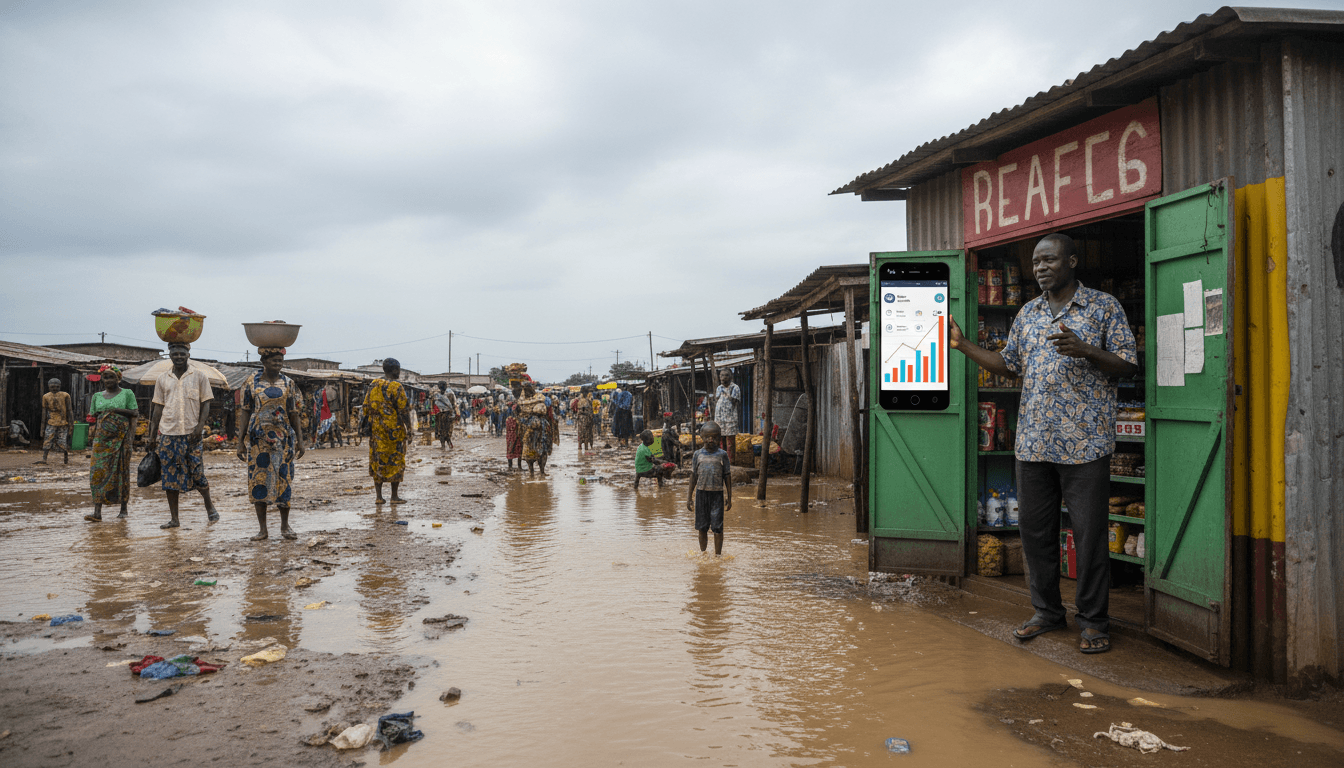
When floodwater sits in front of your shop, your sales don’t just “dip.” They stop.
That’s why Justine’s line—
“When it floods in front of my shop, customers don’t show up.”
—hits so hard. It’s not theory. It’s Tuesday.
The big question behind the RSS article Is Climate Financing Helping African Businesses Grow? is simple: is climate financing actually reaching the businesses that feel climate shocks first—small and medium enterprises (SMEs)? My take: it helps, but it’s not fast enough, not targeted enough, and not measurable enough for day-to-day business survival.
This post is part of our series “Sɛnea AI Reboa Adwumakuo Ketewa (SMEs) Wɔ Ghana”—how AI can support Ghanaian SMEs with better operations, communication, and accounting without needing a huge team. Here’s the practical angle: even when climate financing is slow or unavailable, AI tools can help SMEs reduce climate-driven losses now—using data you already have.
Is climate financing helping African SMEs grow?
Answer first: Climate financing helps more at the policy and project level than at the micro-business level, and many SMEs don’t feel the benefits directly.
Africa has contributed about 7% of global carbon emissions since the 19th century, yet it’s widely recognized as one of the most climate-vulnerable regions. That mismatch creates a fairness argument for climate funds—but it doesn’t automatically create cashflow stability for a provision shop, a salon, a small manufacturer, or a trader at the market.
Here’s where climate financing often misses SMEs:
- Access barriers: complex applications, collateral demands, and heavy documentation.
- Timing: funds arrive after the damage—or after the business has already shrunk.
- Scale mismatch: financing favors large infrastructure or big corporate projects.
- Weak tracking: it can be hard to prove what changed for the small business on the ground.
So yes, climate finance can support growth. But for many SMEs, climate change shows up as operational disruption, not an abstract “environmental issue.”
What climate shocks look like in a Ghana SME’s daily operations
Answer first: For SMEs, climate change becomes a business continuity problem—lost days, spoiled inventory, and unstable supply.
If you run a small business in Ghana, you’ve probably seen at least one of these patterns:
Flooding changes customer behaviour instantly
When roads flood, customers don’t “postpone.” They reroute. Or they stay home. And if your business depends on foot traffic—kiosk, trading stall, pharmacy, chop bar—you can lose the day’s revenue in hours.
A practical way to think about it:
- One flood day can wipe out your profit for the week.
- Two flood days can push you into borrowing for restocking.
- Three flood days can start the cycle of late payments, staff issues, and stockouts.
Heat and humidity quietly increase your costs
Heat affects:
- food spoilage (higher wastage)
- cold-chain costs (more power use)
- worker productivity (more breaks, slower output)
Even if sales stay constant, margins shrink.
Supply chains become less predictable
A delivery that used to take one day can take three due to road conditions, storms, or disruptions upstream. SMEs feel this harder because they don’t have buffer stock or multiple suppliers.
The reality? Climate risk is now a forecasting problem. And forecasting is exactly where AI performs well.
Why “more funding” won’t be enough (and what SMEs can do anyway)
Answer first: Without better targeting, faster decisions, and real-time monitoring, climate finance won’t protect SMEs at the speed climate shocks hit them.
Climate finance is usually designed to be accountable—which is good. But accountability often creates bureaucracy—which is slow. SMEs don’t have the luxury of waiting for a committee meeting.
So what’s the better approach for SMEs?
- Treat climate resilience like an operating system, not a one-time project.
- Use low-cost AI tools to reduce uncertainty in sales, stock, cash, and communication.
- Use evidence (your own business data) to qualify for financing when it becomes available.
This is where our topic series fits: Sɛnea AI Reboa Adwumakuo Ketewa (SMEs) Wɔ Ghana isn’t about fancy tech. It’s about simple systems that help you run lean.
3 practical AI solutions Ghana SMEs can use against climate disruption
Answer first: The fastest wins come from AI tools that improve forecasting, customer communication, and cash planning—without adding staff.
Below are three options that are realistic for SMEs. They’re not perfect, but they’re usable.
1) AI demand forecasting to reduce stock losses
If floods or storms reduce foot traffic, you don’t want excess perishable stock. If heat increases demand for certain items, you don’t want stockouts.
A simple AI forecasting workflow can:
- predict weekly demand based on past sales
- flag “unusual drops” (possible flood/road disruption)
- suggest reorder quantities by product category
What to track (start small):
- daily sales totals
- top 20 products by revenue
- stockouts (yes/no) each day
- wastage/spoilage value per week
Snippet-worthy rule: Your forecast doesn’t need to be perfect; it needs to be better than guessing.
Even a modest improvement can reduce spoilage and preserve cash.
2) AI-powered customer messaging when access is disrupted
When customers can’t reach you, the next best thing is to reach them.
AI tools can help you draft fast, clear messages for:
- WhatsApp broadcast lists
- SMS updates
- Facebook/Instagram posts
Use cases that matter during floods:
- “We’re open but access is easier from the north side road.”
- “Delivery available today within these areas.”
- “Order now, pay on delivery (conditions apply).”
This isn’t about marketing hype. It’s basic continuity.
What works (I’ve seen this repeatedly): businesses that communicate early keep customer trust, even when service is limited.
3) AI-assisted cashflow planning for shock weeks
Climate shocks create “bad weeks.” Bad weeks kill SMEs when cash planning is weak.
AI can help by turning your simple records into a cash plan:
- expected inflows by day (based on history)
- upcoming bills (rent, salaries, supplier payments)
- “minimum cash to keep doors open” estimate
Then you can simulate scenarios:
- What if sales drop 30% for 5 days?
- What if deliveries delay and you need emergency restock?
- What if you must switch to dispatch/delivery for a week?
Practical outcome: you stop making panic decisions like over-borrowing or under-ordering.
How AI can make climate financing work better (so SMEs actually feel it)
Answer first: AI improves climate financing by identifying who needs support most, reducing admin delays, and proving impact with clear metrics.
Even if you’re not a lender, this matters because it changes what funders ask you for. It also changes how fast you can qualify.
Better targeting: fund the businesses at real risk
Climate funds often miss SMEs because they can’t “see” them clearly. AI can use simple indicators to identify vulnerability:
- location risk (flood-prone zones)
- sector risk (food, retail, logistics)
- revenue volatility patterns
- inventory spoilage frequency
That leads to more accurate support than blanket programs.
Faster decisions: reduce paperwork loops
AI can help institutions:
- auto-check documents
- detect inconsistencies
- prioritize urgent cases after extreme weather events
Speed matters. A trader doesn’t need funding after they’ve already sold their freezer to restock.
Impact tracking: prove what changed
Funders want measurable outcomes. SMEs need simpler reporting.
AI-assisted tracking can focus on metrics like:
- days of closure avoided
- wastage reduced (GHS)
- delivery lead times improved
- revenue stability across shock periods
One-liner: If you can’t measure resilience, you can’t fund it intelligently.
A simple 30-day resilience plan for SMEs in Ghana
Answer first: In 30 days, you can set up basic records, automate communication, and start forecasting—enough to reduce losses during floods and disruptions.
You don’t need a data team. You need consistency.
Week 1: Clean up your “minimum data”
- Record daily sales total
- Record top products sold
- Record any closure/disruption reason
- Record wastage/spoilage
Week 2: Build a basic cashflow calendar
- List fixed costs and due dates
- List supplier payment cycles
- Note your average daily sales
Week 3: Set up disruption communication templates
Prepare messages for:
- delayed opening
- delivery-only days
- alternative access routes
- temporary stock changes
Week 4: Start simple forecasting
- compare this week to last week
- identify the top 5 products that drive revenue
- adjust reorder levels based on trend
The point is momentum. Once you have the habit, AI becomes more useful because you have input data.
People also ask: “Do I need climate financing if I use AI?”
Answer first: Yes—AI helps you adapt, but financing helps you invest. The win is using AI to become fundable and resilient at the same time.
AI won’t rebuild a road or construct drainage. But it can keep your business alive long enough to benefit from bigger interventions.
Here’s the relationship:
- AI = day-to-day resilience (forecasting, communication, planning)
- Climate financing = structural resilience (equipment upgrades, relocation, infrastructure, insurance)
If you’re an SME, your strategy should be: use AI to reduce losses now, and use your improved records to access financing later.
What to do next (especially for 2026 planning)
Climate financing is part of the solution, but SMEs can’t sit idle waiting for it. AI is the practical resilience tool that scales down to the level of a single shop, a small team, or a one-person operation. That’s exactly what this series is about: Sɛnea AI Reboa Adwumakuo Ketewa (SMEs) Wɔ Ghana.
If flooding, heat, or supply disruptions are already affecting your sales, start with one move: track daily sales and disruptions for 30 days. That single dataset becomes the foundation for forecasting, better stock control, clearer cash planning, and stronger financing applications.
When the next heavy rain comes, will your business be guessing again—or operating with a plan?