PROSPER’s $147.3m push can boost agribusiness SMEs. See practical ways AI improves planning, quality control, sales, and profit discipline.
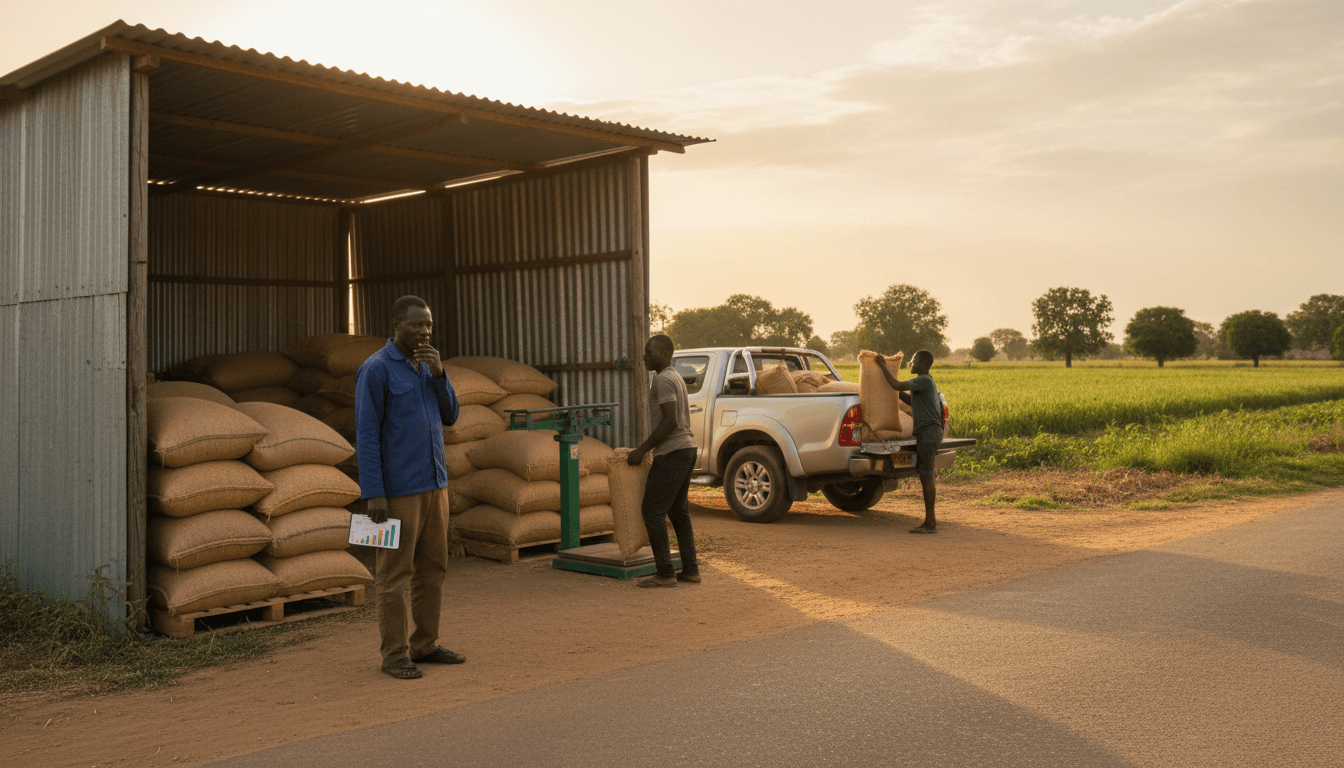
AI for Ghana Agribusiness SMEs: PROSPER’s Big Moment
Ghana has put serious money on the table: a $147.3 million national agriculture intervention called the PROSPER Project, launched by the Minister for Food and Agriculture, Eric Opoku. The headline promise is bold—modernise agriculture and improve livelihoods for about 420,000 beneficiaries across eight regions, with the official launch held in Damongo (Savannah Region).
For many people, news like this lands as “government project talk.” But if you run an agribusiness SME—aggregator, input dealer, processor, transporter, miller, warehouse operator, exporter, even a well-organised farmer group—this is a real signal: the sector is being retooled, and the businesses that adapt fastest will take the upside.
Here’s my stance: PROSPER can upgrade roads, irrigation, farmer capacity, and market structures—but SMEs will still win or lose on execution. And right now, the cheapest execution advantage available is AI tools that help you plan, sell, track, and control costs without hiring a big team. This post breaks down what the PROSPER Project implies for agribusiness SMEs in Ghana, and exactly where AI fits.
What the PROSPER Project means for SMEs (beyond the press release)
Answer first: PROSPER is best understood as a demand and productivity catalyst—it’s likely to increase output, formalise value chains, and raise expectations for quality, traceability, and sustainability.
A project targeting 420,000 beneficiaries doesn’t just affect farmers. It reshapes the ecosystem around them:
- More consistent volumes entering local markets (good for aggregators and processors).
- Higher adoption of improved practices (good for input dealers and mechanisation services).
- Stronger focus on resilience and sustainability (good for SMEs that can prove their sourcing and reduce waste).
- More attention to rural opportunity and profitability (good for businesses that can build reliable routes to market).
If you’re an SME, the opportunity isn’t simply “more farmers.” It’s more structured farmer activity—and structured activity rewards businesses that can handle data, logistics, and customer communication.
The hidden shift: modernisation raises the performance bar
Modernisation usually brings standards: grading, moisture thresholds, packaging requirements, delivery windows, digital records, even basic proof of origin.
That’s where many SMEs get stuck. Not because the business model is wrong, but because the admin load grows faster than the team.
AI for SMEs in Ghana is most useful here: it reduces the cost of organisation—quotes, invoices, follow-ups, stock tracking, forecasting, training, and reporting.
Where AI helps PROSPER beneficiaries and agribusiness SMEs—practically
Answer first: AI complements government agriculture programmes by handling the “small but constant” tasks—planning, recordkeeping, customer support, quality checks, and simple forecasting.
You don’t need a custom AI lab. Most SMEs can start with tools that run on a phone and a laptop.
1) Smarter farm-to-market planning (forecasting you can act on)
If PROSPER leads to higher production in supported regions, SMEs must avoid two expensive mistakes:
- Buying too much (cash gets locked in stock you can’t move).
- Buying too late (you miss volume, competitors lock in supply).
AI can help with simple forecasting using the data you already have:
- Last season’s buying volumes by community
- Weekly prices you paid vs. sold
- Transport costs per route
- Spoilage or shrinkage rates
A practical approach I’ve found works: start with a “forecast spreadsheet” and let an AI assistant turn it into a weekly plan—how much to buy, what price range is safe, and what volume you can store without losses.
Snippet-worthy point: The SME that predicts demand one week earlier usually makes more profit than the SME that negotiates harder on price.
2) Operational control: stock, cash, and shrinkage
Agribusiness profit often dies quietly through:
- untracked stock movement
- inconsistent weighing practices
- “small” transport leakages
- unpaid receivables
AI helps by making basic controls easier to run every day:
- Auto-generate stock cards and inventory summaries from daily entries
- Flag unusual numbers (e.g., shrinkage spikes on a route)
- Create debtor follow-up messages in Twi/English for different customer types
- Turn WhatsApp sales chats into structured orders (even if you do it manually at first)
For a maize aggregator, the difference between 2% and 6% shrinkage can be the difference between growth and stagnation. AI won’t stop shrinkage by itself, but it makes it harder for losses to hide.
3) Quality and grading support (simple, consistent standards)
As modernisation grows, buyers demand consistency. SMEs often struggle to keep grading consistent across multiple buying points.
AI can support quality assurance with:
- Standard operating procedures (SOPs) written in plain language
- Checklists for moisture testing, sorting, bagging, and storage
- Training scripts for new staff and buying agents
- Photo-based inspection workflows (even basic ones) where staff upload a photo and follow step-by-step checks
This matters most for:
- grains and legumes (moisture, aflatoxin risk)
- horticulture (size, bruising, cold chain)
- shea and other tree crops (sorting, contamination control)
4) Market access: selling more with the same small team
Many agribusiness SMEs don’t have a marketing department. They have a phone.
AI can turn that phone into a repeatable sales system:
- Draft weekly price update messages for buyers and suppliers
- Create product sheets (specs, packaging, volumes, delivery terms)
- Produce proposal templates for hotels, schools, processors, NGOs
- Prepare tender response outlines when opportunities show up
If PROSPER improves productivity, competition will increase too. The SME that communicates clearly and consistently becomes the “safe supplier.”
A PROSPER-ready AI playbook for agribusiness SMEs in Ghana
Answer first: The best way to adopt AI is to start with one workflow, one dataset, and one measurable outcome—then expand.
Here’s a practical sequence that fits typical Ghanaian SME realities (limited staff, mixed paper + WhatsApp operations):
Step 1: Pick one workflow that bleeds money
Choose one:
- procurement and weighing
- inventory and storage
- sales and collections
- transport scheduling
Define a simple metric:
- shrinkage %
- days to collect payment
- rejected loads %
- cost per tonne moved
Step 2: Standardise your data (don’t overthink it)
You need consistency more than sophistication. Start capturing:
- date
- product
- community/source
- quantity
- buying price
- selling price
- transport cost
- losses/spoilage
AI is far more useful when your records are clean—even if they’re basic.
Step 3: Use AI for outputs, not just “chat”
Ask AI to produce things you can use immediately:
- a weekly buying plan
- a re-order list for packaging and inputs
- debtor follow-up schedule
- a one-page SOP for store management
Snippet-worthy point: AI isn’t valuable because it talks. It’s valuable because it produces decisions and documents faster than your busiest employee.
Step 4: Train your team in small bursts
Don’t run one big workshop and expect adoption. Do 15–20 minute sessions:
- how to record purchases properly
- how to name files and photos
- how to use checklists at buying points
If PROSPER supports capacity-building across regions, SMEs that align training with those programmes will scale faster.
People also ask: “Is AI realistic for small farmers and rural agribusiness?”
Answer first: Yes—if you treat AI as a support tool for communication, planning, and recordkeeping, not as a complicated tech project.
“What if connectivity is poor?”
Use AI where it’s strongest:
- preparing templates when you have data
- generating checklists and training notes
- producing messages and forms
Then run daily operations with simple offline-friendly tools (paper, spreadsheets, basic apps) and sync when possible.
“Do we need big data?”
No. Many SMEs get value from 50–200 transactions of clean records. The real win is building the habit of tracking.
“Will AI replace staff?”
In most Ghanaian SMEs, the immediate effect is different: AI reduces overload so staff can focus on field relationships, quality checks, and negotiation.
The PROSPER opportunity: SMEs that organise will dominate
Answer first: PROSPER increases the upside for organised SMEs—those that can plan procurement, control losses, prove quality, and sell consistently.
The project’s focus—rural opportunities, sustainable profits, environmental resilience—matches what serious buyers already care about. If you can show basic records, consistent grading, and predictable delivery, you’ll find better customers and more stable margins.
This post also fits directly into our “Sɛnea AI Reboa Adwumakuo Ketewa (SMEs) Wɔ Ghana” series theme: you don’t need a large team to run tight operations. You need repeatable systems, and AI can help you write, run, and improve those systems.
PROSPER can modernise the sector. AI helps your SME keep up with the pace of that modernisation.
Next step: choose one operational pain (shrinkage, collections, forecasting, or quality), track it for 30 days, and use AI to produce a weekly action plan. If PROSPER is raising the bar across eight regions, what will you standardise first—your buying process or your selling process?