AI for Ghana farming SMEs: turn 2025 agtech lessons into practical systems for records, forecasting, crop protection, and finance-ready reporting.
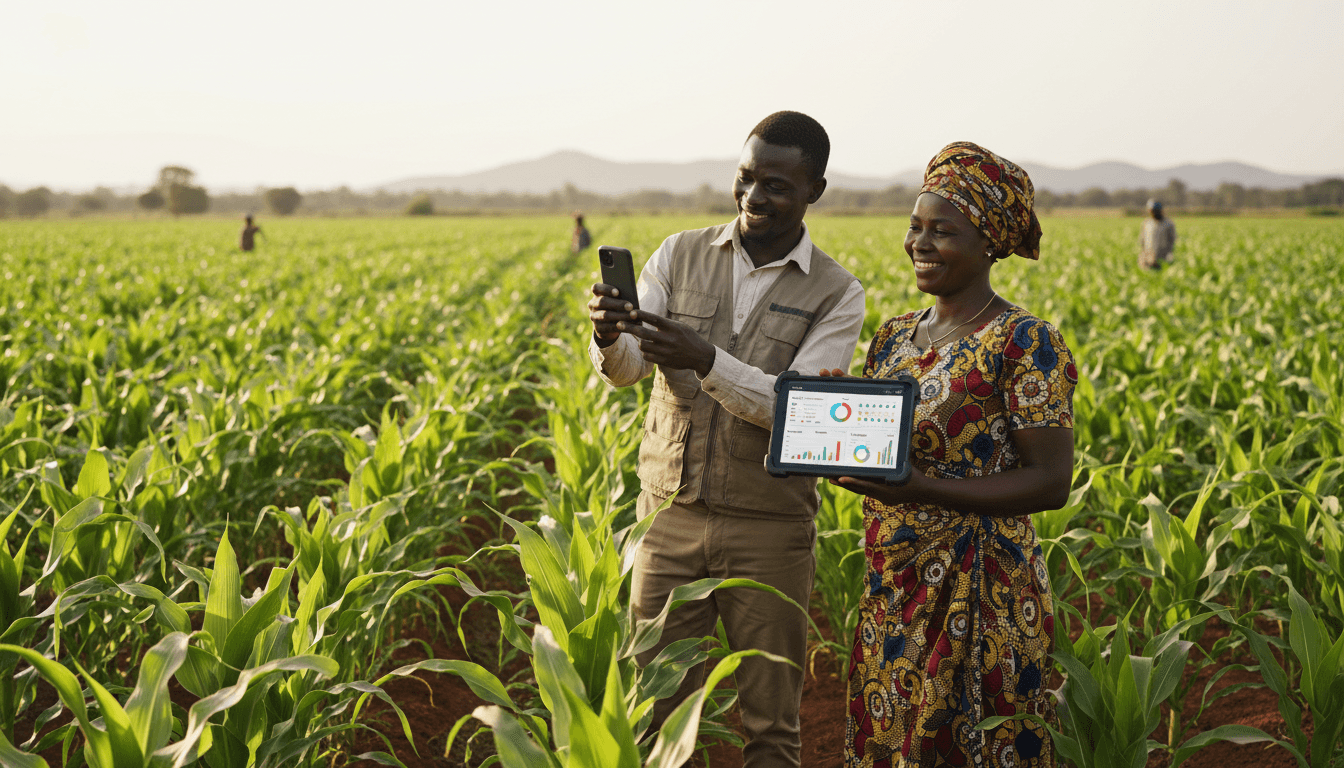
AI for Ghana Farming SMEs: Lessons from Agtech 2025
A lot of agtech headlines in 2025 sounded exciting—regen agriculture pilots, bio-based crop protection, autonomous tractors, indoor farms “finally delivering.” But the real story was tougher: many agtech companies ran out of cash, cut staff, or restructured. That’s not a failure of innovation. It’s a reminder that agriculture doesn’t reward shiny demos; it rewards things that survive seasons, debts, pests, and bad roads.
For Ghanaian farmers and agriculture SMEs, that global “stamina year” is useful. It shows where the ambition–reality gap is widest, and where AI can actually help close it—not by buying expensive robots, but by improving decisions, reducing waste, proving results, and making financing less of a guessing game.
This post is part of the “Sɛnea AI Reboa Adwumakuo Ketewa (SMEs) Wɔ Ghana” series. The focus here is practical: how small and medium agribusinesses—input dealers, aggregators, processors, outgrower managers, and commercial farmers—can use AI to build operations that are bankable, measurable, and resilient.
2025’s loudest lesson: finance kills more ideas than technology
Answer first: In 2025, the biggest barrier across regenerative agriculture and several agtech segments wasn’t “lack of innovation.” It was lack of workable finance models.
A major moment was the US government’s announcement of a $700 million regenerative agriculture pilot program. The debate around it (hope vs. greenwashing vs. whether small farmers benefit) points to a hard truth: money follows measurement. If outcomes aren’t credible and easy to verify, financing stays expensive or disappears.
Here’s how that maps to Ghana. Banks and buyers often ask:
- Can you prove your yields are improving?
- Can you show consistent quality and volumes?
- Can you document inputs, farm practices, and traceability?
- Can you forecast revenue enough to repay credit?
Many Ghanaian SMEs can do the farming part. The weak spot is usually records, verification, and forecasting.
Where AI helps most: turning farm activity into “proof” lenders accept
AI doesn’t need to start with drones and robotics. The fastest wins come from making your operations legible:
- Smart recordkeeping (voice + WhatsApp + local languages): AI can convert daily farm notes into clean logs—planting dates, input use, labor, harvest volumes.
- Yield and cashflow forecasting: Even simple models—trained on your own past seasons—can forecast expected output and revenue ranges.
- Field risk flags: AI can highlight anomalies from photos (leaf damage) or simple weather + planting-date data (high pest risk window).
- Audit-ready reporting: Generate consistent monthly reports for lenders, off-takers, and internal management.
My stance: If your farm or agribusiness can’t produce credible records within 48 hours, you’re paying an “uncertainty tax”—higher interest rates, lower purchase commitments, more rejected deliveries.
Regen agriculture needs measurement—AI is the measurement engine
Answer first: Regenerative agriculture scales only when outcomes are tracked cheaply and consistently; AI reduces the cost of tracking.
2025 showed regen ag interest growing, but also highlighted the bottleneck: transition costs, unclear payback timelines, and skepticism about results. Ghana has the same tension. Farmers hear “use cover crops,” “reduce chemicals,” “improve soil,” but they still need to pay school fees this term.
Practical Ghana use cases that fit SME realities
You don’t need perfect data to start. You need repeatable routines.
- Soil improvement tracking: Use AI-assisted templates to log compost application, residue retention, rotations, and basic soil test results. Over time, this creates a defensible story of improvement.
- Input optimization: AI can help compare input plans vs. outcomes (yield, pest pressure, costs), then suggest where to adjust—especially fertilizer timing and pesticide use.
- Buyer traceability: Processors and exporters increasingly want traceability. AI can produce consistent farmer profiles, field histories, and compliance notes—without hiring a large admin team.
A simple “regen scorecard” SMEs can start in January
If you manage an outgrower scheme or buy from smallholders, create a one-page scorecard per farm:
- Crop and variety
- Planting date and field size
- Input plan (fertilizer, herbicide, pesticide)
- Key practices (mulch, rotation, intercropping, compost)
- Pest/disease events (date + photo)
- Harvest volume + quality grade
- Basic margin estimate
AI’s role is to standardize and summarize this, then produce trends across farms. That’s how you earn better financing and better off-take terms.
Crop protection is getting messy—AI helps you choose, time, and verify
Answer first: As biologicals and crop protection options multiply, the advantage shifts to operators who can match products to local conditions and document results.
2025 signaled a turning point: the biostimulant market matured, differentiation increased, and big corporates released new bio-based offerings. Meanwhile, legal and public trust battles around chemicals continued.
In Ghana, the daily reality is more immediate: counterfeit inputs, wrong dosage, late spraying, poor pest scouting, and weak follow-up. That costs yield.
Three AI workflows that reduce losses quickly
-
AI-assisted scouting from phone photos
- Field staff take leaf/pest photos
- AI suggests likely issues and urgency level
- Supervisor gets a daily “top 10 risks” list
-
Spray timing and dosage reminders
- Based on crop stage + last application + weather notes
- Creates a simple compliance trail for buyers
-
Input performance tracking
- After harvest, AI compares which farms used which products and what happened
- You stop repeating expensive mistakes
A blunt truth: most input decisions fail because feedback loops are broken. AI fixes feedback loops.
Robotics and indoor farming made noise—Ghana should copy the strategy, not the hardware
Answer first: 2025’s robotics and indoor farming stories show that scale comes from operational fit and partnerships, not flashy tech.
John Deere’s push into autonomy and its partnerships were about “bridging the gap” between growers and technology. Indoor farming saw high-profile bankruptcies, plus consolidation and more realistic business models.
For Ghanaian SMEs, importing high-end robotics usually doesn’t pencil out—maintenance, spare parts, financing, and field conditions are real constraints.
The Ghana-appropriate version: “automation by process”
Instead of buying a robot, automate decisions and admin first:
- Auto-generate purchase orders when inventory hits a threshold
- Auto-route produce pickups using simple location + volume data
- Auto-grade produce quality using phone photos and standardized checklists
- Auto-create weekly payment schedules for outgrowers
This is where the topic series matters: Sɛnea AI Reboa Adwumakuo Ketewa (SMEs) Wɔ Ghana isn’t about big teams. It’s about using AI so a small team can run a clean operation.
A 90-day AI plan for Ghana agriculture SMEs (no hype, just execution)
Answer first: Start with one business bottleneck, capture consistent data, then automate the report your stakeholders already demand.
If you want leads and real adoption, you need a plan that respects time, budgets, and staff capacity.
Days 1–15: pick one bottleneck and one metric
Choose one:
- Late payments and weak farmer records
- Input stockouts
- High rejection rates from buyers
- Unclear profitability per crop
Pick one metric to track weekly:
- % deliveries accepted
- gross margin per acre/hectare
- input cost per unit yield
- repayment rate
Days 16–45: standardize data capture (don’t overbuild)
Use tools your team already uses (often WhatsApp + spreadsheets). Add rules:
- Every farm visit gets 3 photos: crop, issue close-up, overall field
- Every delivery gets a simple grade + reason if rejected
- Every input sale gets customer + farm + crop + date
Let AI clean and summarize. Humans should not be formatting data all night.
Days 46–90: automate reporting and decision routines
Deliverables that change behavior:
- Weekly “risk list” (top pests/diseases by area)
- Monthly margin report per crop and per farmer cluster
- Inventory reorder suggestions
- Lender/off-taker summary pack (1–2 pages)
If you can produce these consistently, you’ll feel the ambition–reality gap shrink.
People also ask: common questions Ghana SMEs have about AI
“Do we need big data before AI helps us?”
No. You need consistent small data. Ten clean weeks beat three years of messy notes.
“Will AI replace field officers and agronomists?”
Not in any healthy operation. AI is strongest as a copilot: it summarizes, flags risks, and drafts reports. Your team still makes the final call.
“What’s the quickest ROI use case?”
For most Ghana agriculture SMEs: recordkeeping + forecasting + reporting. It improves financing, reduces disputes, and tightens operations.
What 2025 set up for 2026—and what Ghana should do next
2025 wasn’t a victory lap for agtech. It was a stress test. The companies and models that survived were the ones that could prove value, manage cash, and fit into real farm workflows.
Ghanaian agriculture SMEs can benefit from the same discipline. Use AI to make your operation measurable: costs, yields, quality, and risk. That’s how you negotiate better with buyers, earn trust with lenders, and scale without hiring an army.
If your agribusiness had to raise money or win a new off-take contract in the next 60 days, which three reports would you need to show—immediately? That’s the right starting point for AI in your business.