UNEVOC’s TVET publications show how Ghana can teach AI, entrepreneurship, and green skills that SMEs need. Practical steps for TVET leaders and SMEs.
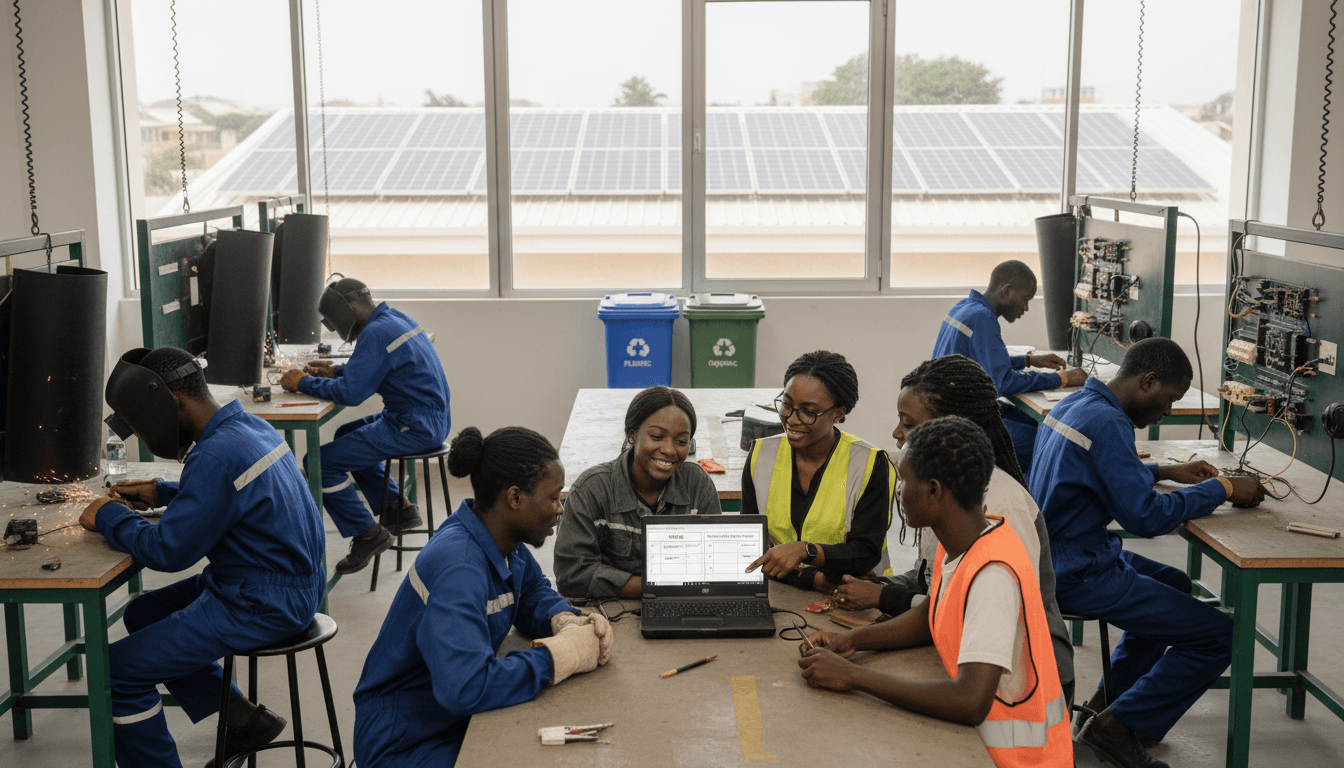
UNEVOC TVET Resources for AI & Entrepreneurship in Ghana
62% of young people are already using AI in real-world contexts. That’s not a “future of work” headline—it’s a skills gap warning light for Ghana’s TVET system and for every SME owner who needs staff that can sell, serve, build, repair, and keep records with speed and accuracy.
December 2025’s new TVET publications from UNESCO-UNEVOC (including the UNEVOC Quarterly Issue #24 and a global youth survey on AI and digital skills) land at the perfect time. End-of-year planning is happening in schools and training centres, budgets are being reset, and many SMEs are hiring for Q1. If you’re responsible for training—whether you run a TVET institution, manage a workshop, or lead a small business—these publications aren’t “nice to read.” They’re practical inputs you can turn into curriculum updates, short courses, and better workplace training.
This post shows how Ghana can use UNESCO-UNEVOC’s TVET library themes—entrepreneurial learning, AI and digital skills, greening TVET, and gender equality & social inclusion—to build job-ready graduates and SME-ready workers. It also fits into our series “Sɛnea AI Reboa Adwumakuo Ketewa (SMEs) Wɔ Ghana” by translating big global ideas into day-to-day tools SMEs can actually adopt.
What UNEVOC’s December 2025 publications signal for Ghana
UNEVOC’s current publication lineup is pointing to one clear direction: TVET systems that thrive will teach skills for work plus skills for adaptation. The December 2025 materials highlight four pressure points that Ghana can’t ignore.
First, AI use is already mainstream among youth. The youth survey report (World Youth Skills Day 2025) draws on insights from 4,000+ respondents across 128 countries, and reports that 62% of youth are already using AI in real contexts. For Ghana, the immediate lesson is simple: if AI isn’t in TVET, learners will still use it—just without guidance, safety practices, or employable workflows.
Second, TVET is being asked to respond to climate and sustainability. UNEVOC’s focus on greening TVET—plus materials like “Africa and the climate crisis” and sector-specific work (like construction)—matches where Ghana’s opportunities are: solar and electrical installation, energy-efficient construction, sustainable agriculture value chains, repairs and maintenance, and waste management.
Third, gender equality and social inclusion (GESI) is being treated as a programme, not a slogan. That’s important because TVET outcomes improve when training schedules, facilities, recruitment, and assessment stop unintentionally filtering out women, people with disabilities, and underserved communities.
Fourth, networked learning is becoming the new normal. The UNEVOC Quarterly highlights coaction initiatives and collaboration. Ghana’s TVET and SMEs need more shared standards, shared teaching resources, and shared assessment methods—especially for digital skills.
Entrepreneurial learning in TVET: the missing layer for SMEs
Entrepreneurial learning isn’t “how to register a business.” It’s the ability to spot opportunities, price work correctly, manage risk, communicate value, and keep basic records. In Ghana, that’s exactly what separates a skilled craftsperson from a stable micro or small enterprise.
Here’s the stance I take: most TVET entrepreneurship modules are too theoretical and too late in the programme. Learners meet “entrepreneurship” near the end, when they should have been practicing it from week one.
A better approach: entrepreneurship as a weekly habit
Instead of one big subject, embed entrepreneurial learning into practical trades:
- Hairdressing/beauty: weekly customer scripting (upselling politely), daily stock checks, pricing bundles for festive seasons
- Welding/fabrication: quoting practice using real market prices, material waste tracking, job cards
- Catering: portion costing, supplier negotiation role-plays, food safety logs
- Electricals: service checklists, warranty terms explained in plain language, after-service follow-up
The output shouldn’t be a long essay. It should be a one-page quote, a simple invoice, a job checklist, and a cashbook summary.
Where AI helps SMEs (and what TVET should teach)
Within the series theme—AI reboa SMEs wɔ Ghana—the most practical AI use cases for entrepreneurial learning are simple:
- Writing & communication: draft WhatsApp service messages, customer follow-ups, and short proposals
- Basic bookkeeping support: categorizing expenses, summarizing weekly sales notes, generating invoice descriptions
- Marketing: product captions, promo calendars for market days, simple customer surveys
- Operations: checklists, SOPs, reorder reminders, template creation
A TVET learner who can use AI to produce a clean quote and explain it to a customer is immediately valuable to a small business.
AI and digital skills: teach workflows, not “computer studies”
The youth survey’s 62% AI usage statistic is a strong signal that banning AI in training won’t work. Ghana’s better option is to teach responsible AI workflows that match real jobs.
The 4-part AI skill set TVET graduates need
1) Prompting for work outputs Learners should practice prompts that produce business documents and technical explanations. Example outputs:
- job estimates and bills of quantities (simple versions)
- customer-friendly maintenance instructions
- safety toolbox talks
2) Verification and accountability AI can be confidently wrong. TVET should normalize a routine:
- check calculations manually
- compare to trade standards and instructor guidance
- test steps in the workshop before applying on-site
3) Data handling and privacy SMEs often keep customer data in notebooks and WhatsApp chats. Learners should be taught:
- don’t paste customer phone lists into random tools
- anonymize customer details when generating templates
- keep consent in mind for photos and testimonials
4) Tool choice under constraints Many Ghanaian SMEs face intermittent connectivity and limited devices. Training should include:
- offline-first habits (templates, checklists, saved forms)
- lightweight tools that work on phones
- clear “minimum tech” alternatives
A useful rule for Ghana’s TVET: if a skill can’t be done on a basic smartphone, it’s not yet mainstream.
A practical classroom-to-SME project (2 weeks)
Run a “micro-enterprise simulation” inside the trade area:
- Teams choose a service (e.g., fan repair, gates, catering trays)
- They create: price list, quote template, invoice template, and a 10-message customer script
- They track costs and sales for 10 simulated orders
- They use AI to produce weekly summaries and improve messaging
This teaches entrepreneurial learning and AI skills together—exactly what SMEs need.
Greening TVET: Ghana should start with construction and repairs
UNEVOC’s sector-focused publication on TVET for the building and construction sector is relevant to Ghana because construction touches everything: housing, roads, drainage, schools, markets, and commercial spaces. It also employs a large network of artisans and subcontractors.
The practical point: greening TVET isn’t only about new green jobs. It’s also about upgrading everyday work to reduce waste, improve safety, and cut energy bills.
Three “green skills” that immediately pay off
1) Energy efficiency basics Teach electricians and masons how to explain energy-saving options to customers (lighting choices, wiring quality, ventilation decisions). SMEs that can explain savings win trust.
2) Quality installation and maintenance Poor installation creates repeat failures, callbacks, and customer frustration. TVET should treat preventive maintenance as a core skill, not an afterthought.
3) Materials waste tracking In welding, carpentry, and masonry, waste is profit leakage. Add a weekly exercise: measure waste, list causes, propose fixes.
And yes—AI can help here too. Learners can use AI to create:
- waste tracking sheets
- maintenance schedules
- customer education scripts in simple English and local language variants
Gender equality & social inclusion: make it measurable
UNEVOC’s emphasis on gender equality and social inclusion is timely for Ghana because TVET access still isn’t equal across trades. But inclusion improves when it becomes operational.
What “measurable inclusion” looks like in a TVET centre
Set targets and track them termly:
- Recruitment: percentage of women enrolled in non-traditional trades (e.g., electricals, welding)
- Retention: attendance and completion rates by gender and disability status
- Facilities: safe changing areas, basic sanitation, lighting for evening sessions
- Placement: apprenticeship or internship placements by group
AI tools can support inclusion if used correctly:
- translating learning materials into simpler language
- generating multiple versions of a lesson (visual steps, short text steps)
- creating practice quizzes that adapt to the learner’s pace
The risk is also real: biased outputs and stereotyping. The fix is straightforward—teach learners to challenge outputs and use diverse examples.
How Ghana can use the UNEVOC Online Library without waiting for a big reform
The fastest wins come from small, consistent upgrades. You don’t need a national overhaul to start.
For TVET leaders (principals, heads of department)
- Choose one trade area and redesign one term around “work outputs”: quote, invoice, checklist, safety brief, customer script
- Set a rule: every module produces a document an SME would actually use
- Build a monthly staff session where instructors share what worked and what didn’t
For instructors
- Replace one test with a portfolio: 5 workplace documents + a short reflection
- Teach AI as a “drafting assistant,” then grade learners on verification and clarity
- Run a 30-minute weekly activity: “Fix this quote” or “Rewrite this customer message”
For SMEs (masters, supervisors, owners)
If you run a small business and you’re training apprentices, try this next week:
- Create a one-page price list (even if rough)
- Create a job card: customer name, issue, parts used, labour, date, warranty note
- Use AI to draft a standard WhatsApp message for:
- confirming an order
- updating a delay
- requesting feedback
These tiny systems reduce confusion, improve trust, and make it easier to scale beyond the owner.
People also ask: quick answers Ghanaian TVET teams need
Should TVET students be allowed to use AI?
Yes—but with rules. Allow AI for drafts and learning support, and assess students on verification, practical performance, and ethical handling of information.
What’s the first AI skill Ghanaian SMEs should teach apprentices?
Customer communication. Clear messages, clear quotes, clear follow-ups. That alone increases repeat business.
How does greening TVET connect to entrepreneurship?
Green practices reduce waste and energy costs. Lower costs mean healthier margins—entrepreneurship benefits immediately.
What to do next (and why this matters for SMEs)
UNEVOC’s December 2025 publications are useful because they reflect what’s already happening: youth are using AI, industries are demanding greener skills, and TVET is being judged by outcomes—not intentions.
If Ghana’s TVET system teaches entrepreneurial learning alongside AI and green practices, SMEs get employees and apprentices who can do more than “work with their hands.” They can quote, document, communicate, and improve processes. That’s how small businesses stop plateauing.
If you’re planning your 2026 training calendar—at a TVET institution or inside an SME—what’s one trade area where you can introduce AI-supported quoting, invoicing, and customer communication in the first month?