PMI Ghana’s 2025 Loyalty Awards highlight the power of consistency. Here’s how SMEs can pair project management discipline with AI for faster, cheaper execution.
PMI Ghana Loyalty Awards: Lessons for SMEs Using AI
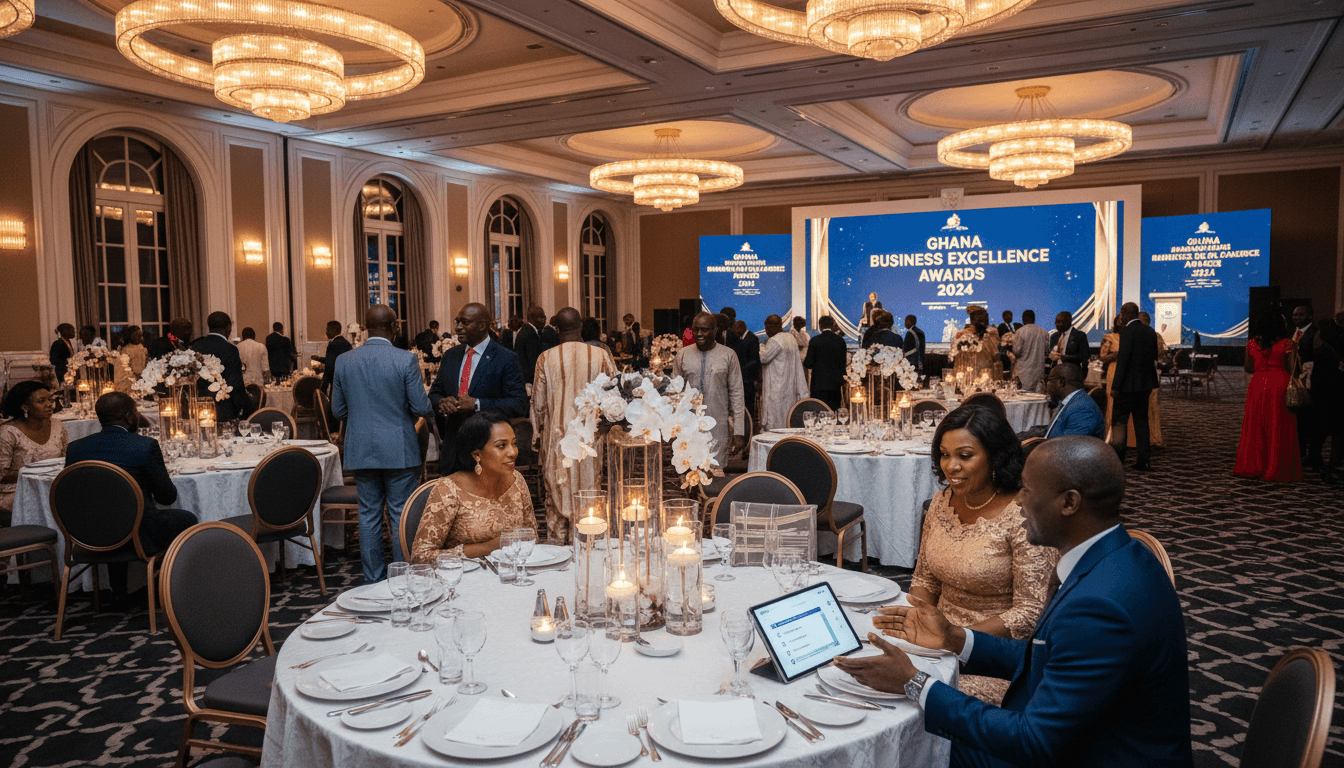
Consistency beats hype. That’s the real story behind the Project Management Institute (PMI) Ghana Chapter recognising members who’ve stayed active for 10+ years at its 2025 End-of-Year Dinner and Loyalty Awards. The RSS summary is short, but the signal is loud: long-term professional discipline is still one of the most reliable competitive advantages in Ghana’s business environment.
For Ghanaian SMEs, this matters because growth rarely fails due to “lack of ideas.” It fails because execution breaks down—missed timelines, unclear ownership, poor follow-through, and decisions made on vibes instead of data. Project management fixes that. And in 2025, AI tools for SMEs in Ghana can make those project management habits easier to maintain, cheaper to run, and faster to scale.
This post is part of the “Sɛnea AI Reboa Adwumadie ne Dwumadie Wɔ Ghana” series, focused on how AI speeds up work, reduces cost, and improves output quality. The angle here is simple: PMI’s loyalty story is a blueprint for SME resilience—AI just makes the blueprint easier to live by.
What PMI Ghana’s Loyalty Awards really signal
The award isn’t only about time served. It’s about a professional identity built over years—showing up, learning, mentoring, and improving how work gets done.
From the RSS summary: PMI Ghana honoured long-standing members (10+ years) and celebrated their contribution to the growth of project management in Ghana. Benjamin Manu (CEO/Founder of Nimdier) praised PMI at the ceremony. Even with limited details, the message is clear: institutions reward consistency because consistency creates outcomes.
Here’s the SME translation: if your business depends on you “pushing people” every day to get results, you don’t have a system—you have exhaustion.
A business that can’t run on process will always struggle to scale—no matter how talented the team is.
Why this is timely for SMEs in Ghana (December 2025 context)
End-of-year events aren’t just social calendars. They’re where organisations reflect on performance, recognise what worked, and reset expectations for the new year.
For SMEs, late December is also when you see the real consequences of weak execution:
- Projects promised in Q2 are still “almost done.”
- Cash flow is tight because delivery slipped.
- Staff turnover rises because work felt chaotic.
- Customers don’t renew because deadlines weren’t respected.
So yes, an awards night matters. It celebrates the quiet discipline most businesses need more than another motivational speech.
The SME growth problem: execution breaks before ambition does
SMEs in Ghana often have strong market instincts: they know what customers want and how to sell. The pain shows up when the work becomes complex—multiple teams, vendors, locations, and deadlines.
Project management is the difference between:
- “We’re trying our best”
and
- “We deliver reliably, predictably, and profitably.”
Three execution gaps that quietly kill SME growth
1) Unclear priorities Everything is urgent, so nothing is truly important. Teams multitask themselves into slow delivery.
2) Weak ownership Tasks are assigned, but nobody is accountable for outcomes. You get activity without progress.
3) No feedback loop Mistakes repeat because the business isn’t capturing lessons learned in a usable way.
The PMI mindset pushes against all three: define scope, plan realistically, assign owners, track progress, review results. That’s why PMI communities matter—especially when SMEs need structure without bureaucracy.
Where AI fits: it supports discipline, it doesn’t replace it
AI won’t save a disorganised business. But once you commit to basic project management habits, AI becomes a powerful assistant that makes those habits stick.
Think of AI as a “second brain” for operations:
- It helps you write, summarise, and standardise documents.
- It reduces meeting overhead.
- It surfaces risks earlier.
- It turns scattered notes into structured plans.
AI is most useful when you already know what “good” looks like. Project management defines good; AI helps you repeat it.
Practical AI use cases SMEs in Ghana can start next week
Below are realistic starting points that don’t require a big tech budget.
1) AI-assisted project planning (scope, timeline, roles)
If you’ve ever struggled to turn a client request into a clear plan, AI can help you draft:
- Scope statements (what’s in / out)
- Work breakdown structures
- Role assignments (RACI-style)
- Milestones and acceptance criteria
What to do: feed the AI your project goal, constraints, and deadline. Then edit the output with your real-world knowledge (staff capacity, supplier lead times, customer approval delays).
2) Meeting notes that become action lists
Most SMEs lose time because decisions happen in meetings but don’t become tracked tasks.
AI can convert notes into:
- action items
- owners
- due dates
- risks and open questions
Rule I use: No meeting ends without a written “next actions” list. AI makes that easy and consistent.
3) Faster reporting for clients and leadership
Clients don’t only pay for results—they pay for predictability. AI helps you produce weekly updates in minutes:
- what was done
- what’s next
- blockers
- budget status (simple narrative + numbers)
This is where SMEs win trust. Trust is what keeps contracts renewing.
4) Risk management that doesn’t feel like paperwork
SMEs rarely document risks until the risk has already happened.
AI can help you maintain a lightweight risk register:
- likely risks (supplier delays, FX movement, staff absence)
- impact and likelihood n- mitigation actions
Even a simple risk log updated every Friday is enough to reduce “surprise fires.”
Professional standards + AI automation: a better operating system for SMEs
The strongest link between PMI recognition and SME growth is standards. Not “formalities”—standards that reduce confusion.
Here’s a practical way to combine PMI-style discipline with AI automation without making your business feel corporate.
A 30-day implementation plan (built for SMEs)
Week 1: Standardise the basics
- Choose one project template for your business (even a one-page version)
- Define 4 fixed sections: Scope, Timeline, Owners, Risks
- Use AI to draft the template, then lock it as your default
Week 2: Install simple tracking
- Pick one tracking method (board, spreadsheet, or lightweight tool)
- Add only these columns: Task, Owner, Due date, Status, Blocker
- Use AI to convert your plan into tasks
Week 3: Make reporting non-negotiable
- Send one progress update weekly (internal + client-facing when relevant)
- Use AI to summarise progress notes into a clean update
Week 4: Add a learning loop
- Do a 30-minute project review: what worked, what failed, what changes next time
- Ask AI to organise the lessons into a checklist for the next project
This is how you build an operating system that survives staff changes and growth spurts.
Leadership development: the hidden payoff of PMI-style commitment
The RSS summary highlights loyalty—10+ years. That kind of consistency usually comes with mentoring and leadership.
For SMEs, leadership is often the bottleneck. Owners carry too much in their heads, then wonder why nothing moves without them.
AI supports leadership by reducing cognitive load:
- summarising long threads and chats into decisions
- drafting policies and SOPs for review
- producing performance scorecards from simple inputs
AI-driven decision-making that stays practical
“AI-driven decision-making” doesn’t mean complicated data science. For SMEs, it often means:
- capturing sales, costs, and delivery dates consistently
- reviewing the same 5–10 numbers weekly
- using AI to explain trends in plain language
A simple example:
- You log deliveries and delays for 8 weeks.
- AI groups the delays by cause (supplier, approvals, transport, rework).
- You fix the top two causes.
That’s not theory. That’s margin improvement.
People also ask (and what I tell SMEs)
“Will AI replace my project manager or operations lead?”
No. AI replaces busywork—drafting, summarising, formatting, first-pass planning. You still need a human to negotiate trade-offs, manage stakeholders, and make judgment calls.
“What if my team isn’t tech-savvy?”
Start with one workflow: meeting notes → action list. When people feel the time savings, adoption becomes natural.
“Is it safe to use AI with client information?”
Don’t paste sensitive client data into tools without clear internal rules. Use placeholders, remove personal details, and keep a basic data-handling policy. If you can’t explain your policy simply, it’s not ready.
A practical next step for 2026: build loyalty to your process
PMI Ghana’s Loyalty Awards highlight something many SMEs underestimate: long-term commitment is a business strategy. Not because it sounds noble, but because it produces repeatable results.
If you’re planning 2026 targets—new branches, more staff, bigger contracts—treat project management as your foundation. Then layer AI on top to reduce admin time and improve decision speed.
The SMEs that win the next wave in Ghana won’t be the noisiest. They’ll be the ones that deliver consistently, then use AI to deliver even more consistently.
If you had to pick one area to standardise in January—planning, tracking, reporting, or post-project reviews—where would you start, and what’s stopping you from starting now?