Bioenergy led agrifoodtech funding in 2025. Here’s how Ghana can use AI to make bioenergy and agribusiness more profitable and reliable.
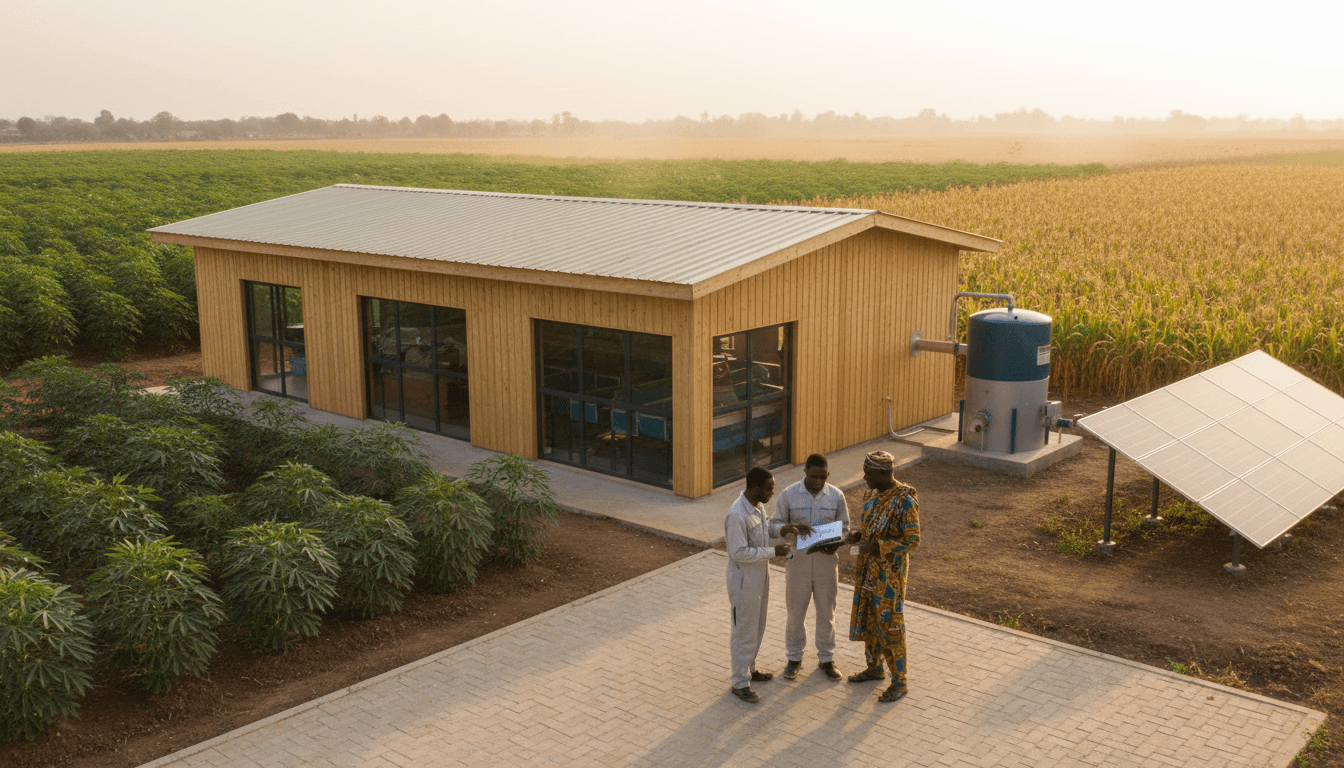
AI-Powered Bioenergy Bets Ghana’s Farmers Should Watch
Bioenergy pulled $1.3 billion across 72 deals in 2025—enough to reshape what “agrifoodtech funding” even means. The surprising part isn’t the money; it’s where it went. Investors put their biggest cheques into companies sitting at the edges of agriculture: energy, materials, fintech, and deep tech.
For Ghana, that’s not just an interesting global headline. It’s a signal. When capital moves toward bioenergy and biomaterials, it usually means the market is admitting a hard truth: food systems don’t scale if energy stays expensive, unreliable, or dirty. And when energy becomes the bottleneck, AI becomes the tool people reach for—because AI is good at squeezing waste out of messy systems.
This post sits inside our series, “Sɛnea AI Reboa Adwumadie ne Dwumadie Wɔ Ghana”—practical ways AI speeds work up, reduces costs, and improves results. Here, we’re applying that lens to one clear opportunity: AI for bioenergy and agrifoodtech in Ghana, especially for farmers, aggregators, and agro-processors dealing with power costs, post-harvest losses, and unpredictable margins.
What 2025’s agrifoodtech funding pattern really says
Answer first: The money is chasing the constraints, not the crops.
The 2025 funding swing highlighted four categories:
- Bioenergy & biomaterials: $1.3B, 72 deals (the year’s leader)
- Ag marketplaces: $772M, 65 deals
- Innovative food: $590M, 112 deals (down sharply)
- Farm robotics/mechanization/equipment: $590M, 67 deals (surprisingly low given the buzz)
The direction is clear: investors are prioritizing infrastructure-like solutions—energy reliability, alternative materials, and platforms that move goods and money.
Why bioenergy surged
Answer first: Energy has become the “hidden ingredient” behind food innovation.
Two drivers showed up strongly in 2025:
- Grid reliability concerns (globally) pushed investment into renewables and storage.
- Rising data demand increased pressure on power systems, indirectly raising attention on distributed energy.
Ghana doesn’t need a Silicon Valley narrative to relate. If you run irrigation pumps, cold rooms, mills, or processing lines, you already know the reality: energy cost and uptime shape productivity as much as fertilizer does.
Ghana’s opportunity: treat energy as a farm input (then optimize it with AI)
Answer first: If we manage energy like we manage seed and fertilizer—measured, planned, optimized—profitability improves.
I’ve found that many agribusinesses in Ghana make energy decisions reactively: buy a generator after losses, add a freezer when spoilage becomes painful, switch fuels when prices spike. The better approach is to run energy like an input with a simple discipline:
- Measure (what uses power, when, and how much)
- Predict (peak periods, seasonal shifts, downtime patterns)
- Control (schedule loads, prevent breakdowns, reduce waste)
This is exactly where AI in agriculture in Ghana becomes practical, not theoretical.
Where AI fits in bioenergy for farms and processing
Answer first: AI improves bioenergy economics by reducing uncertainty—feedstock supply, equipment uptime, and demand forecasting.
Bioenergy projects fail when the numbers drift: inconsistent feedstock, poor maintenance, unstable demand, or wrong sizing. AI helps by turning day-to-day operations into decisions backed by data.
Common Ghana-relevant feedstocks include:
- Cassava peels and processing waste
- Oil palm residues (empty fruit bunches, fiber)
- Rice husks
- Maize stalks and cobs
- Poultry litter and livestock manure
AI can support:
- Feedstock forecasting: predict volumes by season, location, and price
- Routing & collection plans: reduce transport cost per tonne collected
- Process control: stabilize biogas yields, improve combustion efficiency
- Predictive maintenance: reduce unplanned downtime for digesters, boilers, mills
- Demand response: decide when to run cold rooms or milling to avoid peak tariffs (where relevant) or minimize generator fuel use
Snippet-worthy truth: Bioenergy doesn’t win on technology alone; it wins when operations stop guessing.
The “ag marketplaces” signal: platforms are winning because fragmentation is expensive
Answer first: Marketplaces raised $772M because they reduce friction for smallholders—access to buyers, inputs, and credit.
A major theme from 2025 is that emerging markets drive this category, largely because smallholder systems create huge coordination costs. Ghana shares the same structural issues:
- Many small producers, scattered supply
- Variable quality and grading disputes
- Limited storage and cold chain
- High cost of working capital
AI use case Ghana can copy fast: quality, pricing, and credit scoring
Answer first: AI helps marketplaces pay fairly, reduce defaults, and move produce faster.
If you’re building (or partnering with) an ag marketplace in Ghana, three AI capabilities matter immediately:
-
AI-assisted grading
- Use phone images + simple models to classify size/defects
- Standardize quality bands so pricing is less emotional and more repeatable
-
Price and demand forecasting
- Predict market absorption (especially around festive seasons like Christmas/New Year when demand spikes and logistics tighten)
- Recommend where to send produce to reduce gluts
-
Alternative credit scoring
- Score borrowers using transaction history, delivery reliability, farm size proxies, and repayment behavior
- Tie credit to offtake contracts or input bundles
This isn’t about fancy dashboards. It’s about building trust at scale.
Why “innovative food” fell—and what Ghana should learn from it
Answer first: Funding fell because scaling costs and consumer adoption risks became unavoidable.
Globally, innovative food funding dropped hard in 2025: $590M, down close to 60% year-on-year, and down more than 80% from the $3.3B high in 2022. The sector ran into three issues:
- High cost to scale manufacturing
- Slower consumer adoption than projections
- Tight capital markets that punish long payback periods
Ghana takeaway: don’t bet the farm on hype; bet on unit economics
Answer first: Ghana’s food innovation should focus on affordability, shelf-life, and local inputs.
For Ghanaian founders and agribusiness leaders, the lesson is simple: prioritize innovations that improve today’s margins.
AI can support realistic wins, such as:
- Shelf-life prediction for fresh produce using temperature + handling data
- Recipe reformulation for local products (e.g., blending flours) based on cost and nutrition targets
- Waste analytics in processing plants to find where yield disappears
If a product can’t compete on price for most households, growth will be slower than pitch decks suggest.
Robotics got attention—but money stayed cautious. Ghana should be even more selective.
Answer first: Robotics is valuable, but it must match labor realities and field conditions.
Farm robotics and mechanization ended 2025 at $590M across 67 deals—not much considering the noise. Investors are cautious because hardware is hard: maintenance, distribution, and unit economics bite.
In Ghana, the smarter entry point is often AI + appropriate mechanization, not fully autonomous machines.
Practical Ghana use cases: “AI on top of machines we already use”
Answer first: Add intelligence to existing equipment before buying new robots.
Examples that fit Ghana’s current farm landscape:
- Predictive maintenance for tractors, shellers, and mills (reduce downtime during peak harvest)
- Route optimization for aggregation trucks (lower fuel per bag moved)
- Yield mapping using low-cost drone imagery or satellite signals (target fertilizer and irrigation)
- Spray planning based on pest pressure and weather windows (reduce chemical waste)
This is how you “tew adwumadie ho ka” (cut operating cost) without taking big hardware risks.
A simple playbook: how Ghanaian agribusinesses can start using AI for bioenergy
Answer first: Start with one bottleneck, one dataset, and one measurable outcome.
AI projects fail when they start as “digital transformation.” Successful ones start as cost reduction.
Step 1: Pick the cost that hurts most
Choose one:
- Diesel spend for generators
- Spoilage and cold-room losses
- Downtime in milling/processing
- Feedstock shortages for boilers/digesters
Step 2: Capture the minimum data for 30 days
You don’t need perfection. You need consistency.
- Fuel purchased and run-hours
- Output (bags milled, crates cooled, tonnes processed)
- Downtime logs (what broke, how long, what it cost)
- Feedstock inflow/outflow (by source)
Step 3: Use AI for prediction, then scheduling
Two fast wins:
- Predict tomorrow’s demand (cold storage load, processing throughput)
- Schedule high-energy tasks when power is available/cheaper and staff is ready
Step 4: Prove ROI before scaling
A good first target is 5–15% reduction in fuel use or downtime within 60–90 days. If you can’t measure it, don’t expand it.
Snippet-worthy truth: AI value shows up in invoices—fuel, repairs, spoilage—not in slides.
What to do next (and the question Ghana should ask in 2026)
Bioenergy led agrifoodtech funding in 2025 because energy is now the pressure point across the food system. Ghana’s version of that story is already here: power cost, uptime, and logistics losses quietly set the ceiling on farm and processing profitability.
If you’re a farmer group, processor, or marketplace operator, the most practical next step is to run a small AI pilot aimed at one outcome: lower energy cost per tonne, less spoilage, or higher equipment uptime. Once the numbers improve, it’s easier to raise capital, win partners, and expand.
The forward-looking question I want Ghanaian agribusiness leaders to sit with is this: If bioenergy is where global money is concentrating, what would it take for Ghana to build bioenergy projects that are bankable—because their operations are optimized with AI, not run on guesswork?