Turn power reliability into an SME advantage. Learn transparency habits and practical AI steps that cut spoilage, fuel waste, and downtime in Ghana’s food chain.
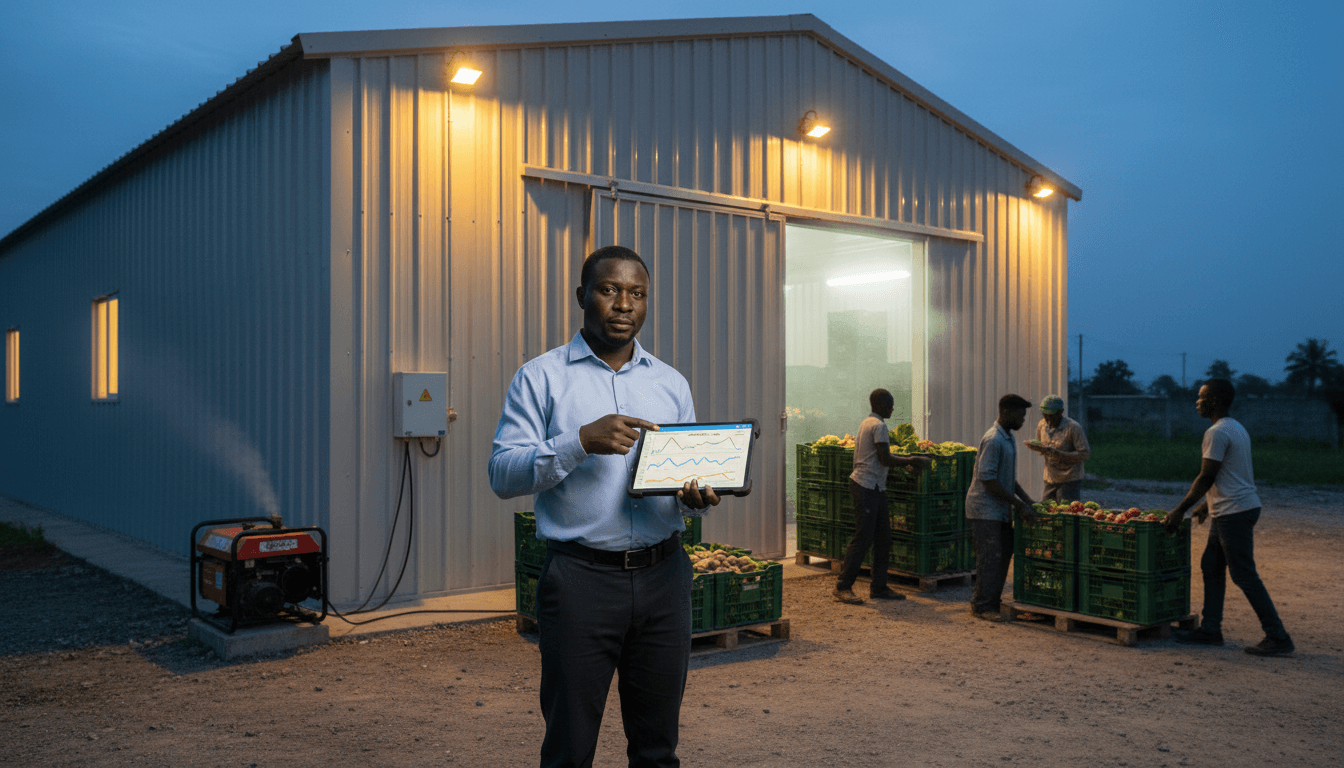
Power Reliability Lessons SMEs Can Copy in Ghana
Ghana’s SMEs don’t fail because they lack hustle. They fail because one “small” operational shock—power instability, fuel price swings, a delayed supplier, a broken cold room—spreads through the whole business like fire through dry grass. If you’re in food processing, cold storage, retail, poultry, milling, or agribusiness services, power isn’t just a utility bill. It’s your production schedule, your inventory quality, and your customer trust.
That’s why a short RSS update about Karpowership engaging energy sector reporters and reaffirming commitment to power supply and community impact is more relevant to Sɛnea AI Reboa Aduadadie ne Akuafoɔ Wɔ Ghana than it first looks. When a power producer prioritizes transparency and community impact, it signals something SMEs can adopt: communicate clearly, measure what matters, and run operations like reliability is your brand.
Here’s the stance I’ll take: Most SMEs treat power risk as unavoidable. It isn’t. You can’t control the grid, but you can control your preparedness, your process discipline, and your data. And this is exactly where practical AI tools (even simple ones) help Ghanaian SMEs protect margins—especially in food and agriculture where spoilage is brutal.
Why Karpowership’s reporter engagement matters for SMEs
Karpowership’s engagement with reporters isn’t “PR fluff” if you look at it through an operations lens. It’s a public commitment to operational transparency—sharing updates, answering questions, and reinforcing accountability. For SMEs, the equivalent isn’t hosting a press conference. It’s building a habit of communicating clearly with the people who keep your business alive: customers, staff, suppliers, regulators, and community leaders.
Transparency is a reliability strategy (not a branding tactic)
When power supply is sensitive, trust becomes a tool. If your customers believe you manage risk well, they’ll tolerate small delays and stay loyal. If they don’t, one interruption becomes “this business is not serious.”
For an SME in the food chain, transparency looks like:
- Posting realistic production and delivery windows based on power and logistics realities
- Sharing quality assurance logs (cold room temperature checks, batch records)
- Explaining how you’ll handle disruptions (backup plan, refund policy, alternative delivery)
Snippet-worthy truth: Reliability isn’t only about having stable electricity. It’s also about predictable communication when things go wrong.
Community impact is operational, not charitable
Karpowership’s emphasis on community impact highlights something SMEs often underestimate: your community relationships affect operations. Noise complaints, waste disposal issues, truck traffic, and employment expectations can become business risks.
If you run a small rice mill, cold store, or food processing shop, community impact means:
- Managing waste and wastewater properly
- Creating fair, predictable local hiring and training
- Running safely (fire hazards, generator placement, food hygiene)
Community goodwill reduces friction. Less friction means fewer shutdowns and fewer surprise costs.
The hard operational reality for Ghana’s food and agriculture SMEs
Food and agriculture businesses feel power instability more sharply than many sectors. The damage is immediate and measurable: spoiled stock, halted production, missed market windows, and higher unit costs.
The cost of “one outage” is rarely just the generator fuel
A power interruption triggers a chain reaction:
- Production pauses (labour still paid)
- Machines restart inefficiently (more wastage)
- Cold chain warms up (quality drops)
- Deliveries delay (customer penalties, churn)
- Emergency purchases happen (higher prices)
If you’ve ever thrown away thawed chicken, sour yogurt, or weevil-prone grains because humidity got out of control, you already know: power risk becomes inventory risk.
December context: peak demand, peak expectations
It’s late December—holiday demand is high and customers are less patient. Food businesses push volume, cold rooms run harder, and logistics gets tighter. This season is the worst time to rely on “we’ll manage somehow.”
A practical mindset for this period:
- Treat power stability as a sales enabler, not a cost
- Build buffers (stock, time, cash) before the rush
- Use data to decide what to produce and store
Where AI actually helps: reliability management for SMEs
AI doesn’t need to be complicated or expensive. For most SMEs, the value starts with prediction, detection, and decision support—using your own small datasets (sales records, temperature logs, generator run time, delivery notes).
1) AI for load planning: know what to run, when to run it
The easiest money to save is from running the wrong equipment at the wrong time. AI-assisted load planning can help you schedule energy-heavy tasks (milling, freezing, baking, packaging) during your most stable supply periods or when backup power is available.
What to track weekly:
- Peak production hours vs. outage frequency
- Generator fuel burn per hour
- Unit cost per product batch during grid vs. generator
A simple AI model (or even smart spreadsheet forecasting) can produce a weekly “production calendar” that reduces emergency generator dependence.
2) AI for cold chain protection: stop spoilage before it starts
Cold rooms and freezers don’t usually fail dramatically. They drift. Temperature rises slowly, compressor performance drops, doors open too often, and then you discover the loss too late.
AI helps by spotting patterns humans miss:
- Temperature anomalies at certain hours
- Compressor cycling that signals maintenance issues
- Stock turnover mismatches (items staying too long)
Practical setup for a small cold store:
- Low-cost temperature sensors logging hourly readings
- A basic alert rule (SMS/WhatsApp) when temperature crosses a threshold
- Simple anomaly detection to reduce false alarms
One-liner you can use internally: If you can measure temperature, you can manage profit.
3) AI for inventory and demand forecasting: produce what will sell
Many Ghanaian food SMEs overproduce in “good weeks” and then panic-sell when power or logistics disrupts storage.
AI-driven forecasting (even lightweight) uses:
- Past weekly sales
- Seasonality (Christmas, school reopening, Ramadan, harvest cycles)
- Price changes and supply constraints
The output is not magic. It’s a decision aid: how much to produce, how much to store, and which customers to prioritize.
4) AI for maintenance: fix the generator before it humiliates you
Preventive maintenance is cheaper than emergency repairs—especially in December when technicians are booked and parts are scarce.
Start capturing:
- Generator run hours
- Fuel consumption per hour
- Oil change dates
- Breakdown notes (cause, cost, downtime)
AI can flag “this generator is burning more fuel than usual” or “breakdowns are clustering” and push you toward planned servicing.
Copy the “transparency playbook”: what SMEs should communicate
Karpowership’s engagement with reporters is a reminder that stakeholder communication is part of operations. SMEs don’t need formal media relations, but you do need clear updates that build trust.
What customers want to know (and what to tell them)
Customers don’t want long explanations. They want certainty.
Share:
- Delivery windows (with buffer)
- Quality guarantees (what you’ll replace/refund)
- Stock availability (what’s in, what’s out)
If you sell to retailers or institutions, your transparency should include:
- Batch identification and expiry visibility
- Cold chain handling steps
- Escalation contact when something goes wrong
What staff need: predictable instructions, not stress
Power problems turn into staff problems when instructions are unclear.
Create a simple “outage SOP” (standard operating procedure):
- What must be shut down immediately
- What must be protected first (cold room, live animals, fermentation)
- Who calls the electrician/vendor
- Who updates customers
AI can support this by generating checklists and incident logs, but the key is consistency.
A practical 30-day plan for Ghanaian SMEs (food & agriculture)
You don’t need a big budget to become more resilient. You need discipline.
Week 1: Baseline your power and loss points
- Record outages (time, duration)
- Track generator run hours and fuel spend
- Identify your top 3 spoilage or downtime causes
Week 2: Instrument the cold chain and critical equipment
- Add temperature logging (manual or sensor)
- Start a maintenance log for generator/freezers
- Define thresholds for alerts
Week 3: Forecast demand and set production rules
- Build a simple weekly demand forecast
- Decide minimum safety stock for fast-moving items
- Reduce slow-moving SKUs that waste energy and storage
Week 4: Build your transparency system
- Standard customer update template (WhatsApp message format)
- Internal outage SOP printed and posted
- Monthly “reliability report” (1 page) for your own management
Extractable insight: The SMEs that win in 2026 won’t be the ones with the biggest machines—they’ll be the ones with the tightest operating rhythm.
People also ask: “Is AI worth it if my business is small?”
Yes—if you treat AI as decision support, not as a fancy product. Start with one area where errors are expensive:
- Cold room temperature drift
- Generator fuel leakage and inefficiency
- Overproduction and stock expiry
If you can save even GHS 300–1,000 per month in spoilage, fuel, and rush logistics, you’ve already funded the tools.
What to do next (and what to watch in 2026)
Karpowership’s public commitment to power supply and community impact is a reminder that energy reliability is built on two things: operational performance and trust. SMEs can’t control national generation, but you can control how prepared you are, how quickly you detect issues, and how confidently you communicate.
If your business sits anywhere in the food chain—farming inputs, aggregation, processing, cold storage, distribution—make 2026 the year you stop guessing. Start measuring. Start forecasting. Start running your operations like power interruptions are a known risk with a plan, not a random curse.
Which part of your operation would hurt the most if you lost power for four hours tomorrow—production, cold storage, payments, or delivery—and what’s the first sensor, log, or checklist you can put in place this week?