Rail upgrades can boost tourism only if planning feels easy. See how AI helps Georgia’s hotels and tour operators convert better transport into bookings.
AI + Georgia Rail: Faster Trips, Smarter Hotels
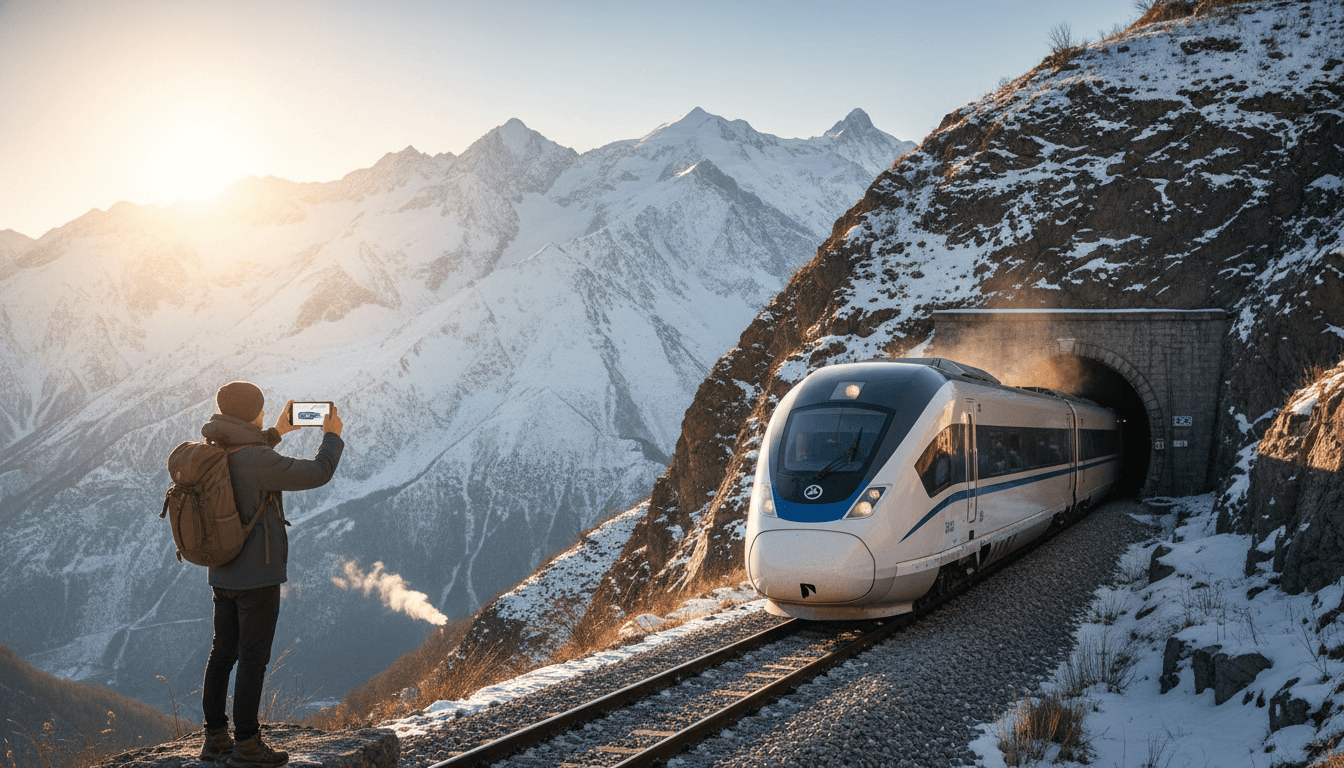
Georgia just finished a 14-year railway modernization project on the Tbilisi–Makhinjauri line, with officials projecting higher cargo capacity, shorter transit times, and a Tbilisi–Batumi passenger trip that’s expected to be about 30 minutes faster by 2026. The headline sounds like “logistics,” but the real opportunity sits right next to tourism and hospitality.
Because here’s what most tourism businesses miss: physical infrastructure only creates potential demand. What turns that potential into bookings, filled rooms, and repeat guests is how well you manage information—routes, timing, pricing, service recovery, language, and personalization. That’s exactly where ხელოვნური ინტელექტი (AI) delivers measurable gains.
This post is part of our series „როგორ ცვლის ხელოვნური ინტელექტი ტურიზმსა და სასტუმრო ბიზნესს საქართველოში“. We’ll use the newly modernized railway as a backdrop to show how hotels, tour operators, and destination managers can pair better transport with AI-driven travel planning, demand forecasting, and guest communication—and convert “easier access” into real revenue.
What the railway modernization changes for tourism (beyond speed)
The practical change is simple: more reliable travel between East and West Georgia and a railway designed to handle more volume with fewer bottlenecks. The project’s mountainous pass section included major engineering works—an 8,300-meter dual-tube tunnel near Kvishkheti, new track, bridges, tunnels, and upgraded signaling.
But the tourism implications aren’t “people get there faster.” They’re more specific:
- Predictability improves planning. When delays drop, tourists are more willing to do multi-city itineraries (Tbilisi → Kutaisi → Batumi/Adjara) without buffering a full extra day “just in case.”
- Short breaks become viable. In late December (right now), you see it clearly: Georgians and regional visitors book short getaways around holidays and weekends. A reliable rail link supports 2–3 night trips where timing matters.
- Group travel gets easier. Tour operators care about tight schedules: check-in windows, dinner reservations, guided tours, and airport connections.
The railway also signals bigger national ambitions: Georgia wants to be a stronger link in the Middle Corridor (Europe–Asia transit route). Whether that macro strategy succeeds or faces competition from alternative routes, the local tourism sector still benefits from one thing: investment attention in mobility.
The missing layer: AI turns rail access into bookings
Better transport is necessary. It’s not sufficient. AI is the layer that makes the journey feel simple to the traveler and profitable to the operator.
If you run a hotel or a tour business in Georgia, the “rail upgrade moment” is the right time to fix the friction that still kills bookings:
- People can’t confidently plan connections (train timing + last-mile transfer).
- Guests abandon booking when they can’t get a fast answer in their language.
- Hotels price too high on low-demand days and too low on peak days.
- Tour products are generic, not built around real intent (food, family, hiking, wine, culture).
AI doesn’t solve all of that by magic. But it does solve it systematically when you implement it around your actual customer journey.
AI route optimization for tourists: “door to door,” not “station to station”
Travelers don’t buy a train ticket. They buy a plan that won’t collapse.
A practical AI use case is multimodal itinerary generation:
- Train segments (Tbilisi–Batumi/Makhinjauri)
- Buffer time based on historical reliability
- Last-mile options (taxi, shuttle, car rental, walking)
- Check-in/check-out constraints
- Weather and seasonality constraints (especially relevant in winter)
For example, if a guest arrives at Makhinjauri and your property is in Batumi or Gonio, an AI assistant can automatically recommend:
- The best transfer option by time of day
- Expected cost range
- Backup plan if the train runs late
This reduces the “I’ll just choose a different destination” effect that happens when planning feels uncertain.
Smart content that matches real intent (and stops wasting ad spend)
Most Georgian hospitality websites still publish content that’s either too generic (“Visit Batumi!”) or too random (“Top 10 places…” with no conversion path). AI helps if you treat content as a product, not decoration.
A high-performing approach:
- Use AI to generate clustered landing pages around rail-enabled itineraries: “3 days Tbilisi to Batumi by train,” “Family weekend in Adjara without a car,” “Wine + sea itinerary.”
- Localize properly (Georgian, English, Russian, Turkish, Arabic—depending on your target), but keep tone consistent.
- Add conversion assets: a mini-itinerary PDF, WhatsApp/Viber click-to-chat, or a “build my trip” form.
If the rail travel time drops by 30 minutes, that’s a real selling point. But only if your pages, ads, and chat scripts actually use it.
AI in hotels: demand forecasting, pricing, and staffing for rail-driven spikes
Rail improvements often create a pattern: more short-notice bookings and sharper weekend peaks. If your operations don’t adapt, you’ll feel busy and still underperform financially.
The direct answer: use AI to forecast demand by day and automate decisions.
Predict demand using signals you already have
Hotels and tour operators in Georgia sit on useful signals but rarely connect them:
- Booking engine search dates (even if not booked)
- Channel manager pickup trends
- Past occupancy + ADR by weekday
- Event calendars (concerts, sports, conferences)
- Rail schedule changes and holiday periods
An AI forecasting model (or even a simpler ML-driven dashboard) can output:
- Expected occupancy for the next 14/30/60 days
- Price elasticity suggestions (raise price, hold, or discount)
- Staffing recommendations (front desk, housekeeping)
If you want a concrete benchmark from the railway project itself: officials cited capacity rising from 27 million tons to 48 million tons per year and operating costs dropping by about 10% on the freight side. The tourism parallel is clear: you’re aiming for more “throughput” (bookings) with lower operational waste (overstaffing, underpricing, messy service recovery).
Dynamic pricing without annoying guests
Dynamic pricing gets a bad reputation when it’s chaotic. Done properly, it’s consistent and explainable.
A workable rule set for Georgia-based properties:
- Floor price protects profitability on low demand days
- Ceiling price prevents reputational damage on spikes
- AI recommends daily rate changes within the corridor
- You keep human control over exceptions (VIP groups, corporate deals)
Rail-driven weekend spikes are perfect for this. You don’t need to squeeze guests. You need to avoid leaving money on the table while keeping value clear.
AI customer experience: multilingual support and service recovery that actually works
If you’re selling Georgia as a destination, the “soft infrastructure” matters as much as the tunnel and track.
The direct answer: AI improves guest confidence before arrival and reduces complaints after arrival.
24/7 multilingual concierge (that doesn’t sound robotic)
A well-designed AI concierge can cover:
- Train arrival guidance and check-in instructions
- Local recommendations tailored to preferences (food type, accessibility, kids)
- Instant answers to FAQs (parking, breakfast, late checkout)
- Upsells that feel helpful (airport transfer, spa slot, guided tour)
The difference between “spammy chatbot” and “useful concierge” is simple: tie it to your real operations—your room inventory, your policy rules, your local partner availability.
Service recovery: detect issues early and fix them fast
Most negative reviews don’t come from a big failure. They come from a small issue that nobody handled quickly.
AI can help by:
- Flagging sentiment in chat messages (“cold room,” “no hot water,” “noise”)
- Triggering internal tasks (maintenance ticket, room change proposal)
- Suggesting compensation options within your policy
This matters more during peak periods, when rail improvements may drive higher occupancy and your team has less time per guest.
Smart tourism for Georgia: connecting rail, cities, and experiences
A destination wins when it packages experiences across regions. Rail modernization makes that easier—if the ecosystem shares data and planning tools.
What a “smart itinerary” looks like in practice
A strong Georgia itinerary tool (built by a DMO, a consortium, or a private operator) should:
- Recommend routes based on traveler type (solo, family, seniors)
- Combine rail + attractions + dining + hotel availability
- Adjust automatically for seasonality (winter closures, short daylight)
- Offer alternative plans if disruption occurs
Even without a national platform, individual businesses can collaborate: hotels + tour operators + transfer providers can share availability through simple integrations and let AI propose the best bundle.
The environmental angle you can’t ignore
The railway project also attracted controversy from villages near the mountainous section, with complaints about landslides and erosion linked to construction works. Whether you’re a hotelier or a tour operator, the stance should be straightforward: tourism growth that damages local communities is bad business.
AI can support more responsible tourism by:
- Spreading demand across less crowded times/places
- Recommending lower-impact transport and routing
- Monitoring guest flow patterns to reduce overtourism in hotspots
Sustainability isn’t a slogan. It’s risk management.
A practical 30-day plan for hotels and tour operators in Georgia
If you want to act on this now (end of December is a great planning window), here’s a simple approach I’ve found works.
Week 1: Fix the journey friction
- Map the top 10 guest questions about arriving by train
- Create standard answers in 2–4 languages
- Add them to your website, booking confirmation, and messaging
Week 2: Launch an AI concierge pilot
- Start with one channel (website chat or WhatsApp)
- Train it on your policies, room types, and local recommendations
- Track: response time, conversion to booking, top unresolved questions
Week 3: Build rail-based packages
- “Tbilisi–Batumi by train” weekend offer
- Add last-mile transfer + late checkout option
- Create 3 landing pages targeting different traveler intents
Week 4: Add forecasting + pricing discipline
- Set floor/ceiling rates
- Review pickup daily for 14 days forward
- Use AI suggestions, but keep one person accountable for final rates
If you do only one thing: make the rail journey feel effortless. When planning becomes easy, bookings follow.
One-liner worth remembering: Rail builds access. AI builds confidence.
Where this is going in 2026—and what to do now
Georgia’s rail modernization is a real signal: the country is investing in connectivity and selling a bigger role in regional transit. For tourism and hospitality, the winners won’t be the businesses that simply say “we’re near the station.” The winners will be the ones that use AI in tourism to plan, price, communicate, and recover service faster than competitors.
If your hotel, agency, or tour company wants leads—not just traffic—tie your next AI initiative to one measurable outcome: more direct bookings, higher occupancy in shoulder periods, or better guest satisfaction. Then iterate.
Want a useful next step for your team? Pick one corridor (Tbilisi–Batumi/Adjara is the obvious start), build a rail-first itinerary and offer, and use AI to support it end-to-end. A year from now, when travel volumes shift and competition tightens, you’ll be glad you built the operating system early.
What would happen to your bookings if every guest felt they had a clear, reliable “door-to-door” plan before they even clicked “Reserve”?