Georgia’s GDP rose 7.2% in Nov 2025. Here’s what that means for tourism—and how AI helps hotels and tour operators boost direct bookings and efficiency.
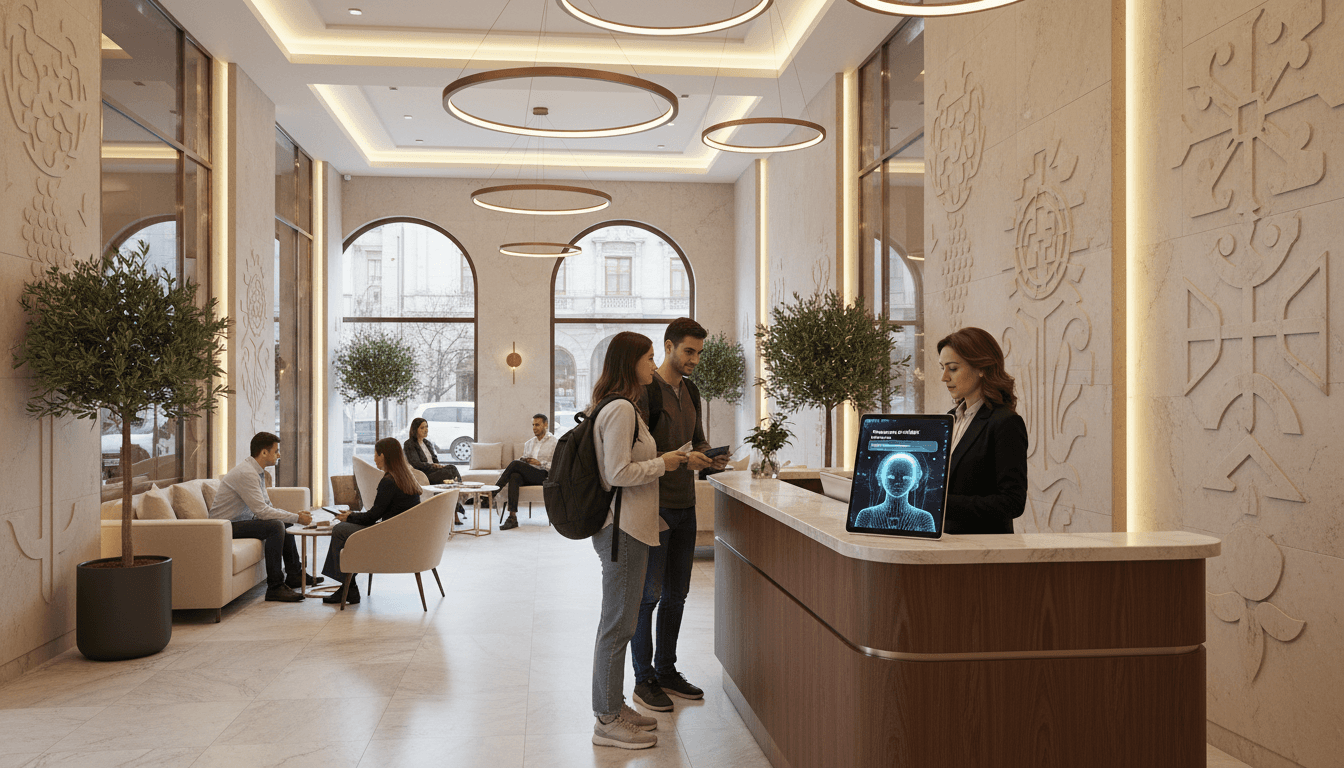
Georgia’s 7.2% GDP Growth: AI’s Next Move for Hotels
Georgia’s economy ended 2025 on a strong note: real GDP grew by 7.2% in November 2025 compared to the same month a year earlier, according to Geostat’s rapid estimates released on December 31, 2025. Even more telling, average real GDP growth for January–November 2025 reached 7.5%. That’s not a “nice-to-have” macro headline. For tourism and hospitality, it’s a signal that demand, competition, and expectations are all moving up at the same time.
Here’s what most companies get wrong: they treat GDP growth as background noise—something for economists and government briefings. But if you run a hotel, guesthouse, travel agency, tour operator, or even a restaurant that depends on visitors, GDP growth is an early indicator of two things you’ll feel very soon: higher guest volumes and higher acquisition costs.
This post is part of our series „როგორ ცვლის ხელოვნური ინტელექტი ტურიზმსა და სასტუმრო ბიზნესს საქართველოში“. The point isn’t to “talk about AI.” It’s to show how Georgian tourism businesses can use AI to protect margins, improve service quality, and create more direct bookings—especially while the economy is expanding and the market is getting crowded.
What the 7.2% GDP growth really signals for tourism
Answer first: A 7.2% GDP increase doesn’t automatically mean “tourism is up,” but it usually means more spending power, more business activity, and stronger service demand—all of which push hospitality markets upward.
Geostat’s note says growth was mainly driven by transportation and storage, manufacturing, real estate activities, financial and insurance activities, and mining and quarrying, while construction and energy declined. For tourism, the standout is transportation and storage. When transport activity rises, you often see a chain effect: more mobility, more inbound/outbound movement, and more logistics supporting seasonal travel.
Why this matters in January 2026: Georgia is entering a year that major institutions expect to still grow—just a bit slower. The EBRD forecasts 7% GDP growth for 2025 easing to 5% in 2026, and the ADB also puts 2025 at 7% and 2026 at 5%. A slowdown from 7% to 5% is not a crash. It’s a shift from “very hot” to “still strong.”
For hotels and tour operators, that means:
- Demand remains, but you can’t rely on “market growth” alone to fill rooms.
- Guests become more price-sensitive as inflation and costs fluctuate.
- Competition for visibility (Google, OTAs, social) gets tougher.
This is exactly the moment where AI adoption stops being trendy and starts being practical.
Why economic expansion increases pressure on hotels (not just revenue)
Answer first: When the economy grows quickly, hospitality businesses often see higher revenues—and higher costs. AI is one of the few tools that can improve output without scaling headcount at the same pace.
During growth phases, three pressures hit hotels and tourism businesses at once:
1) Labor pressure: staffing doesn’t scale smoothly
If occupancy rises, you can’t instantly hire and train great front-desk staff, reservations agents, and service teams. Quality drops before it improves. AI can absorb part of the workload—especially repetitive messaging and coordination.
Practical uses right now in Georgia:
- AI receptionist / chat support for common questions (check-in time, parking, breakfast, pet policy, airport transfer)
- Auto-replies on WhatsApp/Instagram/Facebook with correct property info
- Drafting bilingual responses (Georgian/English/Russian) with consistent tone
2) Acquisition pressure: marketing gets more expensive
Growth attracts new entrants and higher ad spend. That pushes up costs on paid channels and increases reliance on OTAs.
AI helps here by:
- Producing high-intent content (local guides, seasonal itineraries, FAQs) that ranks organically
- Improving conversion on direct booking pages through better copy and smarter offers
- Segmenting audiences for email campaigns (weekend trips, business travelers, wine tours)
3) Pricing pressure: the “set-and-forget” rate strategy breaks
When the market moves fast, static pricing leaves money on the table—or empties your rooms at the wrong rate.
AI-enabled revenue practices include:
- Demand forecasting using historical occupancy + local events
- Rate recommendations by room type and day-of-week
- Automated “fences” (non-refundable discounts, minimum stays during peaks)
The reality? You don’t need to build a data science team. Many PMS, channel managers, and revenue tools now ship with AI features. The key is implementing them with clear rules and monitoring.
Where AI creates the fastest wins in Georgian tourism (2026 playbook)
Answer first: The fastest ROI comes from AI in three areas: guest communication, direct booking growth, and operations automation.
Below is a practical playbook for hotels and tour operators in Georgia that want results in weeks—not months.
Guest communication: respond faster, sell more
Speed matters. When a traveler asks about availability or a tour slot, your competitor is one click away.
AI can:
- Capture leads 24/7 from your website chat, social DMs, and messaging apps
- Ask a few structured questions (dates, adults/children, interests)
- Hand off to your team when the request is complex
- Log the lead into a simple spreadsheet/CRM
What to measure:
- Response time (minutes)
- Quote-to-booking rate
- Percentage of inquiries answered outside office hours
A good benchmark to aim for: get your median response time under 5 minutes for digital inquiries.
Direct bookings: turn GDP growth into margin growth
More demand doesn’t help if most of it comes through high-commission channels.
AI helps direct bookings through:
- SEO content clusters: “Tbilisi winter weekend itinerary,” “Kutaisi cave tours + hotel,” “Kazbegi road trip planning,” “Batumi offseason stays”
- Dynamic landing pages by audience (business, families, wine tourism)
- Automated review response drafts that protect reputation and improve visibility
If you’re a small hotel or guesthouse, I’ve found one thing consistently true: a solid FAQ page and 10–15 high-quality location pages can outperform random Instagram posting.
Operations: stop losing time to repetitive work
Georgia’s GDP growth is also a reminder: input costs change, vendors renegotiate, and teams get stretched.
AI can reduce manual work in:
- Housekeeping scheduling based on departures/arrivals
- Maintenance ticket triage (categorize issues, prioritize urgent items)
- Inventory forecasting for breakfast items and minibar basics
Even a modest time saving—say 30 minutes per staff member per shift—adds up quickly across a month.
“But is AI safe for hospitality?” What to automate vs. what to keep human
Answer first: Automate repeatable, high-volume tasks, but keep humans in charge of exceptions, empathy, and final pricing authority.
Hotels win on trust. If AI is deployed carelessly, it can create confusion (“Yes, late check-out is guaranteed”) and damage reviews.
A simple rule set works well:
Automate confidently
- FAQ responses using approved property policy
- Drafting messages, then human approval for edge cases
- Content writing with a clear brand voice guide
- Review response templates
Keep human control
- Compensation decisions after service failures
- Overbooking and relocation decisions
- Complaints involving safety, discrimination, or money disputes
- Final approval on high-season pricing changes
A good AI setup doesn’t replace hospitality—it protects it by keeping your team available for real conversations.
A simple 30-day AI adoption plan for hotels and tour operators
Answer first: Start with one customer-facing automation, one revenue improvement, and one internal workflow—then measure weekly.
Here’s a realistic 30-day rollout that doesn’t require a major budget:
Week 1: Foundation
- List your top 30 guest questions (the ones staff answer every day)
- Write “source-of-truth” policies (check-in/out, cancellation, parking, pets)
- Decide where inquiries come in (website, Booking.com messages, WhatsApp, Instagram)
Week 2: Communication automation
- Deploy AI-assisted replies (or a basic chatbot) for FAQs
- Create message templates for bookings, transfers, and late arrivals
- Train staff on escalation rules (“When do we take over?”)
Week 3: Direct booking growth
- Publish 3 SEO pages that match real demand (city + season + intent)
- Add a direct booking incentive that doesn’t destroy rate integrity (small add-on, flexible cancellation perk)
- Implement email capture (Wi-Fi login, website popup, post-stay email)
Week 4: Operations
- Automate housekeeping/maintenance ticket intake
- Build a weekly dashboard: inquiries, conversion, occupancy, ADR, direct booking share
If you do just this, you’ll feel the impact quickly: fewer missed inquiries, fewer staff interruptions, and cleaner visibility into what actually drives bookings.
What GDP growth means for AI in Georgia’s hospitality sector in 2026
Answer first: With GDP growth still projected at 5% in 2026 by EBRD and ADB, Georgia’s tourism market is likely to stay active—but businesses will need efficiency to hold margins.
The 2025 growth story (7.2% in November; 7.5% average for Jan–Nov) is a reminder that the market is expanding. Expansion attracts new hotels, new short-term rentals, and more sophisticated marketing. Standing still becomes expensive.
If you’re following our series „როგორ ცვლის ხელოვნური ინტელექტი ტურიზმსა და სასტუმრო ბიზნესს საქართველოში“, this is the connective tissue: macro growth creates opportunity, but AI is how you capture it without burning out your team or handing your profits to intermediaries.
Pick one process this week that’s slowing you down—guest messaging, content production, pricing decisions—and improve it with AI. Then ask the real question for 2026: when demand spikes again, will your operation scale smoothly, or will it scramble?