AI-powered vertical farming improves yield predictability, cuts energy waste, and boosts quality. See practical steps to start in Q1 2026.
AI-Powered Vertical Farming: Practical Wins in 2026
Urban food demand is rising while farmland isn’t. That mismatch is one reason vertical farming keeps showing up in serious conversations about food security—especially as cities expand and climate volatility makes outdoor yields harder to predict.
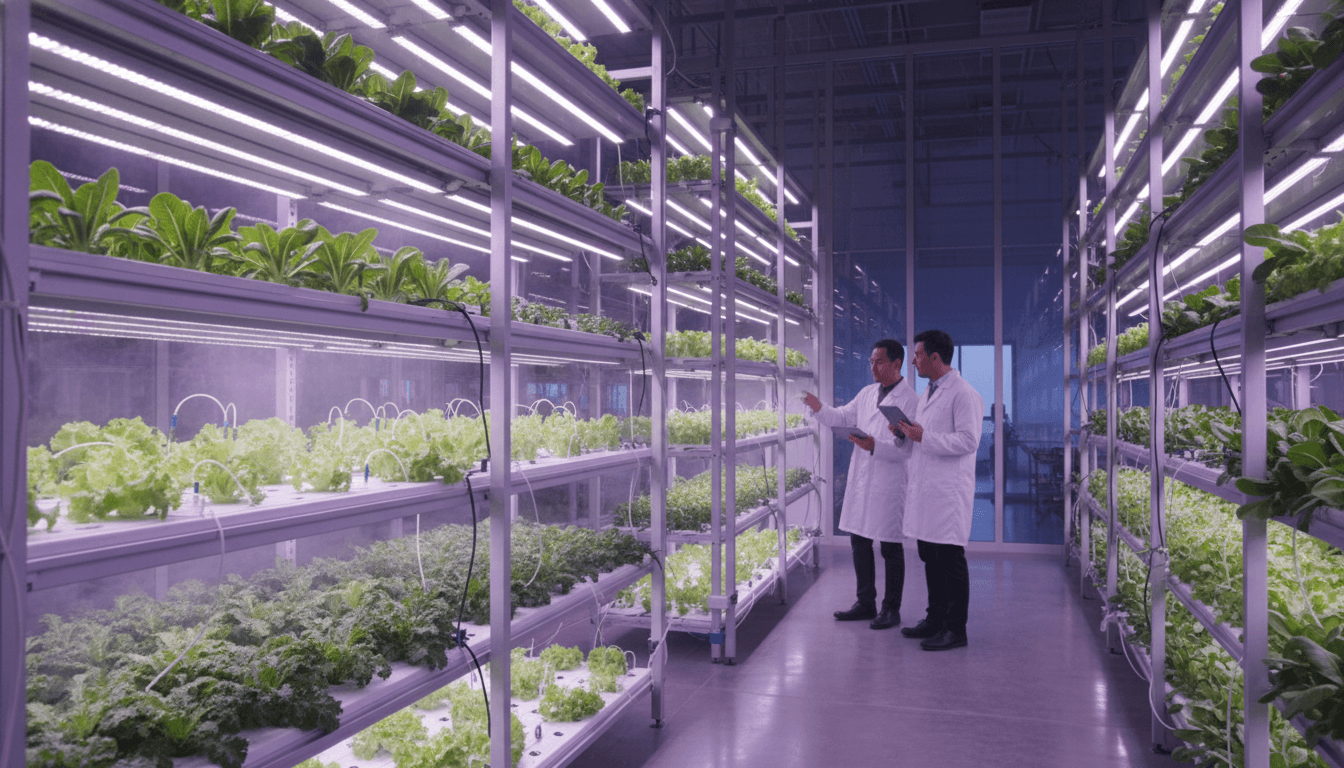
But here’s the thing about vertical farming in late 2025 heading into 2026: the facilities aren’t the hard part anymore. Racks, LEDs, hydroponic systems—those are increasingly standard. The hard part is running the farm like a high-performing “biological factory” day after day, while keeping energy and labor costs under control. That’s where Artificial Intelligence (AI) in agriculture stops being a buzzword and becomes a practical operations tool.
This post is part of our series “አርቲፊሻል ኢንተሊጀንስ በእርሻና ግብርና ዘርፍ ውስጥ ያለው ሚና”—focused on how AI supports farmers and agribusinesses with digital data and smarter decisions. Vertical farming is a clean example because nearly everything is measurable: light, nutrients, humidity, airflow, CO₂, growth rate, and harvest quality.
Vertical farming grows because land and logistics are tight
Vertical farming is expanding because it solves three real constraints at once: land scarcity, unreliable weather, and long supply chains.
When crops are grown in controlled environments (often indoors), production isn’t at the mercy of storms, heat waves, or changing rainfall patterns. That predictability matters to retailers and restaurants that don’t want empty shelves, and it matters to operators trying to plan cash flow.
There’s also a logistics advantage. Growing closer to consumers cuts transport time, reduces spoilage risk, and improves freshness—especially for leafy greens and herbs that lose quality quickly. Around the end-of-year season (think holiday demand spikes, catering, and retail promotions), stable supply is not a “nice-to-have.” It’s revenue.
The catch: controlled environment doesn’t mean controlled costs
A vertical farm can control climate—but it can’t ignore economics. The biggest operational pressures usually come from:
- Energy demand (LED lighting and HVAC are not cheap)
- Labor (seeding, transplanting, harvesting, packaging)
- Process drift (small changes in nutrient balance or humidity can quietly reduce quality)
This is why AI is becoming central. AI doesn’t just “monitor.” It helps farms run closer to optimal—more consistently, with fewer surprises.
Where AI fits: from “monitoring” to “decision-making”
AI’s strongest role in vertical farming is turning sensor data into actions—and doing it fast enough to matter.
A modern vertical farm generates continuous data streams: EC and pH in the nutrient solution, airflow and temperature by zone, leaf color via cameras, plant height via depth sensors, water usage by line, and yield by batch. The problem isn’t collecting data. The problem is deciding what to do with it without relying on constant manual interpretation.
AI use case 1: climate and lighting optimization (cost + yield)
The direct payback area is usually energy efficiency. AI models can learn how small adjustments in:
- photoperiod (hours of light)
- light intensity and spectrum
- temperature setpoints
- humidity and VPD targets
affect growth rate and quality for a specific cultivar under a specific setup.
A practical example: if a basil variety hits target biomass with slightly reduced light intensity during certain growth stages, that’s immediate energy savings—without sacrificing market grade. Many operators underestimate how much “over-lighting” happens simply because teams don’t want to risk underperformance.
Snippet-worthy truth: In vertical farming, “average settings” are expensive. AI helps you earn the right to run closer to the edge—safely.
AI use case 2: nutrient and irrigation control (consistency)
Hydroponic and aeroponic systems can be extremely efficient, but they’re sensitive. AI-assisted control can:
- predict nutrient drift before it shows up in the crop
- detect anomalies (pump efficiency changes, clogged emitters, sensor faults)
- recommend setpoint changes by crop stage
That matters because “good enough” nutrient management often leads to inconsistent taste, texture, or shelf life—things customers notice even when yield looks fine.
AI use case 3: computer vision for crop health and grading
Cameras are becoming one of the highest ROI sensors in controlled environment agriculture. With computer vision, farms can:
- detect early signs of disease or stress from leaf color/shape patterns
- track growth uniformity across shelves and zones
- automate grading for size, color, and defect rates
This reduces the farm’s dependence on subjective visual checks, and it builds a traceable quality record—useful for B2B buyers that care about consistency.
Predicting yield isn’t optional anymore—AI makes it doable
Yield prediction is where vertical farming can outperform traditional agriculture operationally, not just agronomically. Because the environment is controlled, the system is predictable enough for AI models to be accurate.
A good AI yield forecast supports decisions across the business:
- Sales planning: commit volumes to retailers with confidence
- Harvest scheduling: right labor on the right days
- Packaging procurement: fewer last-minute purchases
- Cash flow: predict revenue by harvest week
What data actually improves yield predictions?
If you’re building toward AI forecasting, start with data that’s easy to capture and strongly correlated:
- Seeding date + cultivar (batch identity matters)
- Zone-level climate data (temp/RH/CO₂)
- Light recipe data (intensity + hours)
- Nutrient solution trends (EC/pH changes over time)
- Periodic imaging (even weekly can help)
I’ve found that many teams try to “AI everything” at once and end up with dashboards that don’t change behavior. A yield model that improves planning by even one week is more valuable than ten charts nobody uses.
Automation: AI reduces repetitive work, not responsibility
Automation is often presented as robots replacing people. In vertical farming, the more realistic win is AI reducing repetitive decisions so humans can focus on higher-value work.
Examples of AI-supported automation that pays off:
- Automated setpoint tuning with human approval workflows
- Predictive maintenance (pumps, fans, HVAC components) based on vibration, current draw, and performance trends
- Harvest timing recommendations tied to buyer specifications (size/weight targets)
The operational stance I recommend
Don’t aim for “full autonomy” first. Aim for decision support with tight feedback loops:
- AI makes a recommendation
- operator accepts/adjusts
- system tracks outcome (yield/quality/energy)
That loop is how you build trust and improve model performance over time.
The biggest barriers: energy, capital, and data discipline
The RSS article rightly points out the sector’s momentum and also the hard realities: high upfront costs and energy intensity. AI helps—but only if you implement it like an operations program, not a tech demo.
Barrier 1: energy intensity
Lighting and climate control are major costs. AI can reduce waste, but it can’t change your electricity price. What it can do is support:
- better load scheduling (where utility tariffs allow)
- fewer “safety margins” in setpoints
- early detection of inefficient zones (hot spots, airflow issues)
If you’re in a market where renewables integration is feasible, AI is also useful for deciding when to run energy-heavy phases.
Barrier 2: capital expenditure and payback pressure
Vertical farms fail when they build the facility first and figure out unit economics later. My opinion: start with the crop and the buyer, then engineer the farm.
AI contributes to payback by improving:
- yield consistency (fewer rejected batches)
- labor productivity (better scheduling, fewer manual checks)
- energy efficiency (optimized light/climate)
Barrier 3: messy data (the silent killer)
AI systems don’t like missing timestamps, uncalibrated sensors, or inconsistent batch labeling. The fix is boring—but necessary:
- standardize batch IDs (seed lot → tray → shelf → harvest)
- calibrate critical sensors on a schedule
- log every recipe change (light, nutrients, climate) with date/time
One-liner: AI can’t compensate for a farm that doesn’t know what it changed yesterday.
What should a vertical farm do in Q1 2026? A simple playbook
If you’re an operator, investor, or agribusiness leader evaluating AI-driven vertical farming, here’s a practical sequence that works.
1) Pick one “money metric” and one “biology metric”
- Money metric: kWh per kg, labor hours per harvest, rejection rate
- Biology metric: days to target weight, uniformity score, shelf-life proxy
Tie AI projects to these. If you can’t link a model to a metric, it’s a science project.
2) Instrument the farm with intent
You don’t need every sensor. You need the right ones placed correctly:
- climate sensors by zone and height (not one per room)
- nutrient solution monitoring where changes actually occur
- imaging where it captures representative trays
3) Start with forecasting and anomaly detection
These are usually the fastest wins:
- yield forecast by batch
- early warning for pump/fan/HVAC issues
- alerts for drift in EC/pH or climate targets
4) Only then move into closed-loop optimization
Once your team trusts the data and alerts, you can safely automate parts of the control strategy.
People also ask: quick answers about AI in vertical farming
Does AI matter if the farm is already “automated”?
Yes. Automation executes rules; AI improves the rules using data. A farm can be automated and still waste energy or produce inconsistent quality.
What crops benefit most from AI-controlled vertical farming?
Leafy greens, herbs, and microgreens usually show the fastest ROI because cycles are short and quality standards are strict. Fruiting crops can work too, but the complexity and time-to-feedback are higher.
Is vertical farming only for rich cities?
Not necessarily, but economics are real. The best near-term fit is places with high import costs, strong demand for fresh produce, or limited arable land. AI improves viability by reducing waste and improving predictability.
Where this fits in the bigger AI-in-agriculture story
Vertical farming is a clear window into the broader theme of this series: AI turns agriculture into a data-driven decision system, not just a tradition-driven process. The same capabilities—monitoring, prediction, optimization—also apply to open-field farming, greenhouses, livestock, and supply chains. Vertical farms just make the feedback loop faster.
If you’re considering vertical farming (or already operating one), focus your AI roadmap on three outcomes: predictable yield, consistent quality, and lower cost per kilogram. Those are the wins that turn a cool facility into a durable business.
What’s the next constraint you want AI to solve in your operation—energy cost, labor, or yield predictability?