How AI-powered precision nutrient management can turn green fertiliser policy into farmer-ready action—better timing, smarter doses, and scalable sustainability.
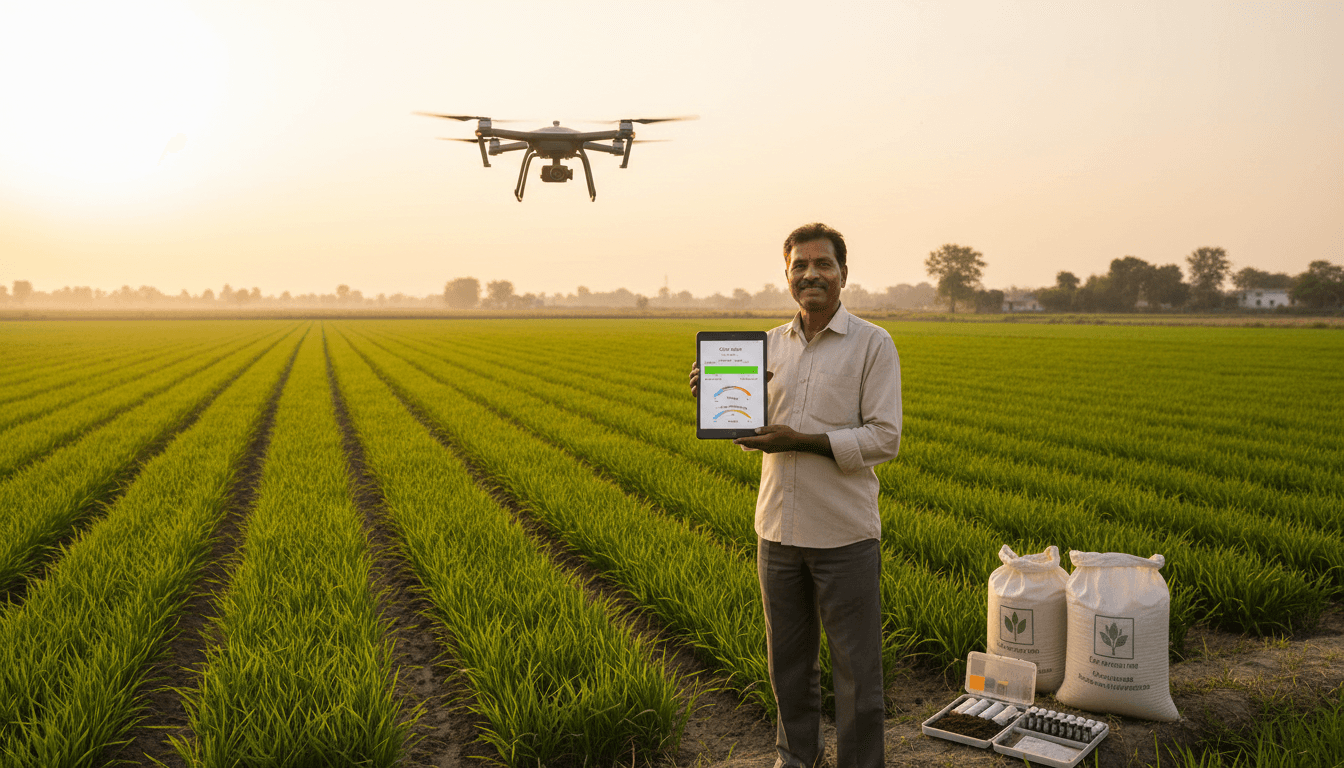
AI-Driven Green Fertiliser: From Policy to Practice
A fertiliser bag is one of the most expensive “inputs” on many farms—and one of the easiest to waste. The Fertiliser Association of India’s 61st Annual Seminar (held mid-December 2025 in New Delhi) put that reality at the center of three days of talks on green production, nutrient stewardship, policy reform, and farmer-focused innovation.
Here’s the part I think most people miss: “green fertiliser” isn’t only a factory problem. It’s a field decision problem. And field decisions get better when they’re supported by good data, good timing, and clear incentives. That’s where artificial intelligence in agriculture stops being a buzzword and starts becoming a practical tool—especially for precise nutrient use, advisory services, and marketing that reaches farmers in ways that actually help.
This post is part of our series “አርቲፊሻል ኢንተሊጀንስ በእርሻና ግብርና ዘርፍ ውስጥ ያለው ሚና”—focused on how AI supports day-to-day farming decisions, productivity, and sustainable outcomes. We’ll use the FAI seminar themes as a real-world case study and turn them into an action plan farmers, agribusinesses, and policymakers can apply.
What the FAI Seminar signaled: sustainability is now nutrient-led
Answer first: The seminar’s four themes—green fertiliser policy, farmer-empowering nutrient management, greener production, and futuristic marketing—add up to one message: India’s sustainability agenda will be won or lost in nutrient decisions.
According to the seminar summary, FAI convened senior government officials, scientists, industry leaders, international experts, and farmer representatives to shape a roadmap for the country’s nutrient future. The discussion wasn’t just about “more fertiliser” or “less fertiliser.” It was about better fertiliser—and especially better decisions around it.
A quote from FAI Chairman S. Sankarasubramanian captured the direction clearly: the greener path starts with smarter, responsible fertiliser use, supported by domestic capacity, balanced and precise nutrient application, and advanced technologies reaching farmers on time.
The event’s structure matters because it mirrors how change actually happens:
- Policy sets the rules and incentives (what gets subsidized, measured, regulated).
- Farm advisory shapes behavior (what farmers trust enough to adopt).
- Production determines footprint and availability (how green and how reliable supply is).
- Marketing determines reach (whether farmer-centric innovation is understood and used).
AI can contribute to all four—but it works best when it’s tied to measurable outcomes (yield stability, input efficiency, soil health, emission reduction, and farmer income).
AI’s most immediate win: precise nutrient use at the plot level
Answer first: The fastest sustainability gains come from AI-enabled precision nutrient management—because it cuts waste, reduces runoff, and protects yield without asking farmers to gamble.
Most nutrient losses happen for boring reasons: wrong timing, wrong dose, wrong placement, and “blanket” recommendations applied to variable fields. AI doesn’t magically fix agronomy—but it’s excellent at turning messy field variability into practical guidance.
What AI actually does in nutrient management
At a practical level, AI systems combine inputs like:
- Soil test results (even if infrequent)
- Weather forecasts and rainfall probability
- Crop stage information (sowing date, phenology)
- Remote sensing and vegetation indices from satellites or drones
- Past yield maps or farmer-reported harvest
- Localized agronomy rules (crop, soil type, irrigation method)
Then they produce outputs that a farmer can act on:
- Split application schedules aligned to rainfall windows
- Variable-rate nutrient plans (even if only “low/medium/high” zones)
- Early stress flags (nutrient deficiency vs water stress patterns)
- Cost-aware recommendations that fit a farmer’s budget
A clean way to describe it is:
AI in fertiliser management is a decision engine that converts field variability into timing and dosage guidance.
“Farmer-centric” means the recommendation must survive reality
A lot of advisory tools fail because they assume ideal conditions. Farmer-centric design means the AI recommendation accounts for constraints:
- Labour availability (especially during peak season)
- Cash flow and credit timing
- Input stock availability in local markets
- Irrigation schedule realities
- Risk tolerance (farmers protect downside before chasing upside)
If the system can’t answer “What should I do this week?” it won’t be used. That’s why the seminar’s emphasis on farmer-empowering nutrient management is a big deal: it pushes the ecosystem toward tools that make sense on the ground.
Green fertiliser production needs AI too—just not for the reasons people think
Answer first: AI helps green fertiliser production by improving energy efficiency, quality control, and supply reliability, which reduces emissions and prevents “panic overuse” when supplies arrive late.
The FAI seminar included a thematic session on green solutions for fertiliser production. That matters because a major part of fertiliser’s climate footprint happens before the bag reaches the farm.
Where AI fits in production and supply is straightforward:
1) Energy and process optimization
AI can reduce energy waste in industrial processes through predictive control—identifying patterns humans miss and tuning parameters continuously. The sustainability impact is direct: lower energy input per tonne of product.
2) Predictive maintenance and downtime reduction
When plants and distribution networks fail, the field-level consequence is messy: late availability triggers rushed, poorly timed applications or switching products without guidance. Predictive maintenance reduces those disruptions.
3) Quality consistency
Inconsistent quality creates mistrust. AI-based quality monitoring (paired with sensors) can detect deviations early, avoiding “bad batches” that damage farmer confidence.
Here’s my stance: a green fertiliser strategy that ignores reliability isn’t farmer-centric. Reliability is part of sustainability because it prevents reactive farming decisions that increase waste.
“Futuristic fertiliser marketing” should really mean AI-powered farmer support
Answer first: The best use of AI in fertiliser marketing is not persuasion—it’s precision education and timely support so farmers understand what to use, when to use it, and why it pays.
The seminar’s Session IV focused on futuristic fertiliser marketing. That’s a smart inclusion, because fertiliser is a technical product sold at massive scale—and confusion leads to misuse.
What AI-driven farmer communication looks like
Think less about flashy campaigns and more about service delivery:
- Localized messages in the farmer’s language, tied to crop stage
- Voice-based advisory for low-literacy contexts
- WhatsApp/SMS nudges triggered by rainfall and planting dates
- Interactive “why this recommendation” explanations that build trust
- Dealer enablement tools that help retailers give consistent guidance
A useful rule: If an AI system can’t explain itself simply, it will be ignored or misused.
Nano fertilisers and novel products: adoption depends on proof, not hype
FAI leaders referenced responsible marketing and clear communication around novel solutions like nano fertilisers. That’s exactly the right framing.
AI can support responsible adoption by:
- Running structured on-farm trials and analyzing results quickly
- Segmenting recommendations (who benefits, under what conditions)
- Tracking farmer outcomes (yield, cost, repeat purchase) ethically
Novel inputs should earn trust through transparent results. AI makes that scaling possible—if the program is designed to learn, not just sell.
A practical roadmap: how to implement AI for nutrient stewardship
Answer first: Start with a small set of decisions AI can improve (dose, timing, and product choice), then expand only after you can measure impact.
Whether you’re a cooperative, agribusiness, NGO, or policy program, implementation works best when it’s staged.
Step 1: Choose 3 measurable outcomes
Pick outcomes you can measure in one season:
- Fertiliser use efficiency (kg nutrient per tonne output, or cost per quintal)
- Yield stability (reducing “bad season” downside)
- Timing accuracy (percent of applications aligned to advisory windows)
Step 2: Build a minimum dataset that’s realistic
You don’t need perfect data. You need usable data:
- Farmer profile + location
- Crop type + sowing date
- One soil test per cluster (or historical if available)
- Weather feed
- Fertiliser purchase/application log (even farmer-reported)
Step 3: Deliver advice through the channel farmers already use
In many regions, that’s phones, local dealers, and extension agents. AI should strengthen those relationships, not replace them.
Step 4: Close the loop with feedback
A farmer-centric AI system must learn from reality:
- Did the farmer apply? If not, why?
- Did rain arrive as expected?
- What yield happened?
- What did it cost?
This feedback loop is where AI becomes more accurate over time—and where trust is built.
Common questions farmers and agribusinesses ask (and honest answers)
Answer first: AI improves nutrient decisions when it’s paired with agronomy and accountability; it fails when it’s treated like a generic app.
“Will AI replace soil testing?”
No. AI can reduce how often you need full testing by interpolating and learning patterns, but soil tests remain the anchor. If you skip them entirely, recommendations drift.
“Does precision nutrient management only work for large farms?”
No. The trick is to make precision cheap and simple: zone-based guidance, group soil testing, shared services, and phone-based advisory. Smallholders often gain the most because input waste hits them harder.
“What’s the biggest risk with AI advisory?”
Overconfidence. If recommendations aren’t transparent and locally validated, farmers can lose money. The best systems show confidence levels, offer fallback rules, and are tested with extension partners.
What to do next: turning seminar themes into field action
The FAI Annual Seminar’s focus areas—policy reform, nutrient stewardship, green production, and modern marketing—fit perfectly with where AI in agriculture is most useful: making decisions more precise, more timely, and easier to follow.
If you’re building programs in this space, I’d start with one concrete commitment: make “balanced and precise nutrient application” measurable at the farmer level, not just discussable at conferences. That’s the bridge between farmer-centric sustainability and real-world adoption.
As this series on “አርቲፊሻል ኢንተሊጀንስ በእርሻና ግብርና ዘርፍ ውስጥ ያለው ሚና” continues, we’ll go deeper into specific tools—satellite-based crop monitoring, AI advisory design, and data collection models that don’t overwhelm farmers. The next question worth asking is simple and uncomfortable: Which nutrient decision on your farm (or in your program) causes the most waste—and what data would fix it?