AI traceability in food supply chains is spreading fast as FSMA 204 nears. See what AI-native traceability changes—and how to adopt it.
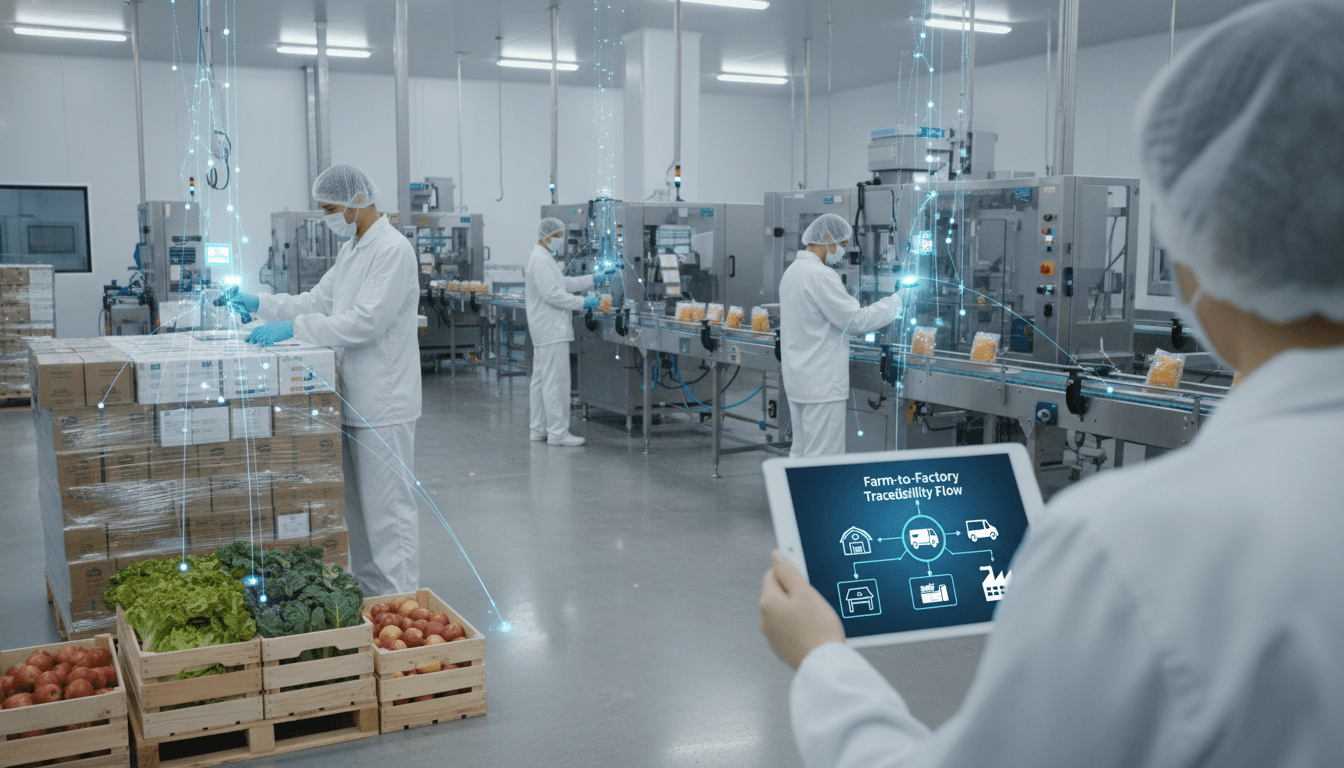
AI Traceability in Food Supply Chains: Less Chaos
A modern food recall isn’t just a safety incident—it’s a speed test. If you can’t answer “which lots went where, and which suppliers fed into them?” in minutes, you’ll answer it in public, under pressure, and usually at the worst possible time (think: peak holiday demand, end-of-year audits, and short-staffed QA teams).
That’s why the news that FoodReady’s AI-native traceability system is now live in hundreds of food and beverage manufacturing facilities worldwide matters beyond “another software rollout.” It’s a signal that AI traceability in food supply chains is becoming a default operating model—especially as FSMA 204 enforcement gets closer and retailers demand cleaner, faster documentation.
This post is part of our series “አርቲፊሻል ኢንተሊጀንስ በእርሻና ግብርና ዘርፍ ውስጥ ያለው ሚና”—because traceability isn’t a “factory-only” topic. When traceability works, it connects decisions from farm practices and harvest lots all the way to finished goods, shipping, and consumer trust.
Why AI traceability is getting adopted fast (and why that’s healthy)
Answer first: AI traceability is taking off because regulations, audits, and recall expectations now require operational traceability—not a spreadsheet scramble.
Food manufacturers used to treat traceability like an annual fire drill. You’d store documents “somewhere,” hope suppliers were consistent, and rebuild the story during audits. The reality? That model breaks when:
- You have dozens (or hundreds) of ingredients and packaging inputs
- Your production changes shift-to-shift
- Customers require real-time proof of controls
- Regulators expect Key Data Elements (KDEs) and consistent event records
FoodReady’s announcement highlights exactly this: mid-size and enterprise firms are moving to systems that bake traceability into daily workflows, from receiving to shipping.
The FSMA 204 clock is forcing better behavior
FSMA 204 (Food Traceability Rule) raises the bar on what must be recorded and how fast it must be produced for specific foods. Even companies outside the strictest scope feel the ripple effect because distributors, retailers, and co-manufacturers standardize upward.
Here’s my stance: FSMA 204 is doing the industry a favor. It’s pushing companies away from “traceability theater” (binders, PDFs, after-the-fact log edits) and toward systems that produce evidence as a byproduct of doing the work.
Seasonal reality: audits and demand spikes collide
Late December is a perfect stress test. Production schedules tighten, cold-chain risk rises, and teams are juggling year-end reporting. In that environment, the value of AI-native traceability is simple: less time chasing documents, more time preventing problems.
What “AI-native traceability” should mean in a plant
Answer first: AI-native traceability means the system captures lot events in real time, validates data quality automatically, and can generate end-to-end lineage fast—without heroic manual effort.
In FoodReady’s description, a few capabilities stand out because they reflect what modern compliance actually needs:
- Full lot tracking (ingredient-to-finished-goods lineage)
- Real-time inventory movement (where lots are now, not where they were last week)
- Centralized compliance documentation aligned with common schemes (e.g., SQF, BRCGS)
- KDE tracking and automated traceability logs
- Mobile-first capture on the shop floor
- Built-in connections to core operations (supplier management, inventory, batch monitoring)
The unglamorous problem AI solves: messy data
Most traceability failures aren’t caused by a lack of software. They’re caused by:
- Wrong lot numbers typed in a hurry
- Missing receiving events
- Backdated production records
- Unit-of-measure inconsistencies
- “This is how we’ve always named it” supplier fields
AI adds value when it can flag anomalies early (e.g., invalid lot formats, missing KDEs, implausible yields, duplicate events) and push teams to fix errors while the product is still in the building.
A practical definition you can use internally:
Good traceability isn’t a report—it’s a system that prevents you from creating bad records in the first place.
Why mobile-first capture matters more than dashboards
Dashboards look nice. But traceability lives where work happens: receiving bays, production lines, rework stations, coolers, and shipping docks.
Mobile-first workflows matter because they:
- Reduce “clipboard drift” (paper notes that get entered later—or never)
- Improve timestamp accuracy
- Make QA less dependent on a single ERP specialist
- Encourage a culture where operators own data quality
If your traceability depends on one person who “knows the spreadsheet,” you don’t have traceability—you have a single point of failure.
From farm to facility: why agriculture should care about manufacturing traceability
Answer first: AI traceability in manufacturing increases pressure—and opportunity—upstream, because farms and aggregators that produce clean lot data become preferred suppliers.
This is where the post ties directly to our AI-in-agriculture series. Traceability systems in factories don’t magically create high-quality upstream data. They demand it.
When a processor needs KDEs, harvest dates, field IDs, cooling events, and transport handoffs, they’ll naturally favor suppliers who can provide consistent, digital records.
What “good upstream data” looks like (and how AI helps)
For growers and cooperatives, the easiest win is making sure every lot has:
- A consistent lot ID tied to a harvest block or field
- Harvest date/time and crew or contractor identifiers
- Post-harvest handling events (wash, cool, pack)
- Shipping handoffs (who took custody and when)
AI in agriculture supports this through:
- Computer vision to verify counts/grades and reduce manual entry
- Sensor data (temperature, humidity) that attaches automatically to lot histories
- Predictive alerts (e.g., cold-chain excursions likely to create spoilage risk)
The broader theme of this series is that AI improves productivity by turning day-to-day activity into structured data. Traceability is one of the clearest examples: the work generates the proof.
Real business outcomes: audits in minutes, recalls in focus
Answer first: The real ROI is faster audits, faster recalls, and fewer “unknowns” that force overly broad product holds.
FoodReady reports a 2X increase in customers deploying its traceability modules over the last 12 months, especially across produce, ready-to-eat meals, seafood, and meat processing. Those are categories where time, temperature, and cross-contamination risks make speed non-negotiable.
One ready-to-eat QA manager quote from the release is telling: lot tracking and recall preparation went from hours to minutes.
That’s not just convenience. It changes the economics of risk:
- Shorter investigations reduce labor and disruption
- Tighter recall scope reduces write-offs and brand damage
- Faster containment protects consumers and retailer relationships
A simple example: “minutes” changes the recall boundary
Imagine a seasoning blend used across 14 SKUs.
- If your system can’t link ingredient lots to specific production runs quickly, you may place all 14 SKUs on hold.
- If you can trace precisely which runs used the affected lot, you might hold only 3 SKUs and release the rest.
That difference is often the line between a controlled incident and a quarterly financial headache.
“Recall readiness” is a daily habit, not a binder
Most companies get this wrong: they treat recall readiness as a compliance checkbox.
A better way to approach it is operational:
- Capture events automatically where possible (scans, sensors, integrations)
- Validate KDE completeness daily, not annually
- Run small “trace drills” weekly (one ingredient lot → finished goods; one finished good → ingredient lots)
- Track response time as a KPI
If you can’t measure your trace time, you can’t improve it.
What to look for when choosing an AI traceability system
Answer first: Choose systems that prove lineage quickly, prevent bad data, and fit real workflows—especially on the shop floor.
FoodReady emphasizes ERP-like capabilities plus traceability. That’s attractive, but selection should be grounded in your operating reality. Here’s a practical checklist.
The 10-point selection checklist (use this in demos)
- Lot genealogy speed: Can it produce forward and backward trace in under 5 minutes for a typical SKU?
- KDE completeness: Does it flag missing KDEs at the moment of entry?
- Shop-floor usability: Can an operator complete a receiving/usage event in under 30 seconds?
- Mobile/offline support: Does it work in cold rooms and low-connectivity areas?
- Rework and commingling: Can it handle rework loops and mixed lots without breaking lineage?
- Integrations: Can it connect to scales, label printers, WMS/ERP, supplier portals?
- Audit outputs: Can it export evidence packages aligned to common audit expectations?
- Role-based access: Can QA, operations, and supply chain each do their part without admin bottlenecks?
- Security and permissions: Can you restrict sensitive supplier/pricing data while sharing trace data?
- Implementation realism: Does the vendor have a playbook for data cleanup, training, and change management?
One opinion I’ll defend: If the vendor can’t show you a trace in minutes using messy, real sample data, the demo doesn’t count.
What’s next: validation, simulations, and predictive analytics
Answer first: The next wave of AI traceability is proactive—systems that validate KDEs automatically, simulate recalls, and predict supply chain risk before failures happen.
FoodReady’s roadmap mentions:
- Automated KDE validation
- Smart recall simulations
- Predictive supply chain analytics
Those features matter because they shift traceability from “record-keeping” to “risk management.” A mature system should eventually help answer:
- Which suppliers repeatedly send incomplete data?
- Which lanes or carriers correlate with temperature excursions?
- Which ingredients create the most rework or yield volatility?
That’s where AI becomes truly useful for agriculture and food manufacturing together: it turns traceability into decision-making intelligence.
Traceability data is only valuable if it changes what you do next shift.
Practical next steps for teams adopting AI traceability (this week)
Answer first: Start small, prove speed, then scale by product family and supplier tier.
If you’re considering an AI traceability platform—FoodReady or any comparable system—take these steps before you sign anything:
- Pick one high-risk product family (RTE, seafood, leafy greens, fresh-cut)
- Map your critical trace events (receiving → production → packing → shipping)
- Define “done” as: two-way trace in under 10 minutes using live data
- Clean your lot naming rules (formats, units, supplier identifiers)
- Train for habit: one short daily check that KDEs are complete
That approach keeps the project grounded in outcomes, not features.
The bigger theme in our “አርቲፊሻል ኢንተሊጀንስ በእርሻና ግብርና ዘርፍ ውስጥ ያለው ሚና” series is simple: AI improves agriculture when it reduces friction and improves decisions. AI traceability does both—by making food movement legible from farm lots to finished goods.
So here’s the forward-looking question worth sitting with: when the next audit request or recall alert hits, will your team be hunting for data—or will the system already have the story ready?