Geothermal power could cover much of new AI data center demand by 2030. Learn what it means for AI SaaS marketing, costs, and credible sustainability.
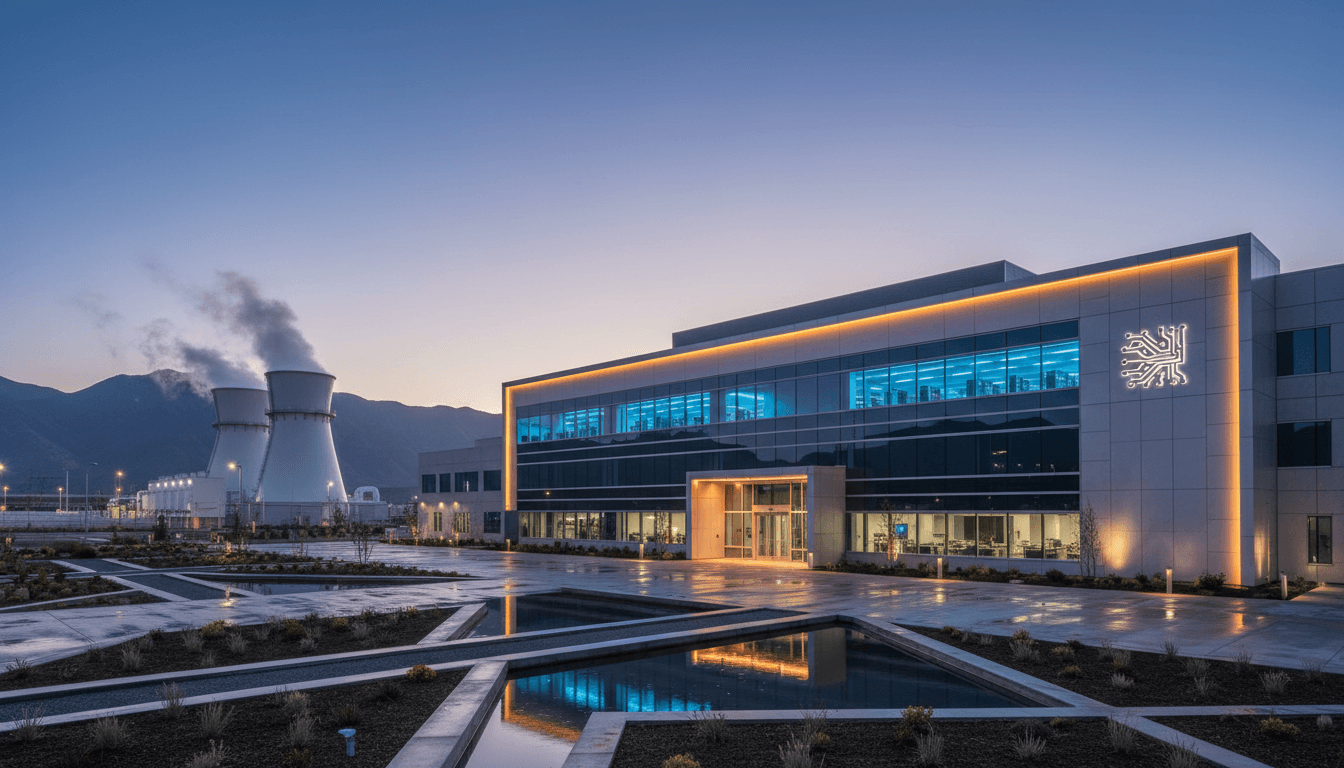
Geothermal power for AI data centers: a 2030 playbook
AI marketing tools feel “cloudy” and weightless. The reality is brutally physical: every prompt, personalization model, and multilingual content workflow runs on racks of servers that need reliable electricity 24/7. And as AI adoption accelerates in SaaS and startup teams, the energy question stops being a facilities problem and becomes a product, brand, and growth problem.
Geothermal is suddenly on the shortlist because it matches what data centers crave: steady, around-the-clock power. The RSS headline that geothermal could power nearly all new data centers through 2030 is provocative for a reason—it points at a shift in how AI infrastructure might be built and funded in the second half of this decade.
This post sits in our “Tehisintellekt idufirmade ja SaaS-ettevõtete turunduses” series for a simple reason: if you’re using AI to scale content production, run multi-country campaigns, or expand internationally, you’re part of this infrastructure story. You don’t need to drill a well—but you should understand what “clean, firm power” means for cost, compliance, and credibility.
Why data centers want geothermal (and why marketers should care)
Geothermal fits data centers because it can provide firm power: electricity that doesn’t depend on sun or wind at the moment you need it. That matters more for AI workloads than for many traditional enterprise systems.
AI inference and training loads are spiky. Campaign launches, seasonal peaks (hello, Q4 and holiday traffic), and real-time personalization can push usage hard. If your AI stack is tied to data center capacity constrained by grid congestion or intermittent supply, you get one of three outcomes: higher prices, throttled performance, or longer lead times for capacity.
From a marketing leadership perspective, this shows up as:
- Cost volatility in cloud bills (especially as premium “green” capacity becomes scarce)
- Risk to SLAs for AI features (recommendations, chat, localization, analytics)
- Sustainability pressure from enterprise buyers who ask hard questions in procurement
Here’s the blunt stance: “green marketing” that ignores the energy behind your AI is going to age badly. Buyers are getting more specific, not less.
The reliability point most teams miss
Solar and wind are excellent for reducing emissions, but they often require storage or backup generation to match 24/7 demand. Data centers don’t just want clean electricity; they want clean electricity at 3 a.m. in February.
Geothermal—especially newer approaches—aims to do that with fewer compromises.
The geothermal boom: what’s changed in the 2020s
Geothermal isn’t new. What’s new is the push to scale it beyond a handful of naturally hot regions.
The sector is evolving in two parallel tracks:
- Conventional geothermal in high-quality resources (proven, but geographically limited)
- Next-generation geothermal that expands where geothermal can work (higher potential, more technical risk)
If geothermal can expand geographically and hit predictable costs, it becomes a serious candidate to power many new data centers—especially as AI increases baseline electricity demand.
Enhanced geothermal systems (EGS): scaling beyond “lucky geology”
EGS aims to create geothermal reservoirs where they don’t naturally exist by engineering permeability in hot rock. Think of it as building the underground heat exchanger rather than relying on perfect natural conditions.
Why it matters: EGS is the bridge between “geothermal is great in a few places” and “geothermal is a mainstream power option.” Companies like Fervo Energy have helped pull this into the data center conversation by focusing on repeatable drilling and development methods.
Drilling tech and “superhot rock” approaches
Some teams are pursuing deeper, hotter resources using advanced drilling techniques. The thesis is straightforward: hotter rock means more energy per well, and more energy per well means better economics.
Companies such as Quaise Energy are often discussed in this context. Whether every approach succeeds isn’t the point. The point is that geothermal is being treated like an innovation category, not a niche.
Modular geothermal and hybrid models
Geothermal can also pair well with other systems:
- Geothermal + solar/wind for lower average cost
- Geothermal + batteries for resiliency
- Geothermal + grid services to monetize flexibility
This hybrid thinking is exactly how modern data center power procurement works—and it’s why geothermal is being evaluated seriously rather than dismissed as “too site-specific.”
“Nearly all new data centers through 2030”: how could that be true?
The claim isn’t that geothermal will magically replace every other power source. The stronger interpretation is this:
If next-generation geothermal scales fast enough, the technical geothermal resource base could be large enough to cover the incremental demand from new data center growth through 2030.
Resource potential and deployable reality aren’t the same thing. The gap is filled (or not) by permitting, drilling capacity, interconnection, financing, and project execution.
The bottlenecks that decide the decade
Four constraints will determine whether geothermal becomes a dominant data center power source:
- Time-to-power: Can projects deliver in 24–48 months, not 7–10 years?
- Drilling supply chain: Rigs, crews, and expertise are finite.
- Permitting and community acceptance: Local trust and clear regulation matter.
- Bankability: Investors want predictable output, warranties, and proven performance.
If these constraints loosen, geothermal’s “firm, clean power” profile becomes extremely attractive for AI infrastructure.
Why data centers are a special buyer
Data centers are unusually good customers for geothermal because they can sign long-term power agreements and value reliability enough to pay for it.
That willingness to commit is a big deal. It can finance new geothermal development the way corporate renewables deals accelerated wind and solar in the 2010s.
What this means for AI startups and SaaS marketers in Estonia (and beyond)
You’re not choosing the power plant. But your product and marketing strategy still gets pulled into the energy conversation in three practical ways.
1) “Green AI” is becoming a sales requirement, not a branding extra
Enterprise procurement is getting more detailed about emissions reporting. If your SaaS uses large language models for content generation, localization, or customer support automation, buyers may ask:
- Where is the workload hosted?
- What’s the 24/7 clean energy story (not just annual offsets)?
- Do you have credible reporting for AI-driven features?
If your answer is vague, you’ll lose deals to someone who can be concrete.
2) Your AI feature roadmap depends on compute availability
Teams building AI-driven marketing features—real-time personalization, multilingual campaign generation, automated experimentation—often assume compute will always be cheap and instantly available.
That assumption is risky through 2030. AI demand is rising, grid interconnection queues are long in many regions, and data center power constraints are already shaping where capacity can be built.
Geothermal’s promise here is not only “cleaner.” It’s more buildable in places where grids are constrained, assuming next-gen geothermal can be deployed widely.
3) Sustainability claims need to be specific enough to survive scrutiny
I’ve found that the easiest way to avoid awkward ESG conversations is to prepare a simple internal “AI infrastructure factsheet” that marketing, sales, and product can share.
Include:
- Primary cloud regions used for AI workloads
- Whether you can select lower-carbon regions
- Your approach to measuring AI feature energy/emissions (even if it’s directional)
- What you’re doing in 2026 to improve it (contracts, providers, optimization)
This is not about perfection. It’s about credibility.
Practical playbook: how marketers can act on this in 30 days
You can’t control the grid, but you can control how your company talks about and designs its AI usage.
Step 1: Map your “AI energy surface area”
Answer these questions internally:
- Which features depend on heavy AI compute (generation, embeddings, image/video)?
- When do spikes happen (product launches, seasonal campaigns, weekly batch jobs)?
- Which regions run the majority of inference?
This gives you a foundation for cost control and a cleaner sustainability narrative.
Step 2: Reduce waste in AI-driven content production
Most teams can cut compute quickly by tightening workflows:
- Use smaller models for drafts; reserve bigger models for final polish
- Cache embeddings and reuse them across campaigns and languages
- Batch non-urgent jobs (e.g., re-tagging content libraries overnight)
Compute efficiency is a sustainability win and a margin win.
Step 3: Ask your vendors better questions
When evaluating AI tooling or hosting:
- Can you choose regions with lower-carbon electricity?
- Do they support 24/7 clean energy matching or only annual claims?
- Can they report on workload-level energy or emissions?
If the vendor can’t answer, that’s a signal.
Step 4: Turn infrastructure into a trust asset (without being cringe)
A simple positioning that works:
“We’re scaling AI marketing responsibly: performance first, measurable footprint, and a plan to improve it each year.”
You don’t need to name specific power plants. You do need to show you’ve thought about the infrastructure behind your AI.
People also ask: geothermal + AI data centers
Is geothermal actually renewable?
Yes—when managed properly, geothermal is considered renewable because it taps Earth’s heat. But project quality varies, and sustainability depends on reservoir management and reinjection practices.
Is geothermal available everywhere?
Conventional geothermal isn’t. Next-generation geothermal aims to expand viability to many more regions by engineering reservoirs or drilling deeper into hotter rock.
Will geothermal make AI cheaper?
Not automatically. The value is often price stability and reliability, which can reduce risk premiums and avoid expensive backup solutions. Over time, scale and repeatable drilling could improve costs.
Where this is heading in 2026–2030
Data center demand is rising because AI isn’t a feature anymore—it’s becoming the interface for software. That makes the energy supply chain part of the competitive landscape.
Geothermal’s big promise is firm, clean power that matches the always-on nature of AI systems. If the sector scales, it will influence where data centers are built, how cloud providers price capacity, and what “responsible AI” looks like in procurement.
For this series—Tehisintellekt idufirmade ja SaaS-ettevõtete turunduses—the takeaway is practical: the more your growth relies on AI-driven marketing and content generation, the more you should treat infrastructure as part of go-to-market. Your next enterprise customer may not ask how your model works. They might ask what powers it.
If geothermal can truly support most new data center growth through 2030, the companies that win won’t just be the ones with better prompts—they’ll be the ones with better operational answers.