Meta’s 100MW solar move shows AI’s energy reality. Here’s how Eesti SaaS teams can align AI marketing, pricing, and sustainability for global growth.
Meta’s 100MW solar bet: what SaaS marketers should copy
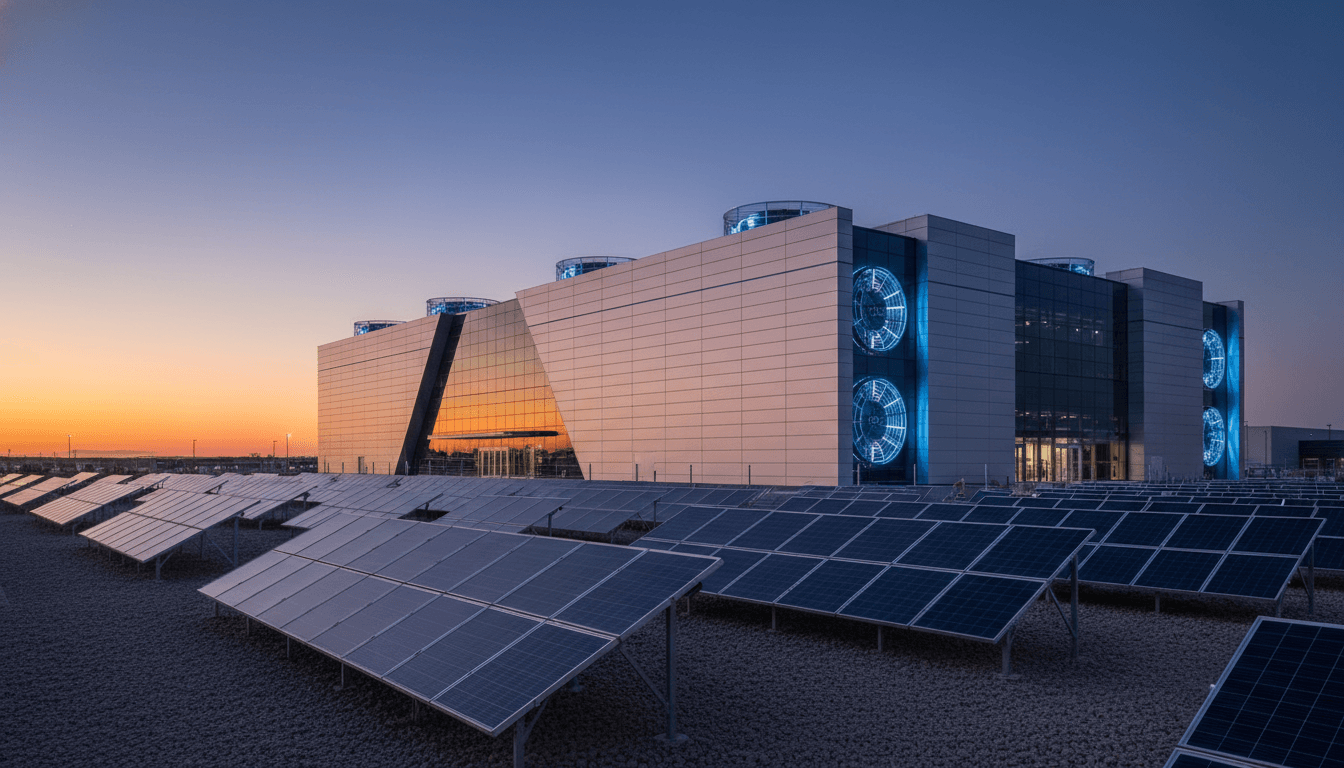
Meta is adding 100 megawatts (MW) of solar power to support a new AI data center in South Carolina, using US-made equipment. That sounds like a facilities story—until you translate it into what it really is: a public signal about the economics of AI.
AI isn’t just a product feature anymore. It’s an infrastructure decision with energy, cost, and brand consequences. And for Eesti idufirmad and SaaS-ettevõtted building AI-driven products (and marketing them globally), this matters more than most teams admit.
Here’s the stance: if your go-to-market narrative is “we’re an AI company,” then your credibility increasingly depends on how you think about compute, energy, and sustainability—whether you run your own servers or not.
What Meta’s 100MW solar move actually signals
Meta buying another large tranche of solar isn’t a “nice-to-have” climate gesture. It’s a response to the hard math of AI data centers: more GPUs, more runtime, more cooling, more grid demand.
A few practical implications sit beneath the headline:
100MW is a capacity statement, not a PR line
Solar capacity (MW) isn’t the same as constant delivered power (MWh). Solar output varies by season and time of day, and data centers run 24/7. Still, a 100MW procurement is a serious commitment—the kind that’s typically tied to long-term contracts and multi-year planning.
For marketers, the translation is simple: AI roadmaps now drive infrastructure roadmaps. If your product roadmap assumes heavier models, faster responses, or more personalization, somebody is paying for the electricity.
“US gear” hints at supply chain and policy realities
The mention of US gear isn’t accidental. It reflects a broader push toward domestic manufacturing and resilience, plus policy incentives and procurement preferences. For European SaaS teams selling into US enterprise accounts, this is a preview of what buyers will increasingly ask:
- Where is your compute hosted?
- What’s your sustainability posture?
- What do your suppliers look like?
Not because every buyer is idealistic. Because risk teams and procurement departments are getting stricter.
The AI data center build-out is accelerating—and grids are feeling it
Across the tech sector, AI data center announcements have started to sound like industrial policy. The energy side is no longer background. It’s front-page. Meta’s solar add is one more indicator that AI growth is now partially constrained by power availability and cost.
If you market AI for a living, you’re implicitly marketing “more compute.” The market is catching on.
Why this matters to Eesti AI SaaS companies (even without data centers)
Most Estonian SaaS companies don’t own a data center. You’re on AWS, Azure, GCP, or a regional provider. So why care about a solar deal in South Carolina?
Because your unit economics and your brand story are coupled to infrastructure you don’t control.
Cloud costs are becoming a marketing constraint
When you ship AI features, you often introduce:
- Higher variable costs (tokens, GPU time, vector search)
- Latency expectations (users expect “instant”)
- Reliability expectations (AI features can’t be “beta forever”)
Marketing teams feel this as friction:
- You want to promise “AI copilots for every user”
- Finance wants to know the gross margin impact
- Sales wants pricing clarity
The reality? Positioning and packaging are now intertwined with compute strategy. You can’t claim “AI everywhere” and then price like it’s 2019.
Sustainability is moving from “brand value” to “buyer requirement”
In EU markets, sustainability reporting pressure keeps rising year over year. Even if your company isn’t directly required to report in depth, your customers may be—and they’ll push requirements down the supply chain.
I’ve found that sustainability questions often show up first in two places:
- Enterprise security and vendor assessments (where “environmental impact” becomes a checkbox that suddenly isn’t optional)
- RFPs for international buyers, especially in regulated industries
Meta’s solar procurement is a loud signal: big buyers see energy as a strategic input to AI. Smaller vendors will be asked to keep up.
“Green AI” is turning into a credibility filter
“Green AI” isn’t about perfect purity. It’s about making clear, defensible choices:
- Model selection that fits the job (don’t run a sledgehammer model for a tack)
- Efficient inference and caching
- Smart usage limits and tiering
- Transparent statements on hosting and energy policies
You don’t need a solar farm. You need an answer.
The marketing lesson: infrastructure choices shape your narrative
Meta can say, “We’re building AI capacity, and we’re powering it responsibly.” That’s not just PR. It supports hiring, partnerships, and regulatory positioning.
For an AI-driven SaaS company in Estonia, your version sounds different—but it should exist.
Build a “compute story” your sales team can repeat
Most SaaS companies have a product story and a customer story. Fewer have a compute story. Yet AI buyers increasingly ask about:
- Data residency and regions
- Uptime/SLA expectations for AI features
- How you handle model drift and monitoring
- Sustainability posture (especially in EU/UK enterprise)
A practical template your team can adapt:
Our AI features are designed to be efficient by default. We use right-sized models, optimize inference, and host on major cloud providers with published sustainability commitments. For enterprise customers, we can support region-specific deployments and clear data handling terms.
That statement is short, repeatable, and avoids overpromising.
Don’t market “AI scale” if you can’t support it
This is where most companies get this wrong. They market scale first and figure out costs later.
If you’re planning a big 2026 push into new markets (Nordics, DACH, US), do the math now:
- What happens to gross margin if usage triples?
- What’s the cost per active user for your AI feature set?
- Which features are compute-heavy, and can you gate them?
Your marketing claims should match the economics. Otherwise, you’ll end up with one of the worst outcomes: strong demand for an unprofitable feature.
Turn sustainability into a proof point, not a slogan
If you mention sustainability, be specific. Not poetic.
Examples that work in SaaS marketing pages and sales decks:
- “We can provide region selection for deployments.”
- “We monitor inference cost per request and optimize monthly.”
- “We support usage limits and role-based access for AI features.”
- “We can share our subprocessors and hosting approach in a vendor packet.”
Notice what’s missing: vague claims like “eco-friendly AI.” Buyers don’t trust that.
Practical checklist: align AI marketing with scalable, greener infrastructure
If your company is in the “Tehisintellekt idufirmade ja SaaS-ettevõtete turunduses” series because you’re using AI to scale content, multilingual campaigns, and international growth, then this checklist keeps you honest.
1) Measure what your AI features actually cost
You need three numbers that marketing, product, and finance agree on:
- Cost per AI action (e.g., per generated email, per analysis, per support answer)
- Cost per active user per month attributable to AI
- Top 3 cost drivers (model, vector DB, RAG retrieval, logging/monitoring)
If you don’t have these, pricing and positioning will be guesswork.
2) Design your packaging around energy reality
AI pricing is still messy across SaaS. A practical approach that works:
- Include a modest AI allowance in core plans (to reduce adoption friction)
- Add usage-based add-ons for heavy workloads
- Gate the most expensive features behind higher tiers
This protects margins and reduces “surprise bills,” which kill trust.
3) Create a one-page “AI & sustainability” FAQ for sales
Treat this like a living doc. Include:
- Where you host and which regions are available
- Your subprocessors and data handling summary
- A plain-language statement on model usage (what you use, what you don’t)
- How you optimize efficiency (caching, model choice, batching)
- A simple sustainability posture (no inflated claims)
This makes procurement smoother—and speeds up deals.
4) Bake infrastructure constraints into your content strategy
If you’re using AI for marketing operations—content generation, localization, outbound personalization—set guardrails:
- Don’t generate thousands of low-value pages “for SEO” (it’s expensive and risky)
- Focus on fewer, higher-intent pages that convert
- Use AI to support experts, not replace them
Efficient content is a sustainability move and a conversion move.
5) Use “green AI” as a differentiator—carefully
There’s a narrow lane where sustainability messaging wins:
- You sell to EU enterprises with procurement scrutiny
- Your competitors are making vague claims
- You can provide concrete operational details
A strong positioning line is specific:
We’ve built our AI features to be cost-aware and efficient, so you can scale usage without unpredictable bills or unnecessary compute.
It ties sustainability to the buyer’s real concern: predictability.
Quick Q&A your team will get asked (and how to answer)
“Do we need renewable energy contracts like Meta?”
No. But you do need a credible infrastructure and sustainability narrative. For most SaaS, that means choosing reputable cloud providers, optimizing workloads, and being transparent.
“Will customers actually care?”
Some won’t. Enterprise buyers often will—especially in the EU and UK. Also, sustainability questions tend to appear late in deals, when you least want delays.
“Is this marketing’s job?”
Marketing can’t procure power, but marketing can prevent overpromising, shape packaging narratives, and equip sales with answers that keep deals moving.
Where this fits in the AI marketing series—and what to do next
This topic series is about how Eesti idufirmad and SaaS-ettevõtted use AI to speed up content production, build multilingual campaigns, and enter international markets. Meta’s 100MW solar purchase is a reminder that AI growth isn’t free—someone pays in power, cost, and scrutiny.
If you want leads from AI messaging in 2026, here’s the better approach: market the outcome, prove operational maturity, and show you can scale responsibly. The companies that win won’t be the loudest about “AI.” They’ll be the clearest about how it works in the real world.
What would change in your positioning if a top enterprise prospect asked tomorrow: “How does your AI roadmap affect cost and sustainability at scale?”