African fintechs to watch in 2025 reveal practical AI tactics for Cameroon: smarter support, safer payments, better retention, and faster payouts.
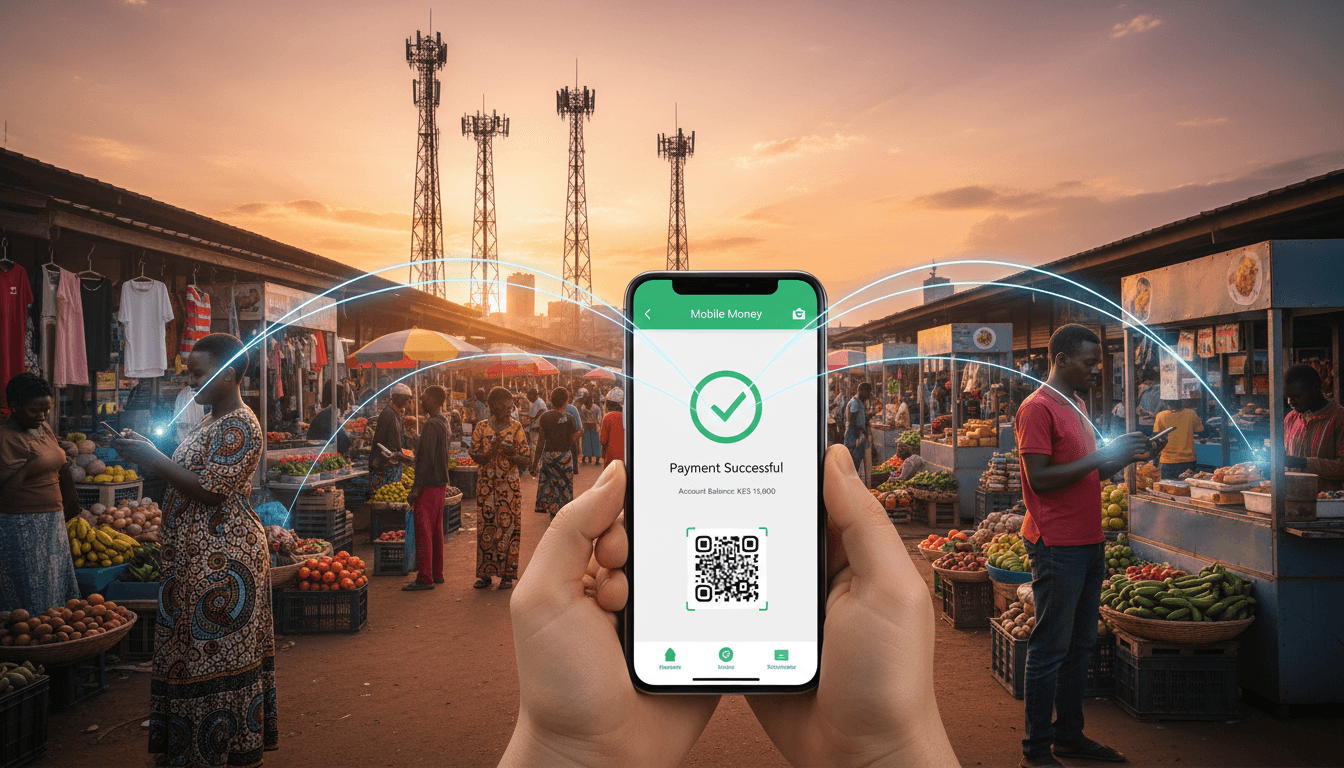
African Fintechs to Watch: AI Lessons for Cameroon
African fintech isn’t “coming” anymore. It’s already where the money is.
One stat from 2024 says it plainly: fintech attracted nearly half of all startup investment in Africa, and the continent added two new fintech unicorns (Moniepoint and TymeBank). When that much capital and talent concentrates in one sector, patterns show up fast—especially around AI in fintech, customer engagement, and mobile-first growth.
This post is part of our series on how AI is transforming telecommunications and fintech in Cameroon. I’m using a 2025 watchlist of African fintechs as the base, but the goal isn’t to admire companies from afar. It’s to pull out practical AI playbooks Cameroonian telcos, mobile money teams, banks, and fintech founders can apply right now—during peak end‑of‑year volumes, promo campaigns, salary cycles, and cross‑border remittance spikes.
The real trend: AI is being deployed where volume is highest
AI creates value in fintech when it’s attached to a high-volume workflow: onboarding, KYC, collections, customer care, fraud checks, payouts, pricing, and retention. If your product touches millions of small transactions, AI has more “surface area” to improve outcomes.
The 2025 fintechs getting the most attention tend to sit in these volume-heavy lanes:
- Micropayments and pay-as-you-go financing (like asset financing)
- Remittances and cross-border payouts
- Merchant payments and agency networks
- B2B fintech infrastructure (open banking, banking-as-a-service)
- Stablecoin rails for faster/cheaper settlement
For Cameroon, this matters because the growth engine is the same: a mobile-first economy powered by telcos, agent networks, and digital wallets. The winning question isn’t “Should we use AI?” It’s: Which workflows are expensive, repetitive, and tied to revenue? Start there.
What the “Top fintechs” list reveals about 2025 growth
The watchlist includes companies such as M-Kopa, Moove, Nala, LemFi, Yellow Card, Selcom, Rise, Grey, Miden, Mono, and Swahilies. They don’t all use AI publicly in the same way, but their business models hint at where AI becomes unavoidable.
1) Credit and asset financing: AI turns repayment into a science
Companies like M-Kopa (pay-as-you-go devices and productive assets) and Moove (vehicle financing for mobility drivers) rely on one thing: predicting repayment and intervening early.
AI helps here in very specific ways:
- Alternative credit scoring using behavioral signals (payment cadence, device usage patterns, earnings signals, geo-stability, transaction history)
- Collections optimization: which reminder channel, what message, what timing, and what offer (grace period vs partial payment) gets the best recovery
- Churn prevention: detecting “about to default” patterns days earlier than a rule-based system
Cameroon application: If you’re a fintech or telco offering device financing, nano-loans, or merchant credit, don’t copy a generic scoring model from abroad. Build a scoring stack around local signals: mobile money history, agent cash-in/cash-out behavior, SIM tenure, top-up patterns, merchant seasonality, and salary timing.
Snippet-worthy truth: In African consumer finance, the best AI models aren’t the fanciest ones—they’re the ones trained on local repayment behavior.
2) Remittances and payouts: AI reduces failure rates (and angry customers)
The list calls out Nala (consumer remittance + B2B payouts via Rafiki) and LemFi (large remittance volumes). Remittance is crowded, margins are tight, and trust is everything.
AI earns its keep when it:
- Predicts payout failures (bank downtime, mobile money congestion, name mismatch trends)
- Routes transactions to the most reliable rail in real time
- Automates support triage so “Where is my money?” cases are answered with context, not scripts
- Detects fraud and mule activity without blocking legitimate diaspora users
Cameroon application: Cross-border flows into Cameroon spike around holidays and family events. A practical AI project is to build a payout reliability layer:
- Classify each payout by risk of failure (destination provider, amount band, customer history)
- Pre-emptively request missing data (ID format, beneficiary naming, wallet status)
- Route to the best rail and queue non-urgent payments for off-peak windows
This reduces chargebacks, support tickets, and reputational damage.
3) Stablecoins: AI is the control tower, not the currency
Yellow Card stands out because stablecoins keep popping up in serious payment conversations. The point isn’t hype. The point is operational: stablecoins can reduce settlement delays and FX friction, but only if risk is controlled.
AI’s role in stablecoin-enabled payments is often:
- Transaction monitoring (pattern detection across wallets, counterparties, velocity)
- Risk scoring that adapts to new fraud behaviors
- Customer messaging to explain holds, compliance checks, and timelines clearly
Cameroon application: If you’re exploring stablecoin rails for B2B cross-border payments, treat AI as your compliance and customer-experience layer. Most blow-ups happen when teams scale volume without improving monitoring and communication.
Telecom + fintech in Cameroon: the most profitable AI use cases are “boring”
Most companies get distracted by flashy demos. The reality? The highest ROI AI work in Cameroon mobile money and fintech is unglamorous:
1) AI for customer care that actually reduces cost
Call centers and WhatsApp support are expensive. AI can reduce cost without wrecking customer trust—but only if you design it properly.
A good approach:
- Start with issue classification (failed transfer, reversed cash-out, PIN reset, KYC update, charge dispute)
- Use AI to draft responses, but keep human review for sensitive cases
- Add self-serve flows inside WhatsApp/USSD where possible
- Track one metric weekly: contacts per 1,000 transactions
Companies like Mono (with WhatsApp payment experiences) hint at where the market is going: messaging-first interfaces. In Cameroon, customers already live on WhatsApp. Meet them there.
2) AI for marketing automation: retention beats acquisition in 2025
By late 2025, many fintechs are learning the hard way: acquisition costs rise as competition grows. AI helps you keep users through:
- Lifecycle segmentation: new user → activated user → habitual user → dormant user
- Next best action: the one message or offer most likely to trigger a return
- Personalized content: short, localized messages in the language customers respond to
Seasonal note for Cameroon: December is high-velocity for transfers, gifts, and merchant payments. Don’t waste it on generic blasts. Use AI to target:
- salary earners before cash-out peaks
- merchants before weekend rushes
- diaspora recipients before holiday remittance spikes
3) AI for fraud: stop treating it as a rules problem
Fraud changes faster than rules. That’s why fintech infrastructure companies like Miden (BaaS) and open-banking-style platforms like Mono become critical: they standardize controls.
A practical fraud stack for Cameroonian fintech teams:
- Real-time anomaly detection (velocity, device fingerprint mismatch, unusual geo)
- Graph analysis (shared devices, shared agents, linked beneficiaries)
- Adaptive step-up verification (ask for more proof only when risk rises)
- Post-incident learning loop so confirmed fraud updates the model
Snippet-worthy truth: Fraud prevention isn’t a department—it’s a feedback loop. AI makes the loop faster.
What Cameroonian teams can copy (without copying the whole product)
You don’t need to replicate M-Kopa or LemFi to learn from them. Copy the mechanics.
Playbook 1: Build an “AI score” for every customer touchpoint
Create a simple internal score that updates daily (or hourly):
- engagement score (recency, frequency, feature usage)
- risk score (fraud likelihood, chargeback probability)
- value score (gross margin contribution, retention likelihood)
Then use it to drive:
- who gets promos
- who gets a human support agent first
- who gets additional verification
- who gets retention offers
Playbook 2: Train AI on your support tickets before you train it on your dreams
If you have 10,000 support chats, you have training data.
Steps that work:
- Clean and label conversations by issue type and resolution outcome
- Identify top 10 repetitive issues (usually 70–80% of volume)
- Deploy AI to draft replies + suggest workflows
- Measure reduction in handle time and repeat contacts
Playbook 3: Treat agent networks like a data product
Companies like Selcom show the power of long-lived merchant/agent networks. In Cameroon, agent networks are the distribution layer for both telcos and fintech.
AI can help you:
- forecast cash liquidity needs per agent location
- detect agent-level fraud rings
- optimize commissions and incentives using performance patterns
“People also ask” (quick answers)
Which African fintech areas benefit most from AI in 2025? High-volume workflows: customer support, fraud detection, credit scoring, payout routing, and marketing automation.
How does AI help mobile money providers in Cameroon? It reduces support costs, improves fraud detection, increases retention with better segmentation, and improves reliability through anomaly and failure prediction.
Is AI mostly for big fintechs? No. Smaller teams often benefit faster because they can deploy narrow AI projects (support triage, churn prediction) without legacy systems slowing them down.
What to do next if you want leads, not just “innovation theater”
If you run a fintech, mobile money operation, or telco team in Cameroon, pick one workflow where:
- volume is high,
- errors are common,
- customers complain loudly,
- and the fix improves revenue or reduces cost.
Start with a 30-day pilot: one AI use case, one dashboard, one owner, one success metric.
As we head into 2026 planning, the companies that win won’t be the ones announcing the most AI features. They’ll be the ones quietly improving trust, reliability, and response time in a mobile-first economy.
What would change in your business if your support team handled 30% fewer repetitive tickets next month—without customers feeling ignored?