Minimalist, bold fonts can transform fitness content. See the best fonts for gym brands, smart pairings, motion tips, and an AI workflow you can use today.
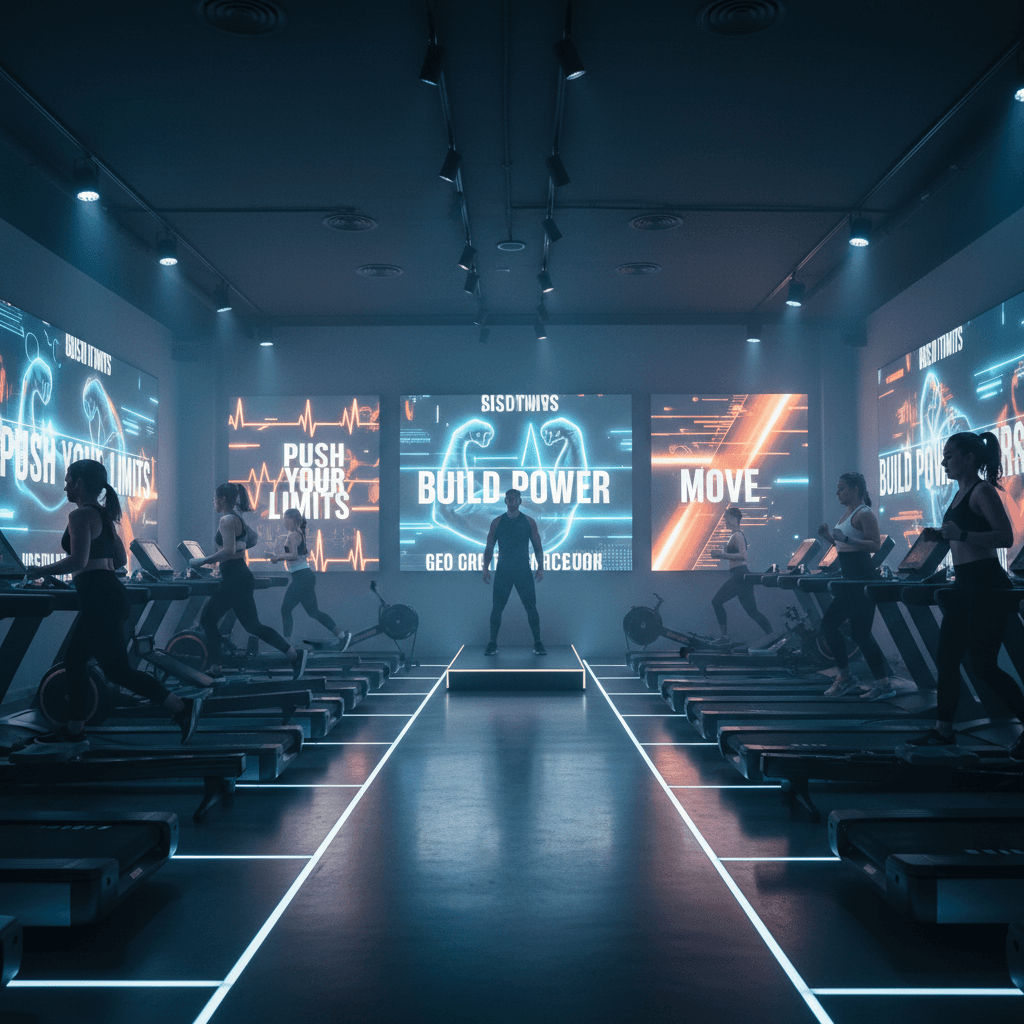
Why Typography Is Your Strongest Brand Rep
In branded content editing, the first second decides whether people lean in or swipe past. Your typography does a surprising amount of that heavy lifting. The best fonts for gym brands don't just look tough—they set pacing, signal quality, and make your message effortless to read on a sweaty, fast-moving screen.
As part of our Mastering Branded Content Editing: Tips, Tools & Trends series, this guide shows how minimalist, bold fonts translate into stronger storytelling, cleaner edits, and more consistent brand visuals. We'll review a curated font shortlist seen across high-performing fitness visuals, explain what each conveys, and show you how to pair and animate them for maximum impact. You'll also get an AI workflow to prototype styleframes and type systems in hours—not weeks.
Bottom line: Good fonts make content look better. The right fonts make content work better.
The Fitness-Ready Shortlist: What Each Font Signals
Minimalist, bold, and easy to remember—these are the hallmarks of fitness typography. Below is a practical, editor-first look at frequently loved choices and where they shine across social, video, and signage.
GT America
- Vibe: Modern, disciplined, reliable; a bridge between classic grotesks and contemporary sans
- Where it wins: Primary headlines, UI overlays, clean lower thirds
- Why editors love it: Wide weight range and excellent legibility help maintain hierarchy across vertical and horizontal formats without switching families.
PP Mori & Lavishly Yours (accent)
- Vibe: Elevated minimalism with a luxe flair; use Lavishly Yours sparingly as a script accent
- Where it wins: Campaign headlines, premium training programs, brand taglines on hero frames
- Pro tip: Keep body text in PP Mori and reserve the script for 1–3 words to avoid visual clutter. Minimalist bold fonts shine when contrast is intentional.
Halvar Breitschrift
- Vibe: Wide, industrial, strong
- Where it wins: Impactful opening frames, kinetic type reveals, merch mockups
- Motion idea: Animate width and weight to "breathe" with a beat drop—strength without shouting.
HalenoirText & ITC Garamond Std (pair)
- Vibe: Clean sans plus editorial classic
- Where it wins: Brand magazines, blog overlays, long captions in carousels
- Pairing logic: HalenoirText for utility (captions, labels); ITC Garamond for quotes/pull lines that add authority.
Bayon
- Vibe: Sharp, display-forward, distinctive geometry
- Where it wins: Bold single-word posters, video thumbnails, launch campaigns
- Use with discipline: Limit to short words and large sizes; let a neutral sans handle everything else.
Bacasime Antique
- Vibe: Timeless with a contemporary cut—serif with presence
- Where it wins: Long-form copy, values statements, transformation stories
- Editor's note: Serifs add warmth and trust in wellness narratives—great for brand films and testimonials.
Big Shoulders Text
- Vibe: Urban, condensed, built for tight spaces
- Where it wins: Vertical video captions, city gym signage, thumbnails
- Bonus: The condensed options keep lines short on mobile, boosting caption readability without shrinking type.
Quick heuristic: Display font for emotion. Grotesque sans for utility. Serif for authority. Keep your core set small and consistent.
Build a Typography System That Edits Well
A strong type system makes every cut faster and every asset more consistent. Here's a practical layout for fitness content.
Define Roles Before You Design
- Display: 1 expressive font for hooks and hero headlines
- Utility Sans: 1 clean sans for captions, lower thirds, CTAs
- Editorial Serif (optional): 1 serif for quotes, stories, blog overlays
- Numerics: Choose weights and figure styles that make reps, sets, and timers crystal clear
Size, Spacing, and Contrast That Work on Mobile
- Headline sizing: Aim for 8–12% of frame height on 1080×1920 vertical video
- Subheads/captions: 3–4% of frame height; avoid ultra-light weights
- Safe zones: Keep critical type away from the bottom 15% and top 10% to avoid UI overlays
- Contrast: Pair bold fonts with high contrast; add a soft shadow or translucent plate when footage is busy
- Case: Use Title Case or Sentence case for legibility; reserve ALL CAPS for short hooks
Hierarchy Templates for Editors
- Hook frame: Display font (heavy), 1–5 words, max two lines
- Info frame: Utility sans medium/semibold for body; bold for keywords
- CTA frame: Utility sans bold; keep to 3–5 words ("Start Your Trial") and a consistent color
Motion, Platforms, and the November 2025 Reality
Fitness content today lives where motion sells the message—fast. Design with kinetic typography and platform constraints in mind.
Kinetic Type That Feels Like Training
- Beat-matched reveals: 2–3 words per beat for momentum
- Emphasis via variable axes: Shift weight, width, or slant for dynamic stress (instead of just scaling)
- Read path integrity: Left-to-right sweeps or center punches; avoid chaotic motion for long captions
Platform-Specific Adjustments
- Reels/TikTok: Expect UI overlays at top and bottom; push type to the vertical center band
- YouTube Thumbnails: Condensed bold fonts win; 3–4 words max; test on a 5% scale to simulate mobile
- In-Gym Screens: High brightness and distance viewing demand heavier weights and higher contrast
- Dark Mode Default: Many viewers are effectively in low-light conditions—test both dark-on-light and light-on-dark versions
Color Grading Meets Type
Your color grade and your type system should be designed together.
- Cool grades pair well with stark, geometric sans for a tech-performance mood
- Warm, filmic grades benefit from serifs for human stories
- Always test captions against busiest frames (plyo, sparring, sled pushes) to validate legibility
AI-Assisted Typeface Workflow (Fast, Consistent, On-Brand)
November 2025 is the year of the brand co-pilot. Use AI to explore, test, and lock your typography system without burning production time.
Style Tiles in Hours, Not Weeks
Generate three visual territories—"Performance Minimal," "Premium Recovery," and "Urban Grit"—each with a display, utility, and optional serif. Ask AI to output: cover frame, captioned frame, CTA frame, merch mockup, and a YouTube thumbnail.
Prompt Frameworks You Can Paste
Use these to rapidly prototype brand visuals and motion directions.
Design a minimalist, bold typography system for a high-intensity fitness brand. Prioritize legibility on vertical video. Recommend: 1 display font for hooks, 1 utility sans for captions, 1 optional serif for quotes. Show three styleframes: hook frame (big, high-contrast), info frame (captions, safe zones respected), CTA frame (short and punchy). Color direction: high-energy neons on dark backgrounds. Keep type consistent across frames.
Create kinetic typography animation beats for a 15-second gym promo. Use wide display headlines that pulse with the music, then settle to a clean utility sans for captions. Avoid excessive scaling; use weight/width changes for emphasis. Output: frame-by-frame pacing notes.
A/B Test in Context
- Test 3–5 headline treatments on actual footage
- Evaluate speed of comprehension: can viewers grasp the offer in 2 seconds?
- Score retention: which treatment keeps eyes on screen through the CTA?
Build a Living Type Guide
- Lock weights, sizes, and spacing per platform (Reels, TikTok, YouTube, OOH)
- Document safe zones and color pairings
- Save presets in your NLE and motion templates so editors move faster across campaigns
Pairing Examples You Can Steal
Here are three ready-to-run combinations based on the shortlist above. Adjust weights and tracking to your brand voice.
-
Strength Launch: Halvar Breitschrift (Display) + GT America (Utility)
- Use Halvar for single-word hooks ("UNSTOPPABLE"), GT America for captions and CTAs
- Animate width expansion on beat drops
-
Premium Wellness: PP Mori (Utility) + ITC Garamond Std (Editorial) + Lavishly Yours (Accent)
- Mori for body/captions; Garamond for quotes; Lavishly Yours for a one-word signature (e.g., "Recovery")
- Keep script to 1–2 instances per video to maintain minimalism
-
Urban HIIT: Big Shoulders Text (Utility/Condensed) + Bayon (Display)
- Bayon for the first word only; Big Shoulders everywhere else
- Ideal for thumbnails and fast-cut city footage
Editor's mini-checklist:
- Is the hook readable at arm's length on a phone?
- Do captions survive your noisiest frame?
- Are you using one display font and one utility sans 90% of the time?
- Does the CTA look identical across all deliverables?
Micro Case Study: From Style Chaos to System
A fictional brand, PulseLab, posted solid workouts but saw inconsistent views. Their captions mixed multiple fonts; thumbnails were busy. We built a type-led system:
- Display: Halvar Breitschrift for power hooks
- Utility: GT America for captions, lower thirds, and CTAs
- Editorial: Bacasime Antique for transformation quotes
- Motion: Weight shifts on beat, condensed captions for vertical
Results in four weeks of consistent publishing: content safer on-screen, thumbnails cleaner, and a measurable lift in saves and completion. The secret wasn't more effects—it was type discipline.
What This Means for Your Editing Workflow
Typography isn't a garnish; it's narrative, pacing, and brand trust in one decision. Choose a compact, fitness-ready set of minimalist bold fonts, design roles for each, and codify motion and platform rules. Then use AI to rapidly test styleframes, lock a living guide, and keep your team shipping.
This article is part of our Mastering Branded Content Editing: Tips, Tools & Trends series. Next up, we'll connect type to sound design and beat mapping so every punchline lands where your viewer feels it.
Action step: Run a 48-hour AI Typography Sprint. Prototype three territories, test on real footage, pick one, and lock your presets. Consistency starts on your next edit.