Virginia’s Alexandria rail expansion shows how smart, green infrastructure can cut congestion, support growth, and lay the groundwork for cleaner, AI-enabled mobility.
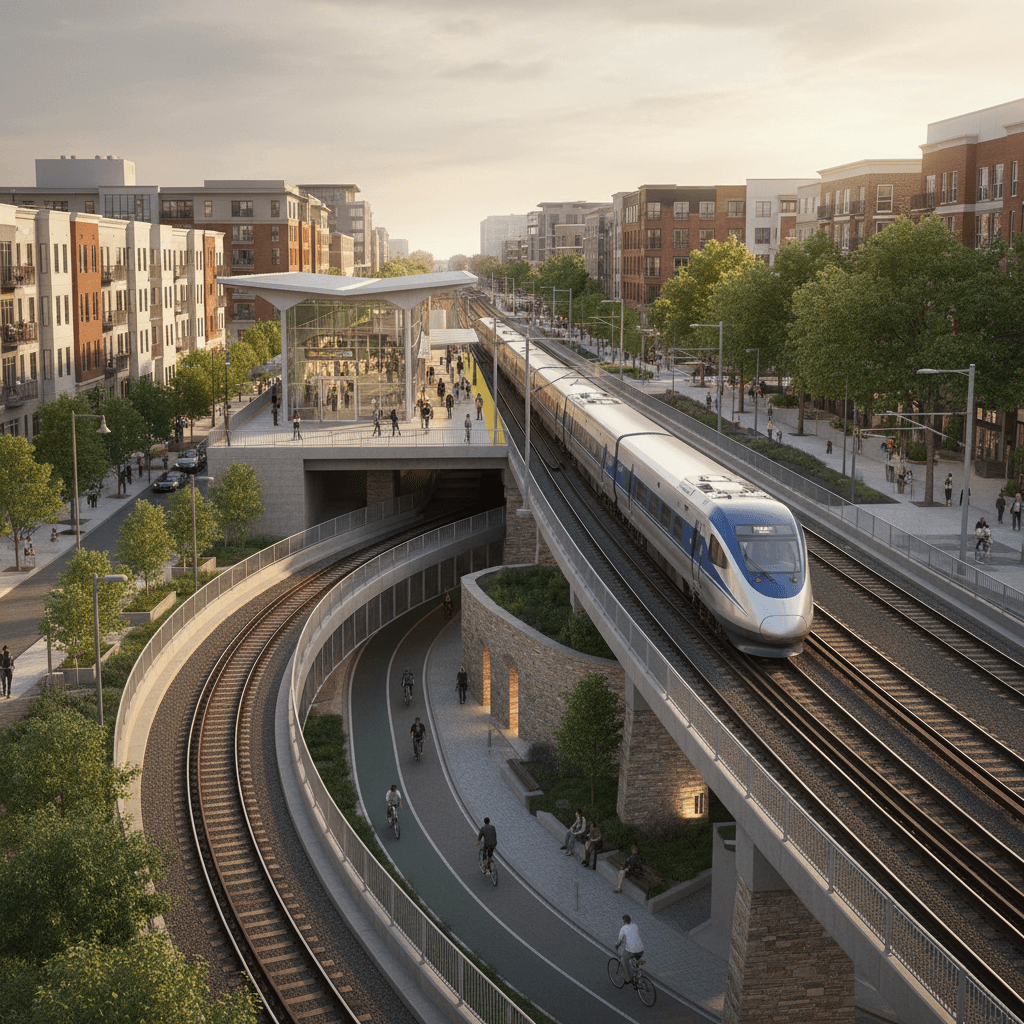
Why Virginia’s new rail project should be on your radar
Traffic in Northern Virginia has exploded along with the region’s population, which has grown about 74% since 1990. Highways are clogged, commute times drag on, and emissions keep climbing. Yet the cheapest, cleanest way to move more people isn’t another lane of asphalt — it’s more trains.
Virginia’s new construction in Alexandria is a textbook example of how green transportation infrastructure can support growth without choking cities in traffic and pollution. It’s not just a rail project; it’s a blueprint for how states can use green technology, smarter planning, and regional coordination to cut emissions and improve daily life.
In this post, I’ll break down what Virginia is building, why it matters for climate and congestion, and what city and regional leaders can learn if they want to replicate this kind of sustainable transport upgrade.
What Virginia is actually building in Alexandria
Virginia isn’t tinkering at the edges. It’s reshaping one of the most important passenger rail corridors on the East Coast.
At the heart of the Alexandria work are three core pieces:
- A new fourth track over roughly six miles between Alexandria and Arlington
- Upgrades to Alexandria’s Virginia Railway Express (VRE) station, including safer access and modernized platforms
- Replacement of two aging railroad bridges near the station, coordinated with a complete station-area streetscape redesign
This work is tightly linked to the state’s $2.6 billion Long Bridge project, which will add a second two-track rail bridge over the Potomac River and new pedestrian and bike bridges. Both the Long Bridge and the Alexandria projects are aiming for completion around 2030.
Here’s the thing about this corridor: it’s shared by Amtrak, VRE, and CSX freight. One choke point snarls everyone. By adding track and updating infrastructure, Virginia is setting itself up to:
- Run more Amtrak state-supported roundtrips (from eight today to 13 once the broader “Transforming Rail in Virginia” program is complete)
- Expand VRE commuter service, including weekend trains that finally give riders a realistic alternative to driving on Saturdays and Sundays
- Keep freight trains moving without constantly conflicting with passenger schedules
From a green technology perspective, this matters because rail is inherently more energy-efficient than cars — and every additional train can shift thousands of car trips off the road over time.
Why this is a climate and congestion strategy, not just a rail upgrade
Virginia’s Passenger Rail Authority is blunt about it: passenger rail is the most cost-effective solution to traffic congestion in Northern Virginia and the D.C. metro area. They’re right.
Trains move more people with less energy
Per passenger-mile, intercity and commuter rail usually outperform private cars on fuel use and emissions, especially when trains are full and speeds are consistent. When you combine that with electrification of equipment over time and cleaner grids, the emissions curve gets even better.
Consider the current baseline:
- VRE already moves about 20,000 riders per weekday.
- Virginia’s state-supported Amtrak services carried over 1.4 million riders in FY 2025, a record.
Now project that forward:
- More capacity from the fourth track and Long Bridge
- More frequencies (13 daily state-supported Amtrak roundtrips instead of eight)
- Expanded commuter and weekend service
Even modest mode shifts from solo driving to rail turn into big climate wins:
- Fewer car miles driven
- Lower fuel consumption
- Reduced tailpipe pollution along I‑95, I‑395, and regional arterials
This matters because Northern Virginia’s population is forecast to exceed 3 million by 2040. You simply can’t meet that growth with more personal vehicles and expect to hit any credible climate, air quality, or livability target.
Congestion relief without endless widening
Most regions still default to highway widening when congestion hits a political breaking point. It’s expensive, it induces more driving, and within a few years the lanes are full again.
Virginia is taking a different path: use rail capacity as the pressure valve instead of more asphalt.
By upgrading a shared passenger–freight corridor and unblocking a major river crossing, the state is effectively creating a parallel people-moving system that doesn’t require everyone to sit in traffic. It’s a cleaner move, and frankly, a cheaper one over the long term when you factor in maintenance costs and induced demand.
The green technology layer: smarter, safer, more connected
On the surface, this looks like a classic civil engineering project: tracks, bridges, platforms. Underneath, though, it’s part of a broader smart, low-carbon transport ecosystem.
Safer, more efficient station design
The Alexandria station upgrades aren’t just cosmetic:
- A street-level crossing will be replaced with a tunnel connecting the platforms, improving safety and reducing conflicts between pedestrians and trains.
- Platforms will be modernized and upgraded, supporting better accessibility and smoother passenger flow.
Those changes pair naturally with digital and AI-enabled tools many agencies are rolling out:
- Real-time passenger information that reduces crowding and confusion
- Demand forecasting to optimize train length and frequency
- Computer-vision-based monitoring to improve safety in high-traffic areas
Even if those specific tech deployments aren’t spelled out in the project announcement, these kinds of station and track investments are exactly what make smart mobility tools possible.
A backbone for future rail electrification and optimization
Right now, much of U.S. passenger rail still relies on diesel. But capacity projects like this are prerequisites for more ambitious green technology moves:
- Rail electrification or partial electrification along key segments
- Hybrid or battery-electric rolling stock for shorter routes
- AI-powered traffic management that sequences freight and passenger trains to minimize idling and wasted energy
Most cities get this backwards. They try to layer flashy “smart city” tech over brittle, underbuilt infrastructure. Virginia’s taking a better route: fix the bottlenecks, add capacity, then use green technology and AI to extract maximum efficiency from that backbone.
What other cities and regions can learn from Virginia
If you’re a planner, policymaker, or sustainability lead, Virginia’s approach in Alexandria offers a practical playbook.
1. Build real partnerships, not silos
This project is backed by a broad coalition:
- Virginia Passenger Rail Authority
- Amtrak
- VRE
- CSX (freight)
- City of Alexandria
Most rail corridors are shared assets. If passenger, freight, and local governments aren’t aligned, every project turns into a turf war. Here, the partners developed one integrated plan: more capacity, better stations, and community benefits such as a redesigned streetscape under the new bridges.
If you’re trying to scale green transportation in your own region, this is step one: get the railroads, agencies, and cities in the same room and design a corridor strategy, not a patchwork of isolated projects.
2. Tie local upgrades to regional chokepoints
The Alexandria station work only makes full sense in the context of the Long Bridge replacement. A second two-track bridge over the Potomac unlocks the corridor; the fourth track and station improvements make sure the local segment doesn’t become the next bottleneck.
This is a strategic pattern more regions should copy:
- Identify your worst regional chokepoints (river crossings, junctions, tunnels)
- Plan feeder projects like extra tracks, passing sidings, and station upgrades so the whole corridor gains capacity
- Design for a clear service outcome: more daily trains, higher reliability, weekend service, or all of the above
3. Design for riders, not just trains
Virginia isn’t just adding steel and concrete. It’s:
- Removing a risky street-level crossing
- Improving station access
- Coordinating with the city on streetscape upgrades under the new bridges
That’s the difference between “we built more track” and “people actually want to use this”. A climate-friendly rail system that’s confusing, unsafe, or unpleasant won’t reach its potential.
If you’re scoping similar projects, ask very bluntly:
- Will a first-time rider know where to go without thinking?
- Is it easy to reach the station by walking, biking, or local transit?
- Are transfers simple and legible enough that people feel confident ditching their car?
4. Lock projects into a long-term transformation program
The Alexandria and Long Bridge work are part of Transforming Rail in Virginia, not one-off wins. That program has clear outcomes:
- Increase state-supported Amtrak roundtrips from 8 to 13 per day
- Expand VRE service, including new weekend runs
- Use rail as a core lever to manage long-term congestion and growth
Too many regions fund isolated “shovel-ready” projects that never add up to a meaningful shift away from cars. The Virginia model is closer to what’s needed: multi-year, corridor-based planning with political backing that survives news cycles.
How this fits into the bigger green technology story
Within the broader Green Technology conversation, this project sits at the intersection of infrastructure, policy, and AI-powered mobility.
- The infrastructure (tracks, bridges, stations) makes high-capacity, low-emission mobility possible.
- Policy and governance — through the Virginia Passenger Rail Authority and its partners — ensure the system serves both economic and environmental goals.
- AI and digital tools turn that physical network into a smarter, more efficient service: better timetables, integrated ticketing, real-time operations optimization, and data-driven planning.
I’ve found that cities which treat rail strictly as an engineering problem rarely unlock its full climate value. The ones that win treat rail corridors as green technology platforms that can support cleaner vehicles, smarter scheduling, and integrated multimodal travel.
Virginia’s Alexandria project doesn’t solve everything. But it’s a strong example of the kind of backbone investment that makes those more advanced tools worth deploying.
Where to go from here if you’re planning similar projects
If you’re responsible for sustainability, transportation, or smart city strategy, there are a few practical moves you can borrow straight from Virginia’s playbook:
- Map your rail and transit chokepoints. Identify where a single bridge, junction, or station is throttling capacity.
- Build a multi-partner coalition. Include freight, passenger agencies, cities, MPOs, and state DOTs early.
- Define clear service goals. More trains? Weekend service? Higher reliability? Design the project around those outputs.
- Bake in green tech from the start. Plan for future electrification, AI-based scheduling, and integrated ticketing as part of the capital program, not an add-on.
- Design for people, not just throughput. Safer access, intuitive wayfinding, and good bike/ped connections turn rail capacity into actual ridership.
Virginia is betting that stronger rail infrastructure is “critical to our economy and people’s ability to get where they need to go,” as Sen. Tim Kaine put it. I’d go a step further: for fast-growing regions that care about climate, health, and economic competitiveness, serious rail investment isn’t optional — it’s the only path that scales.
The next decade will make that clear. Regions that treat passenger rail as a core green technology will be able to grow without drowning in traffic and emissions. Those that don’t will spend more money, sit in longer jams, and still miss their climate targets.
Which side your city ends up on depends on the choices you’re making right now.