Virginia’s Alexandria rail expansion shows how smart passenger rail investment can cut congestion, reduce emissions, and anchor truly green urban mobility.
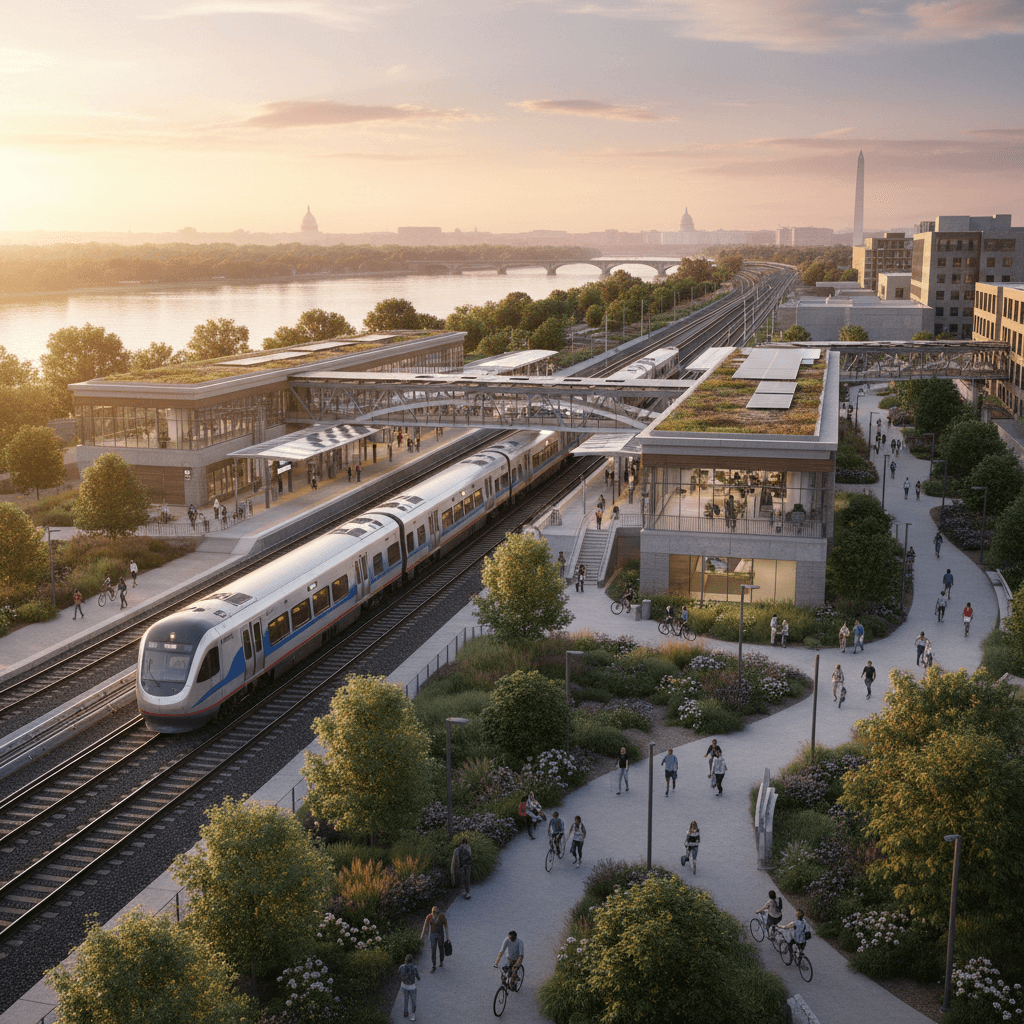
Why Virginia’s Alexandria Rail Project Matters for Clean Transit
Northern Virginia’s population has jumped 74% since 1990, and the roads show it. Highways into Washington, D.C. routinely clog, commute times stretch, and emissions spike every weekday morning.
Here’s the thing about that Alexandria rail construction you may have seen in the news: it isn’t just a local infrastructure upgrade. It’s a textbook example of how green transportation technology and smart public investment can cut congestion, lower carbon emissions, and support economic growth at the same time.
Virginia’s new passenger rail projects around Alexandria sit right at the intersection of green technology, smart cities, and sustainable mobility—which is exactly what this Green Technology series is about.
In this post, I’ll break down what’s actually being built, why it matters for climate and quality of life, and what city leaders, transit agencies, and private partners can learn from Virginia’s approach.
What Virginia Is Building in Alexandria – And By When
Virginia is adding capacity, safety and flexibility to one of the busiest rail corridors on the East Coast.
Core elements of the Alexandria rail program
The projects now under construction in Alexandria are part of the Virginia Passenger Rail Authority’s (VPRA) broader Transforming Rail in Virginia initiative and closely tied to the $2.6 billion Long Bridge project. In Alexandria and Arlington, the current package includes:
- A new fourth track: About 6 miles of additional track between Alexandria and Arlington, creating more capacity for:
- State-supported Amtrak Virginia trains
- Virginia Railway Express (VRE) commuter services
- Freight trains operating on CSX infrastructure
- Station upgrades at Alexandria VRE/Amtrak station:
- Replacing the street-level crossing with a pedestrian tunnel between platforms
- Platform improvements for safer, faster boarding
- Replacement of two aging bridges near the station, coordinated with the city’s streetscape redesign to improve the public realm under and around the structures
All of this is being delivered through a partnership among VPRA, Amtrak, VRE, CSX, and the City of Alexandria, and is timed to align with the Long Bridge expansion over the Potomac River, which will add a second two-track passenger rail bridge and new pedestrian and bike crossings.
Both the Alexandria package and Long Bridge are targeted for completion in 2030.
“Strong rail infrastructure in Virginia is critical to our economy and people’s ability to get where they need to go,” said Sen. Tim Kaine. He’s right—and it’s also critical to the state’s climate strategy.
How More Passenger Rail Cuts Congestion and Emissions
Expanding passenger rail is one of the most cost-effective ways to relieve congestion and cut transportation emissions in a dense metro region.
Rail vs. roads: the climate and cost math
VPRA is blunt about it: passenger rail is the most cost-effective solution to traffic congestion in Virginia and the Washington, D.C. region. Here’s why that’s not just a slogan:
- Higher capacity per corridor: A single double-track rail line can move tens of thousands of people per hour, using far less space than a highway.
- Lower emissions per passenger: Intercity and commuter trains, especially when running near capacity, produce significantly less CO₂ per passenger-mile than solo drivers.
- Cheaper than endlessly widening highways: Each new freeway lane mile can cost tens to hundreds of millions of dollars in urban areas, while simply inducing more traffic over time.
By 2030, the Transforming Rail in Virginia program is expected to:
- Increase state-supported Amtrak daily roundtrips from 8 to 13
- Expand VRE service, including new weekend operations on key lines
That increase in frequency is critical. Trains that run more often:
- Convert transit from a niche option to a default choice
- Reduce perceived wait times and make transfers more practical
- Compete realistically with driving—not just on price, but on time and reliability
Ridership momentum is already there
This isn’t a “build it and hope they come” situation. Virginia is building on real demand:
- VRE carries about 20,000 riders per weekday.
- Amtrak Virginia set a record in FY 2025, carrying over 1.4 million riders on state-supported services.
If you’re looking at this from a green technology or policy standpoint, the signal is clear: people will choose low-carbon transit when it’s frequent, reliable and comfortable. Infrastructure like the Alexandria fourth track and Long Bridge expansion is what makes that service possible.
Where Green Technology Shows Up in “Just” a Rail Project
At first glance, the Alexandria work looks like classic civil engineering: tracks, bridges, platforms. Under the hood, it’s also a platform for green technology and smart city integration.
1. Smarter train operations and energy use
Modern rail corridors increasingly use AI-driven and data-driven tools to optimize performance:
- Advanced traffic management systems coordinate passenger and freight trains over shared tracks, reducing idling and unnecessary braking.
- Predictive maintenance models use sensor data from tracks, bridges and rolling stock to schedule work before failures occur—cutting downtime, avoiding slow orders, and making operations smoother.
- Energy-efficient driving profiles can be calculated in real time to minimize energy use based on gradients, speed limits and timetable padding.
A corridor with more tracks and modern signaling, like the Alexandria–Arlington stretch post-upgrade, gives operators more flexibility to route trains efficiently and apply these tools.
2. Safer, greener station design
The Alexandria station improvements are not just cosmetic. Key green and safety benefits include:
- Replacing a street-level crossing with a tunnel:
- Reduces conflicts between pedestrians and trains
- Allows trains to enter and exit the station at more consistent speeds
- Cuts the need for horns and reduces risky behaviors like gate-running
- Platform upgrades can support:
- Level boarding or reduced gaps, improving accessibility and speeding up dwell times
- Better stormwater management and more sustainable materials
- Enhanced LED lighting and smart controls to cut energy use
When the City of Alexandria redesigns the streetscape under the new bridges, there’s a chance to embed more green infrastructure:
- Permeable pavements and rain gardens
- Tree canopies to fight the urban heat island effect
- Better walking and cycling connections to nearby neighborhoods
This is where smart city design and green technology really start to compound benefits: safer access, more comfortable spaces, and subtle but real climate resilience.
3. Coordinated with bike and pedestrian infrastructure
Because the Alexandria work is tied directly to the Long Bridge project, the benefits extend beyond rail riders. Long Bridge will add new pedestrian and bicycle crossings over the Potomac, connecting Virginia and D.C.
That kind of multimodal design matters:
- Rail gets you into the metro core.
- Safe walking and biking links get you the last mile.
A green transportation system isn’t one technology; it’s the network effect of trains, sidewalks, bike lanes, and local transit all working together.
Lessons for Cities and Agencies Planning Green Mobility Projects
Most cities want fewer cars, cleaner air, and shorter commutes, but get stuck on how to fund and phase projects. Virginia’s rail strategy offers a few useful patterns.
1. Bundle projects into a clear, long-term program
VPRA isn’t treating each bridge or track segment as a one-off. It rolled them into a clearly branded initiative: Transforming Rail in Virginia.
Why that works:
- It’s easier to communicate value to the public and lawmakers.
- It makes long-term phasing and funding more coherent.
- It gives agencies a shared roadmap to align around.
If you’re a regional planner or city leader, consider:
- Grouping related transit, bike, and pedestrian projects into a single, named program
- Publishing clear service outcomes (e.g., “5 more daily roundtrips,” “15-minute all-day service”) rather than just lists of capital projects
2. Make freight, intercity, and commuter rail partners—not rivals
A key reason Virginia can expand passenger rail on a busy corridor is that it bought rail right-of-way and works directly with CSX, Amtrak, and VRE.
Instead of fighting over limited capacity, stakeholders are:
- Adding tracks where needed
- Clarifying who uses which tracks and when
- Sharing the cost and benefits of upgrades
This type of public–private partnership is crucial in corridors where private freight companies own the infrastructure. It’s slower than just building a new highway, but far more aligned with climate goals.
3. Tie every transport project back to climate and equity
Virginia’s passenger rail expansion hits multiple targets at once:
- Climate: more trips by rail instead of car or short-haul air
- Economic growth: better access to jobs in D.C. and Northern Virginia
- Equity: more flexible schedules (including planned weekend VRE service) support workers outside the traditional 9–5
If you’re arguing for green tech investments in your region, don’t silo them as “environmental projects.” Make the case in terms of time saved, reliability, access to opportunity, and long-term cost savings, with climate as a core but integrated benefit.
How Businesses and Institutions Can Plug Into Rail-Centric, Green Mobility
For organizations in the D.C.–Virginia region, these rail projects aren’t theoretical. They’ll reshape how employees, students, and visitors move.
What smart employers can do now
If your workforce is anywhere near the Alexandria–Arlington–D.C. corridor, you can start planning around more robust passenger rail:
- Offer commuter benefits that cover Amtrak Virginia and VRE passes.
- Adjust flexible or hybrid work policies around off-peak train schedules to reduce crowding and stress.
- Align office siting or relocations with walkable access to rail stations.
Companies that lean into rail and transit access often find they can:
- Reduce demand for parking
- Expand hiring radius without requiring long, stressful car commutes
- Strengthen their sustainability story with hard, travel-related emissions reductions
How universities, hospitals, and major trip generators can respond
Large institutions can:
- Integrate rail options into wayfinding and visitor info, not just driving directions
- Partner with rail agencies on joint marketing and discounted passes
- Advocate for last-mile shuttles, micromobility hubs, and bike lanes around stations
The more your campus or campus-equivalent meshes with the rail network, the more attractive it becomes in a region where driving is increasingly a hassle.
What Virginia’s Rail Strategy Tells Us About the Future of Green Tech Cities
Virginia’s passenger rail expansion around Alexandria is a useful snapshot of where green technology for cities is actually headed in 2025:
- Less hype about futuristic pods, more investment in proven, scalable systems like intercity and commuter rail.
- More attention to integrating infrastructure: tracks, bridges, bike paths, digital signaling, and data systems that optimize them all.
- A recognition that population growth and climate commitments leave very little room for car-only strategies.
For this Green Technology series, the takeaway is simple: if you want a realistic, near-term path to lower-carbon cities, rail and high-capacity transit belong at the center. Smart sensors, AI scheduling, and clean propulsion absolutely matter—but they matter most when attached to infrastructure that can move thousands of people reliably every hour.
As 2030 approaches and Virginia’s expanded rail services come online, other regions will be watching. The question is whether they’ll treat this as an interesting case study—or as a template to act on.
If your city or organization is thinking seriously about green mobility, now’s the time to ask: where could frequent, reliable rail take pressure off your roads, your budget, and your climate goals—and what would it take to build the partnerships Virginia is building today?